The post Walnut Meringue Crescent Cookies Easy Recipe appeared first on The World Is an Oyster.
]]>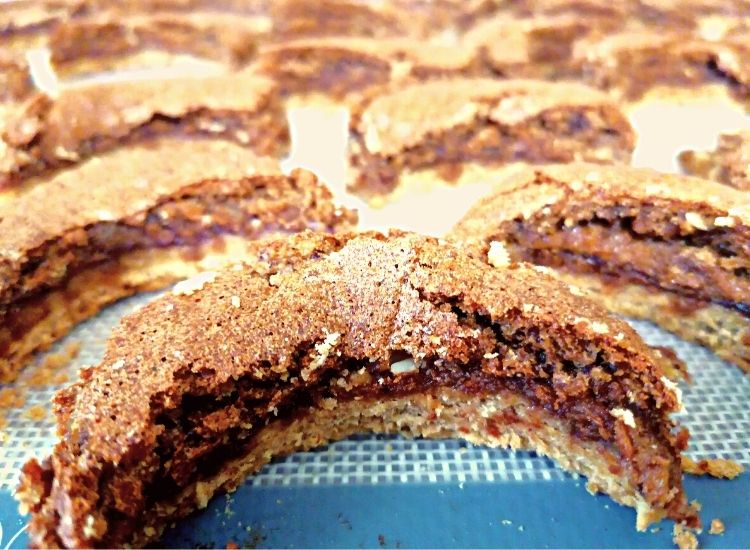
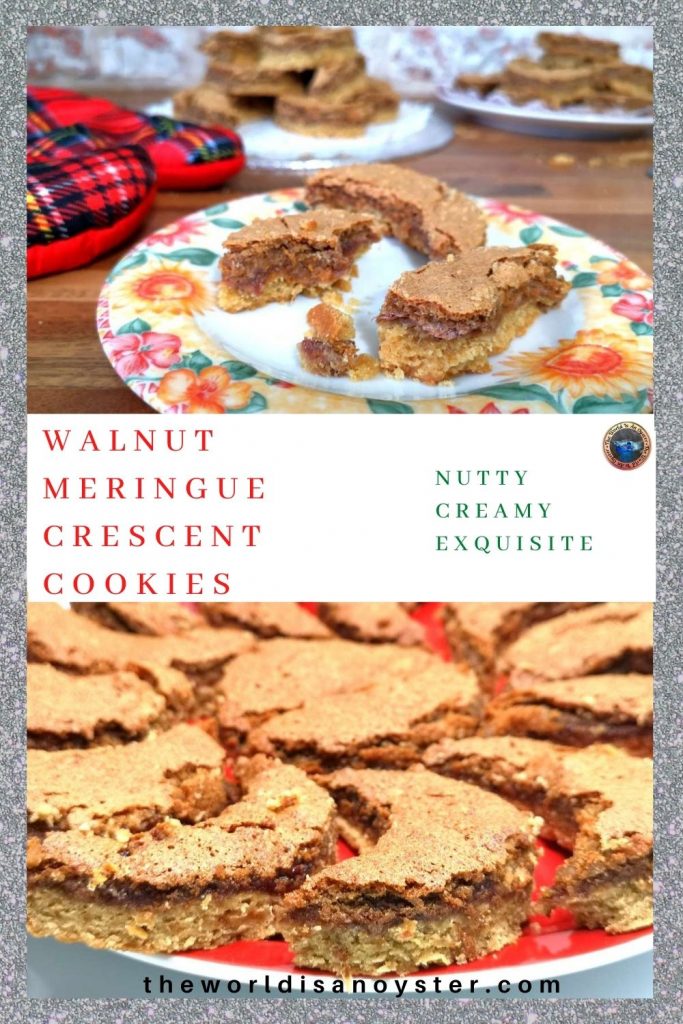
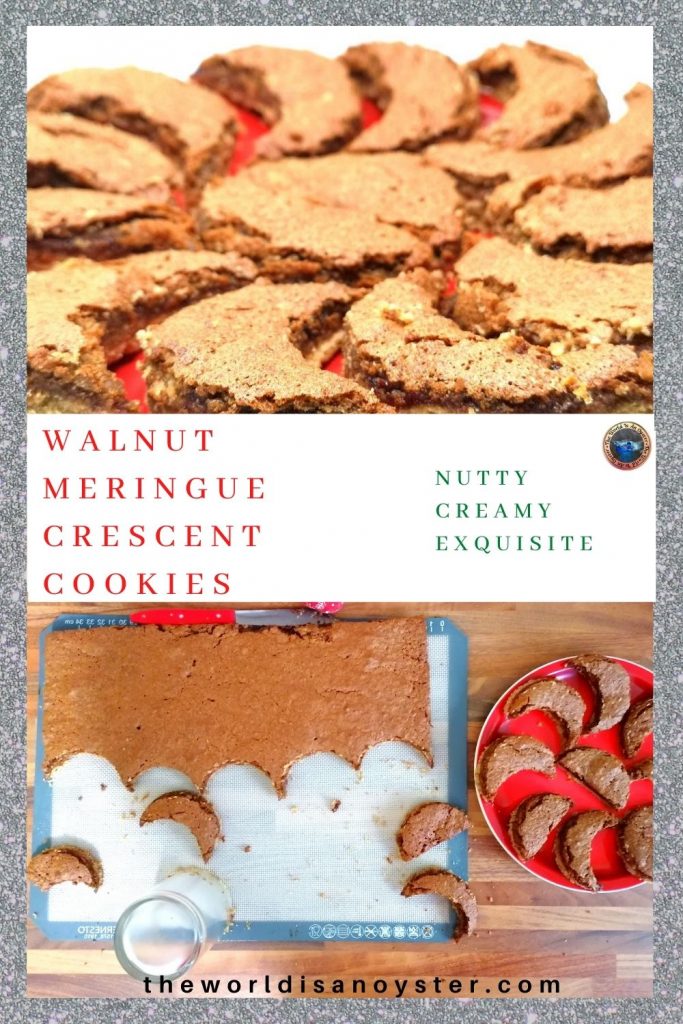
Walnut meringue crescent moon cookies were always the best delight mom baked for holidays. It is a dessert easy to make but so flavourful, with a tender base, a jam layer and a creamy, nutty top – precisely what we loved to munch on often in-between meal times.
This post may contain affiliate links, which means I will receive a commission if you purchase through my links at no extra cost to you. Please read the full disclosure for more information. Thank you!
We would sneak into the pantry where mom kept the massive trays will all the goodies she’d baked for Christmas or Easter (of which the fluffy cozonac was always the centrepiece!) and pinch moon cookies from the beautiful stack so that she would not see (so we thought!) how many were missing by the big day!
It was not long until I started making them with my younger sister and repeated the recipe mainly around Christmas time.
This year, I had the precious helping hand of Santa’s little helper contributing to baking mom’s traditional walnut and meringue crescent moon cookies, and the fun we had in the kitchen was delightful!
Of course, witty Santa’s helper (England born and bred) reading an old recipe handwritten in Romanian was hilarious. Still, I was there to provide the correct translation, and we did not use any alien ingredients on this occasion!
What was incredibly touching to see was how the little helper managed perfectly well with very little intervention on my part. I watched and reminisced how I did the same, around the same age, if not older, in mom’s kitchen back home in Romania.
I am glad to write this and forever remember the generation switch moment as it happened, keeping an old tradition and using the same old (and a tad grease-stained in places) recipe book that mom took the time and patience to write.
It feels emotional now that I’m writing down the recipe. But when we baked the walnut meringue crescent moons, it was fun and pure joy to see how different ingredients transform when mixed and create a delightful dessert.
We agreed on something we both have a passion for – baking is biochemistry, and the kitchen is the lab!
Mom used whatever ingredients she could buy during a difficult time, when communist rule meant restrictions of all sorts, including food.
Today, I am trying to educate my kid to understand the difference the temperature brings to various ingredients and how to use healthier versions and combine them in a way that keeps the flavour but reduces the harm to our body. Mom’s recipe mentioned margarine; we use organic coconut oil or organic butter.

For a self-proclaimed future scientist, I am delighted to see how such a young person understands what excessive refining does to sugar and why that is harmful to our health or how the human digestive system does not have the right enzyme to process cow milk and how healthier substitutes not only help personal health but have a role in the massive chain reaction that affects the environment.
Back to our fun baking for a couple of hours, it was the best time spent away from the computer, and I can’t wait until next time it happens again!
The cookies came out perfectly, and we did a lot of bowl-licking in the process and cooky testing to check that the final product passes the approval of the otherwise fussy quality control bakers and eaters in the family!
Miraculously, the cookies kept disappearing from the platter just as I remember it happened when I was a child! But I rest assured the little helper can bake just fine anytime, not just for holidays, while I watch and enjoy a delightful walnut merengue crescent moon cookie when ready with my cappuccino. Perhaps it will be way more than one, in the end, because they are addictively scrumptious!
Ingredients for walnut meringue crescent moon cookies
For the base
Egg yolks
Coconut oil
Coconut sugar
Baking powder
Orange zest
Plain white flour
Salt
Jam layer
Any jam goes, but a slightly sour one will enhance the flavours. I prefer reduced sugar spicy strawberry jam. A jar is enough for this recipe.
For the meringue
Egg whites
Coconut sugar
Walnuts
Rum essence
Salt

Preparation method for walnut meringue crescent moon cookies
The base
Add the coconut oil at room temperature, a pinch of salt, orange zest, and coconut sugar to a large mixing bowl. Use a handheld mixer and the dough hooks to mix at a low speed.
Add the egg yolks one by one and continue mixing.
Sieve the flour and baking powder over and mix until it incorporates nicely.
If the dough becomes too firm, add a spoon or two of milk and mix.
Move the dough into a lined baking tray and level it by pressing gently with your wet hands.
Spread the jam over and level it nicely with a spatula.
The meringue
Before starting, preheat the oven to 180°C (356°F) and line the baking tray with a silicone sheet or baking parchment.
We followed mom’s method for the meringue and made the French version. Because we baked the walnut meringue crescent cookies already assembled, the meringue did not need beforehand cooking.
Mix the egg whites with a pinch of salt at high speed until stiff. Use a grinder to finely grind the coconut sugar (until you obtain a powdered, lighter brown icing sugar). Add it gradually to the eggs and mix at a low speed.
Grind the walnuts (not too long; they need to remain flakey) and add them to the batter. Fold gently with a spatula until incorporated.
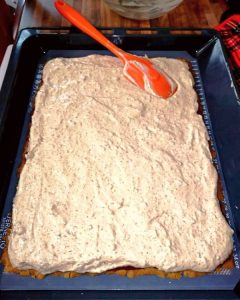
Pour the meringue over the jam and level it without pressing too much.
Bake for 40 minutes and check the top is not charring.
When ready and you have checked the walnut meringue and base are cooked throughout, let it cool slightly.
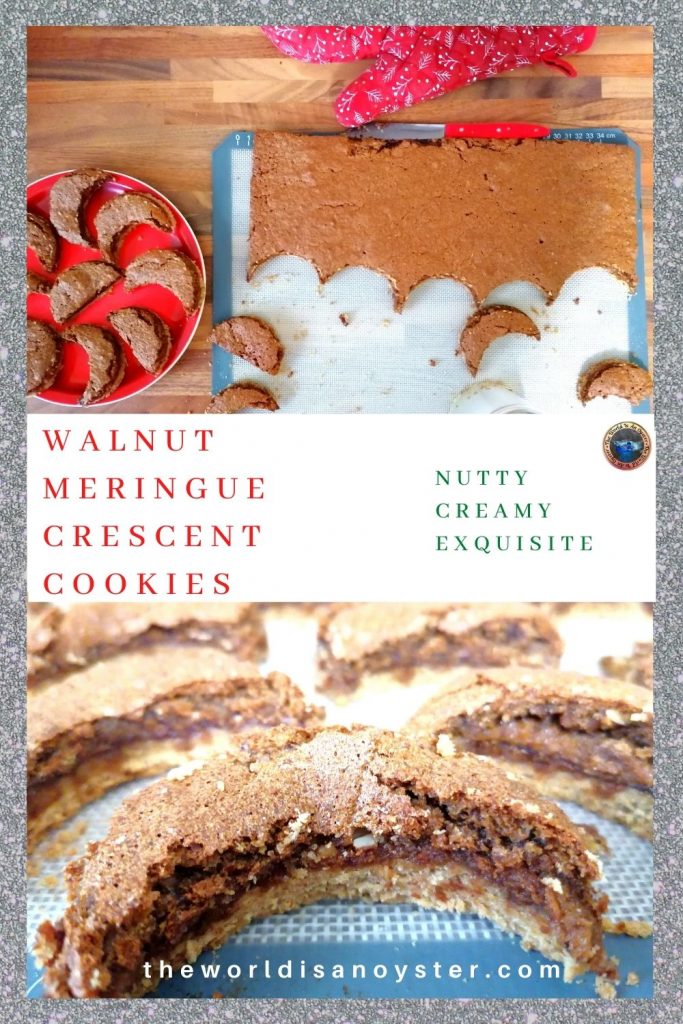
Use a medium-size drinking glass to cut the crescent moon shapes while still warm.
Enjoy the cute and tasty walnut meringue crescent cookies with a festive hot chocolate or a nice cappuccino!
Walnut Meringue Crescent Cookies
Ingredients
The dough
- 200 g organic coconut oil
- 5 egg yolks organic, medium
- 400 g plain flour organic, white
- 1 tsp baking powder flat
- 80 g coconut sugar organic
- 1 organic orange zest
- 1 pinch salt sea/rock
Organic strawberry jam
The merengue
- 5 egg whites
- 120 g ground coconut sugar organic
- 150 g ground walnuts organic
- 1 pinch salt sea/rock
- 1 tbsp rum essence
Instructions
To make the dough
- Add the coconut oil at room temperature, a pinch of salt, orange zest, and coconut sugar in a large mixing bowl. Use a handheld mixer and the dough hooks to mix at a low speed.
- Add the egg yolks one by one and continue mixing.
- Sieve the flour and baking powder over and mix until it incorporates nicely.
- If the dough becomes too firm, add a spoon or two of milk and mix. Optionally, chill the dough for half an hour.
- Move the dough into a lined baking tray and level it by pressing gently with your wet hands.
- Spread the jam over and level it nicely with a spatula.
The meringue
- Preheat the oven to 180°C (356°F) and line the baking tray with a silicone sheet or baking parchment.
- Batter the egg whites with a pinch of salt at high speed until stiff. Use a grinder to finely grind the coconut sugar (until you obtain a powdered, lighter brown icing sugar). Add it gradually to the eggs and mix at a low speed.
- Grind the walnuts (not too long; they need to remain flakey) and add them to the batter. Fold gently with a spatula until incorporated. Add the rum essence.
- Pour the meringue over the jam and level it without using too much pressure.
- Bake for 40 minutes and check the top is not charring.
- When the baking time is up, use a toothpick to check that the walnut meringue and base are cooked thoroughly.
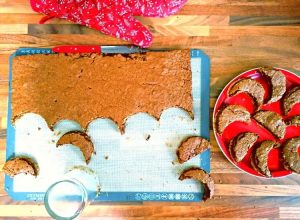
- Keeping the parchment/silicone sheet, move the cake from the tray to a cooling rack. Allow it to cool slightly.
- Move from the cooling rack to the tabletop and use a medium drinking glass to cut the crescent moon shapes while the cake is still warm.
Walnut Meringue Crescent Cookies Easy Recipe
The post Walnut Meringue Crescent Cookies Easy Recipe appeared first on The World Is an Oyster.
]]>The post Festive Cocktails: 25 Recipes For Your Christmas and New Year’s Celebrations appeared first on The World Is an Oyster.
]]>Cocktail Recipes (Alcoholic or Not) To Accompany Your Festive Dinners

Another year past deserves recognition in the form of a celebratory dinner, and no Christmas or New Year feast would be buoyant enough without unique festive cocktails (be it alcoholic or not) to accompany the bountiful festive menu you have worked so hard to prepare!
This post may contain affiliate links, which means I will receive a commission if you purchase through my links at no extra cost to you. Please read the full disclosure for more information. Thank you!
The end of the year is when we gather to celebrate and share gifts and joy. It is also a time of reflection back to the year gone, to the hardship and small victories we went through day by day. If we are smart enough, we try to learn something from life’s lessons and also plan to improve in any aspect in the new year.

It is the second year in a row in which a typical nostalgic feeling about the year past might be replaced with anxiety, depression, fear. If possible, we should try to see the full glass (after all, this is a post about drinks, is it not?)
What drives us forward and makes us see the day of light is the hope that things will get better, life will be good, and we will be okay. And we will be! It might be not easy now, but everything has an end!
We will meet with friends we have not seen in ages; we will hug each other, laugh and dance, and enjoy a good meal and a funky drink because this is what humans do!

If anyone can genuinely foresee the future, perhaps they would like to enlighten all of us. Until then, let’s just remember that everything in this world has energy – you, the house you live in, the pebbles in your garden – everyone and everything that happens to be close to you at any given moment.
And energy has a way of transforming according to the vibes each object, animate or inanimate, produces.
If there is logic in everything, then good vibes, kindness and positivity must attract the same thing. And goodness should be the conclusion of this reflection time, as a good drink should accompany the feast we all are having, hopefully, at the end of yet another odd year!
Have your pick from this generous list of festive cocktails and enjoy the holiday season!
1. Cranberry Moscow Mule

Recipe provided by saporitokitchen.com.
This cranberry Moscow mule is a fun twist on the classic cocktail. Flavoured and garnished with cranberry, this cocktail is perfect for the holiday season. Whether you are having a party or enjoying a quiet evening at home, this festive Moscow mule is sure to put you in the holiday spirit.
2. Mulled wine (with or without alcohol)
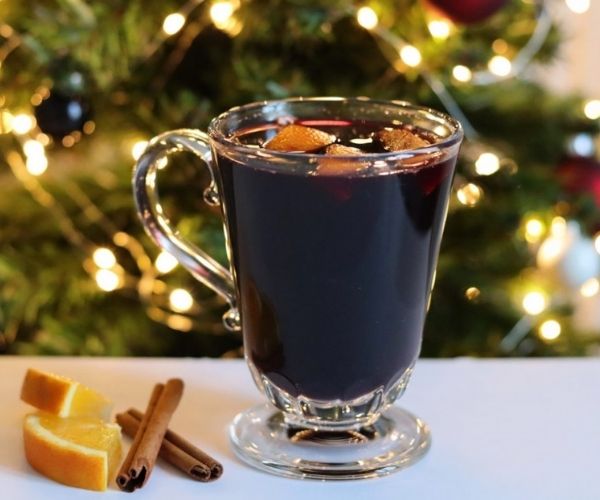
Recipe provided by gohealthywithbea.com.
Traditional mulled wine or non-alcoholic mulled wine, whatever you choose, is the perfect holiday and winter season comfort drink. In France, it is popular in Alsace (the region close to the German border) around Christmas time, especially at Christmas markets. A must-have on your festive cocktails list!

3. White Chocolate Snowflake Martini
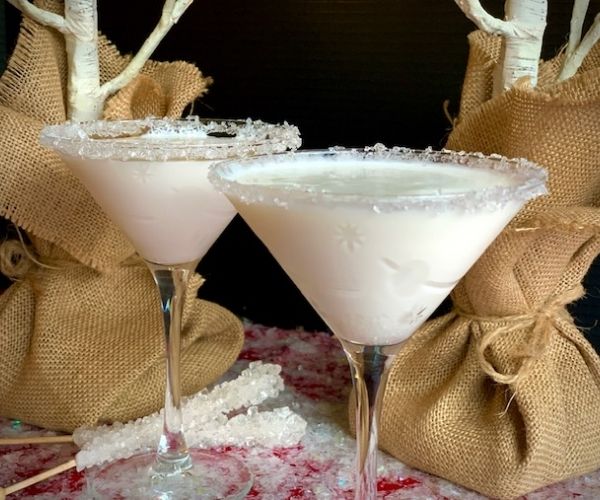
Recipe provided by theartoffoodandwine.com.
White chocolate snowflake Martinis are a gorgeous accompaniment to any winter night, especially a festive one. Still, it is also great for apres ski, an evening dinner party, or a cozy night in. Whatever the occasion, these cocktails will keep you smiling.
4. Cranberry Orange Holiday Sangria
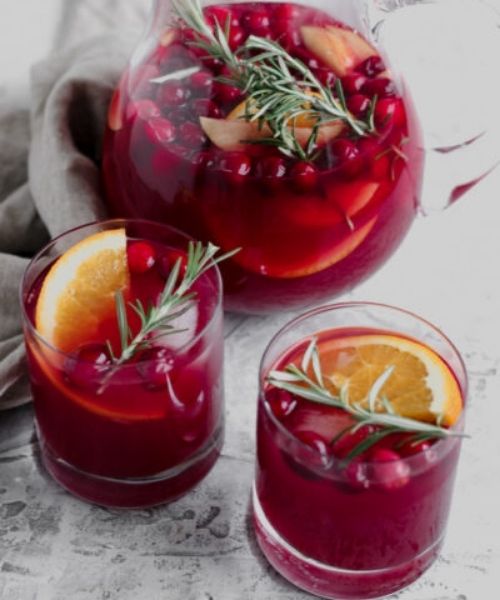
Recipe provided by kaleenaskitchen.com.
The time of year has come for all the fun treats and holiday cocktails. This cranberry orange holiday Sangria is the new holiday favourite among the festive cocktails list! It is a perfect mix of white wine, cranberry vodka, cranberry juice, and orange juice.
5. Gingerbread Martini Christmas Cocktail
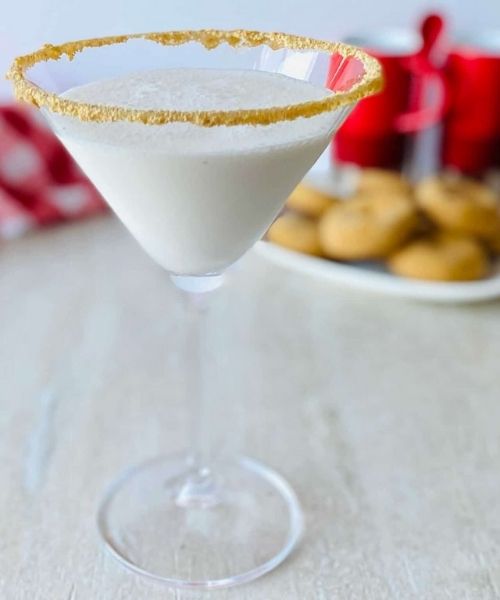
Recipe provided by aubreyskitchen.com.
Is it that time of year where you want to cozy up by the fire in your pyjamas while enjoying a delicious Christmas Cocktail? This gingerbread martini recipe is a delightful Christmas drink with Baileys, perfect for your pyjama mood. Are you hosting a festive party? Then it is also the absolute best and festive Christmas Cocktail to enjoy with friends and family.
6. Sugar Cookies for Santa Cocktail (Boozy Christmas Eve Drink)
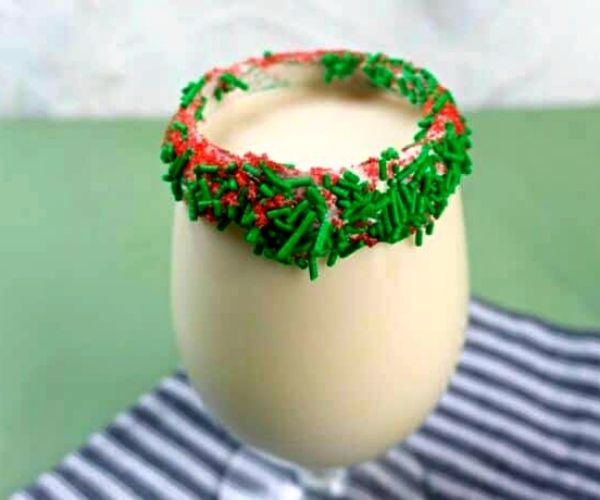
Recipe provided by kimandkalee.com.
Santa is sure to love this boozy Christmas Eve drink that is both sweet and festive! The sugar cookies for Santa cocktail is great for a holiday party or movie night too!
7. Cranberry Festive Cocktail
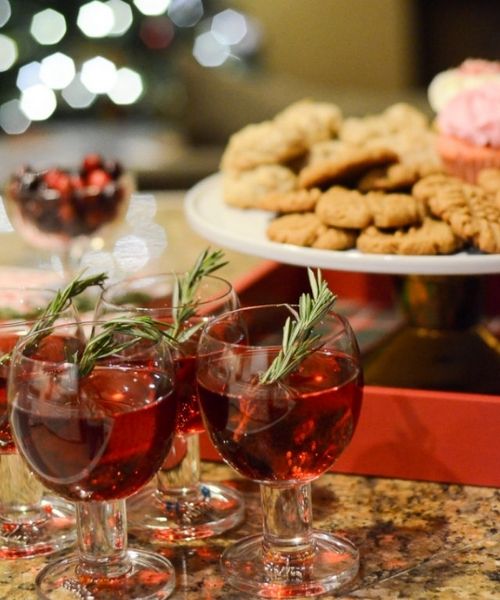
Recipe provided by thegiftedgabber.com.
If you are looking for an easy Christmas cranberry cocktail, you are in luck! This cocktail is the easiest drink you can pour – made of vodka with cranberry juice.
8. Whiskey Blood Orange Smash

Recipe provided by saporitokitchen.com.
This whiskey blood orange smash is one of the best winter cocktails. Fresh blood orange juice is mixed with rosemary-infused simple syrup and whiskey, then topped off with fizzy ginger beer.
9. Peppermint Piña Colada

Recipe provided by theblondcook.com.
Traditional Piña Colada gets a festive twist in these delicious peppermint Piña Coladas spiked with rum and peppermint schnapps! Adding a little grenadine for the pretty pink colour is optional, and the presentation with the crushed candy cane rim makes it look more festive.
10. Grinch Christmas Cocktail
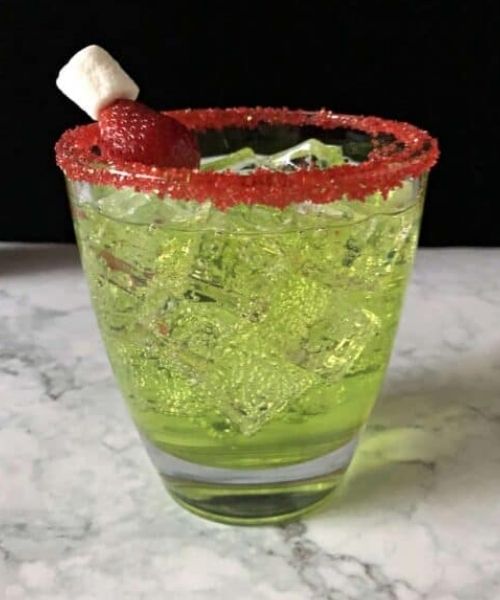
Recipe provided by sulaandspice.com.
How could we let the month go by without a nod to our favourite holiday grouch, the Grinch himself? Let’s give the man what belongs to him and make a lemony drink. Mr Grinch is a more casual kinda guy, so feel free to serve it on the rocks in a tumbler type glass.
11. Coquito: Puerto Rican Coconut and Rum Festive Cocktail
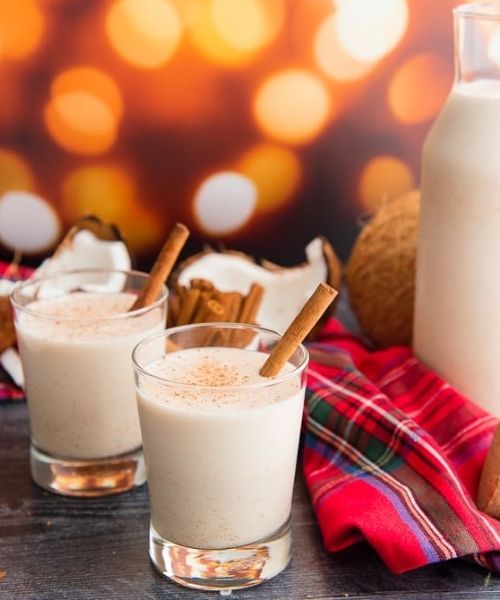
Recipe provided by senseandedibility.com.
Coquito translates to “little coconut” in English. It is a drink with a lil’ bit of coconut and a whole lotta rum. Puerto Ricans serve this creamy libation during the holiday season. Technically, you can make it whenever you want to, but, traditionally, it is served beginning at Thanksgiving through to Three King’s Day on January sixth.
12. Advocaat Egg Liqueur
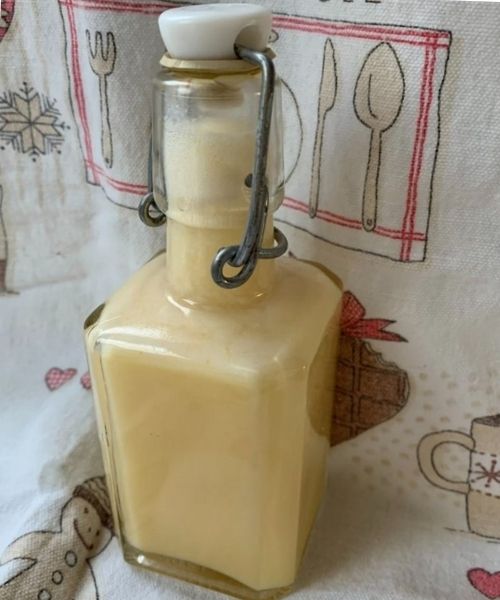
Recipe provided by vividlychristmas.com.
If you don’t want to buy commercial Advocaat from the store, you can easily create a homemade version yourself with this recipe. It is also a grateful recipient of leftover egg yolks.
13. Wassail

Recipe provided by fluxingwell.com.
If you heard of wassail in the old traditional English carol, know that it is a hot beverage that some people still serve during the holidays. There are many variations of this festive cocktail, and this version is non-alcoholic. It’s the kind of recipe you can easily tweak to accommodate personal preference and the ingredients you have on hand.

14. Jack Frost Cocktail
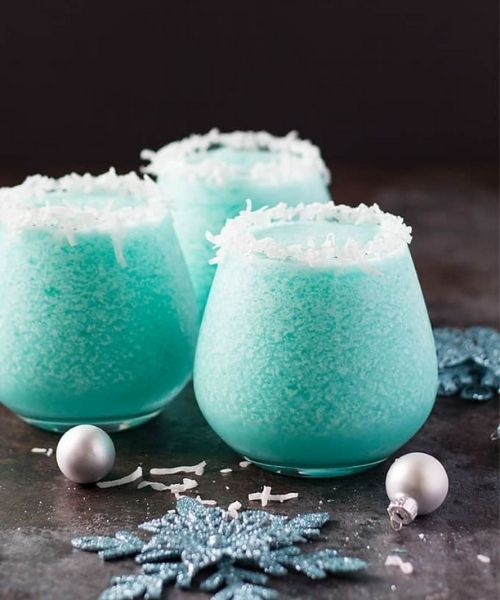
Recipe provided by theblondcook.com.
A Jack Frost cocktail tastes sweet, tropical and Christmas-y, all at the same time! If you don’t want an icy cocktail, you can also make a martini. Shake the vodka or rum, pineapple juice, cream of coconut and blue curacao in a shaker with ice, and strain into a martini glass.
15. Kinderpunsch: Non-Alcoholic Warm Punch

Recipe provided by foodfolksandfun.net.
Apple cider, orange juice, cherry juice and warm winter spices like cinnamon, cloves, and star anise make this the best warm Christmas Kinderpunsch recipe!

16. Chocolate Amarula Festive Cocktail

Recipe provided by greedygourmet.com.
The Amarula cream liqueur adds an irresistible fruitiness to this strong, creamy cocktail, complemented with dark chocolate. In short, it makes one heck of a festive cocktail that bursts with South African flavours!
17. Easy Gluhwein Recipe (Mulled Wine)

Recipe provided by wowitsveggie.com.
Gluhwein is a trendy holiday and Christmas drink all over Europe, particularly in Austria and Germany! When you make mulled wine, you want to keep an open mind. Make it the authentic or traditional way first, and then play it up with flavours and spices to suit your tastes.
18. Peppermint Mimosa {Peppermint Bark Cocktail)

Recipe provided by cocktailswithclass.com.
Mimosas are typically fruity cocktails with either classic orange juice or cranberry juice. Give these fantastic festive cocktails with champagne a try and see what you think! I bet you they are a new addition to your holiday drinks menu!

19. Brandy Alexander Cocktail
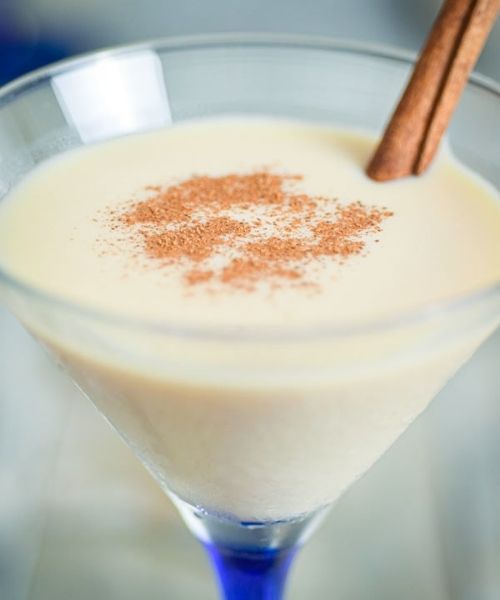
Recipe provided by inthekitch.net.
A Brandy Alexander cocktail is a rich, slightly spicy drink with notes of cinnamon and chocolate. It is almost like a more booze-forward version of the classic hot cocoa (except for the hot part).
20. Hot Cocoa Bombs with Marshmallows
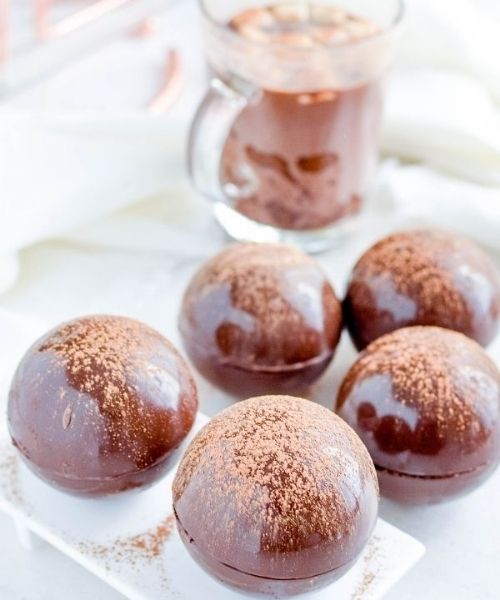
Recipe provided by creativegreenliving.com.
Not quite a ready-made cocktail, but don’t you love to place a chocolatey cocoa bomb at the bottom of a mug, pour hot milk over it and see it explode into a magical, chocolatey drink with marshmallows and toppings floating in it? Here is how to make those bombs. You are welcome!
21. Candy Cane Jello Shots
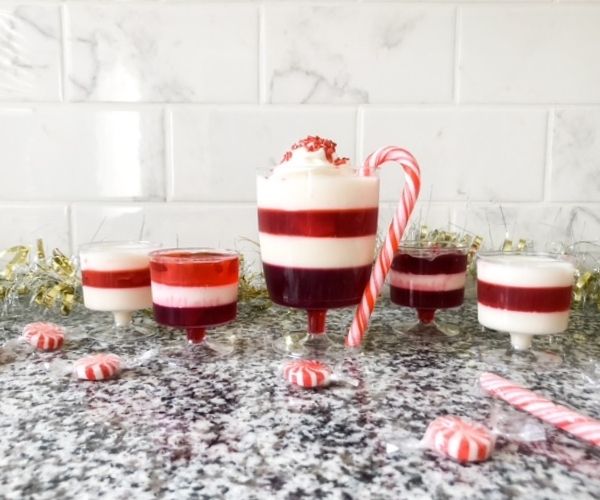
Recipe provided by cocktailswithclass.com.
If you’re looking for a fun and festive shot to serve at your Christmas party this year, look no further than candy cane jello shots. They are easy to make, delicious, and sure to get everyone in the holiday spirit!
22. Pomegranate Lime Spritzer Festive Cocktail

Recipe provided by mapleandmango.com.
The Pomegranate Lime Spritzer cocktail is incredibly refreshing and made with a few simple ingredients. Besides, it does not contain any refined sugars or syrups, but only a little juice. It would be nice to have a refreshing cocktail to pair with the tons of sweet goodies during the holiday season!
23. Chocolate Peppermint Martini
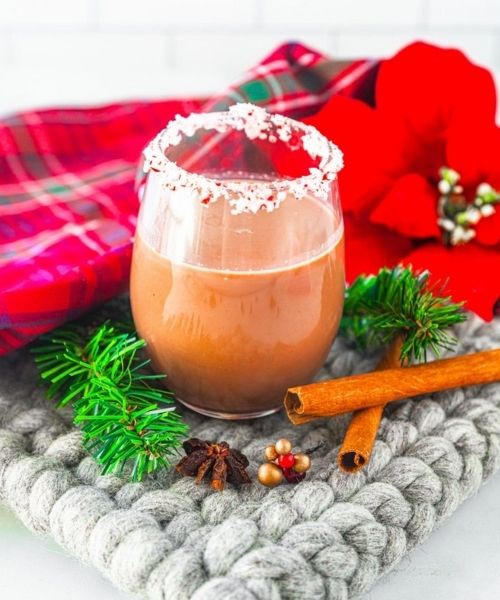
Recipe provided by wowitsveggie.com.
The perfect blend of flavours in this peppermint martini recipe comes together to make a lovely holiday beverage.
24. Energising Vegan Christmas Spiced Hot Chocolate
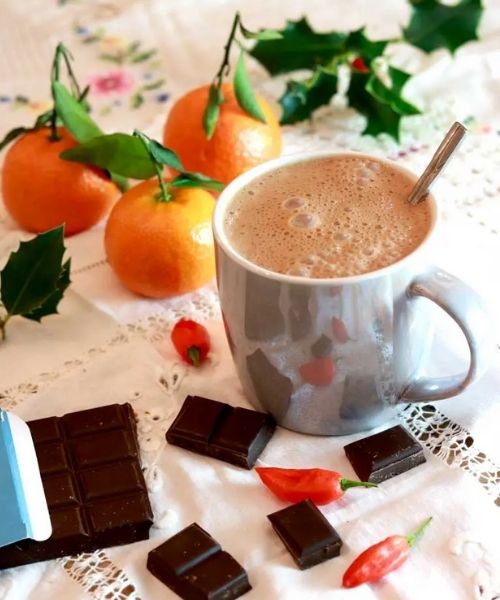
Recipe provided by theveganlarder.com.
This Energising Vegan Christmas Spiced Hot Chocolate is thick, heart-warming and full of energising flavours and spices, perfect for the cold weather. It has the wintery spices cinnamon and nutmeg, with the extra kick of chilli (if you want!) It also happens to be the perfect Christmassy drink to sip when you are packing up all your presents.
25. Keto Sugar Free Eggnog

Recipe provided by healthywithjamie.com.
The cherry on top is keto-friendly eggnog made with almond milk and heavy cream – a healthy choice for the holidays or anytime! A drink with a long history in Europe, the mother of all festive cocktails and one that screams Christmas the most! Plus, this is a clean, low carb, sugar and gluten-free version. Enjoy!

What are your special recipes for festive cocktails?
Even if you were to make one drink every day, you have your festive cocktails fill provided through December until Christmas. But there is nothing better than sharing those you liked best with your family and friends that might visit you at the end of the year.
Which are your favourites? What other cocktails are your speciality? Please share and enjoy!
Have a wonderful Christmas and a truly Happy New Year!



Cocktail Recipes (Alcoholic or Not) To Accompany Your Festive Dinners
The post Festive Cocktails: 25 Recipes For Your Christmas and New Year’s Celebrations appeared first on The World Is an Oyster.
]]>The post How To Make Homemade Chocolate From Scratch appeared first on The World Is an Oyster.
]]>The Best Chocolate Is Always Homemade!
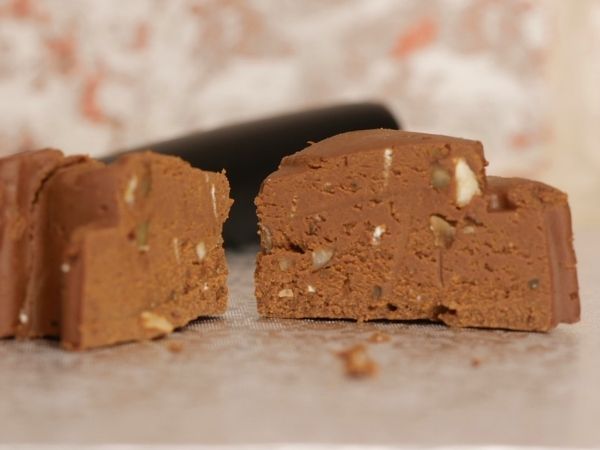
Homemade chocolate is the most delicious treat mom used to make when I was a child. Using simple ingredients and requiring little time and effort, homemade chocolate is easy to make from scratch, and the taste is divine!
The velvety softness and aromas will make you fall in love with it and prefer it over the classical bars, guaranteed!
This post may contain affiliate links, which means I will receive a commission if you purchase through my links at no extra cost to you. Please read the full disclosure for more information. Thank you!
Mom always saved it for special occasions, Christmas, Easter or birthdays, making it more desirable.
These days, homemade chocolate would make a perfect Valentine’s Day treat or gift or a unique addition to the special meals you would prepare for your loved ones on this occasion.
I make this sweet treat rarely, but I always prefer the scratch version rather than melting another already-made chocolate or making fudge.
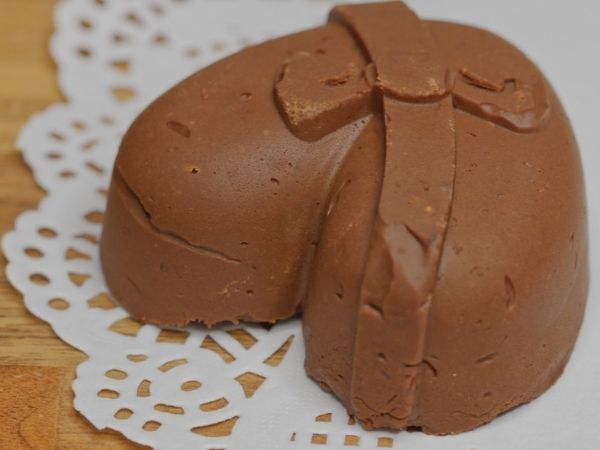
Homemade Chocolate VS Fudge
Fudge might be the closest version to homemade chocolate, but it is not the same thing. The difference is the proportion of sugar used in fudge – way too much for my taste!
When I moved to the UK, I visited a candy shop and witnessed their fudge making. Although the location was picturesque and the fudge business very successful, I lost interest in the demonstration when the makers emptied an entire sack of white, refined sugar in the massive bowl they used for making fudge.
Anyone who cares the slightest bit about their health knows that refined sugar is a no-no. I will not debate here; there are enough facts easily accessible on the internet to make an informed choice.
I prefer coconut sugar for two main reasons: it is less refined than white sugar and is a healthier option than artificial sweeteners!
Besides, I always use it in small quantities. I never liked anything sickening sweet, and I understand that sugar is not a preservative, although there are enough people who believe so!
If you add 2kg of sugar to a kilogram of fruit when you make jam, for instance, it will not preserve it for longer but will surely make the jam sickeningly sweet!
Likewise, I use reduced sugar quantities in baking; I would rather taste other flavours besides sugar in my cakes!
Homemade Chocolate VS Chocolate Bar
Although I love dark chocolate, I am very selective with the brands I choose to buy. A sickly sweet one won’t do!
In time – and persistent tasting (Oh, I know, I was talking about health barely a minute ago, oops!) I settled mainly with German/Swiss/Austrian chocolate producers. And I will always pay a few pence extra for quality than still paying and not enjoying a bar of chocolate!
I want to feel the taste of cacao in my chocolate and distinct flavours, not tons of sugar that would diminish any other savour!
Because I am picky, I make my chocolate the way I fancy, and this offers me a variety of aromas to enjoy.
I love the punch pepper or chilly gives to chocolate, just as I enjoy a citrusy flavour or a boozy one. Plus, I relish hazelnuts, dried fruits or nougat crumbs in my chocolate.
It is so easy to adapt the recipe, and creativity is essential!
Who can say making homemade chocolate from scratch is no fun when you are free to experiment all you like?
It might get a bit messy in the process, but this is cooking: you are in your kitchen, not in a pharmaceutical production line! Enjoy the fun part and leave the chores for later! Or even better – persuade someone else to clean up; after all, you’ve already done your bit!
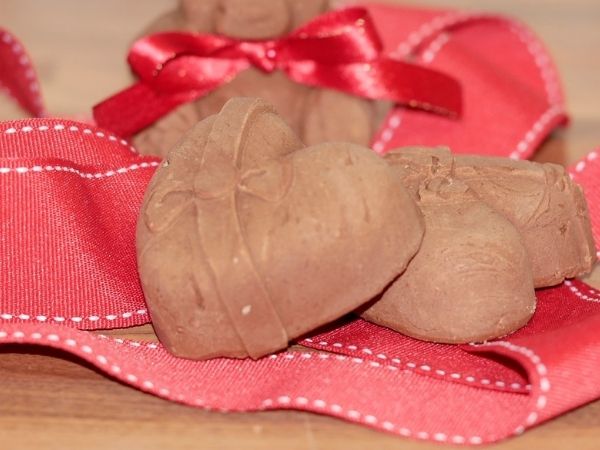
Ingredients:
Water
Organic coconut sugar
Organic cacao powder
Powdered milk
Unsalted butter
Flavours to your taste
Roasted hazelnuts (optional)
Method:
In a pan, boil the water with sugar for eight minutes until it becomes syrupy.
Add the cacao powder, mix well and continue boiling at low temperature for another four minutes. Stir occasionally so that it does not crystalise or stick to the pan.
Remove the pan from the hob, add the powdered milk and mix well.
Depending on the type of powdered milk used, you might want to grind it before if it is too lumpy.
During this step, you will see how the powdered milk quickly absorbs the syrupy composition and thickens. The thickness will balance when you add butter. Keep mixing until all lumps dissolve and the consistency is of thick cream.
Add the butter and mix well. Optionally, add roasted crushed hazelnuts, dried fruits, or anything else you might think of that goes well with chocolate.
Add flavours of your choice, and feel free to experiment with small bits first to see if you want to go for that specific taste.
My favourite flavours are rum essence with a dash of ground pepper or orange essence with pepper. The choice is yours!
At this point, the composition should be malleable enough to pour in silicone moulds if you decide to go for unique occasion shapes.
If you are going for simple bar shapes, place parchment paper on a tray, empty the content from the pan and level nicely with a spatula.
Cool in the fridge for at least 4-6 hours, depending on the layer’s thickness. Overnight is better!
If you used shapes, carefully remove your chocolate from the silicone moulds. Otherwise, cut bars of desired thickness and enjoy when you are craving something sweet!
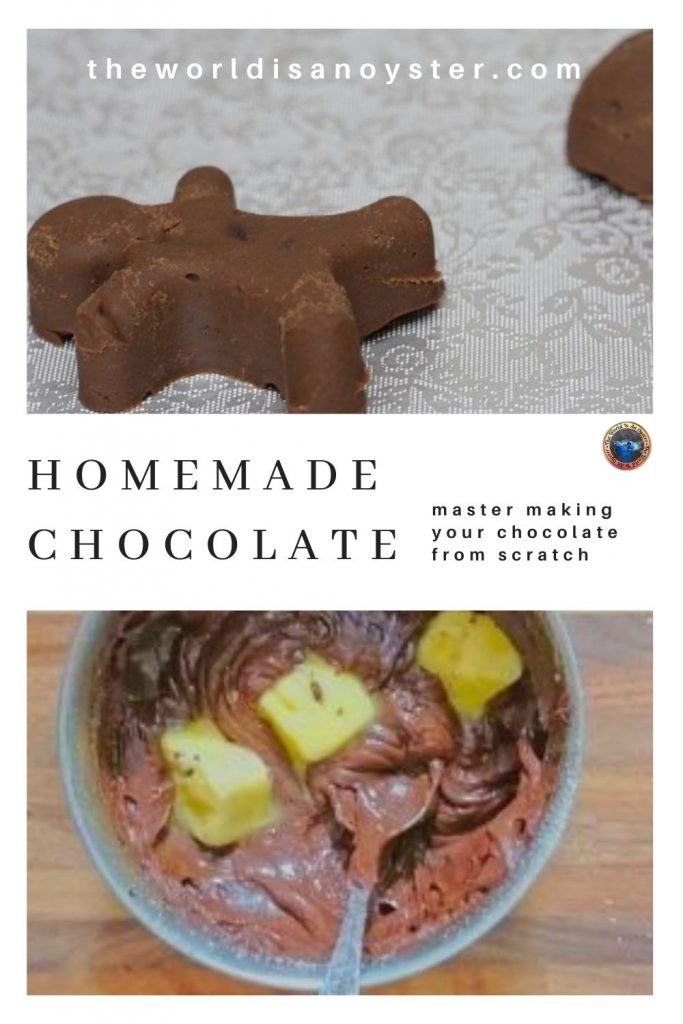
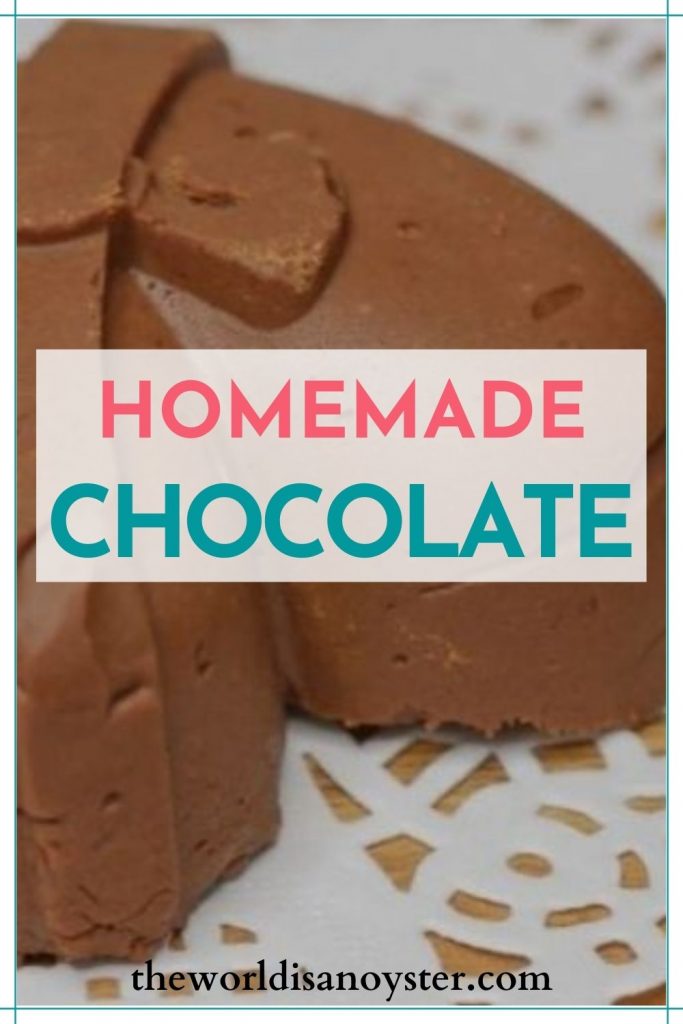
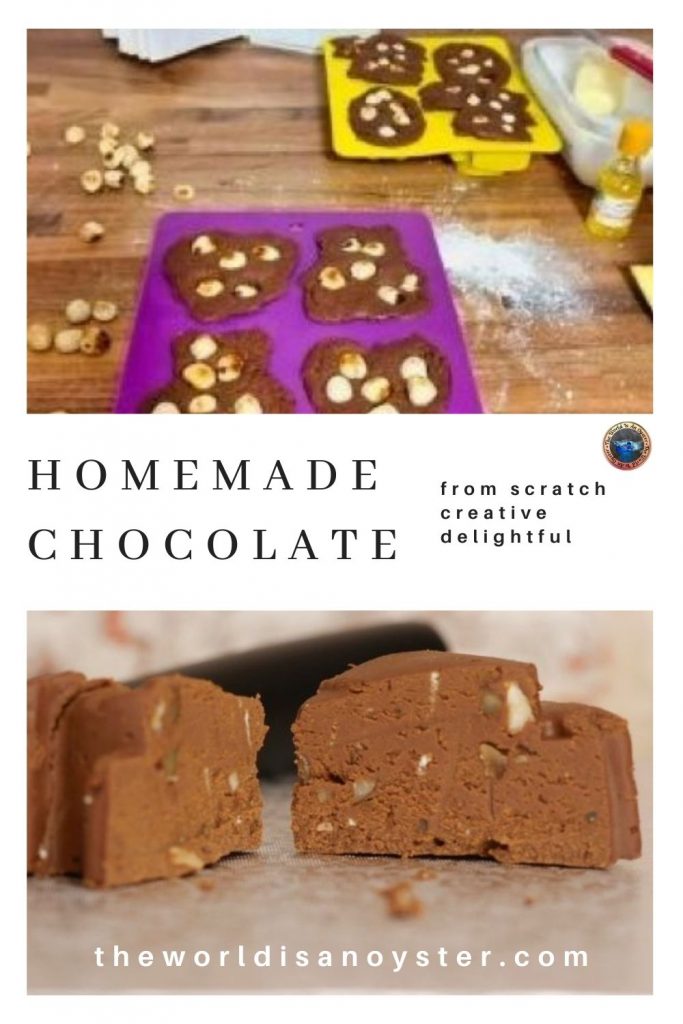
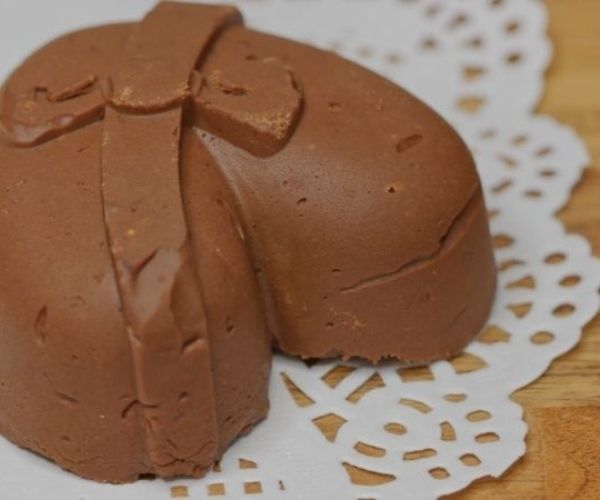
Homemade Chocolate
Ingredients
- 200 ml water
- 200 g coconut sugar organic
- 50 g cacao powder organic
- 200 g powdered milk (extra 30-50 g if needed)
- 100 g unsalted butter
- flavours of choice
- 60 g roasted hazelnuts optional
Instructions
- In a pan, boil the water with sugar for 8 minutes, until it becomes syrupy.
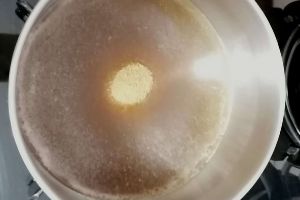
- Add the cacao powder, mix well and continue boiling at low temperature for another 4 minutes. Stir occasionally, so it does not crystalise or stick to the pan.
- Remove the pan from the hob, add the powdered milk and mix well. Depending on the type of powdered milk used, you might want to grind it before if it is too lumpy.
- During this step, you will observe that the powdered milk will quickly absorb the syrupy composition and thicken. Keep mixing until all lumps dissolve.
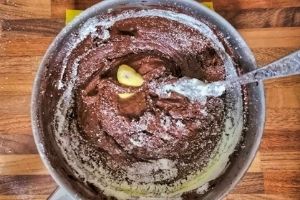
- Add the butter and mix well. Optionally, add roasted crushed hazelnuts.
- Add whatever flavours you wish. Try with small quantities first to see if you want to go for it. My favourite flavours are rum essence with a little dash of ground pepper or orange essence with pepper. The choice is yours!
- At this point, the composition should be malleable enough to pour in silicone moulds if you decided to go for special occasion shapes. Larger moulds work better than smaller; the Christmas shapes I tried were not quite successful because of this!
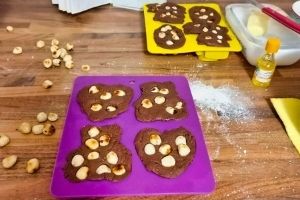
- If you are going for simple bar shapes, place a parchment paper on a tray, empty the content from the pan and level nicely with a spatula.
- Cool in the fridge for at least 4-6 hours, depending on the layer's thickness. Overnight is better!
- If you used shapes, carefully remove your chocolate from the silicone moulds. Otherwise, cut bars of desired thickness and enjoy when you are craving something sweet!
Notes
The Best Chocolate Is Always Homemade!
The post How To Make Homemade Chocolate From Scratch appeared first on The World Is an Oyster.
]]>The post Walnut Snails Recipe Inspired by a Famous German Pastry appeared first on The World Is an Oyster.
]]>How the Walnut Snails Recipe Made It to Mom’s Recipe Book
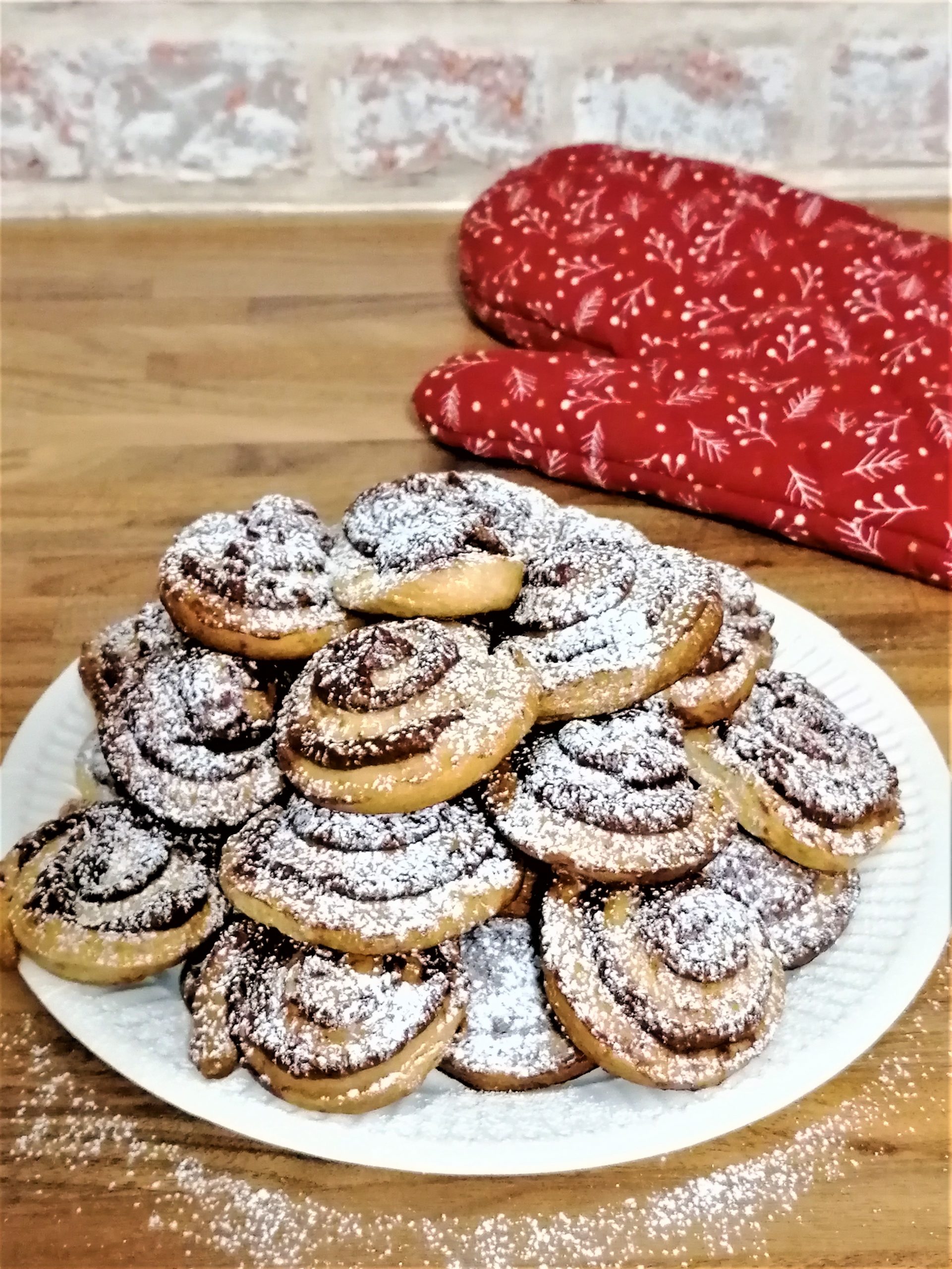
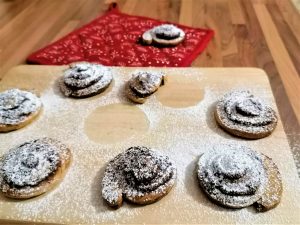
Mom’s walnut snails recipe is an adaptation of the Nussschnecken desert which is basically a sweet bun of Saxon origins, filled with nuts and cinnamon. Schnecken is the German word for snails, which suggests the unique shape of this finger-licking delicious walnut filled treats.
Given Transylvania’s Saxon heritage, our cooking and especially baking have seen a tremendous German influence over the centuries.
When I was a child, mom’s best friend was a German lady who used to bake weekly. She would always invite us to keep her company while she was dancing between the island in her massive kitchen and the oven, mixing ingredients and filling tray after tray. She was not dancing-dancing, but the elegant way she moved, her precision and amazing skills made it look like dancing in my awe-filled eyes.
Of course, the good lady always shared her recipes and many baking secrets with mom, who later shared everything she’d learnt with her kids – my sister and I.
Essentially, my mom had learned how to bake from Frau Francu – that was the lady’s name. Mom filled her first recipe book with mostly German recipes during that time, such as this delicious apple cake, one of my favourite desserts for special occasions.
I used to sneak into Frau Francu’s large kitchen and count the seconds until the first batch of whatever cake she was baking would come out of the oven.
Because I was born without patience, I could never wait for the cakes to cool properly. I would always pinch at least one and run outside to cool it in the wind (lame excuse, I know!)
I fondly remember how Frau Francu would bake four or five different and complex cakes in half a day every Saturday. She would always giggle as I was sneaking in to pinch samples from her trays. The lovely lady had no children and loved to see me around, as impish as I was.
If I regret one thing from those good old times is that whenever Frau Francu wanted to teach me German, I would bolt out the door pretending that I needed to play in her vast garden.
I regretted that the minute the Romanian Revolution of 1989 changed our contemporary history and freed our country of communism. I was very young, still a teenager, but I would have had a chance to move to Germany a few years later and radically change my life.
Now, a few decades on, the only thing that is still preventing me from doing just that is again the fact that I can’t speak German. Although I am fluent in five other languages, I’ve lost the train to learn what should have been the most important foreign language to me.
Ironically, now I have the liberty to choose where I want to live, but the language barrier still makes the choice difficult. Ugh, one day …
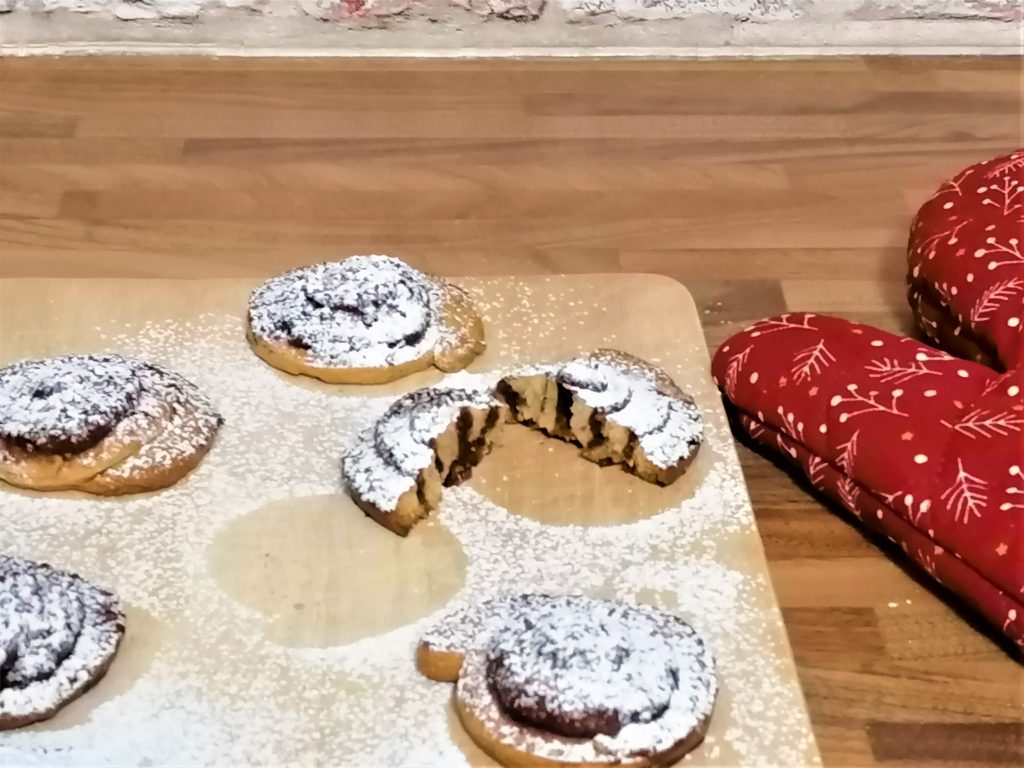
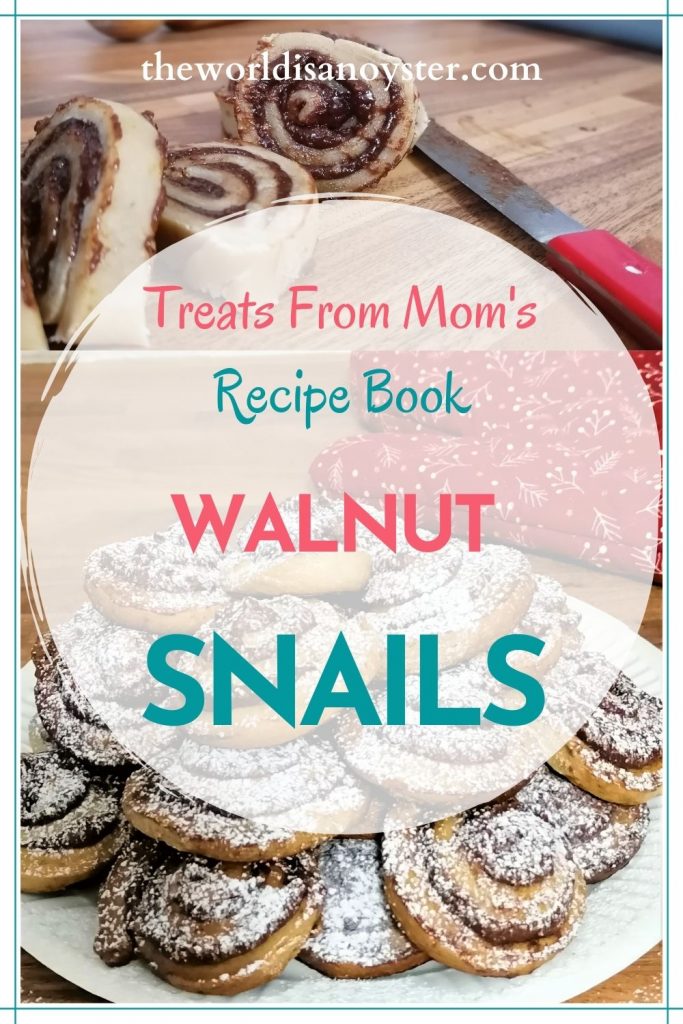
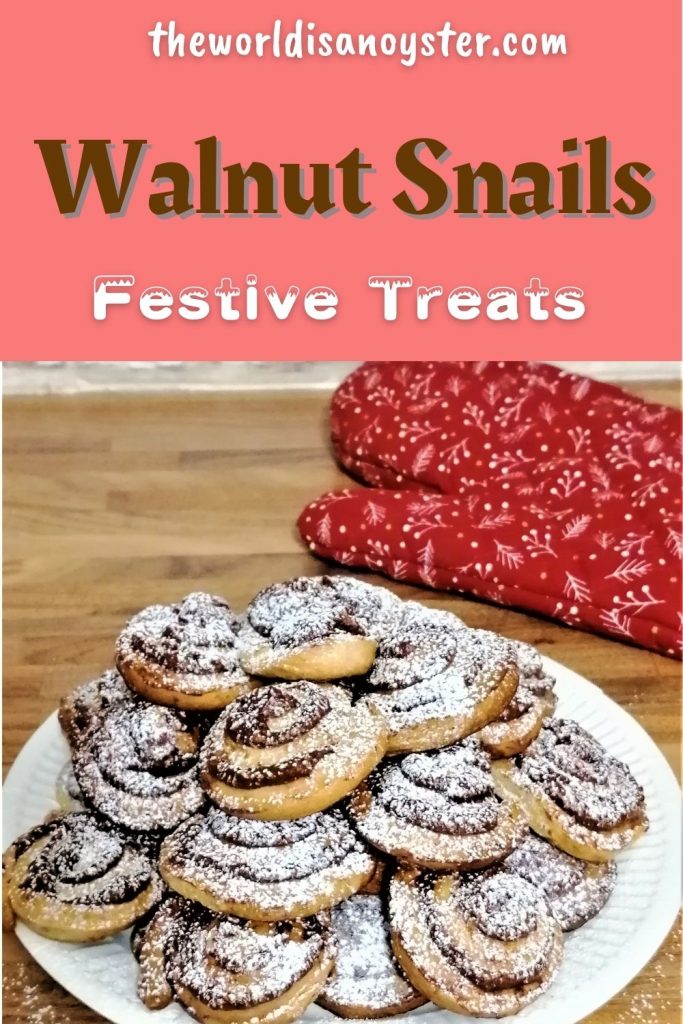
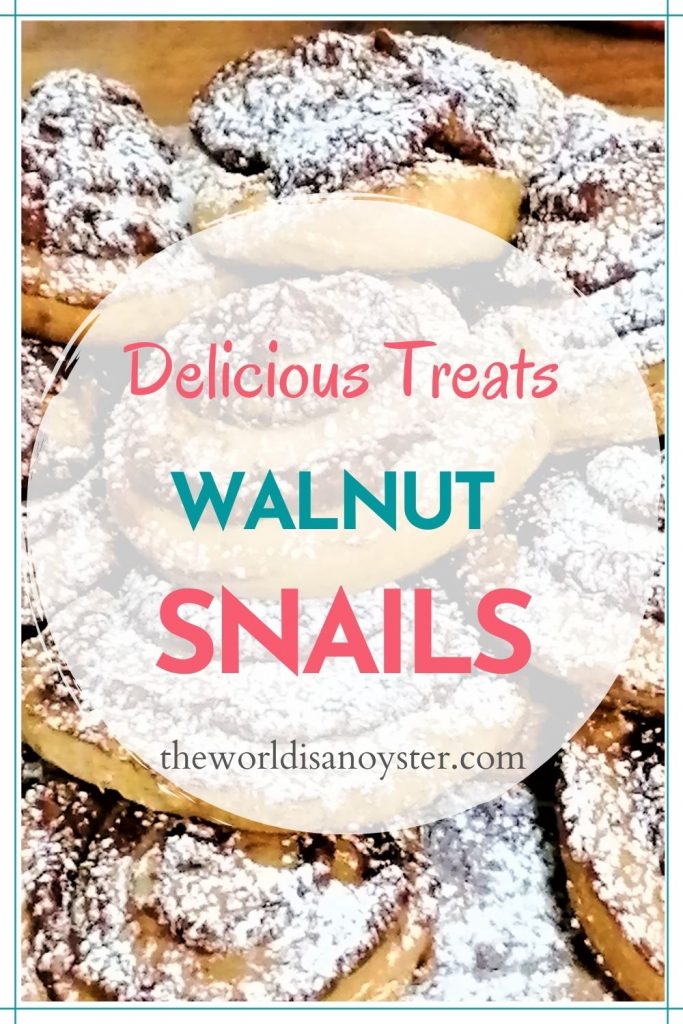
Mom’s Walnut Snails Recipe – Ingredients
The adaptation mom made of Nussschnecken means that instead of getting the giant, fluffy snails the size of a dessert plate, she would make them smaller and would not smother them in sticky sirup, so we could eat them the same way we’d eat biscuits.
I would always bake these treats around the festive winter season or at Easter time and all family anniversaries. We can never have enough of it!
Ingredients for the dough
400 g flour (I always use white organic)
100 ml melted organic butter
100 ml melted organic coconut oil
2 organic egg yolks (you will use the whites later, for the filling)
80 g organic coconut sugar (about 6-8 tbsp)
5 g dried yeast (1 tsp)
½ tsp ammonium bicarbonate
3-4 tbsp tepid unsweetened almond milk (to activate the ammonium bicarbonate)
Organic orange zest
A pinch of salt
Ingredients for the filling
150 g ground walnuts
2 tbsp organic cacao powder
1 tbsp ground cinnamon
2 egg whites + a pinch of salt
Rum oil essence
Preparation tips
The dried yeast requires a warm temperature and time to activate. For this recipe, use the lukewarm milk to activate the ammonium bicarbonate first, then pour it over the yeast mixed with sugar and one tbsp of the flour quantity. Cover with a dry towel and leave aside for about 20 minutes. When the time is up, you will observe that the yeast had dissolved and the pre-dough had increased in volume.
Secondly, any dough that uses melted oils needs refrigeration to solidify the oil molecules and make it easier to roll the dough. When your dough is ready, cover it in cling film, press it down to allow a quicker and thorough cooling and place it in the fridge for about 20 minutes. Meanwhile, you can prepare the filling.
As the title suggests, this recipe includes allergens.
Mom’s Walnut Snails Recipe
Equipment
- Large bowl/small bowl
- Baking tray
- Parchment paper
- Roller pin
- Hand held electric mixer
Ingredients
For the dough
- 400 g organic white flour
- 100 ml melted butter (cooled a bit)
- 100 ml melted organic coconut oil (cooled a bit)
- 2 pcs egg yolks (the whites needed for the filling)
- 80 g organic coconut sugar (approx. 6-8 tbsp)
- 5 g dried yeast (approx. 1 tsp)
- ½ tsp ammonium bicarbonate
- 4-5 tbsp tepid almond milk (unsweetened)
- 1 pcs orange zest
- A pinch of rock/sea salt
For the filling
- 150 g ground walnuts
- 5-6 tbsp organic coconut sugar
- 2 tbsp organic cacao powder
- 1 tbsp ground cinnamon
- 2 pcs egg whites (beaten stiff)
- A pinch of salt (for the egg whites)
- 1 vial rum oil essence (or 2 tsp rum)
Instructions
Prepare the dough
- In a bowl, use the lukewarm milk to activate the ammonium bicarbonate first, then pour it over the yeast mixed with sugar and one tbsp of the flour quantity.
- Cover with a dry towel and allow the yeast to activate for about 20 minutes.
- Add the tepid butter and coconut oil, egg yolks, orange zest and salt and mix until all ingredients incorporate nicely.
- Add the sieved flour gradually and keep mixing using your hand.
- Cover the dough with a piece of cling film, press it down and refrigerate for about 20 minutes.
- Divide the dough in two parts and roll each in a 2-3 mm thick sheet.
Prepare the filling
- While the dough is cooling, in a bowl mix the ground walnuts with sugar, cacao powder, cinnamon and rum.
- Separately, add a pinch of salt to the egg whites and whip until stiff. Use a large bowl and start with a lower speed until the egg whites foam, then increase the speed to maximum and continue whipping until they become firm.
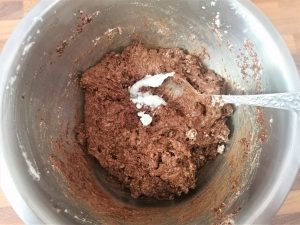
- Slowly incorporate the egg whites into the dry ingredients.
Prepare the snail shapes
- Preheat the oven to 180°C/356°F/Gas mark 4.
- Place parchment paper on the baking tray.
- Place half of the nut filling on the first dough sheet. Spread evenly, leaving about 2 cm filling-free at one edge.
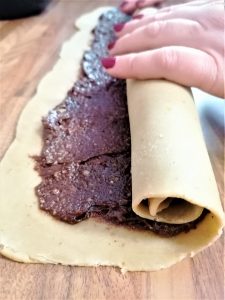
- Roll the sheet and cut 1 cm thick slices.
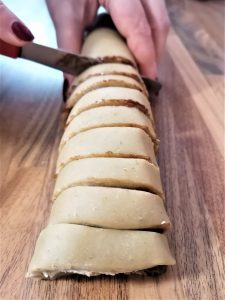
- Transfer the slices onto the baking tray, leaving enough space in between them.
- Bake for 10-15 minutes or until the dough turns golden brown.
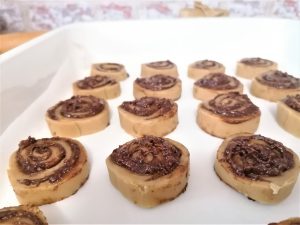
- Allow the first batch to cool and repeat the baking process until all the walnut snails are ready.
- Optionally, sprinkle with powdered sugar.
Notes
I hope you enjoyed reading this recipe. If you would like to see more, please check the Savour the Flavour section of this website or follow my Pinterest recipe board. Have fun baking!
How the Walnut Snails Recipe Made It to Mom’s Recipe Book
The post Walnut Snails Recipe Inspired by a Famous German Pastry appeared first on The World Is an Oyster.
]]>The post How to Make the Best Festive Appetizer: Beef Salad appeared first on The World Is an Oyster.
]]>A Romanian Salad, French in Name and Historically Having Almost Nothing to do With What’s in the Title!
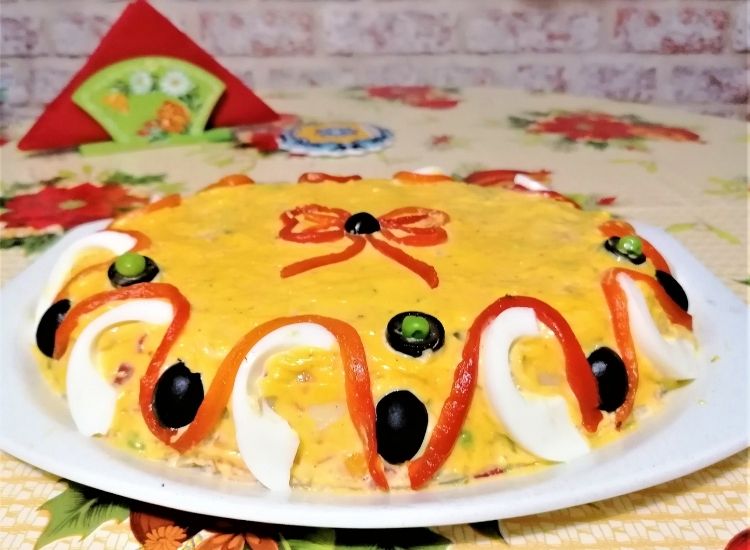
If it sounds a tad confusing, here’s the disambiguation:
Romanians like many things but absolutely LOVE food; therefore, they create dishes that everybody loves to try and often become traditional foods for holidays. A beautifully looking festive beef salad is an appetizer always present on the Christmas, New Year’s Eve and Easter festive table!
This post may contain affiliate links, which means I will receive a commission if you purchase through my links at no extra cost to you. Please read the full disclosure for more information. Thank you!
The story of Boeuf Salad, as we call it, has been initially a simple “game in mayo” dish about two hundred years ago. In time, the pheasant was replaced with beef and the French name (Boeuf) stack for unclear reasons.
It might have to do with French being spoken mainly among Bucharest’s high society in the twentieth century’s interbellum period. In that era, Bucharest, the capital city, was frequently called Little Paris.
Today, beef salad has any meat in it, and I usually prepare it with chicken.

Now, because Romanians are also incredibly superstitious, there is a strong argument against eating chicken on the first day of the year. Unless you want to be going backwards the entire year, sort of like chickens scratching the ground and thus creating the back-walking illusion!
No, we don’t want that! This is why we eat fish on January first so that we are slick and quick in our endeavours like a fish in the water!
If the argument is not strong enough, you can still use chicken in your Boeuf, but after the year we’ve had, are you really willing to take the risk?
Boeuf salad is mainly an appetizer made with boiled vegetables (potatoes, carrots, celeriac, peas, parsley) mixed with pickles (gherkins, bell-peppers) and a dollop of mayonnaise.
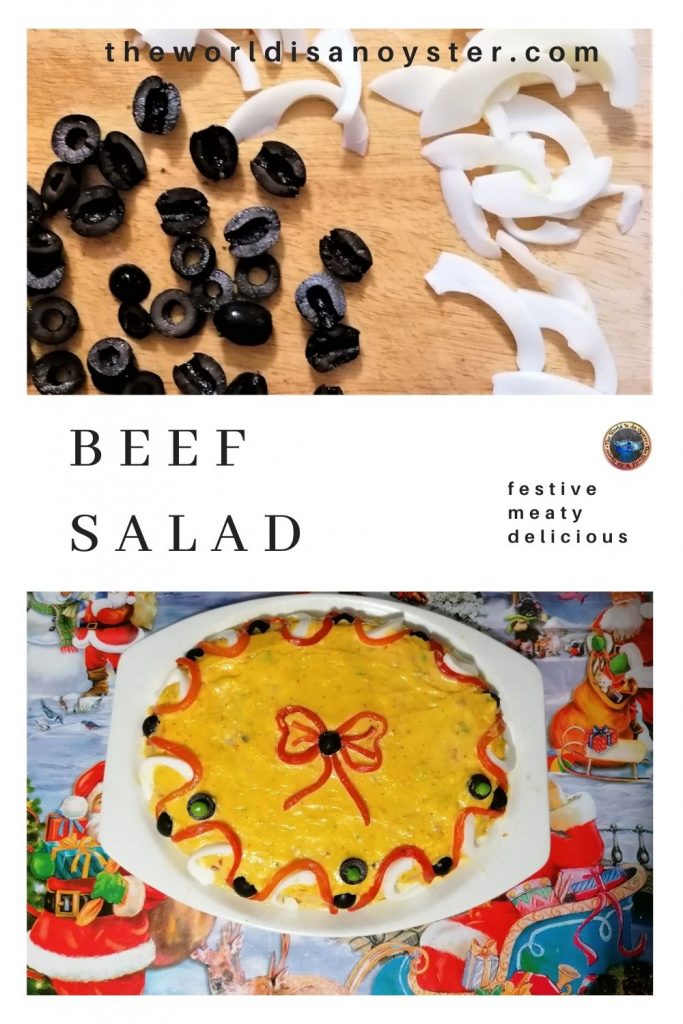
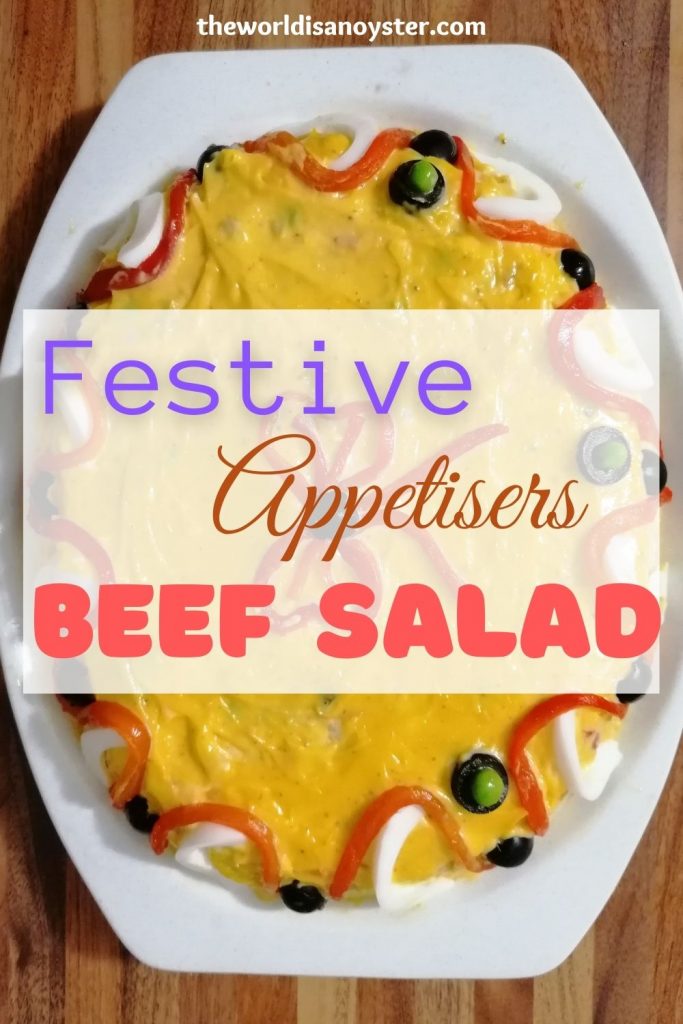
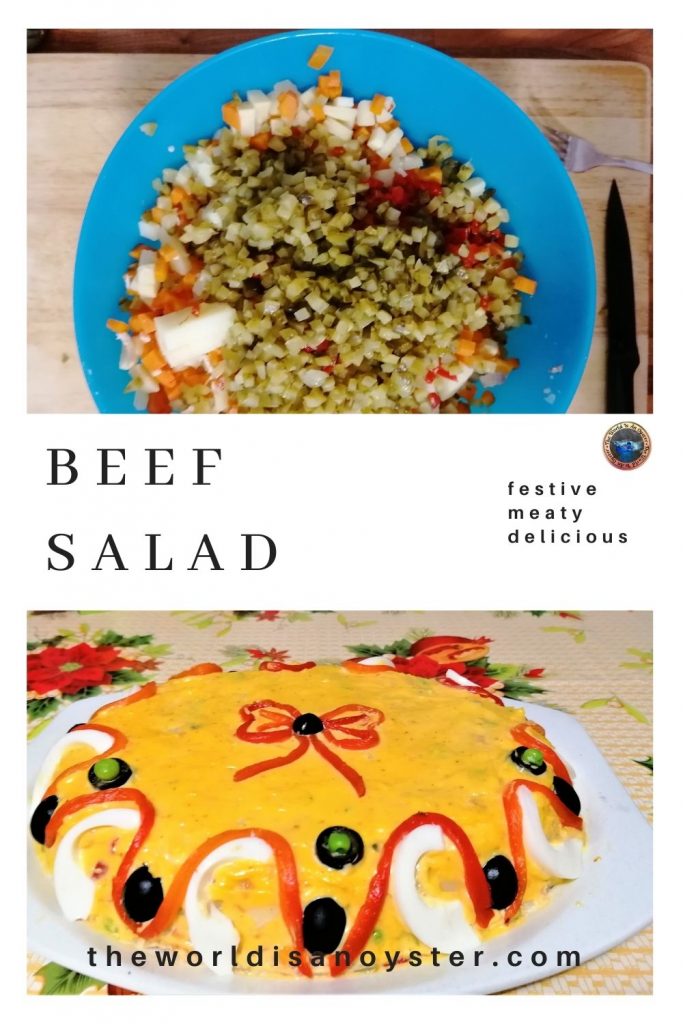
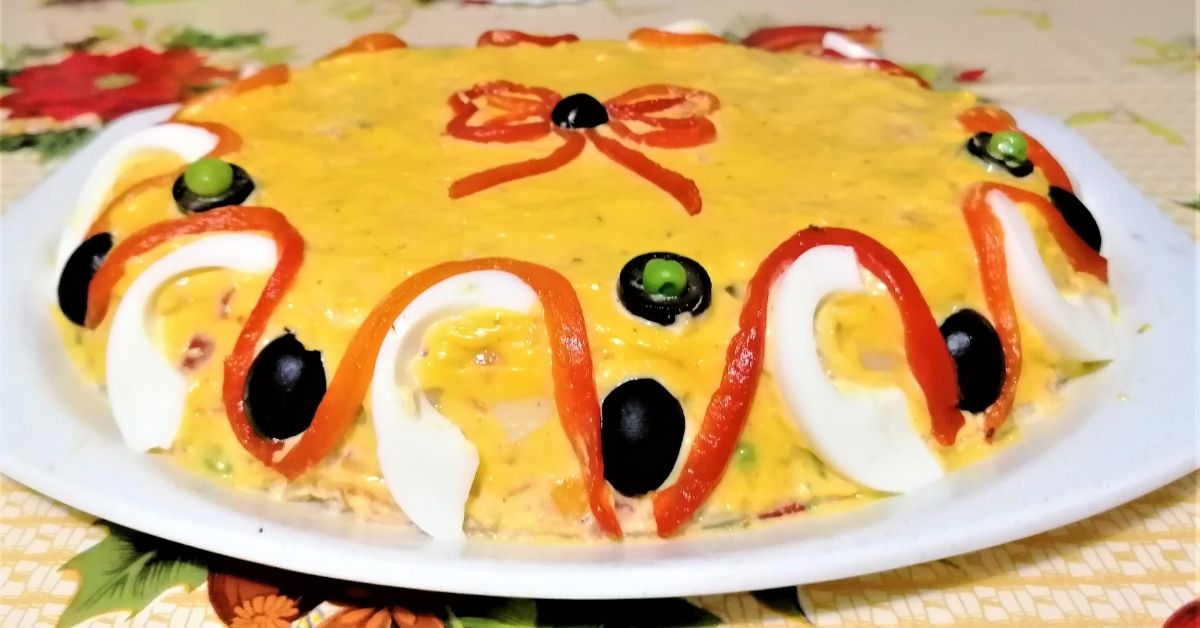
The best part of making this festive beef salad is that anyone can release their inner artist and go crazy with decorations. I like to use halved olives, boiled egg whites, finely cut pickles, but the list does not stop here. Be creative; it’s fun!
What is important is that a large plateau of this unique appetizer is always present on each Romanian festive table, and every New Year’s Eve dinner starts with it. So does the Easter dinner!
Any normal year, Romanians would go crazy partying until the sun would come up on January first. The restaurants, hotels, boarding houses and any other place that can hold festive parties would be fully booked since August.
In the crazy second year of the pandemic, this will not happen for the second time in our recent history. It sounds surreal and completely alien. But it does not mean that we won’t set the table in the evening, imagine we’re at a monster New Year’s Eve party, the music is blasting in the speakers and the fireworks will go any minute above our house!
We better make it be the last time as well! Nobody will forget these past two years, but we should learn something from history and never allow a repeat!
Ingredients for festive beef salad
Potatoes
Pickles (bell peppers, cornichons)
Diced beef
Carrots
Celeriac
Parsnip
Green peas
Mayonnaise
Pitted olives
Eggs
Spices (salt, black/green pepper)
Method
In a large pan, boil the meat first, changing the water at least once. If you use diced beef, the boiling time should be at least 10-15 minutes. If the beef chunk is bigger, it is better to dice it into smaller pieces.
Add the peeled carrots, celeriac (quartered), parsnips and potatoes and boil until ready. Check with a fork that everything is thoroughly cooked.
On a large chopping board, chop all the vegetables (after they cool down) and mix in a large bowl (or a large pan.)
For food safety, use a different chopping board to chop the meat. Place the beef into the mixing bowl with the vegetables.
Drain the pickles, save a few for decorating and finely chop the rest. Squeeze out the excess liquid before adding them to the mixing bowl.
Finely cut long pieces of pickles and place them on a piece of absorbent paper. Leave aside until you get to the decorating part.
Boil the eggs for at least 6 minutes until hard, peel and remove the yolks. You will only need the whites, finely cut, to decorate the salad.
Cut the olives in halves or rings and leave them aside with the pickles.
Empty half of the mayo jar onto the chopped vegetables, add mustard, salt and pepper and mix with a large wooden spoon without crushing it too much.
Place the festive beef salad mix on a large plateau and use a knife to give it a beautiful, regular shape.
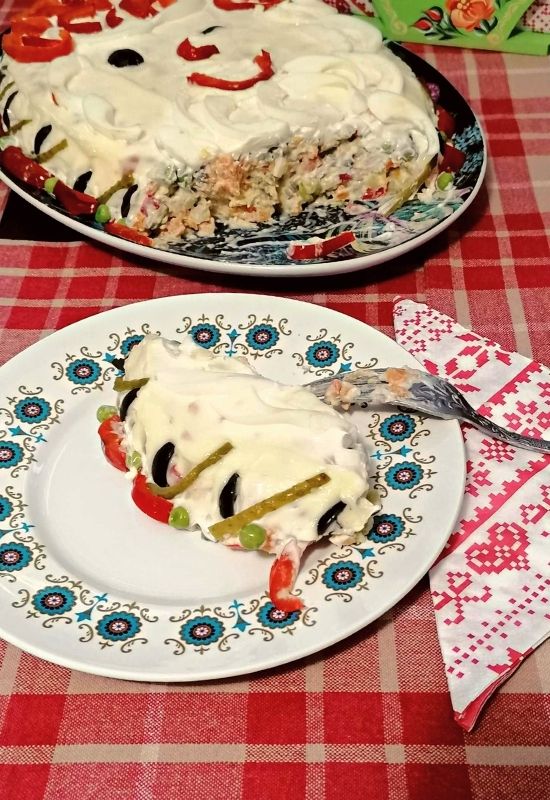
Use the rest of the mayo to cover the salad, top and side.
Decorate with the finely chopped pickles, egg whites, olives and boiled peas.
Refrigerate before use and serve it cold alongside the main dish.
Enjoy your festive beef salad and have a great holiday season!
Festive Beef Salad
Ingredients
- 6-7 large potatoes
- 4-5 carrots
- 1 celeriac
- 2-3 parsnips
- 300 g peas
- 500 g diced beef
- 1 jar mayonnaise (small, about 250 g)
- 2 tbsp mustard
- 1 jar pickled gherkins
- 1 jar pickled bell-peppers
- 15-20 pitted olives
- 1-2 eggs
- sea salt
- pepper
Instructions
- In a large pan, boil the meat first, changing the water at least once.
- Add the peeled carrots, celeriac (quartered), parsnips and potatoes and boil until ready. Check with a fork that everything is thoroughly cooked.
- On a large chopping board, chop all the vegetables (after they cool down) and mix in a large bowl (or a large pan.)
- For food safety, use a different chopping board to chop the meat. Place the beef into the mixing bowl with the vegetables.
- Drain the pickles, save a few for decorating and finely chop the rest. Squeeze out the excess liquid before adding them to the mixing bowl.
- Finely cut long pieces of pickles and place them on a piece of absorbent paper. Leave aside until you get to the decorating part.
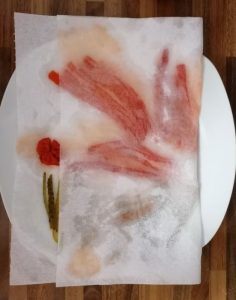
- Boil the eggs for at least 6 minutes, peel and remove the yolks. You will only need the whites, finely cut, to decorate the salad.
- Cut the olives in halves or rings and leave them aside with the pickles.
- Empty half of the mayo jar onto the chopped vegetables, add mustard, salt and pepper and mix with a large wooden spoon without crushing it too much.
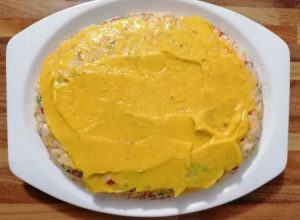
- Place the mix on a large plateau and use a knife to give it a beautiful, regular shape.
- Use the rest of the mayo to cover the salad, top and side.
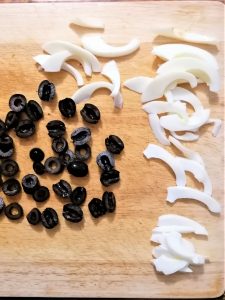
- Decorate with the finely chopped pickles, egg whites, olives and boiled peas.
- Refrigerate before use.

Notes
A Romanian Salad, French in Name and Historically Having Almost Nothing to do With What’s in the Title!
The post How to Make the Best Festive Appetizer: Beef Salad appeared first on The World Is an Oyster.
]]>The post Twelve Must-Try Christmas Treats From Around The World appeared first on The World Is an Oyster.
]]>Twelve Days Of Christmas
“On the first day of Christmas, my true love gave to me” the idea to bring together a few of the most famous Christmas treats from around the world.
This post may contain affiliate links, which means I will receive a commission if you purchase through my links at no extra cost to you. Please read the full disclosure for more information. Thank you!
Christmas is indeed the most wonderful time of the entire year. It is a time of reflection and remembering why we even celebrate Christmas in the first place. A time for being grateful for what we have, for being together with loved ones, for sharing the love for one another and of course, for eating the foods that we love. But most of all, it is the best time for giving!
Click the links to the recipes, have fun preparing some desserts and enjoy sharing them at your Christmas table!
In the most challenging hour of our generation, I hope you are well, healthy, happy and on Santa’s “nice” list.
P.S. I could never remember the order of verses in this carol, so I’m giving myself (and anyone else who might fancy it) a chance to get it right finally. Sing along the melody and enjoy your Christmas treats from around the world!
A Partridge in a Pear Tree
ROMANIA: COZONAC
Provided by https://theworldisanoyster.com/
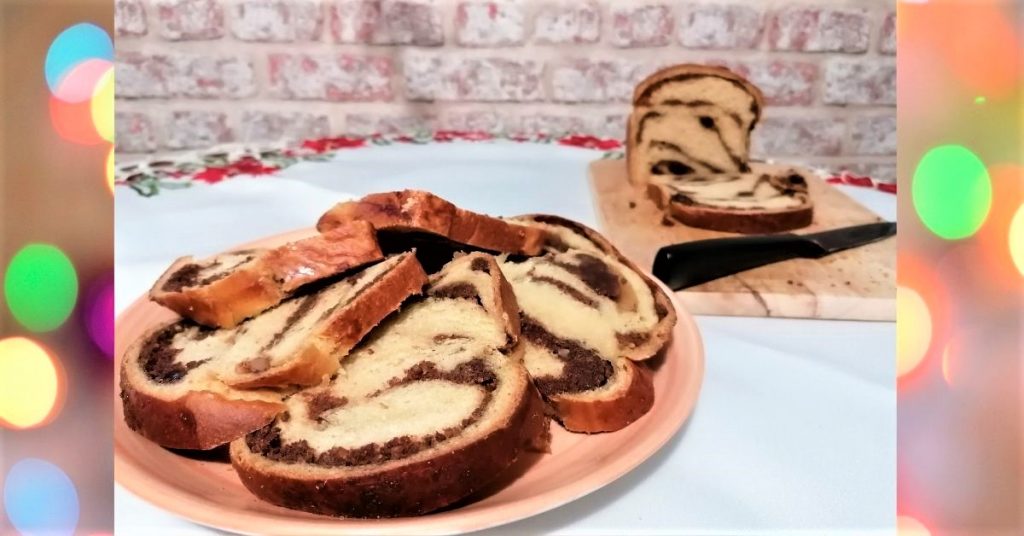
Cozonac is a beautiful Christmas culinary delight I grew up with as a child – a Romanian tradition that meant on each major holiday, mom would bake the best treat there could be. Each important religious holiday (be it Christmas or Easter), the house would smell incredibly good, filled with delightful flavours escaping from the oven. And I would wait impatiently for the festive dinner to finally savour the best treat created by humankind!

To me, cozonac is the best festive treat there can be, and I can never get enough of it! You can offer me the most elaborated sweet made by the most in-demand French pastry chef at a fancy king’s court, and I would always choose cozonac! Nothing beats the aromas that fill the air when you bake it and the taste offered by the combination of spices used in preparation!
Link to recipe here.
Two Turtle Doves
GERMANY: STOLLEN
Provided by https://mydinner.co.uk/
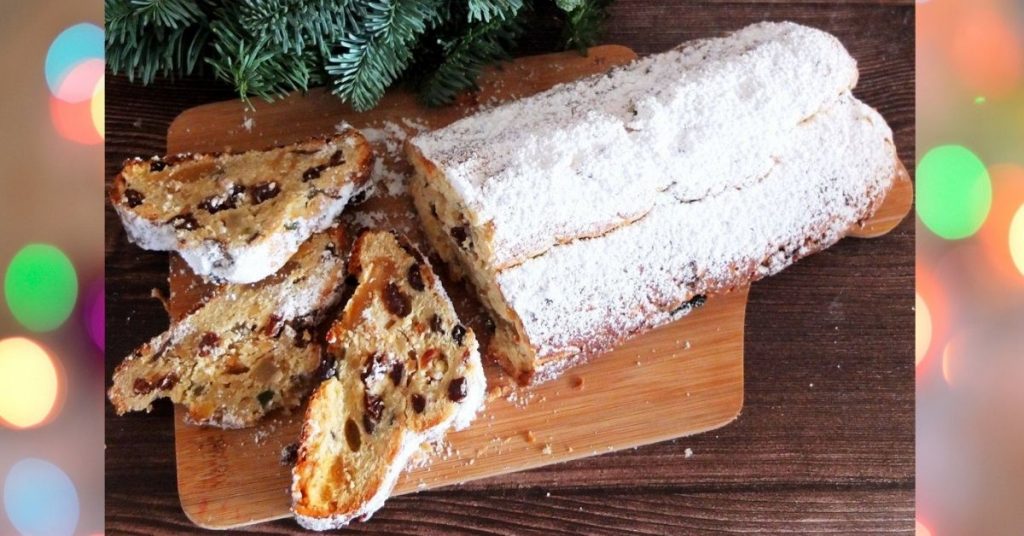
Do you want to learn how to make stollen? Great! I did too, so I asked my uncle Heinz, a retired German baker. He walked me through the steps of his German recipe. I am happy to share what I have learned!
A quick backstory: My father was born into a family of bakers in Bremen in the 1950s. His father was a baker, and his two brothers followed in his footsteps. Until recently you could visit the “Bäckerei Jünemann” in Bremen, but my uncle has now retired.
You will, of course, have heard of stollen – the white powdered German Christmas cake. It is available to buy in Lidl and Aldi at Christmas time. Try homemade stollen, and you will never buy one again.
Link to recipe here.
Three French Hens
ITALY: PANETTONE
Provided by https://theworldisanoyster.com/
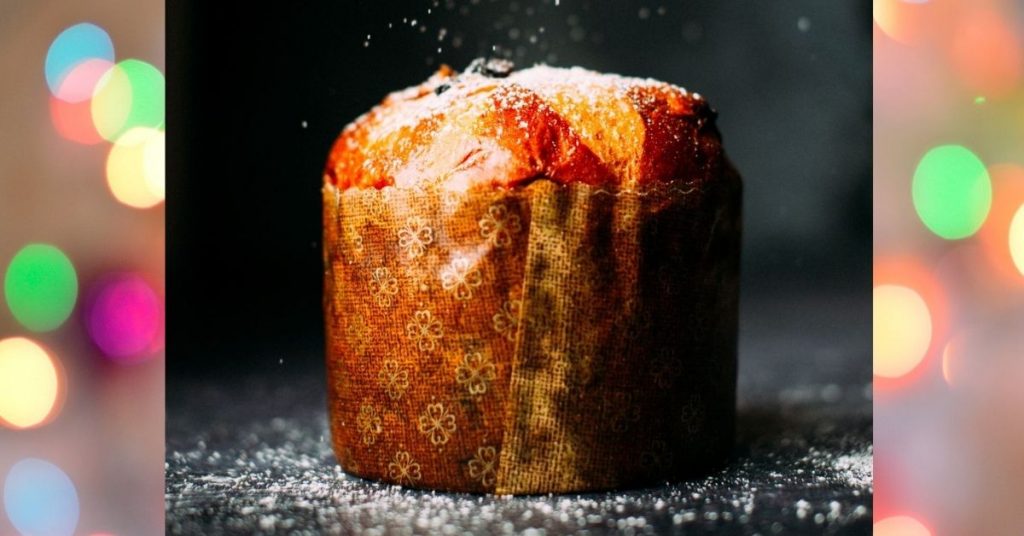
As is the case with everything Italian, the nation’s Christmas traditional dessert, Panettone, has its own history that goes back to the fifteenth century.
A legend has it that one Christmas Eve, while the entire court and guests of Ludovico Sforza, Duke of Milan were sat at the festive table, disaster stroke in the kitchen. The cook managed to burn the dessert accidentally!
While the unfortunate cook was pulling his hair off, a kitchen helper, Toni, threw a few ingredients in a bowl and made a soft dough he baked and served to the potent rulers of Milan.

The sweetbread was so successful among the guests that the Sforzas called it Pan di Toni (The Bread of Toni), which remained in history as the rich people’s traditional Christmas bread. Today, it is the classic Italian dessert the entire world knows as Panettone and must absolutely find a place among your Christmas treats from around the world on the festive table!
Link to recipe here.
Four Calling Birds
AUSTRIA: COCONUT KISSES
Provided by https://vividlychristmas.com/
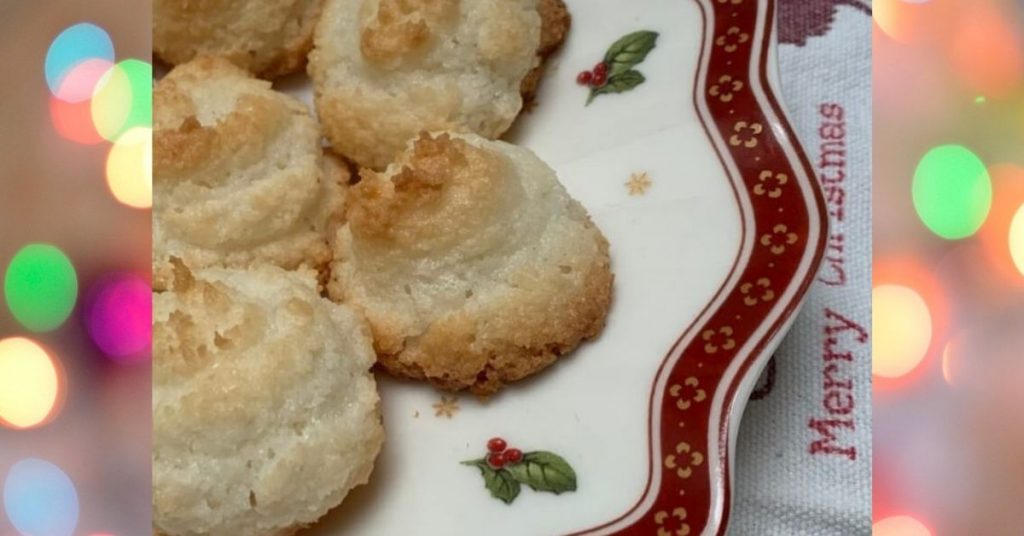
Coconut kisses (or “Kokos Busserl”, as they are called in German ) are traditional Austrian cookies still popular during the Advent and the winter holidays. A little Christmas cookie made by dedicated bakers would always be present on the festive table.
The creator of these festive and romantic cookies has kept her beloved grandma’s recipe and continues to make it each Christmas with her little daughter. A beautiful tradition perpetuated in the family and across many generations – what else can be more suitable for Christmas, a time for family and togetherness?
Link to recipe here.
Five Gold Rings
IRELAND: BARMBRACK BREAD
Provided by https://coffeefitkitchen.com/
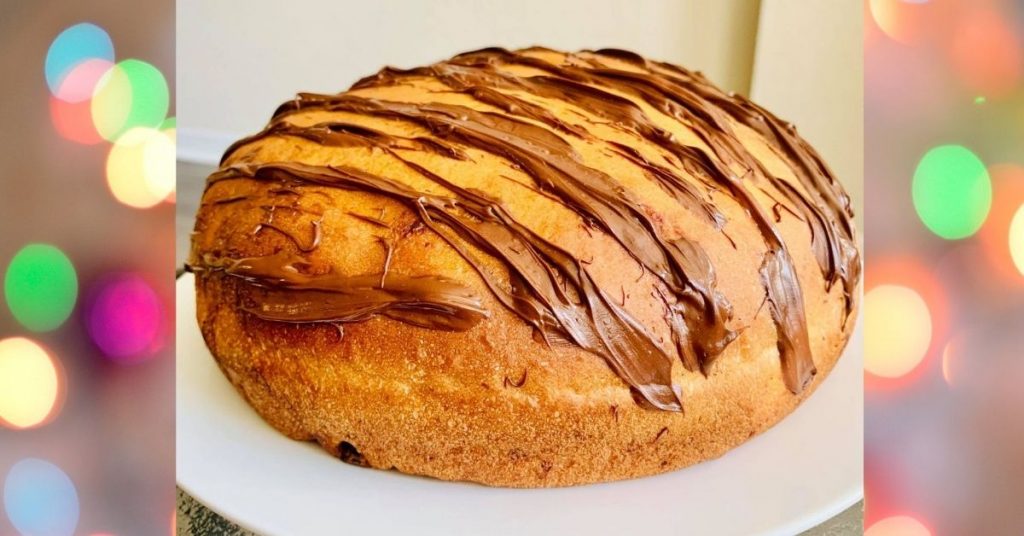
This Chocolate Irish Barmbrack Bread is a rendition of a traditional holiday tea loaf! It’s full of semi-sweet chocolate, raisins and topped with melted chocolate too! This bread is not overly sweet or sugary, but the flavours of the fruit and chocolate shine through!
It’s a perfect bread to share during the holidays or whenever you want a sweet treat. The most traditional holiday it is served on is Halloween, but it’s also included in other holiday celebrations as well.
Since my heritage is about 80% Irish, I was excited to try this recipe! I took inspiration from the recipe on a baking show, and of course, added chocolate to my barmbrack too.
Link to recipe here.

Six Geese a-Laying
GREAT BRITAIN: MINCE PIES
Provided by https://theworldisanoyster.com/

As a migrant who settled in the U.K., of course, I got to learn and appreciate local traditions. But I remember staying away from mince pies for several years. The reason? I did not get why a meaty thing would be placed in a pastry sheet and have sugar sprinkled on top! My prejudice wilted when I decided it was time to do some research and get to the bottom of the story!
It turned up they were only called mince pies because, historically, they would contain minced meat (mainly mutton). In time, dry fruits would replace the meat, and people would start adding booze to the fruity filling.

Mince pies seem to have made it to Britain in the middle ages, brought by the crusaders from the Middle East. At the time, they were filled with meat, fruits and spices and were not a dessert but the main course.
Today, mince pies cannot miss your Christmas treats from around the world baking list! In the Anglophone world, it would not be Christmas without them!
Link to recipe here.
Seven Swans a-Swimming
PHILIPPINES: PUTO BUMBONG
Provided by https://therunningbaker24.com/
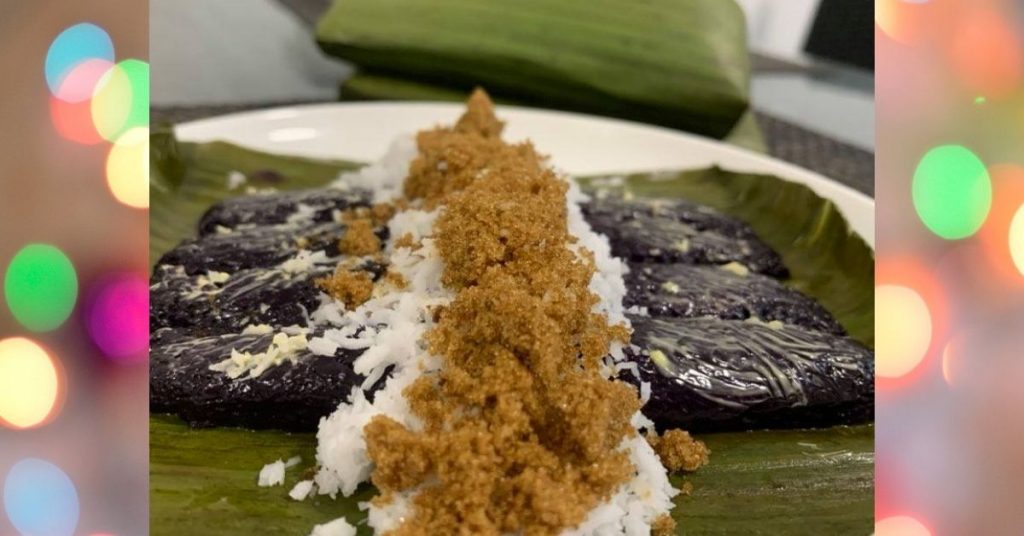
One way of knowing that Christmas is getting nearer is when you see local vendors near churches selling puto bumbong delicacy. A unique sweet delicacy made of purple steamed rice cake usually eaten after attending simbang gabi.
For those living abroad, many miss this traditional delicacy puto bumbong. As we approach the holiday season, especially Christmas, I will be sharing this simple yet easy puto bumbong without a bamboo steamer.
This puto bumbong recipe is originally from the Philippines and plays a significant role in Filipino Catholic practice as a tradition. After attending simbang gabi or nine traditional novena mass stores are open outside the church to sell puto bumbong, and mass goers will buy and eat right away.
Link to recipe here.
Eight Maids a-Milking
POLAND: RUGELACH
Provided by https://missourigirlhome.com/
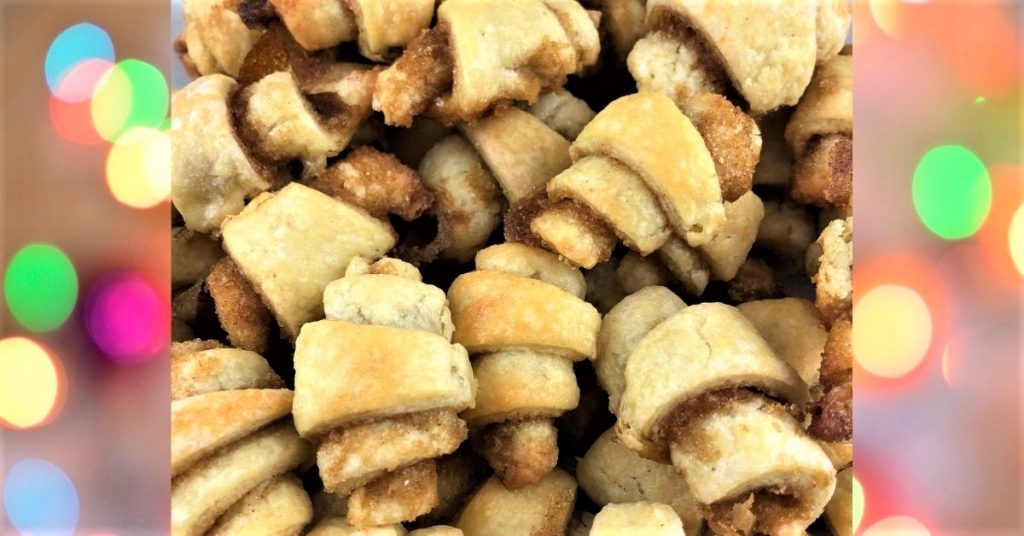
Rugelach. Pronounced “Rugala”. Learn it well because once you have made and shared this cookie, everyone will be asking its name. Time and time again.
I made these for my work Christmas potluck last year, and I bet I said “Rugelach” at least 100 times.
So what exactly is Rugalach? It is a Polish cookie made with a tender cream cheese dough filled with the filling of choice and then rolled into a tiny crescent shape.
The version we are making today is a little less traditional, but it is my personal favourite: Cinnamon and brown sugar with a hint of nutmeg and ginger. A delectable dessert to include in your Christmas treats from around the world baking list!
Link to recipe here.
Nine Ladies Dancing
USA: SUGAR COOKIE TRUFFLES
Provided by https://blueworlddreams.com/
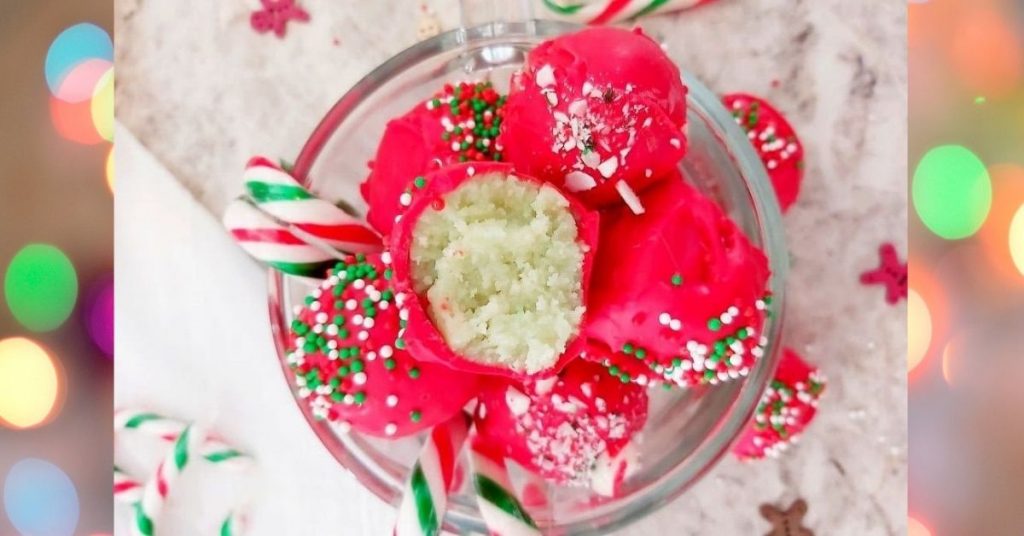
Who else loves sugar cookies? Well, I’ll be honest, they only recently came into my life after my husband requested some sugar cookie truffles.
These truffles are versatile. Decorate them for whichever holiday you want by switching the colour of the chocolate wafers and decorative toppings.

In my local area, they only sell frosted sugar cookies, so I purchased those and scraped off most of the icing. I left a little green so that my dough would have a nice light green festive colour to contrast the ruby-red exterior.
Link to recipe here.
Ten Lords a-Leaping
MEXICO: VEGAN CARLOTA
Provided by https://www.conflictedvegan.com/
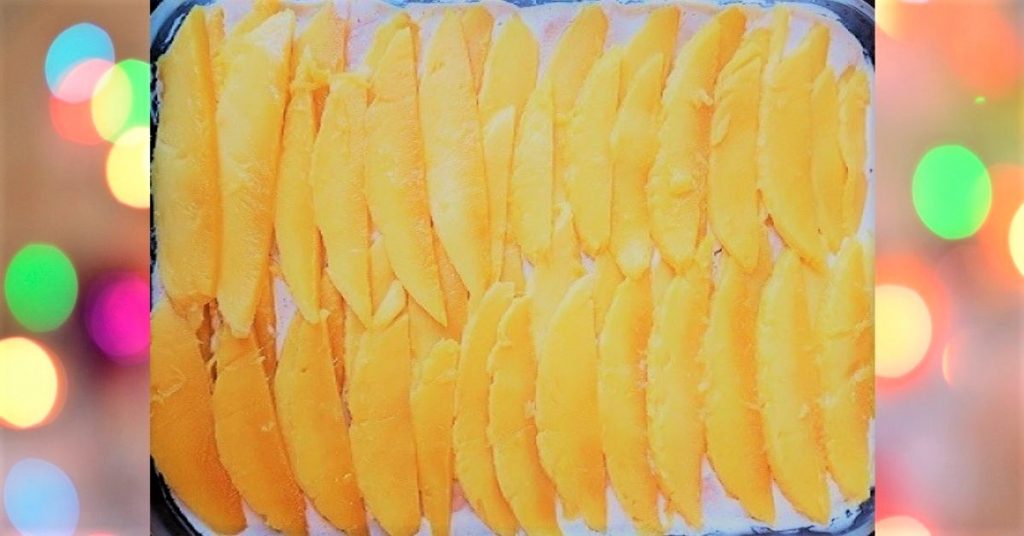
A “Carlota” is far from Mexican; in fact, its origin is still debated as possibly being from the United Kingdom. Vegan Carlota is also known as “Charlotte Russe”. Not the store at the local mall, ladies and gentlemen!
You will not need a stove. What you will need is a large baking dish. A favourite kitchen helper is also allowed as this dessert will not require heavy machinery but the blender. A Vegan Carlota is made with wheat flour cookies; the brand I used was El Mexicano. If you are following a vegan lifestyle, make sure you double-check as the traditional Gamesas are not vegan. You will need vegan condensed and evaporated milk. Soy or coconut will be just as delicious along with lemon or lime. The mango in this recipe is interchangeable with any other fresh fruit. It was solely used as a topping for aesthetics. I left it in the fridge overnight because it was for a work event, but 2 to 3 hours to settle should be fine. Shall we begin?
Link to recipe here.
Eleven Pipers Piping
USA/FRANCE: APPLE BLACKBERRY PIE
Provided by https://cheapdeliciousdinner.com/
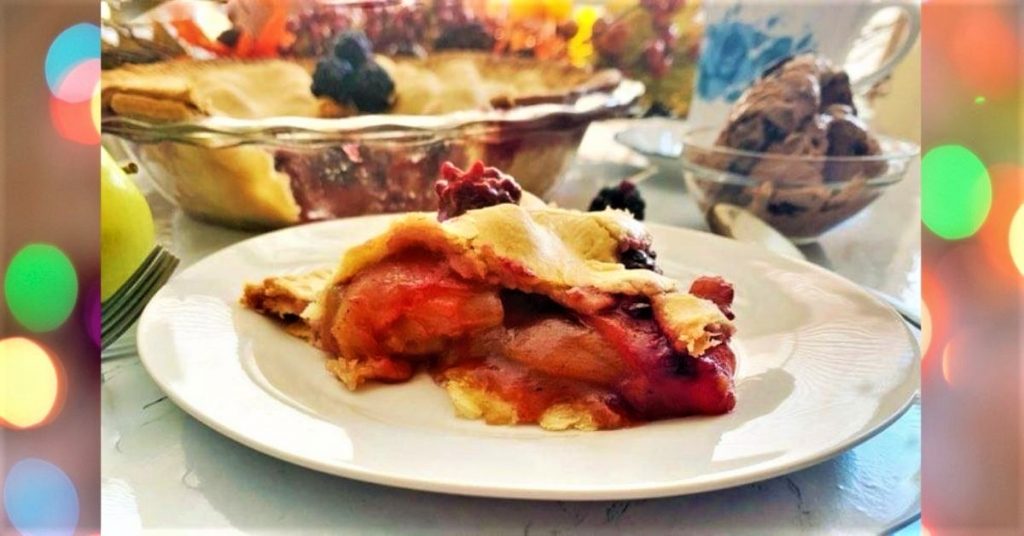
This recipe is my take on this famous recipe called Apple pie by Grandma Ople. I love it because it is simple and easy. I fell in love with making pies by following this recipe. But I have made some changes to it, so I hope you will like this version.
The holidays are coming up, and I tend to stress about not finishing all the food on time; I try to make my holidays as stress-free as possible.
If someone invites us for dinner, this is usually the dessert I make and bring because of its affordable price and deliciousness.
Link to recipe here.
Twelve Drummers Drumming
USA: BUTTERCREAM COOKIES
Provided by https://buttercreamparties.com/

I am IN LOVE with these cute sugar plum fairy buttercream cookies! I think it’s mainly because the colours are so beautiful. I love to see pastels pulled off correctly during the Christmas season.
This set of sugar plum fairy buttercream cookies would be great for a kid’s birthday party as well! Or maybe even as a baby shower for a little girl on the way!
This tutorial is beginner-friendly, so don’t be worried about all of the steps! I will have a video tutorial plus step-by-step photo series for each of these sugar plum fairy buttercream cookies. Follow along for the detailed tutorial!
Link to recipe here.
What is your special Christmas treat from around the world?
Which of these delectable Christmas treats from around the world is your favourite? What special one do you make often at Christmas? What new one would you like to try this year?
Whatever your choice, may you have your table always filled with delicious foods and your heart overflowed with love and happiness!
The Twelve Days Of Christmas is an anonymous cumulative British carol published in the eighteenth century and still played by carollers today. Hopefully, this tradition will continue for many years to come!
Have a very Merry Christmas!



Twelve Days Of Christmas
The post Twelve Must-Try Christmas Treats From Around The World appeared first on The World Is an Oyster.
]]>The post The Most Mouthwatering Christmas Treats: British Mince Pies appeared first on The World Is an Oyster.
]]>A Tradition In Name Only
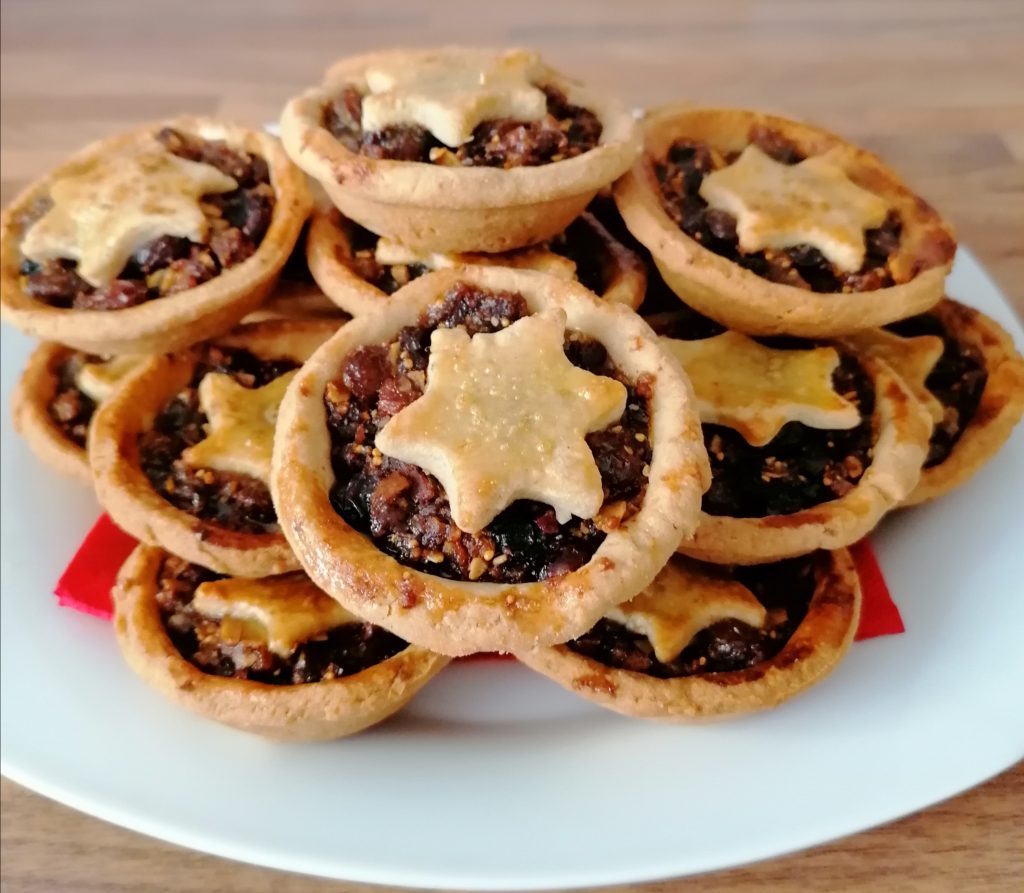
As a migrant who settled in the UK, of course, I got to learn and appreciate local traditions. But I remember staying away from mince pies for several years. The reason? I did not get why a meaty thing would be placed in a pastry sheet and have sugar sprinkled on top! My prejudice wilted when I decided it was time to do some research and get to the bottom of the story!
This post may contain affiliate links, which means I will receive a commission if you purchase through my links at no extra cost to you. Please read the full disclosure for more information. Thank you!
It turned up they were only called mince pies because, historically, they would contain minced meat (mainly mutton). In time, dry fruits would replace the meat, and people would start adding booze to the fruity filling. It would not be the only dessert that uses alcohol, which enhances the taste and preserves the fruits in this case.
Mince pies seem to have made it to Britain in the middle ages, brought by the crusaders from the Middle East. At the time, they were filled with meat, fruits and spices and were not a dessert but the main course. Fibre and protein are not an ideal combination for the human liver, but medieval medicine was not advanced enough to acknowledge this fact.
The most extreme times this traditional pie had seen was the brief kingless period England had known in the seventeenth century. Oliver Cromwell went to the limit, not only banishing pies in an attempt to make the population thrifty but cancelling Christmas altogether.
He was no fun! And he had a warty nose! I saw it in Horrible Histories! (I’m just being a sarcastic bully at the expense of a dead historical character, I know!)
Rightly so, England returned to its monarchic tradition that also meant the reinstatement of Christmas and the continuation of pie baking.
In time, mince pies have seen changes but have never disappeared from the traditional festive table.

Today, the entire English-speaking world would have them at Christmas, filled with a delicious and notably fragrant combination of booze-soaked dried fruits and spices still called mincemeat!
There is even a superstition saying that if you eat one each of the twelve days of Christmas, you’ll be lucky the entire following year! I have to make an effort to get mine to last this long; otherwise, I’m busted!
Given that the past two years were the weirdest in our recent history, I don’t know who would be willing to take a chance!
Merry Christmas!
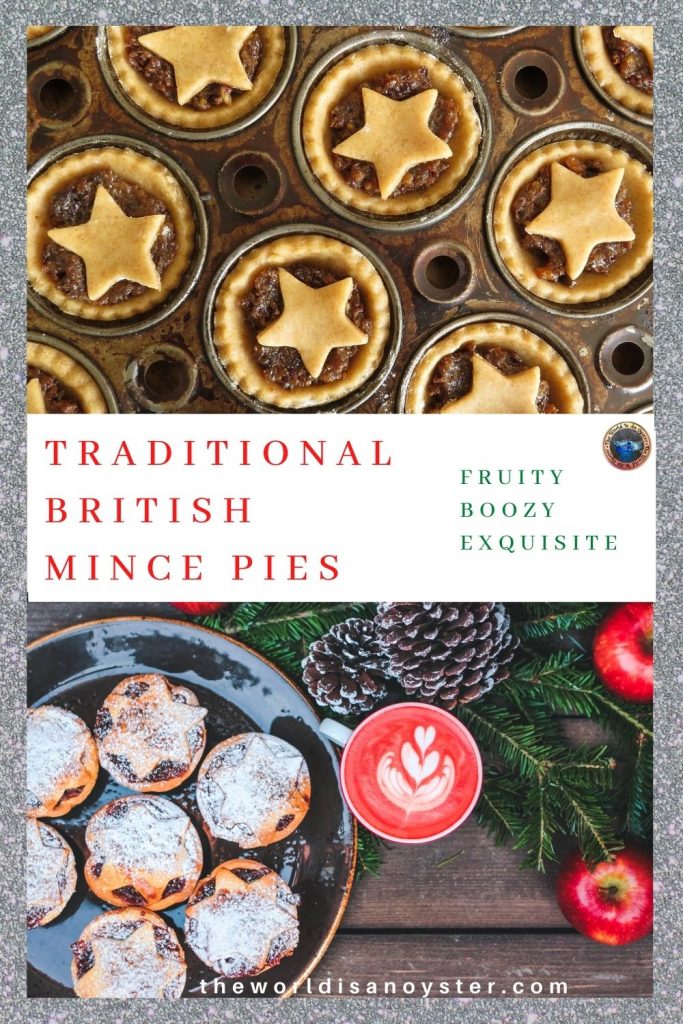


Mince Pies
Ingredients
For the crust
- 500 g plain flour (4 cups)
- 150 ml melted coconut oil (⅔ cup)
- 150 ml melted unsalted butter (⅔ cup)
- 3 tbsp coconut sugar
- 1 lemon zest
- 1 pinch of salt
For the filling
- 100 g Medjool dates (about ½ cup)
- 100 g dried figs
- 100 g dried blackcurrants
- 100 g raisins
- 100 g dried cranberries
- 100 g dried goji berries (optional; I used them for colour)
- 2 tbsp toasted flaked almonds Skip if you have a nut allergy!
- 2 tbsp cocoa nibs (optional)
- 1 orange (juice+chopped peel)
- 2 orange zest
- 1 tsp nutmeg
- 1 tsp cinnamon
- 1 tsp cloves
- 1 tsp organic dried ginger
- 3 pcs peppercorn
- 4 pcs star anise
- 8 tbsp coconut sugar
- 10 tbsp water
- 2 tbsp Martini (or any liquor)
- 1 vial rum oil essence
Instructions
For the crust
- Sieve the entire quantity of flour in a large bowl, add the sugar, lemon zest, salt and the melted fats. Mix using your hands or a kitchen mixer if you have one.
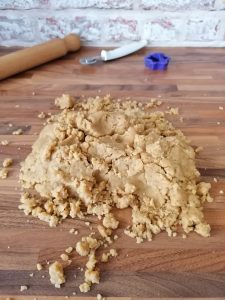
- The dough will be very crumbly at first, but when you add the eggs, the proteins found in them will help bind it better and work it easier.
- Cover the dough in clingfilm and refrigerate it for at least half an hour (an hour is better). Cooling helps the oily ingredients solidify, and this will make rolling easier. I tried to save time, but working the dough before cooling it was useless; all I got was crumbles spread on the worktop.
For the filling
- Preferably, the mincemeat should be prepared a week before use and kept in the fridge to allow all the savours to mix nicely and create an absolutely intoxicating flavour!
- Grind all spices together.
- Finely chop the large fruits and the orange peel. Mix with the rest of the dried fruits, sugar and orange zest.
- Add the wet ingredients (orange juice, liquor, water). Some recipes recommend lard instead of water, which I find revolting! Besides, it is not healthy to mix pork with fruits!
- Place the mix in a jar, cover with a double clingfilm, then put the lid on and store it in the fridge for about a week.
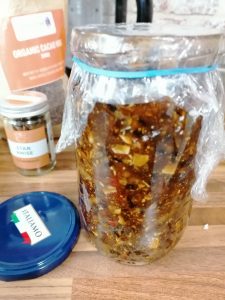
- If some fancy popstar would “create” a perfume smelling like this insane combination, I would pay money to have it and wear it daily! Thinking of it, if anyone goes ahead and commercializes such a perfume now, I am claiming intellectual property rights!
Make the mince pies
- Preheat the oven to 180°C/350°F/gas mark 4.
- Remove the pastry dough from the fridge and use a part to roll a 2-3 mm thick sheet.
- With a large glass or a round form, cut the base. Use either a smaller glass or any Christmassy shape to cut the lids/tops. I used a star shape because it covered better than the others.
- Place and adjust the large pieces in the tray, add a spoon of fruit filling, put a pastry lid on and coat with a beaten egg using a brush.

- Repeat until you have used the entire dough.
- Optionally, sprinkle a little bit of coconut sugar, then put the tray on the middle rack in the oven.
- Bake for 15-20 minutes or until the mince pies turn golden brown. Allow cooling when finished and before serving.
Notes
A Tradition In Name Only
The post The Most Mouthwatering Christmas Treats: British Mince Pies appeared first on The World Is an Oyster.
]]>The post Romanian Cozonac: The Best Treat on Your Festive Table appeared first on The World Is an Oyster.
]]>A Culinary Delight with A Long History
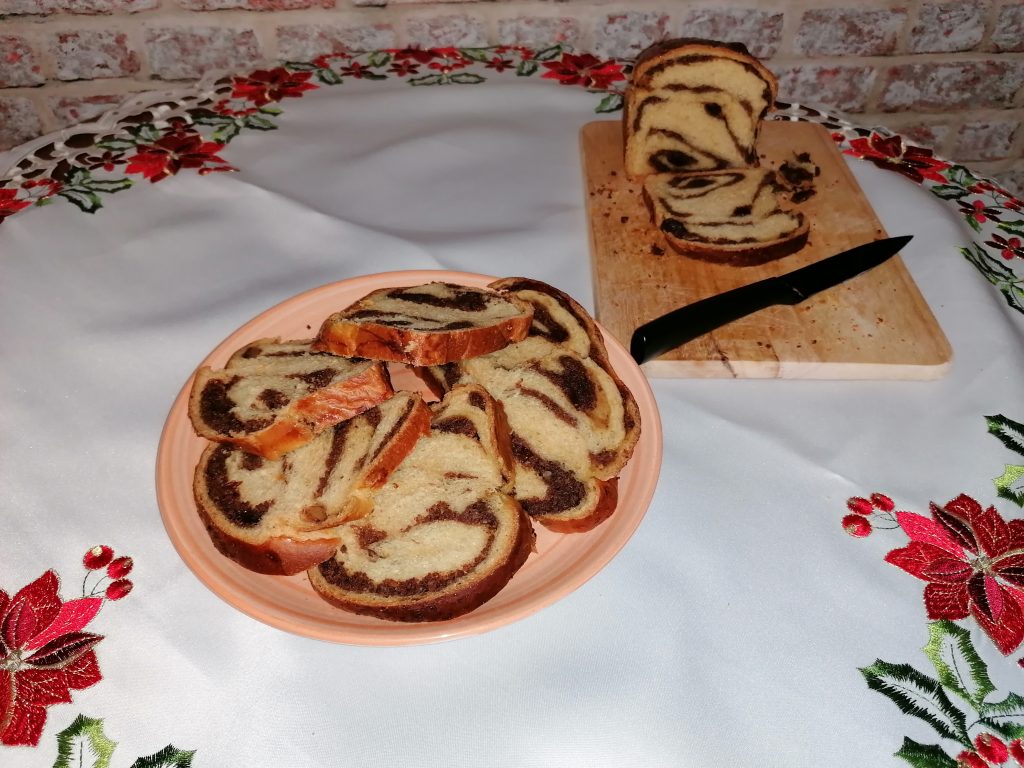
A Word About Romanian Cozonac
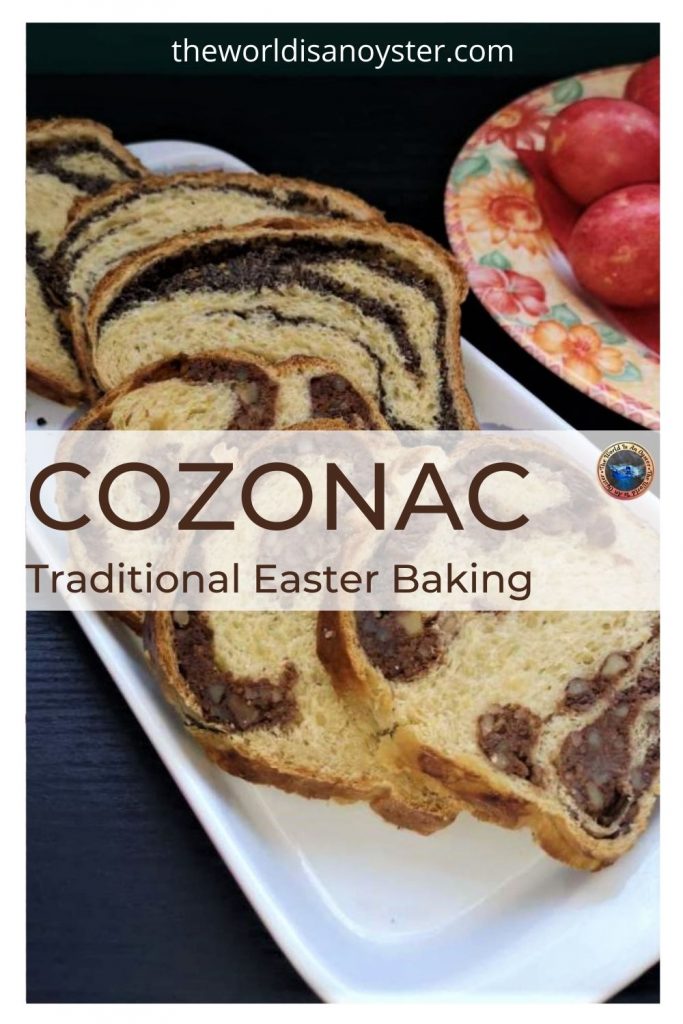
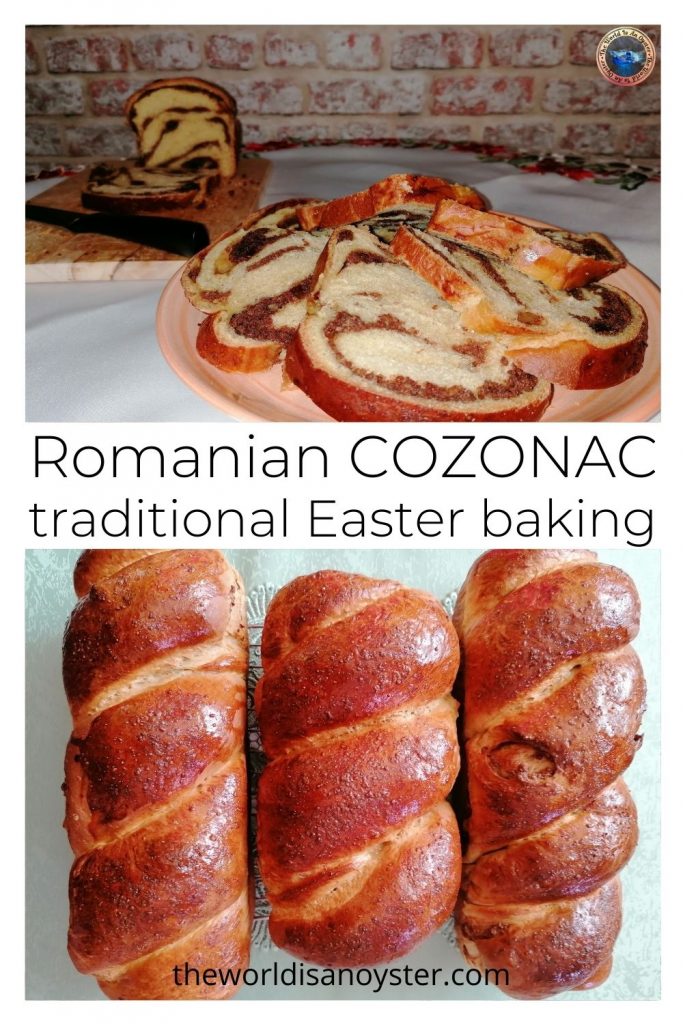
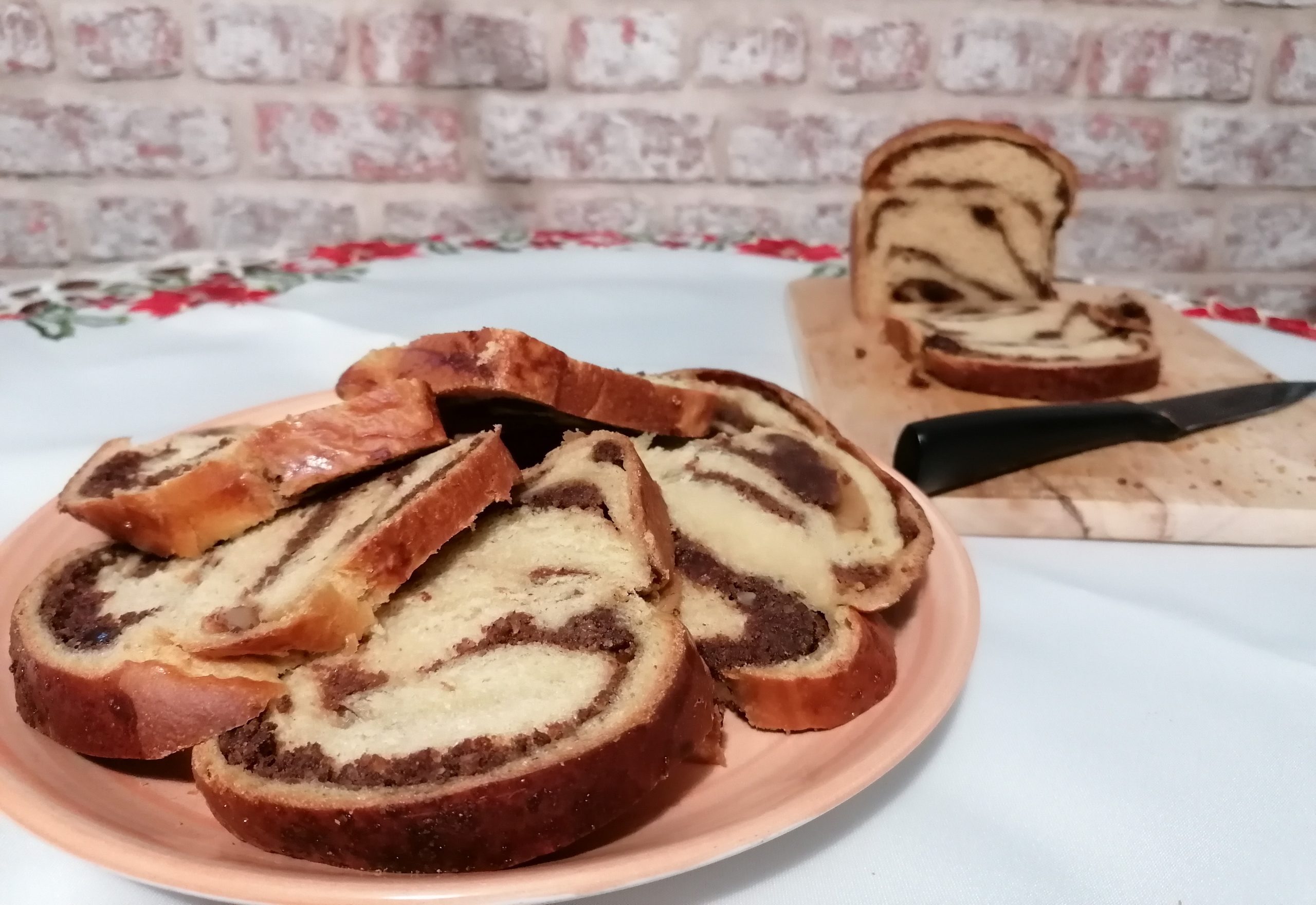
Romanian Cozonac is a beautiful festive delight I grew up with as a child in my country of origin.
Each major holiday mom would bake the best treat there could be. Be it Christmas or Easter, our house would smell wonderful, filled with delightful flavours escaping from the oven. And I would wait impatiently for the festive dinner to finally savour the best treat created by humankind!
This post may contain affiliate links, which means I will receive a commission if you purchase through my links at no extra cost to you. Please read the full disclosure for more information. Thank you!
The ladies of Romania, especially in the countryside, would take at least half a day before a holiday to bake lots of cozonaci (plural [cozonach]) for the festive dinner, and mom is still not an exception.
How Cozonac Evolved During the Ages
Based on bread baking and using a raised dough, cozonac (kozunak in Bulgarian, or Panettone in Italian) has seen a long history, going back to pharaohs’ old times.
Apparently, the ancient Egyptians made fermented dough sweetened with honey they would bake in ovens, as shown in some wall paintings.
The ancient Greeks also made honey-sweetened bread they would fill with nuts and call plaukos.
The more advanced and ever so posh Romans have improved the recipe by adding eggs, butter and dried fruits.
In Middle Age Europe, dried fruits would mostly fill the sweet loaves of bread because they lasted longer.
In England, a mention dates from 1718 of a sweet bread filled with dried fruits and baked in long, thin loaves – the shape primarily used today.
In France, the famously infamous Marie Antoinette remained in history with her uninspired advice to the poor to eat brioche if they could not afford bread. The said brioche seems the be our same delight. Unfortunately, she paid with her head for her lack of touch with her country’s harsh reality!
By the nineteenth century, cozonac became a traditional holiday treat around Europe with slight recipe variations.
To any Romanian, the presence of cozonac on each festive dinner table is an absolute must.
In recent years, cozonac, like anything else, has become a commodity sold in supermarkets.
But most Romanian ladies would still bake it at home using different types of filling, from walnuts to poppy seeds, Turkish delight or chocolate. These last three ingredients also make a perfect substitute for nuts for persons with an allergy.
To me, Romanian cozonac is the best festive treat there can be, and I can never get enough of it!
You can offer me the most elaborated sweet made by the most in-demand French pastry chef at a fancy king’s court, and I would always choose cozonac! Nothing beats the aromas that fill the air when you bake it and the taste offered by the combination of spices used in the preparation!

As you get in the holiday spirit, may you have the table filled with goodies and your soul overflowed with goodness and cheerfulness!

Romanian Cozonac
Ingredients
- 1 kg plain flour (sieved)
- 4 tbsp coconut sugar (spoonfuls)
- 600 ml (2½ cups) milk (tepid)
- 2 tbsp youghurt (at room temperature)
- 100 g (½ cup when melted) butter (melted and tepid, not hot)
- 140 ml (⅔ cup) sunflour oil (tepid)
- 3 egg yolks
- 20 g (5 rounded tsp) dried yeast
- 1 orange zest
- 1 pod vanilla
- ¼ tsp saffron/turmeric (for colour)
- ½ tsp salt
For the nut filling
- 700 g (7⅓ cups) walnuts
- 100 g (⅔ cup) raisins
- 1 vial rum oil essence
- 7 tbsp coconut sugar
- 2 tbsp cocoa powder
- 1 tbsp cinnamon (ground)
- 1 tsp clove (ground)
- 1 orange zest
- 3 egg whites (whisked stiff)
Alternative poppy seeds filling
- 600 g (4¼ cups) poppy seeds (ground)
- 6 tbsp coconut sugar
- 1 tbsp cinnamon (ground)
- 1 ornge zest
- 1 vial rum oil essence
- 3 egg whites (whisked stiff)
Instructions
- Mix the egg yolks with salt, yoghurt, orange zest, vanilla in a bowl, and leave it aside. Heat the milk in a pan and pour a part of it over the above mix.
- The other part goes in another bowl over the yeast mixed with sugar. Allow 10-15 min to activate the yeast, preferably in a warm place.
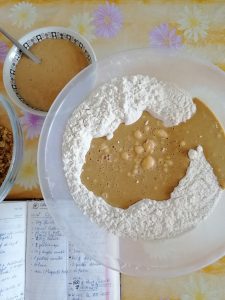
- Place the flour in a large bowl and add the wet ingredients. Knead with one hand. The dough might be soft and sticky at first, but do not add extra flour! As you knead it, the consistency will change.
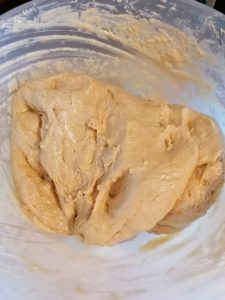
- Add the tepid butter mixed with oil little by little and keep kneading.
- When the oil is absorbed, you can move the dough on a floured worktop and continue to knead. The whole kneading process should take approximately 20-30 minutes.
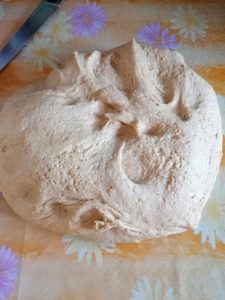
- Place the dough back into the large bowl, cover it with a dry kitchen towel and let it rise until the volume doubles, preferably in a preheat oven to 40°C (104°F).
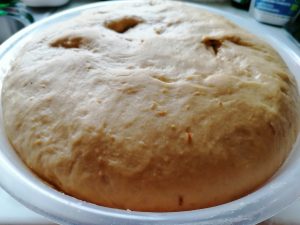
- Importantly, before you cover the dough, you should make a cross sign over it. Believe it or not, it will make your dough rise – so say all the Romanian, Italian or Balkan lady bakers. Since I only made cozonac once in my life and a long time ago, I don't remember if I respected this tradition/superstition. To me, all baking and cooking ingredients, in general, are chemical compounds that produce a chemical reaction at a temperature and mix nicely to result in the food we eat. Try to convince a granny, especially one who lives in the countryside, that cooking is biochemistry! It's way easier to cross the dough and spare a long scientific debate that will not convince the granny in the least! This year, I baked with mom and had fun when we got to this point in preparation, but she still respected the tradition!
Method for the nut filling (makes three cozonaci)
- While the dough rises, prepare the filling by mixing well the dry ingredients.
- Separately, whisk the egg whites until stiff, then incorporate spoon by spoon into the dry mix until obtaining a thick paste.
Method for the poppy seeds filling (makes three cozonaci)
- Place the ground poppy seeds in a pan and cover them with milk.
- Place the pan over medium heat and mix continuously until the poppy seeds absorb the milk.
- Add the sugar, orange zest, cinnamon and rum essence and keep stirring until the ingredients incorporate nicely.
- Remove the pan from the heat and let the content cool before use.
Method for filling and baking cozonaci
- Oil the worktop, divide the dough into six equal pieces and let it rest for 10 minutes.
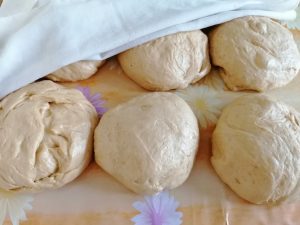
- Using your hands, spread each part at a time in a rectangular shape and cover it evenly with 2-3 spoonfuls of the walnut mix, leaving the edges free.
- Roll it and leave it on the side.
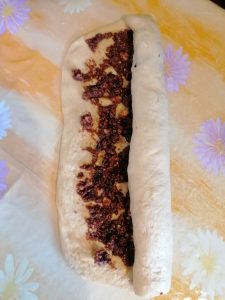
- Repeat the process with a second piece, braid them together and place your first cozonac in a loaf tray coated with parchment.
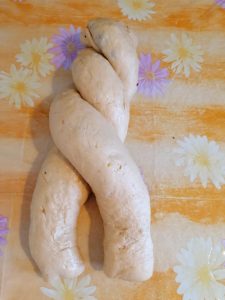
- Because the dough is elastic, you can pull or tuck it to adjust to the tray size.
- Repeat the process with the rest of the dough pieces and nut/poppy seeds filling.
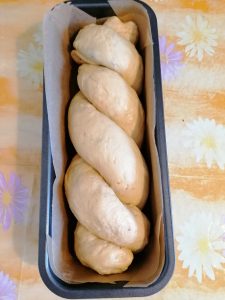
- Preheat the oven to a maximum of 40°C/104°F, turn the heating off and place all three loaves on racks. Close the oven door and let the cozonac rise for about 20 minutes.
- Remove the trays from the oven.
- Beat an egg and use a brush to coat the entire surface, then sprinkle a little bit of sugar evenly.
- Place all three trays back in the oven on the same rack so that they are positioned right in the middle, but leave some space between them to allow hot air to reach the trays evenly.
- Heat the oven to 130°C/266°F at first, for about 10-15minutes, then increase the temperature to no more than160°C/320°F (fan oven) and let the cozonaci bake for another 45 minutes until they turn golden brown.

- When ready, remove from trays, place the loaves on a rake and let cozonac cool completely before you slice them.
Notes
The post Romanian Cozonac: The Best Treat on Your Festive Table appeared first on The World Is an Oyster.
]]>The post Perfect Bread Maker Panettone – Christmas Made Easy appeared first on The World Is an Oyster.
]]>The Bread of Toni
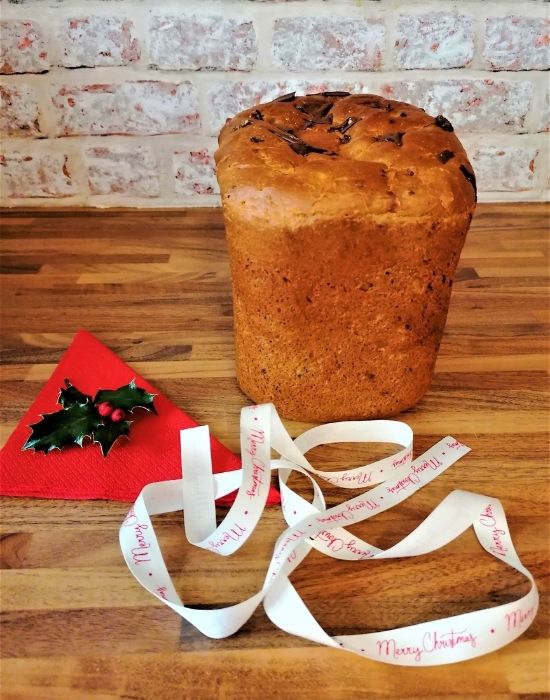
As is the case with everything Italian, the nation’s Christmas traditional dessert, Panettone, has its history that goes back to the fifteenth century.
This post may contain affiliate links, which means I will receive a commission if you purchase through my links at no extra cost to you. Please read the full disclosure for more information. Thank you!
A legend has it that one Christmas Eve, while the entire court and guests of Ludovico Sforza, Duke of Milan were sat at the festive table, disaster stroke in the kitchen. The cook managed to burn the dessert accidentally!
Mamma mia, che dolore che faccio ora il duce mi va cortare il capo! (Oh, dear God, what a disaster, the duke will chop my head off!)
While the unfortunate cook was pulling his hair off, a kitchen helper, Toni, threw a few ingredients in a bowl and made a soft dough he baked and served to the potent rulers of Milan.
The sweetbread was so successful among the guests that the Sforzas called it Pan di Toni (The Bread of Toni), which remained in history as the rich people’s traditional Christmas bread. Today, it is the classic Italian dessert the entire world knows as Panettone.
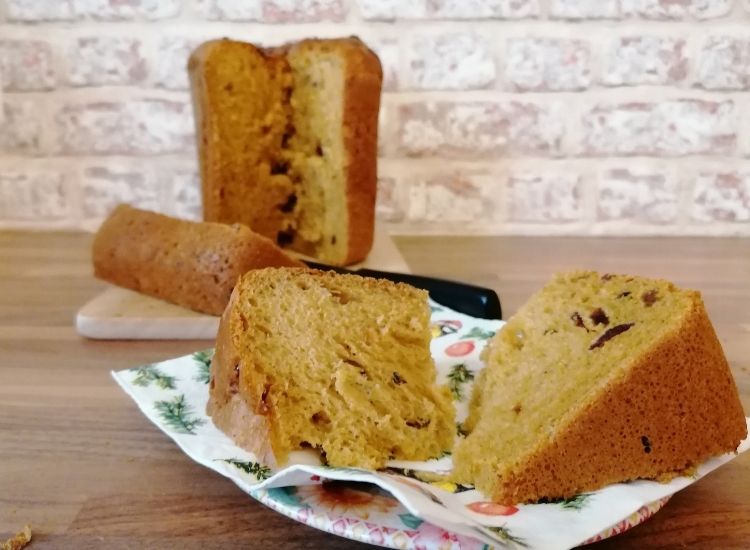
The traditional recipe for Panettone has a lengthy preparation process that takes two days. Thanks to modern technology, many of us use bread makers to save time and bake easier. If you own one and read through the manual, you might find a Panettone recipe adjusted to the type of machine you have.
Just a quick word about everybody should use a breadmaker. To me, it became a vital kitchen appliance during my chemotherapy sessions, years ago when I was diagnosed and treated for cancer. I started using it during my brutal treatment and never went back to buying supermarket bread since!
I know what ingredients I am using (all the healthy ones, always!), I know what type of bread or cake I want, and this beautiful invention provides it to me, as simple as that! All I have to do is add the ingredients, choose the program and press the start button. Then I go on with my business and come back only when I hear the beep that tells me my bread/cake is ready.
A breadmaker is a fantastic time-saver, but the best thing about using one is the tremendous health benefit to you! Say adiós to refined sugars, GMO flours and all sorts of additives that come with a bag of sliced bread and start a healthier lifestyle; you owe it to yourself and your family!
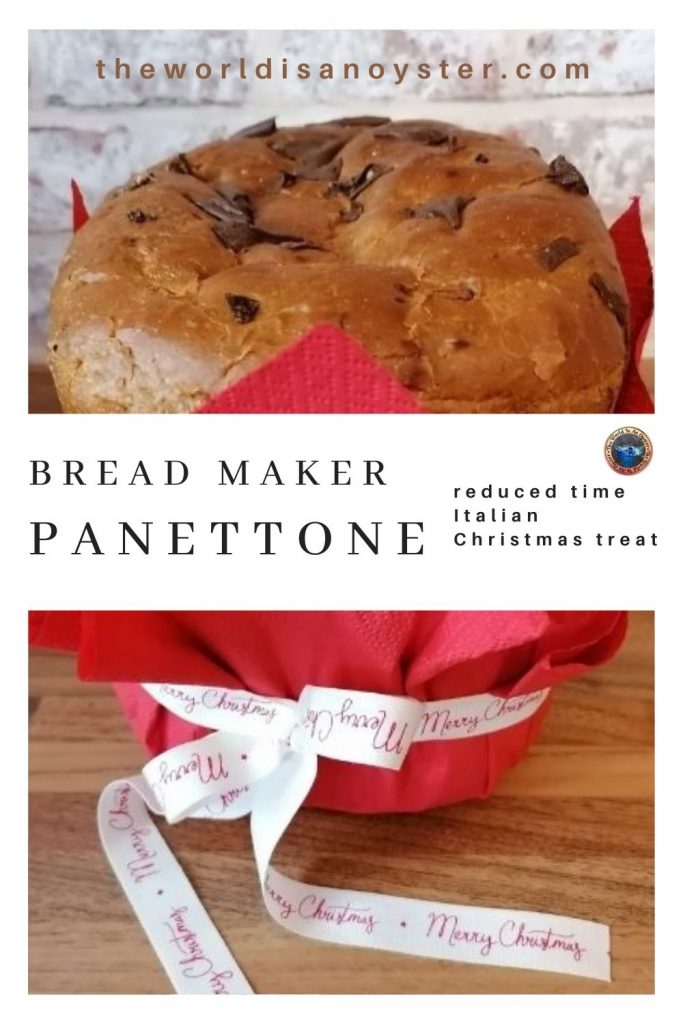
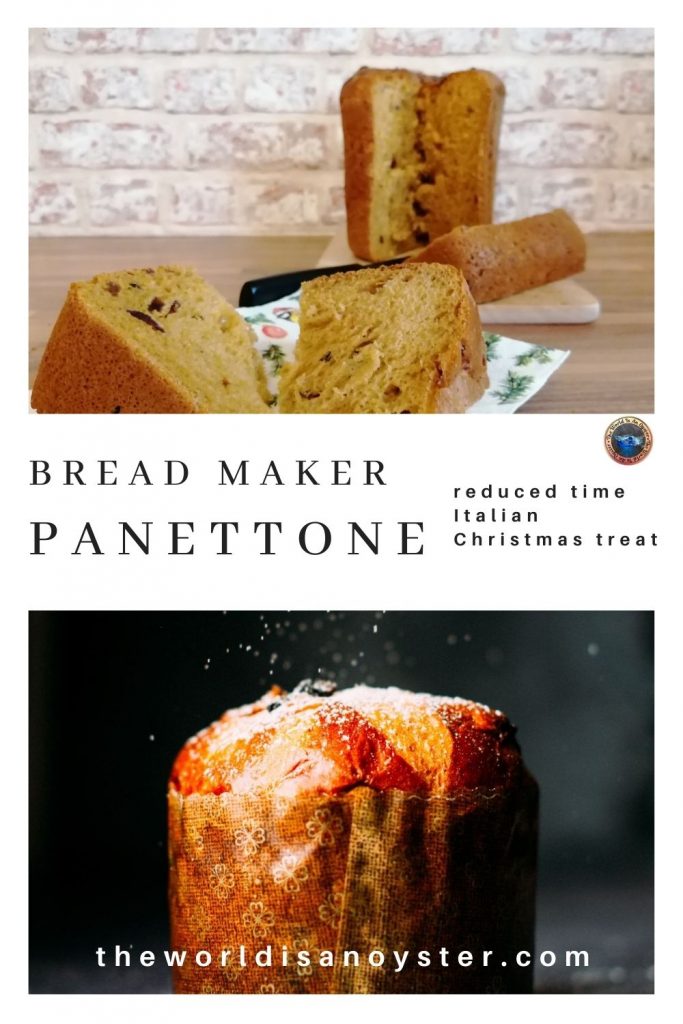
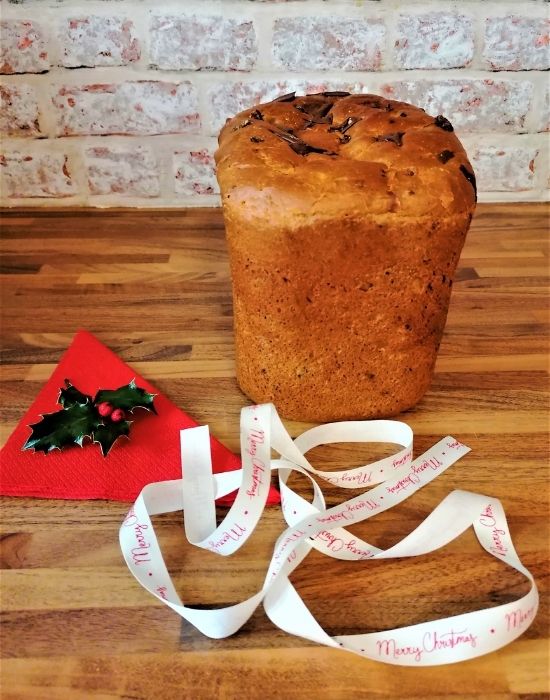
This Panettone is an adapted recipe from my bread maker’s booklet. The original sounded a bit blunt, and I wanted to get all the flavours that scream Christmas; hence I added a few things, and the result was an absolute success.

My bread maker Panettone lived a very brief life on the kitchen table! But this was only a try. On Christmas Eve, I’ll be sure to throw all the ingredients in the machine, and while we make the last-minute preparation, my Panettone will be ready just in time for dinner.
I’m sure our kitchen hero Toni would not mind that I wanted to save time and prepare his delight using modern means. It does cut the time from two days to three and a half hours!
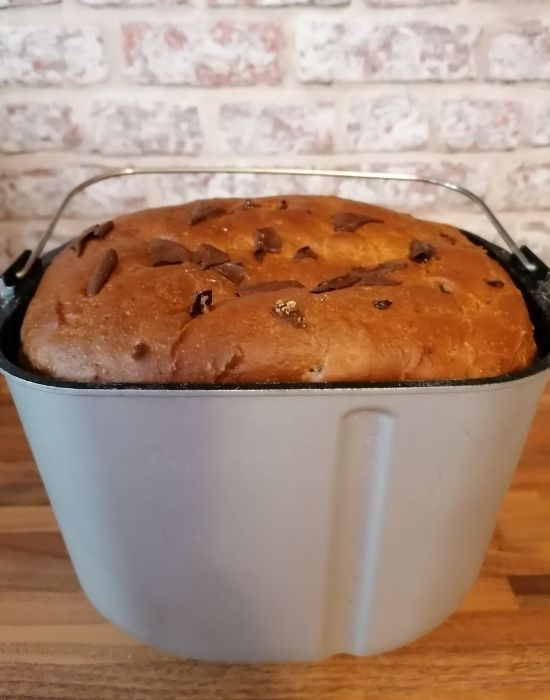
As a last note, the dough for Panettone is a soft one, completely different from bread dough and impossible to hand-knead. Even if you chose the traditional method, you would still need a food mixer, and why not leave it to the bread maker then?
Ingredients for bread-maker Panettone:
2 tsp dried yeast (make sure it is suitable for bread maker use)
400 g strong bread flour
5 tbsp coconut sugar
1 tsp sea/rock salt
1 tbsp coconut oil (at room temperature)
2 eggs (beaten)
200 ml (3/4 cup) almond/coconut milk
1 tbsp orange zest
Spices mix (ground cinnamon, nutmeg, ginger, clove)
Extras:
50 g butter
A handful of raisins
A handful of goji berries
A handful of dried cranberries
2 tbsp cacao nibs
Chocolate shreds (I picked some from a cereal box and spread them on top of my Panettone; improvisation is key!)
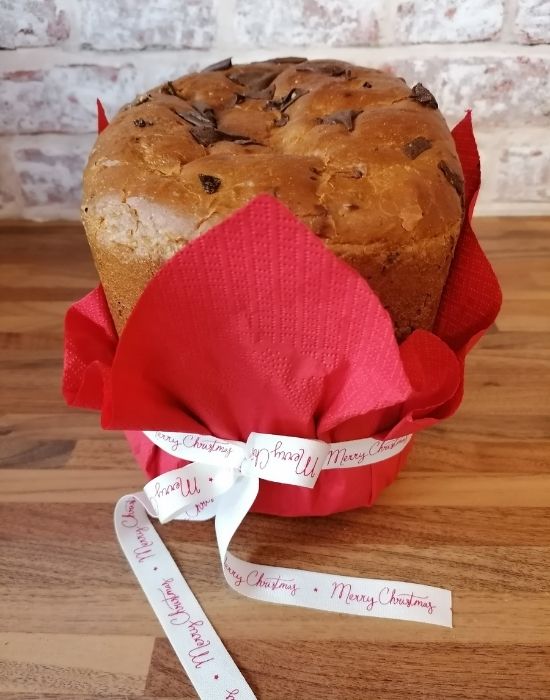
The programme for this bread is Brioche (13, on my device); crust option: light; total time: 3 hours 30 minutes.
My machine requires adding the dry ingredients first; the wet ingredients go over the flour, and the order in which I add them does not matter.
My bread maker would beep after 55 minutes when it was time to add the extras. Then I have to press the Start button again for the program to continue.
Each bread maker functions differently. The important thing is that the machine will do the job and will let you know when your beautiful, fluffy and aromatic Panettone is ready. Let it cool and use it within a week (if it lasts!)
Buon appetito and also Buon Natale for when you will serve it at your Christmas dinner!
Bread maker Panettone
Equipment
- Bread maker machine
- Spoon
- Small bowl+fork
- Cooling rack
Ingredients
Basic ingredients
- 400 g organic strong bread flour
- 5 tbsp organic coconut sugar
- 2 tsp dried yeast the suitable for bread makers type
- 1 tbsp organic coconut oil at room temperature
- 2 organic eggs beaten
- 1 tsp sea/rock salt
- 200 ml almond or coconut milk ¾ cup
- 1 tbsp organic orange zest
- 1 tbsp spice mix (ground cinnamon, nutmeg, ginger, clove)
Extras
- 50 g organic butter unsalted
- 1 handful raisins
- 1 handful goji berries organic, sundried
- 2 tbsp cacao nibs
- 1 handful chocolate shreds or dry fruits for decoration
Instructions
- The programme for this bread is Brioche (13, on my device); crust option: light; total time: 3 hours 30 minutes. Check the instruction booklet for your machine to choose the right programme.
- Each bread maker is different; my machine requires adding the dry ingredients first, then all the wet ones on top.
- After 55 minutes, the machine would beep and let me know that it was time to add the extras. Then I have to press the Start button again for the program to continue.
- When ready, carefully remove the pan from the bread maker using oven gloves.
- Remove the Panettone from the pan and allow it to cool completely on a cooling rack before serving.
- Each bread maker functions differently, but the end result will be a fluffy, flavourful Panettone ready in time for your Christmas dinner and a house filled with holidays aromas!
Notes
The Bread of Toni
The post Perfect Bread Maker Panettone – Christmas Made Easy appeared first on The World Is an Oyster.
]]>