The post How to Cook Perfect Pasta Like a Professional Chef appeared first on The World Is an Oyster.
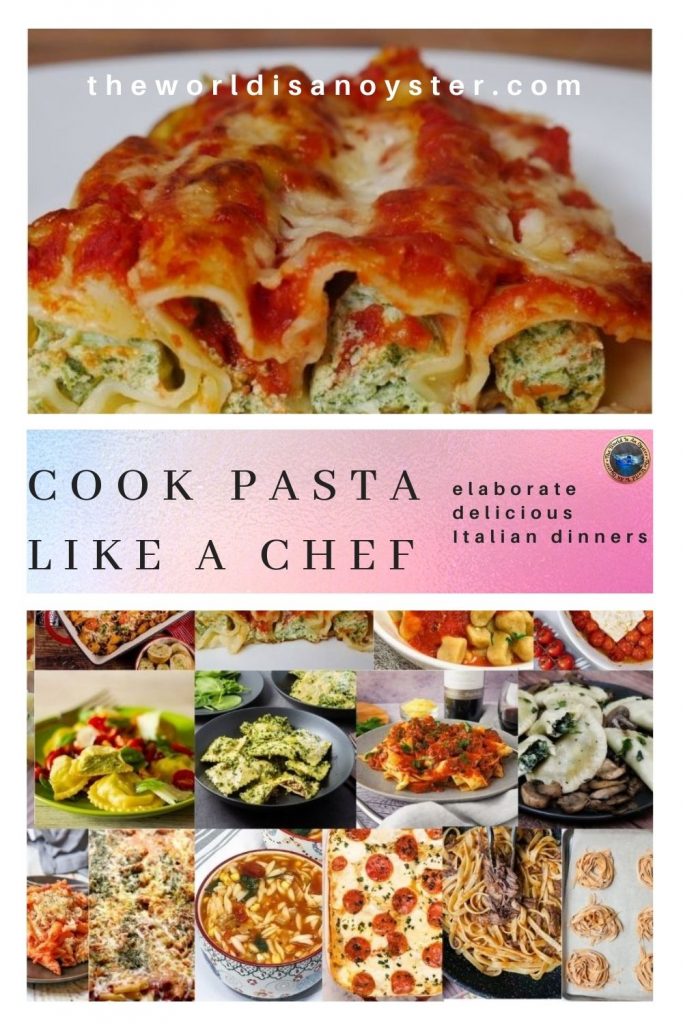
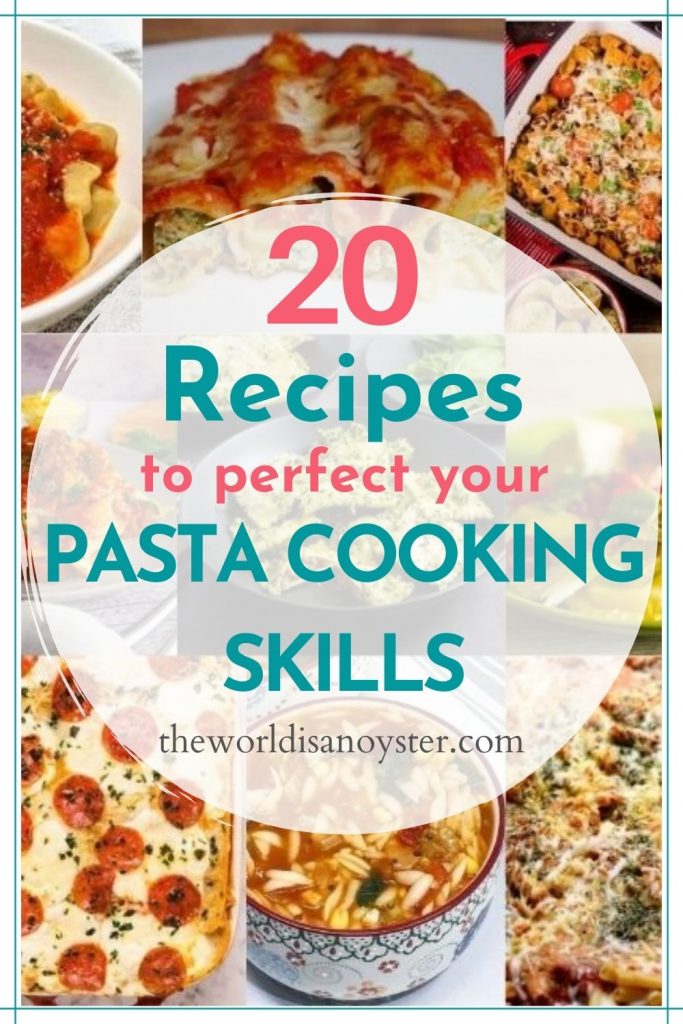
]]>20 Recipes to Perfect Your Pasta Cooking Skills
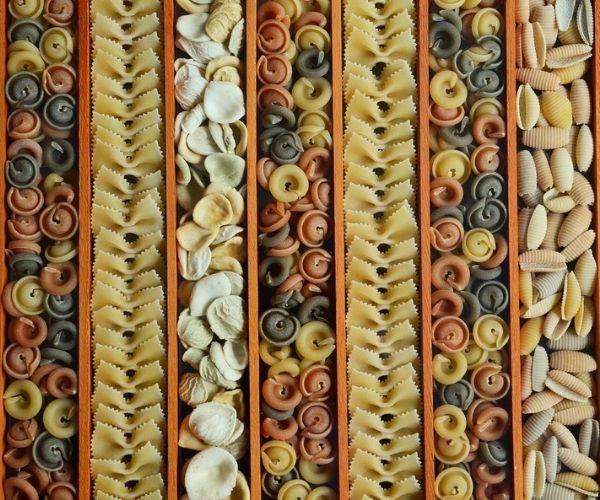
Pasta is one of the most versatile meals to cook and the easiest to perfect. In most cases, it requires a handful of ingredients and minimal time to make, while the result is always delicious!
This post may contain affiliate links, which means I will receive a commission if you purchase through my links at no extra cost to you. Please read the full disclosure for more information. Thank you!
The Italians brought pasta to the world millennia ago, yet they keep to the traditional way of cooking it, making pasta a worldwide favourite food! We all love it, ask for it whenever we visit amazing Italy and strive to perfect it while trying endless variations in our kitchen.
Here are a few tried and tested recipes that should help anyone become a pasta pro in no time!
Of course, a good meal goes down way better with good wine. Check this easy pasta post to see how to best pair wine with each type of pasta.
Get cooking and enjoy your creations!
Recipe provided by theworldisanoyster.com
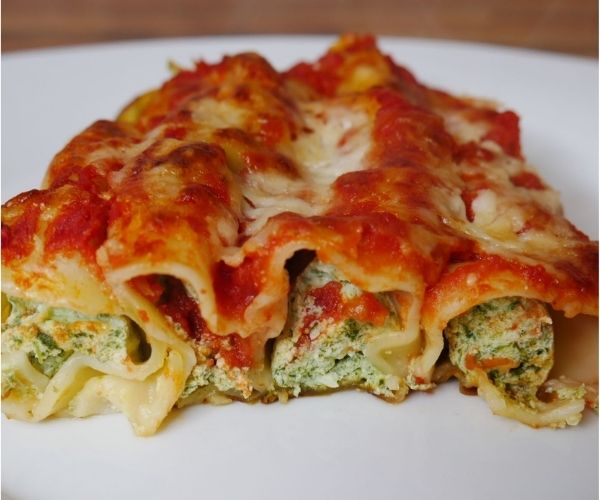
The Italians would eat pasta every day, mainly for lunch. In a typical Italian household, cannelloni would be a Sunday lunch special. This ricotta and spinach cannelloni is a lighter, healthier version to the meaty one anyone can cook successfully, even on the first try!
Recipe provided by aussiehomecook.com
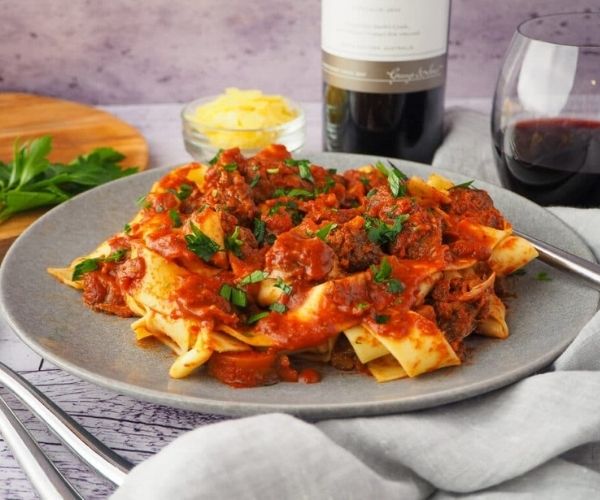
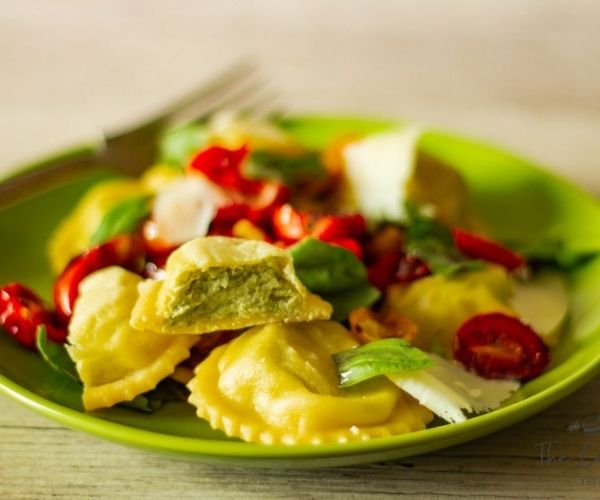
A ragù is a hearty, rich, slow-cooked Italian sauce made of meat and vegetables. The length of cooking will ensure its wonderful flavours. Lamb ragù is typically served with pappardelle – a large, flat pasta, like supersized fettuccini.
Recipe provided by thecoppertable.com
Certain dishes take a little more time and are a labour of love worth the extra effort. This dish is one of those, but also therapy for the soul. It is an excellent opportunity to check out, zone out, and get your hands dirty.
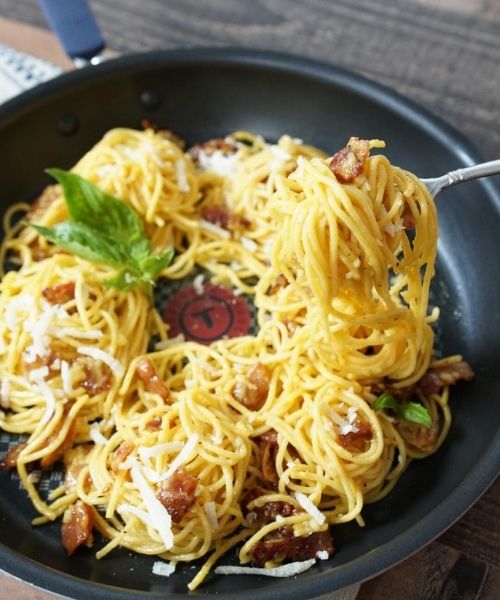
4. Easy Creamy Pasta Carbonara
Recipe provided by coupleinthekitchen.com
Carbonara is the best type of pasta for cold winter months that gives you the feeling of a warm comfy home. This dish is all about the cheese, so make sure to get the best Parmigiano Reggiano for it!
Recipe provided by cookingwithcarbs.com
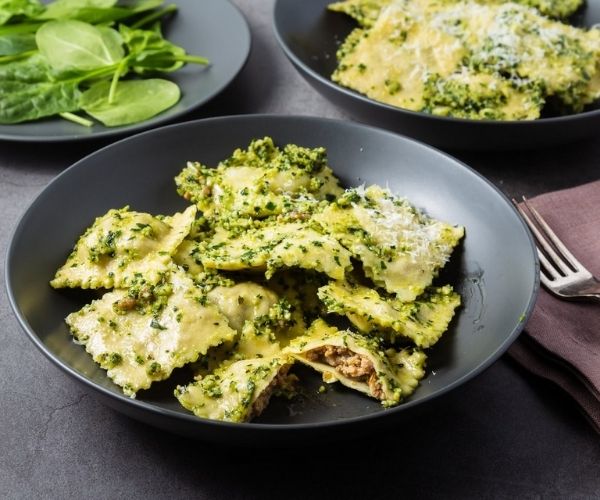
If you thought ravioli to be an elaborated pasta made by professional chefs only, you might be surprised how easy it is to make it at home! Once you nail the technicality of it, you can experiment with various fillings.
Recipe provided by cookedbyjulie.com
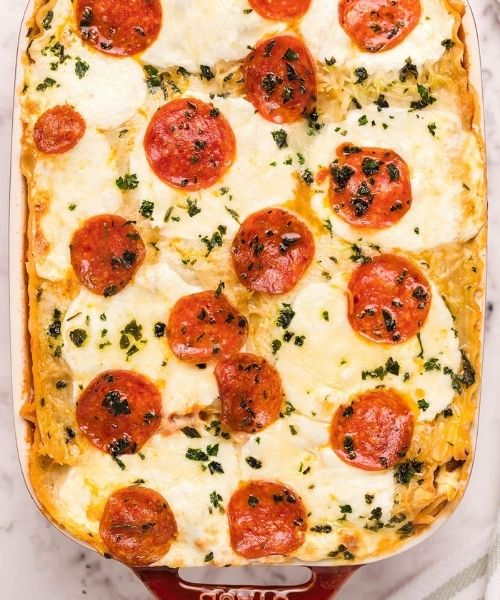
All the classic flavours of pizza combined with your favourite Italian dish for one successful dinner! What can be better than this?
7. Cheesy Bolognese Pasta Bake
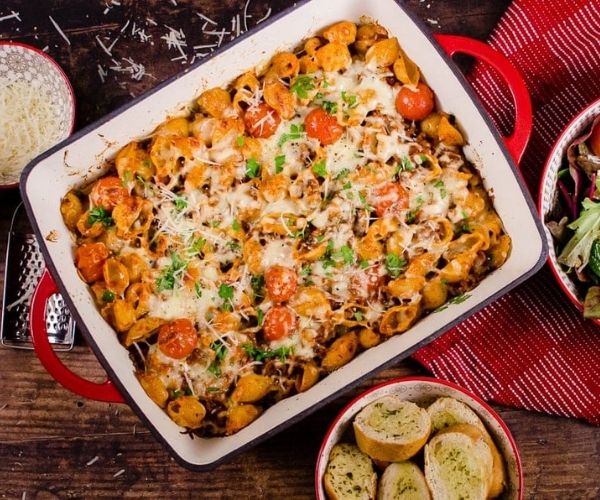
Recipe provided by flawlessfood.co.uk
An easy weeknight dinner recipe, this dish is a twist on a classic Italian Spaghetti Bolognese. But a delicious one!
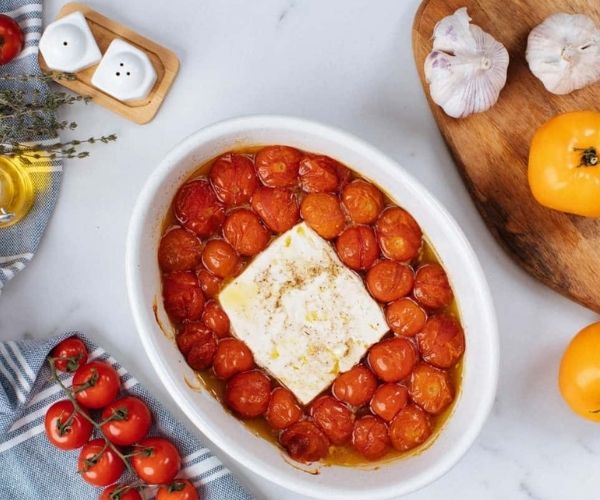
Recipe provided by thedaringkitchen.com
This feta pasta recipe had major hype on Tiktok for good reasons: simple and easy to make. In under an hour, you can have a yummy Greek-inspired pasta feast.
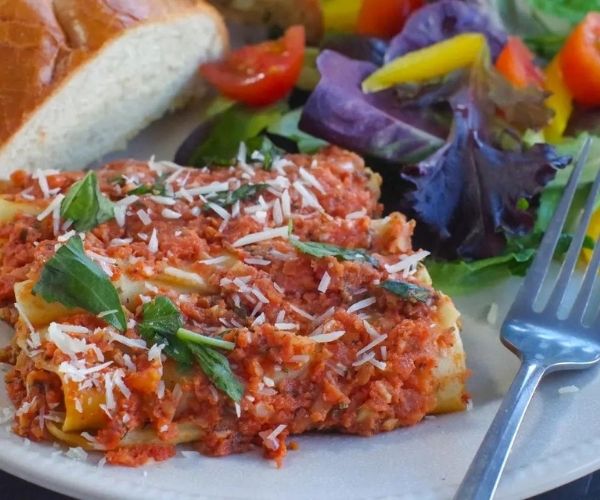
Recipe provided by foodmeanderings.com
If meat is your thing, replace ricotta with a mixture of beef, onions and carrots for a distinct taste and texture. The result will surely satisfy the meat lover in you!
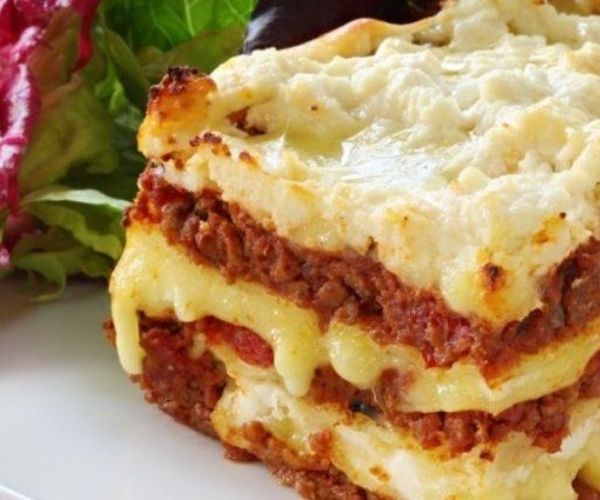
Recipe provided by fluxingwell.com
Lasagna is one of the easiest, most delicious pasta recipes. This dish also makes a great freezer meal if you do a lot of cooking for the month.
11. Vegan Pumpkin Gnocchi made from scratch!
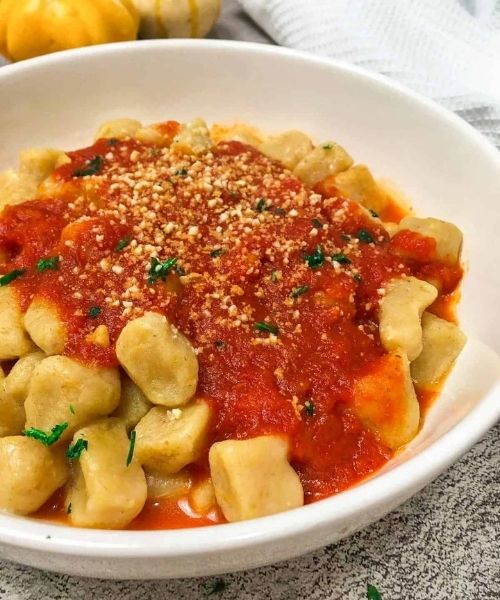
Recipe provided by thishealthykitchen.com
All you need for this excellent dish is just two ingredients: whole wheat flour and pumpkin puree—the result: a delicious, healthier version than traditional potato gnocchi.
12. How To Make The Best Homemade Vegan Spinach Ravioli
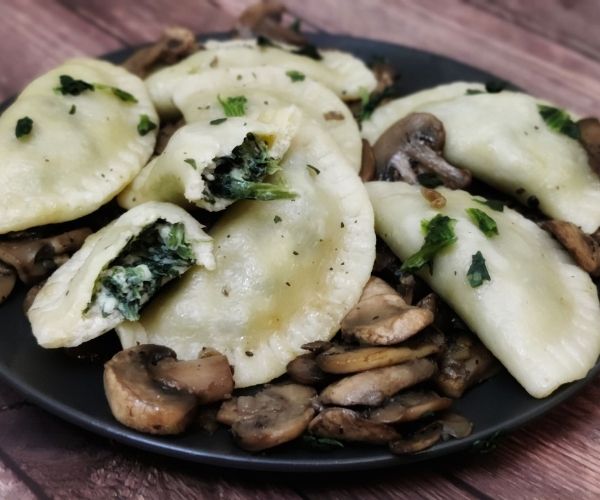
Recipe provided by sugarspiceneverythingnice.com
This is an excellent option for someone who misses having a cheesy ravioli pasta but has an allergy to dairy, eggs and nuts.
13. Instant Pot Vegan Pasta Soup
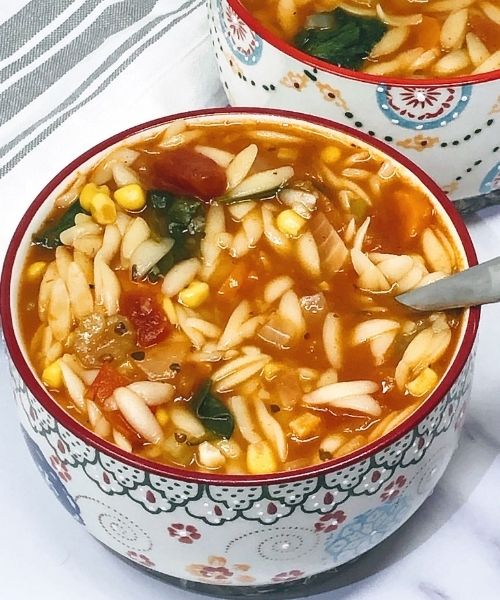
Recipe provided by culinaryshades.com
Soup is comfort food in the cold months or if you are under the weather. This vegan orzo pasta soup loaded with vegetables makes a hearty meal ready in a matter of minutes.
14. Pasta With Potatoes & Bacon
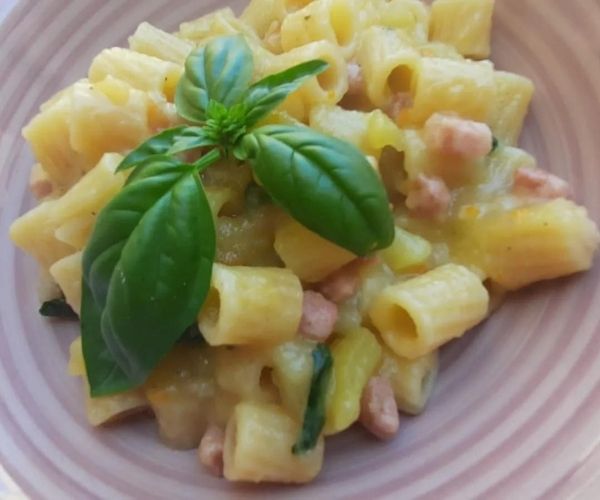
Recipe provided by the-bella-vita.com
Pasta and potatoes are beautifully combined in this traditional Sicilian dish, a speciality of the ever-inventive cooks of Southern Italy.
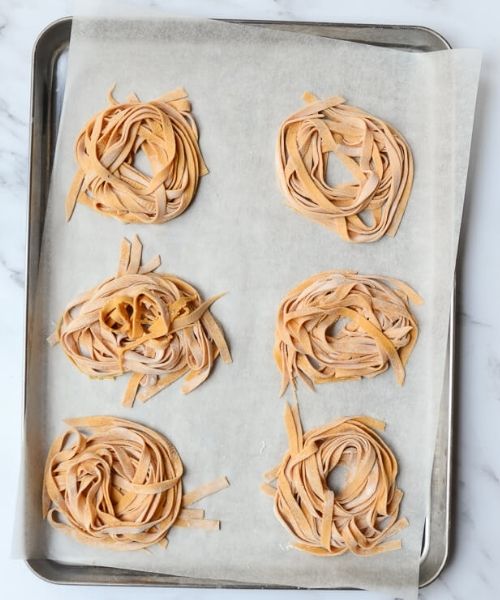
Recipe provided by tikkido.com
These are fresh pasta noodles made with actual pumpkins. Fresh pasta only takes a minute or two to cook, so taste often to determine if it is done to your preference, then drain and add your sauce of choice.
16. Mom’s Best Classic Gluten-Free Vegan Baked Ziti (Soy-Free)
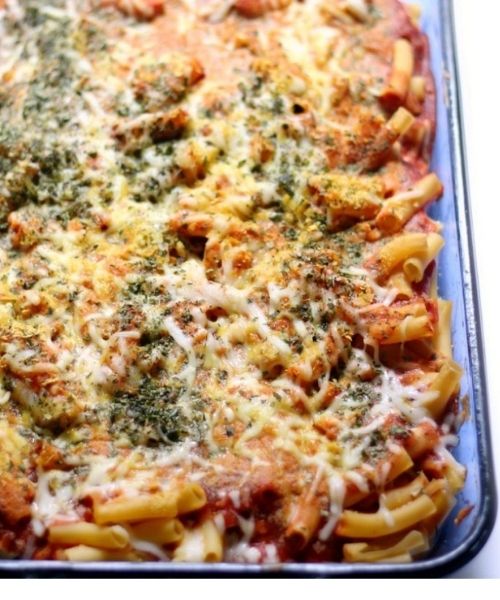
Recipe provided by strengthandsunshine.com
This make-ahead “cheesy” pasta dinner casserole is soy-free, delicious, and ready in minutes! Great as a freezer meal or having leftovers throughout the week!
17. Instant Pot Short Rib Ragù
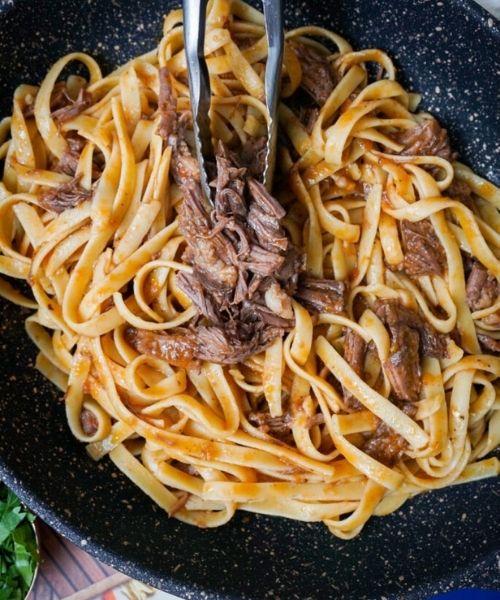
Recipe provided by coupleinthekitchen.com
A ragù is a traditional Italian sauce made of meat, onions, tomato, and red wine. This recipe uses braised short ribs instead of the more traditional ground beef.
18. Homemade Spaghetti and Meat Sauce
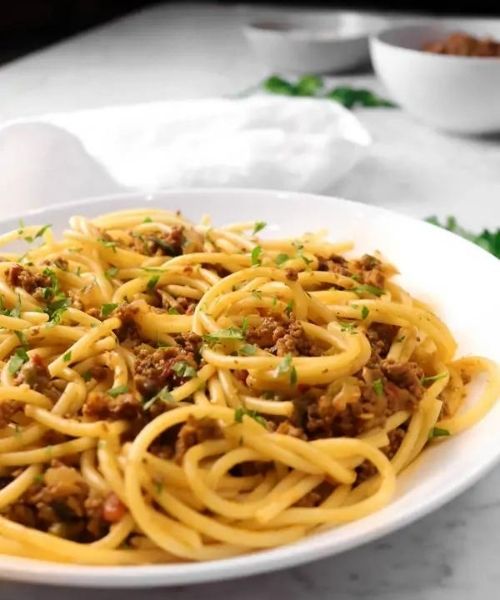
Recipe provided by bakerstable.net
Topped with cheese and fresh parsley, this dish is an absolute favourite for cold days or when we need a nice and homey plate. There is nothing better than a meal packed full of aromatic veggies, fresh herbs, and spices!
19. Taco Spaghetti
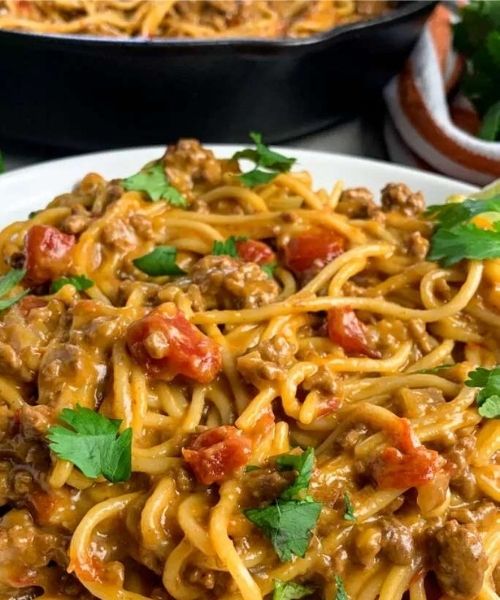
Recipe provided by modernmealmakeover.com
Taco Spaghetti is all the yummy taco flavours you love in a Mexican casserole. Best of all, it is all put together in one pot for easy cleanup and ready in just 30 minutes.
20. Pasta Al Forno
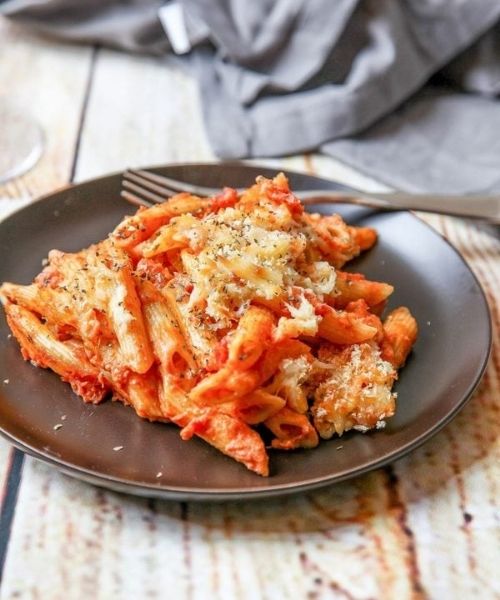
Recipe provided by bakingbeauty.net
Perfectly cooked pasta in a tangy tomato cream sauce. Topped off with more cheese and crunchy bread crumbs, this will become a new family favourite.
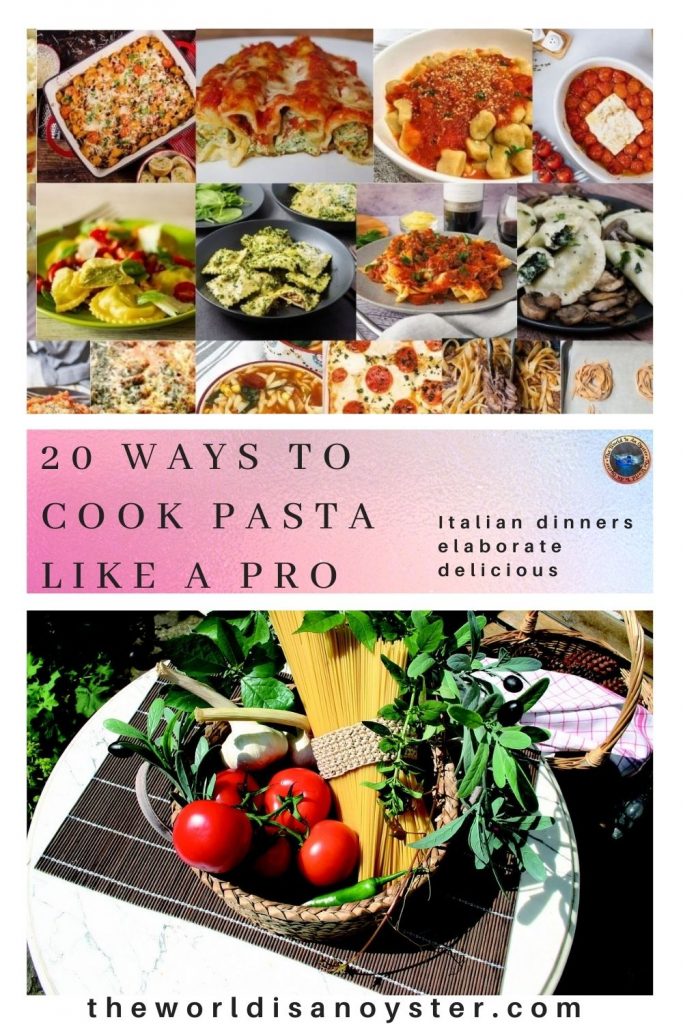

Which one of these perfect pasta recipes is your favourite? Do you have a special recipe that is your signature pasta? Or one you cook more often? I’d love to hear about it if you care to leave a comment!
20 Recipes to Perfect Your Pasta Cooking Skills
The post How to Cook Perfect Pasta Like a Professional Chef appeared first on The World Is an Oyster.
]]>The post 25 Easy Pasta Recipes Ready In Under Half an Hour appeared first on The World Is an Oyster.
]]>Easy Pasta Paradise
Pasta is one of the most versatile, easy to make and delicious meals humankind should thank the Italians for inventing and spreading worldwide! Every nation must have heard of and made pasta at some point or in some form, even if adapted to specific regional or cultural circumstances.
This post may contain affiliate links, which means I will receive a commission if you purchase through my links at no extra cost to you. Please read the full disclosure for more information. Thank you!
Traditionally, pasta is associated with Italy, although there are mentions of similar foods in the Far East or the Greek mythology going back many thousands of years.
It does not matter if you are looking to impress someone on a special occasion or have limited time to cook for your family at the end of a busy day. Pasta will always be the right choice and will never fail to awe.
A thing about carbs: the West seems obsessed with reducing/eliminating them from the diet in a desperate hope to live healthier. Paradoxically, the Italians eat pasta every evening and still manage to live a long, healthy life. Perhaps we need to look elsewhere and let the poor carbs be (part of our diet!)
If you need more reassurance, look for Down to Earth With Zac Efron on Netflix and search for the episode filmed in Sardinia. It might change your perception of carbs. It changed Efron’s opinion, and the guy is not just a pretty face; he has learnt a thing or two while filming this documentary series.
So pasta it is! The variations to the classic recipes are probably endless. Still, I have chosen an array of excellently explained and executed easy pasta recipes for this post, effortless to follow and ready in half an hour or less. Only a few will require ten or fifteen additional minutes of precious time, but rest assured, you will not feel sorry for going the extra mile!

At the end of the post, you will find beneficial information on pairing your chosen pasta with wine to make a simple dinner truly successful!
Have fun reading and, more importantly, enjoy eating! Hasta la pasta!
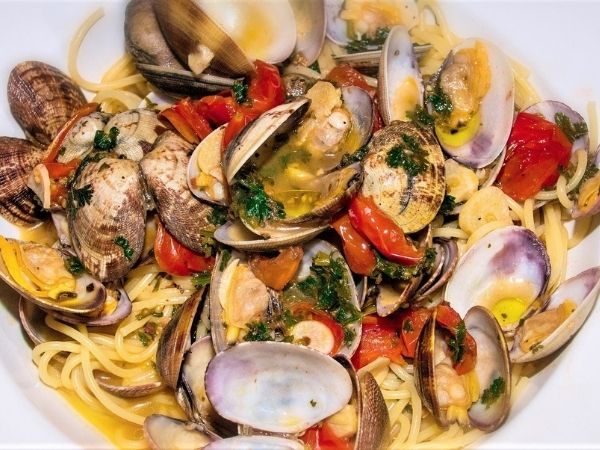
Recipe provided by https://theworldisanoyster.com/
Enjoy it with a sparkling white and a good story of the world-famous Amalfi Coast, the place of this recipe’s origins! Ah, how dreamy sounds a plate of vongole somewhere in Positano… Oh, well, the kitchen will have to do for now!
2. Healthy Salmon Stroganoff Pasta
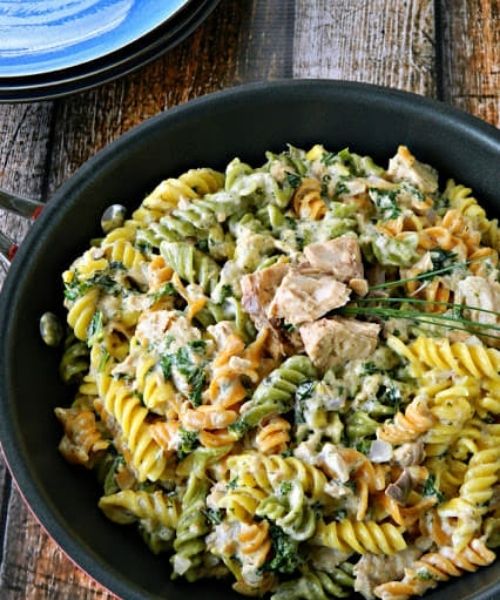
Recipe provided by https://www.momthelunchlady.ca/
Why not try fish pasta with a delicious dill sauce? Healthy, filling, delicious – all in one plate.
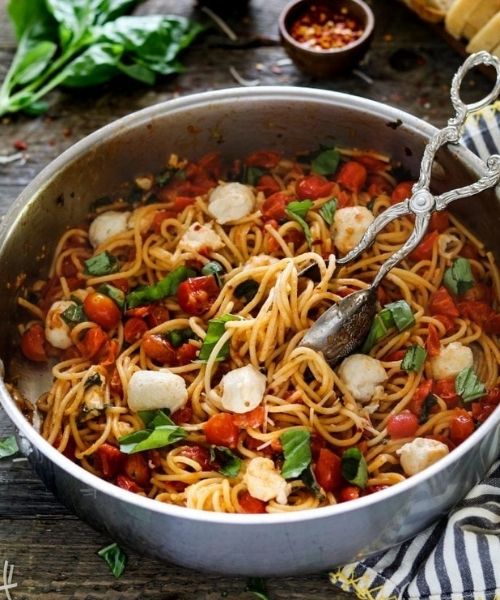
3. Fresh Basil and Cherry Tomato Pasta
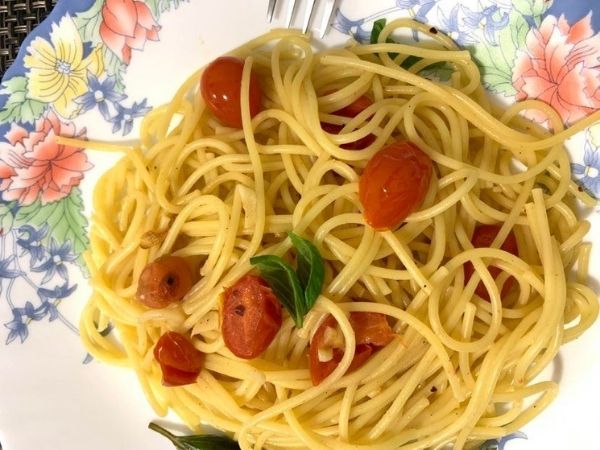
Recipe provided by https://therunningbaker24.com/
Aromatic and requiring just a handful of ingredients, this dish provides the necessary carb load to a trained runner, according to the recipe provider. But we all love it!
4. Penne Alla Vodka With Pancetta
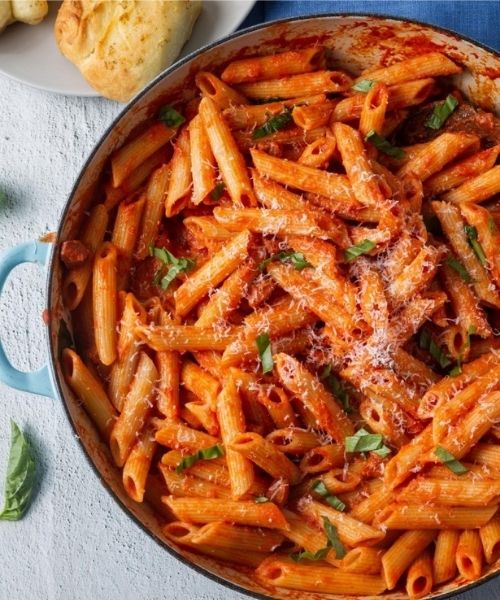
Recipe provided by https://cookingwithcarbs.com/
Why not give a Vodka kick to a simple cream and tomato sauce for a romantic pasta dinner? You know you want to!
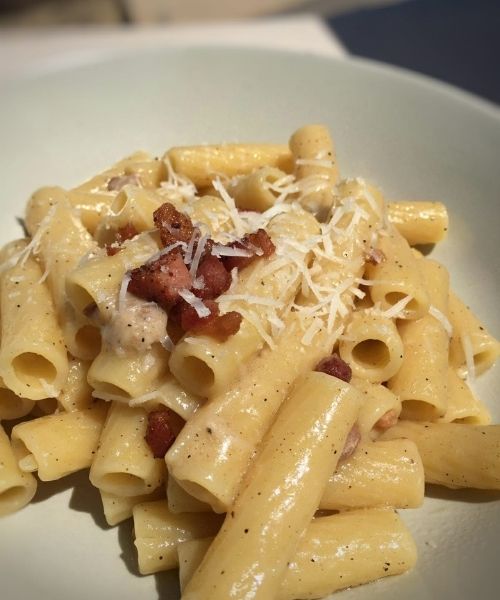
Recipe provided by https://www.the-bella-vita.com/
An authentic Roman pasta with a history going back to antiquity is something worth trying. After all, this is where and how it all started.
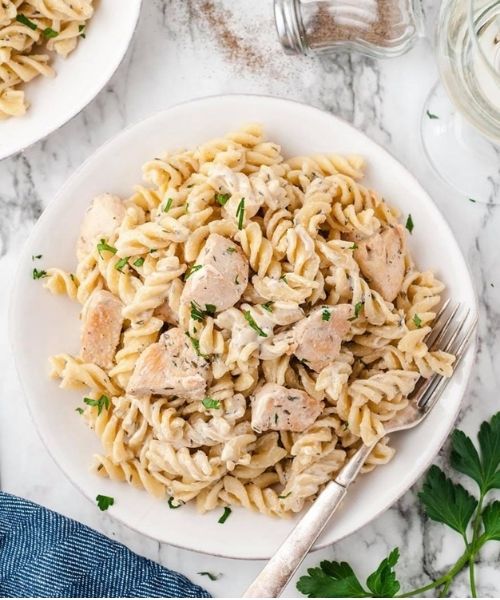
Recipe provided by https://www.cookedbyjulie.com/
Are you looking for a successful date night meal? Look no further; this is your chance to impress!
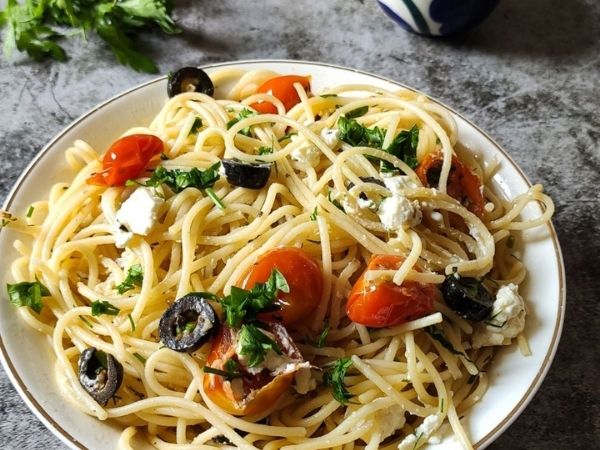
Recipe provided by https://greenbowl2soul.com/
Suiting specific dietary styles and bringing diverse cuisines together, this fusion summer pasta is ideal for picnics or potlucks.
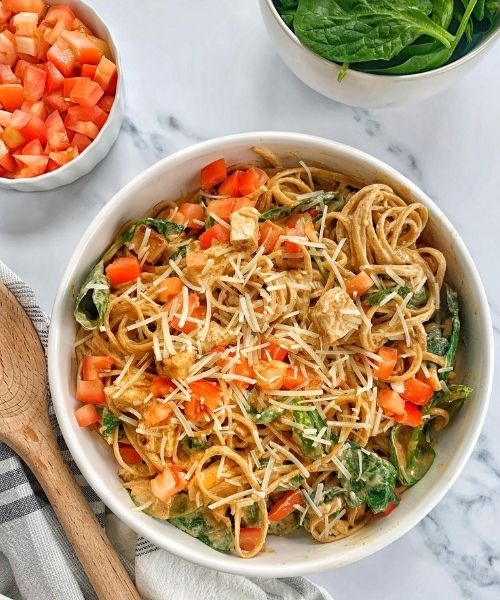
Recipe provided by https://theoregondietitian.com/
Perhaps you would like to try a hot world-famous with a twist by following this healthy recipe!
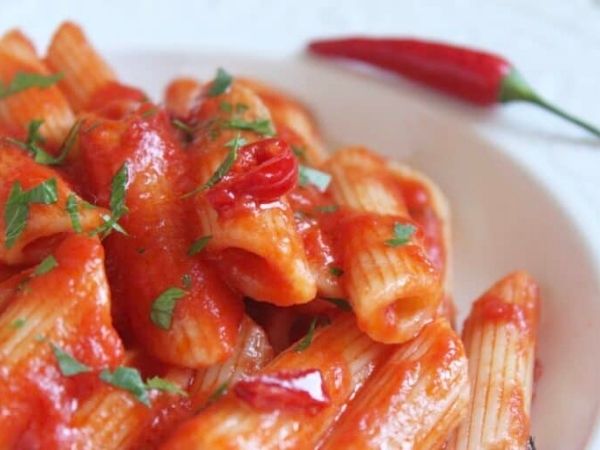
Recipe provided by https://www.christinascucina.com/
This is another authentic Italian recipe, a hot pasta easy to make and my all-time favourite!
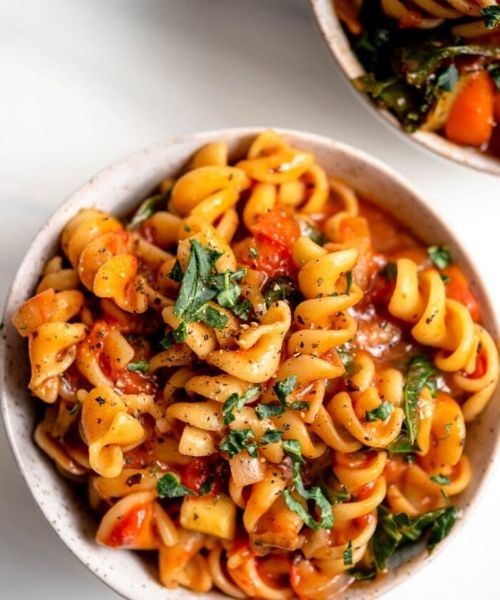
Recipe provided by https://runningonrealfood.com/
Nutritious, budged friendly and easy to make, this is a pasta dish that can be easily customised to your taste!
11. Instant Pot Pasta Primavera
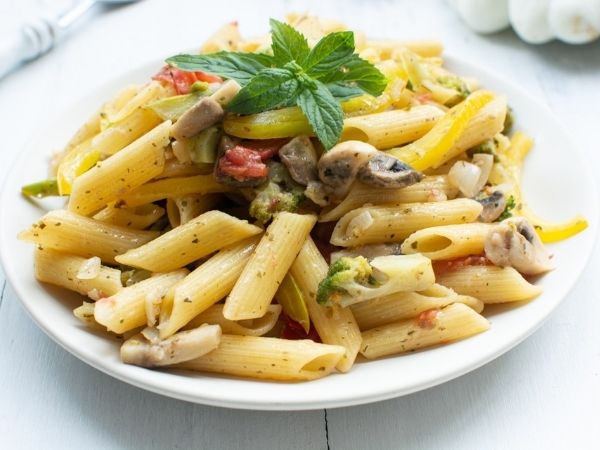
Recipe provided by https://www.corriecooks.com/
You might become addicted to this recipe; trust an instant pot fan!
12. Creamy Garlic Shrimp Pasta
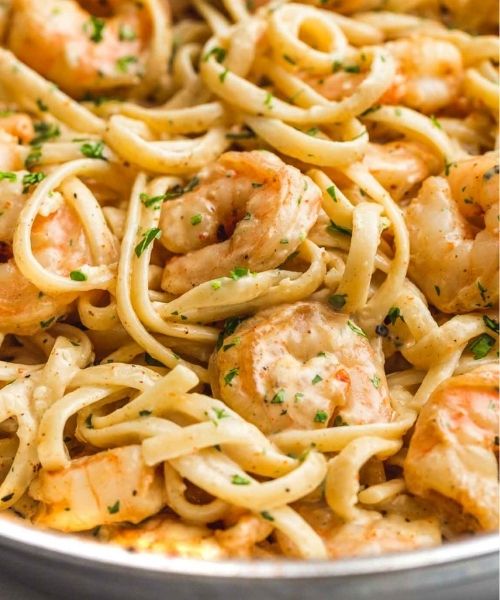
Recipe provided by https://littlesunnykitchen.com/
This sumptuous recipe is every pasta lover’s dream come true – take it from a trained chef! I know I’m already craving it!
13. Gluten-Free Fettuccine Alfredo
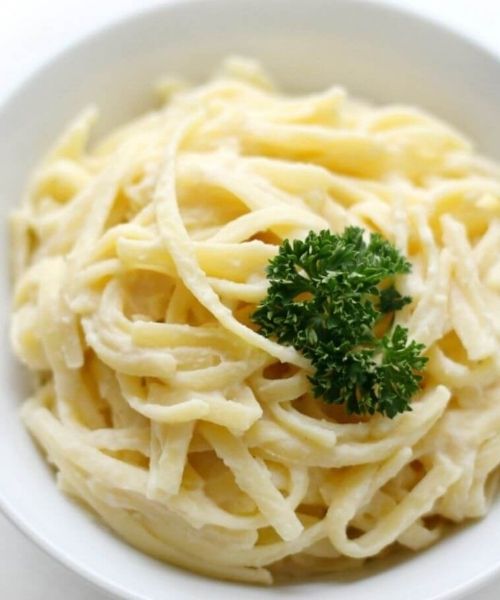
Recipe provided by https://strengthandsunshine.com/
Vegan and allergy-free, this is your perfect super rapid dinner – creamy and delicious!
14. One Pot Chicken Cordon Bleu Pasta
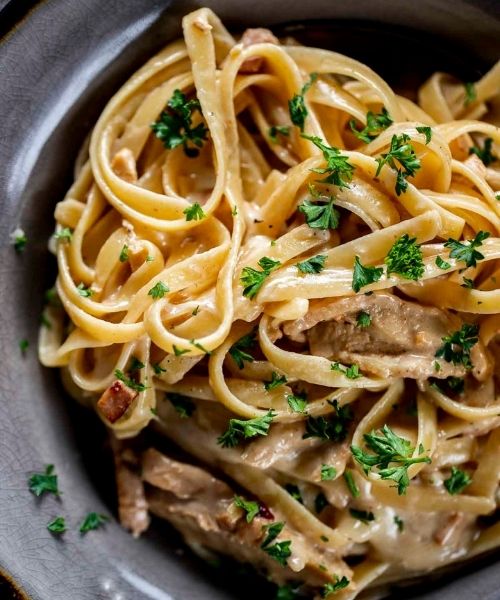
Recipe provided by https://www.wenthere8this.com/
The ultimate comfort food can make a perfect weeknight dinner – see for yourself!
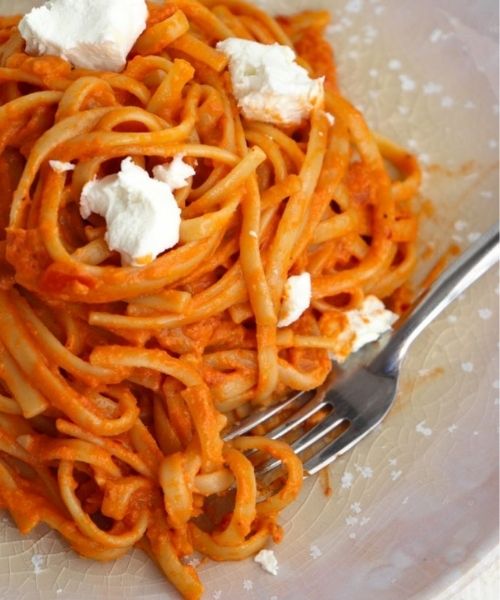
Recipe provided by https://seasonandthyme.com/
The rich and famous eat carbs, too! They even inspire us mere mortals to do the same! Check this cute cooking story and delicious recipe.
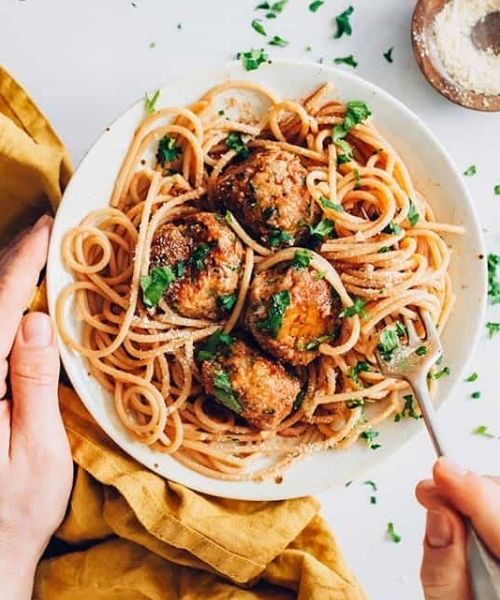
Recipe provided by https://thedaringkitchen.com/
This is a fabulous, right up my alley side dish that goes perfectly with pasta! A must-make, surely!
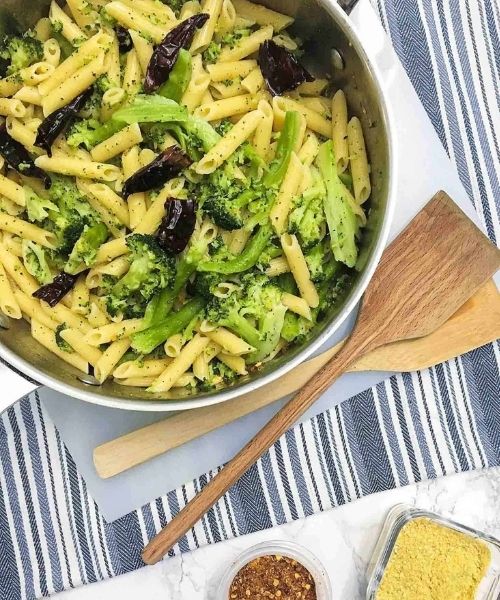
Recipe provided by https://thishealthykitchen.com/
Garlic and oil pasta is the simplest and most delicious type of pasta one can make in minutes and still enjoy as if it were an elaborate palace recipe! This is the charm of Italian cooking!
18. Roasted Eggplant Spinach Pasta
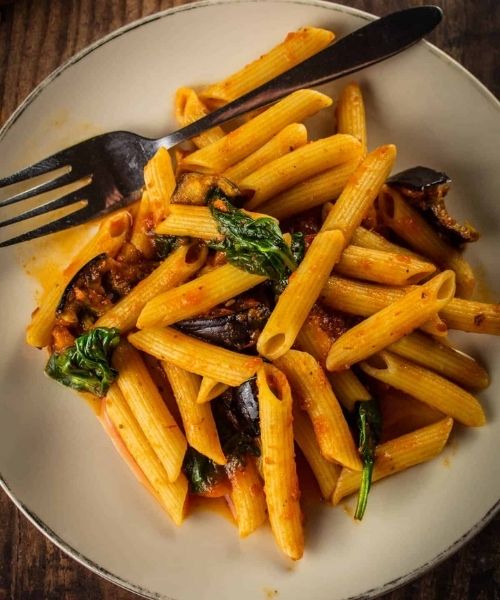
Recipe provided by https://saporitokitchen.com/
A little extra time to bake the aubergines would never put me off. The reward is in the form of a beautiful and goodie-packed pasta dish.
19. Vegan Roasted Red Pepper Pasta
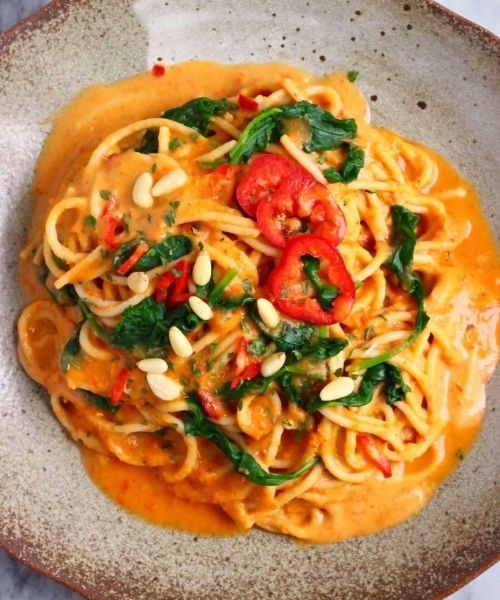
Recipe provided by https://www.rhiansrecipes.com/
Why not try a fragrant baked pasta that needs just a few extra minutes to make? Guaranteed, you won’t feel sorry for the added time!
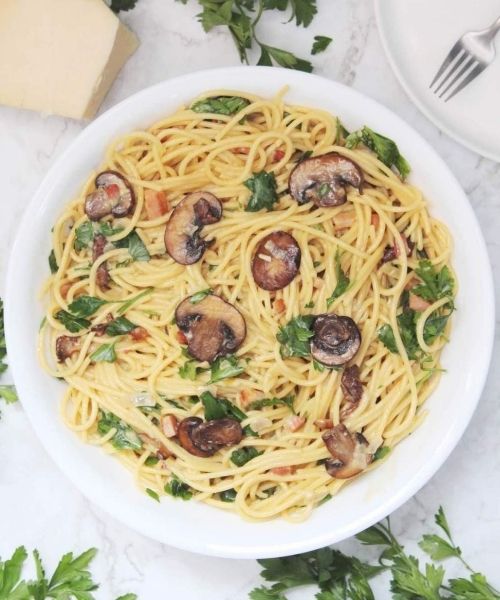
20. Mushroom Carbonara With Pancetta
Recipe provided by https://thesixfiguredish.com/
It might take just a little over half an hour to prepare and cook this recipe, but the result is a delicious garlicky pasta that will make a wonderful dinner!
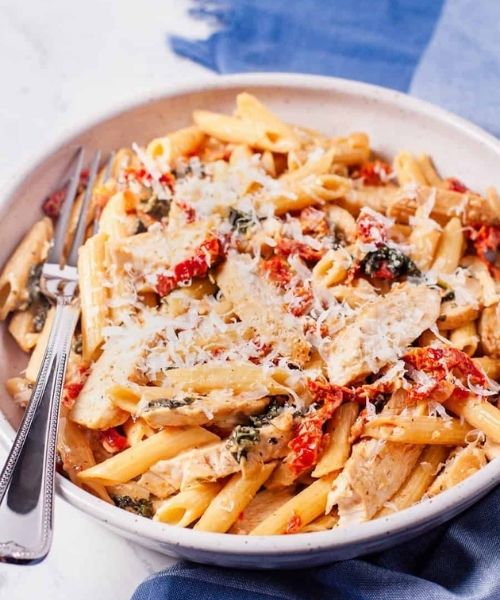
21. Creamy Tuscan Chicken Pasta
Recipe provided by https://disheswithdad.com/
Sautéed chicken, garlicky parmesan and sun-dried tomatoes – on my plate in half an hour? Yes, please!
Recipe provided by https://veganhuggs.com/
What’s better than combining two Italian specials in a healthy and absolute dreamy summer dish? Serving it in a quaint trattoria with a view to Vesuvius, preferably in Capri, perhaps! I swear, one of these days I’ll buy a kitchen wallpaper with that scenery!
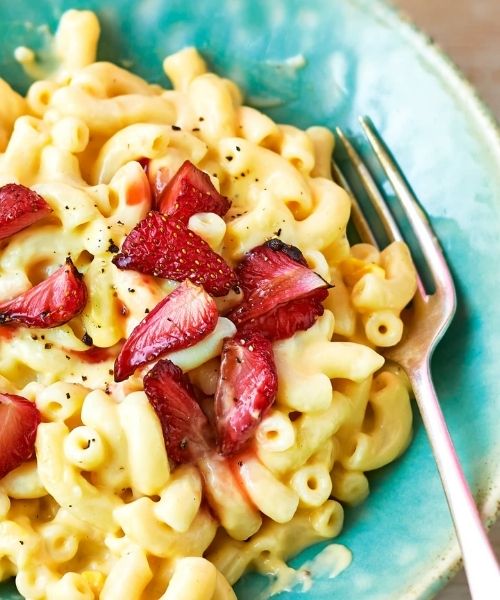
23. Strawberry Pasta
Recipe provided by https://www.amummytoo.co.uk/
What do you do when you need to feed fussy eaters? Perhaps wooing them with something daring and different would work. Just allow extra time to roast a handful of strawberries.
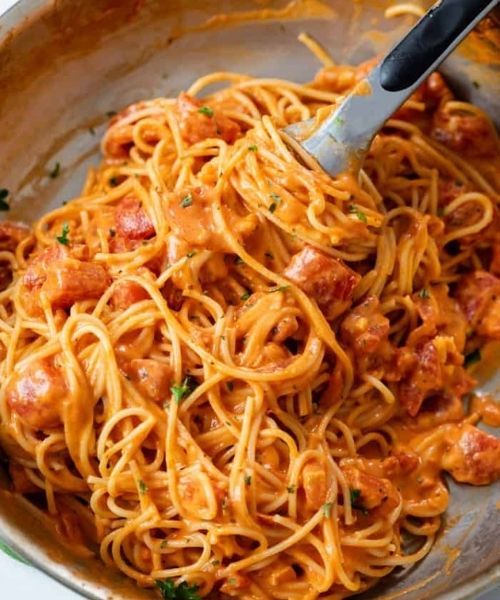
Recipe provided by https://thecozycook.com/
Simple, easy and versatile, this is the ultimate Italian favourite pasta dish!
25. Pasta alla Norma
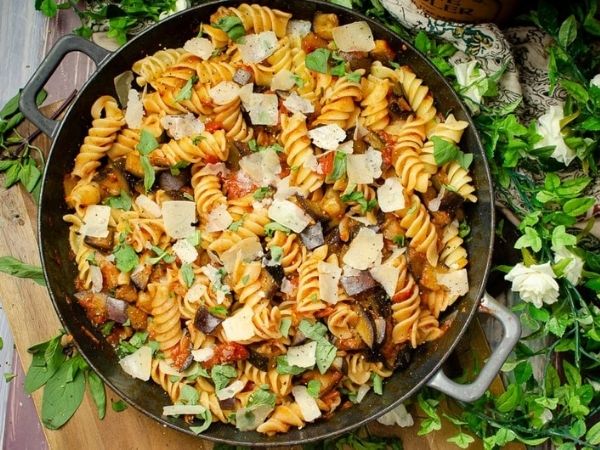
Recipe provided by https://flawlessfood.co.uk/
What better way to conclude this pasta presentation than a Sicilian star dish worthy of an acclaimed operatic name? Bravissima!
How do we pair appropriately wine with your chosen easy pasta recipe?

It is of vital importance to choose the right wine when serving pasta. Wine Folly offers some good ideas and explanations that will make your pasta dinner a total success! An absolute must-read and follow the advice! I know I have acquired an enological education, and surely it will help many others choose wisely.
I genuinely hope you enjoyed reading this easy pasta recipes round-up post and will save it as a reference to your future pasta evenings. Or you can use it as a ready-made meal plan for quite a while! And please share the word. Thank you!

What recipe(s) tickles your fancy the most? No matter what you choose, enjoy your pasta, or as the Italians would say, Buon appetito!
Easy Pasta Paradise
The post 25 Easy Pasta Recipes Ready In Under Half an Hour appeared first on The World Is an Oyster.
]]>The post How to Make Upside-Down Caramelised Orange Cake With Ricotta appeared first on The World Is an Oyster.
]]>An Italian Inspired Delight for Your Morning Coffee
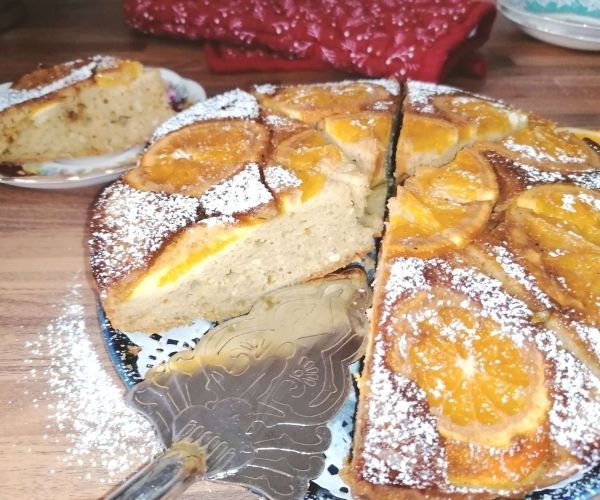
Orange and ricotta cake in endless variations is a famous desert around Italy, especially in the south where orange trees grow everywhere, not only in orchards, and cheesemaking has become a true art over the millennia.
This post may contain affiliate links, which means I will receive a commission if you purchase through my links at no extra cost to you. Please read the full disclosure for more information. Thank you!
I often look for inspiration in the incredible Italian cuisine when cooking or baking, and each time I congratulate myself for the result is always exceptional.
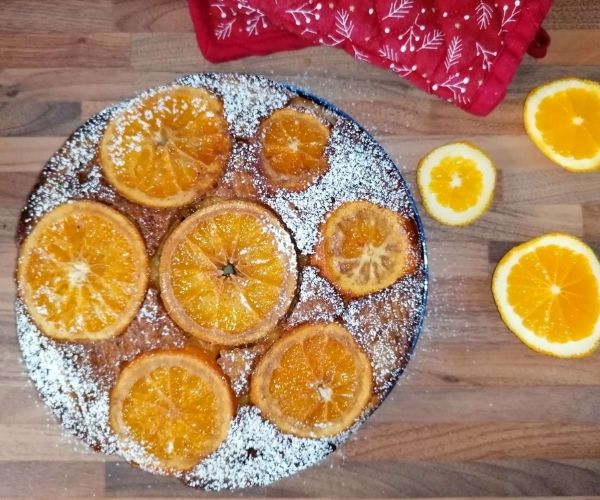
I tried two versions for this orange and ricotta cake: for one, I sprinkled sugar on the bottom of the baking mould and placed the orange slices over it to caramelise them during baking. The result was a delicious cake (flattened as I turned it upside down) that did not live to see the next day! It was just a Saturday cake devoured after lunch by my extended family.
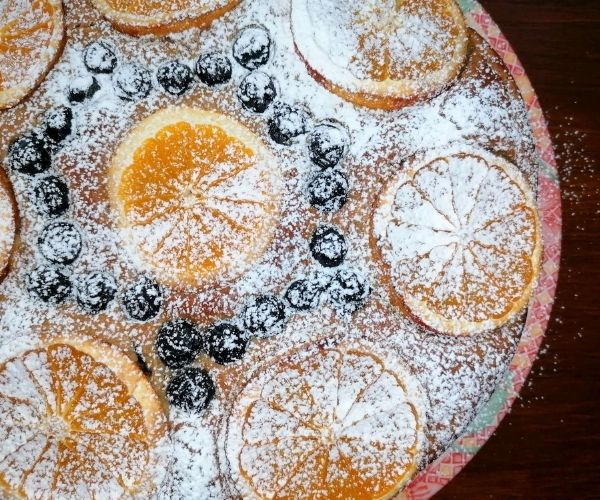
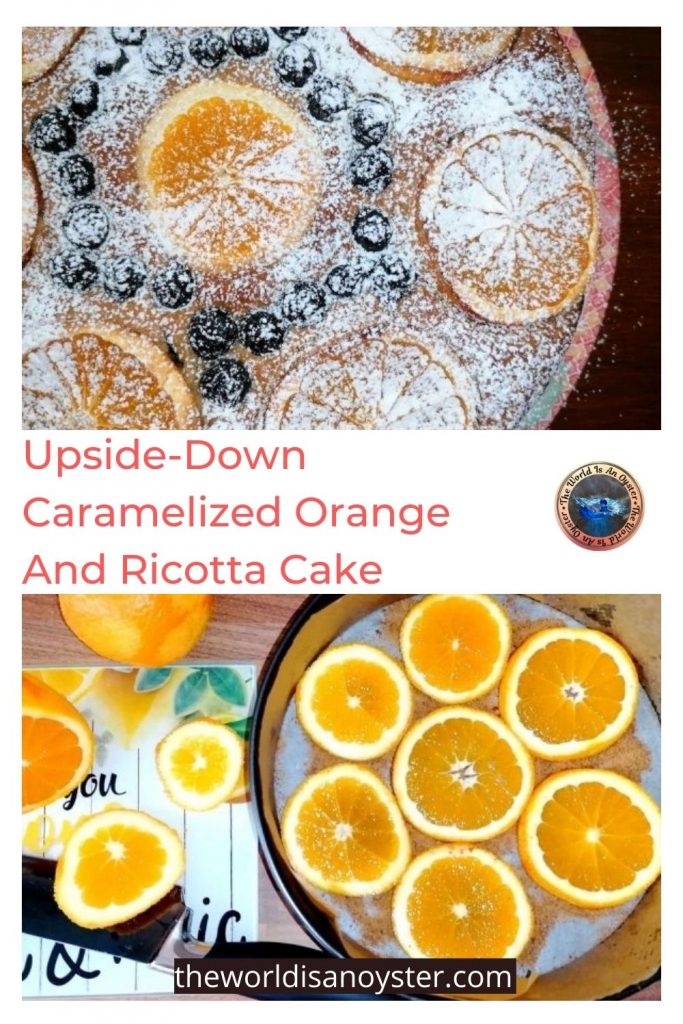
I placed the batter first and decorated it with orange slices and a handful of blueberries for the second cake. This one raised slightly more than the first version and maintained the shape.
Although the taste and aroma were similar, the oranges turned out differently on each cake. As they caramelised in the first one, the orange slices were soft and moist. The orange peel dried slightly in the other cake, where the slices did not sink enough into the batter and became a tad chewy.

Based on this experience, I decided to upload the upside-down version of this orange and ricotta cake as it turned out more successful.
One particularity of Italian baking is that the time spent in the kitchen is always minimal. The Italian cakes generally require a handful of ingredients and little time for preparation. The oven takes care of the baking for the next hour, and the baker enjoys their time living la dolce vita.
Rarely a recipe would be so complex as to confine you to the kitchen for hours on end. Check my pear and almond chocolate cake, too, should you need more convincing!
Add rapidity in preparation to amazing delectable taste and you will see why I absolutely adore Italian cuisine! What is your excuse not to start baking an orange and ricotta upside-down cake right away?
Ingredients for orange and ricotta upside-down cake:
Ricotta
Plain flour (organic, white)
Eggs
Coconut sugar
Organic oranges
Orange extract
Baking powder
Salt
Method:
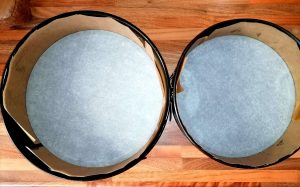
Start by lining the baking mould. Mine is 26 cm in diameter and has a removable base. Still, lining the walls is always tricky and requires some help. Little hands will do and become quite the expert after a few tries! If you don’t have a helper waiting patiently to lick the bowl, perhaps oiling the mould’s walls before fitting the parchment will do the job.
Before starting the preparation, preheat the oven to 180°C/350°F/gas mark 4.
Separate the egg yolks from the whites. Mix the yolks with sugar, orange zest, juice, and orange extract until the volume doubles or trebles. Add the ricotta cheese and mix again.
Batter the whites until they keep the shape when you remove the batters and combine them with the above composition.
Add the flour (previously sieved) and baking powder and mix with ample movements. The batter needs to remain airy so it does not flatten during baking.
Sprinkle a few tablespoons of sugar into the tray and place orange slices over. It is how the oranges caramelise during baking. To control the moisture degree, sprinkle some semolina; it will absorb the excess humidity without interfering with the caramelisation process.

Bake for fifty minutes to one hour (longer if batter sticks to the toothpick when you do the test). When ready, cool slightly, then place a large plate over the mould and turn upside down with a swift movement and allow to cool completely. Use oven gloves and clear the area around you for this manoeuvre; any little helpers present should only watch and learn a baking trick!
Sprinkle powdered sugar when cool and slice as desired. Enjoy the upside-down caramelized orange and ricotta cake with an indulgent cup of coffee.
Buon appetito!
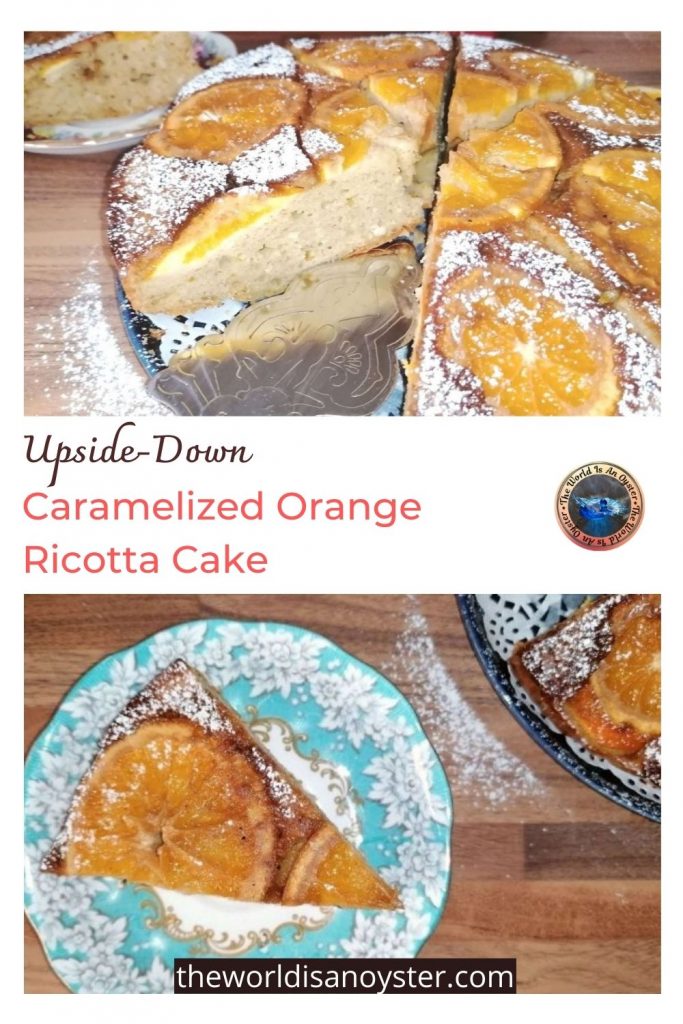
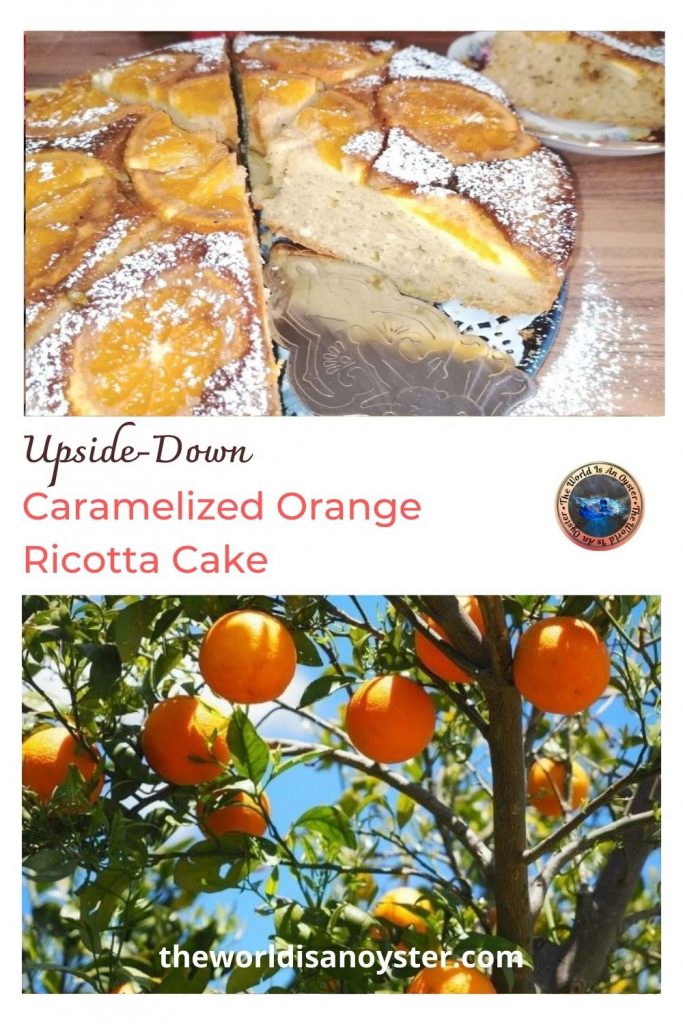

Upside-Down Caramelized Orange and Ricotta Cake
Equipment
- Round baking mould Ø26cm
- Mixing bowl
- Large spatula
- Kitchen scale
Ingredients
- 4 pcs eggs organic
- 250 g plain flour sieved
- 1 tsp baking powder
- 120 g coconut sugar
- 3 tbsp coconut sugar to caramelise the oranges
- 1-2 tbsp semolina to absorb extra moisture from oranges
- 1 organic orange juice+zest
- 1 organic orange sliced
- 250 g ricotta
- 1 tsp orange extract/liquour
- 1 pinch salt sea/rock
Instructions
- Line the baking mould with parchment paper.
- Preheat the oven to 180°C/350°F/gas mark 4.
- In a bowl, mix the egg yolks with sugar, orange zest + juice and orange extract. Use an electric mixer and batter until the quantity trebles, and the composition becomes creamy.
- Add the ricotta and incorporate using a spatula.
- Separately, batter the egg whites with a pinch of salt until they keep the shape when you remove the beaters.
- Add the egg whites to the composition and use a spatula to mix slowly from the bottom to the top until nicely incorporated.
- Mix the baking powder with the flour. Add it to the composition spoon by spoon while mixing carefully, aiming not to flatten the batter.
- Sprinkle uniformly three tablespoons of coconut sugar on the bottom of the baking mould. Cut an orange into 1 cm slices and place them over the sugar. During baking, the oranges will caramelise and infuse the cake with their flavour.
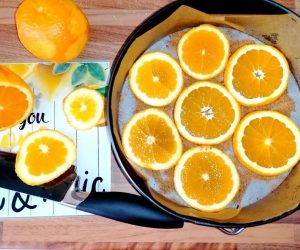
- Sprinkle 1-2 tablespoons of semolina over the orange slices to help absorb the excess moisture while baking.
- Pour the batter over the oranges and gently level it.
- Bake for 50 minutes to one hour until golden brown and perform the toothpick test to check the cake is baked thoroughly. As each oven bakes differently, you might need to cover the mould with a tray for the first 20 minutes to avoid burning. During the first 20 minutes of baking, do not open the oven's door!
- When ready, remove the cake from the oven and allow it to cool for 2-3 minutes, then place a large plate/cake stand over the mould, hold firmly and turn it upside down. Wear oven gloves and be careful not to burn your hands during this step!
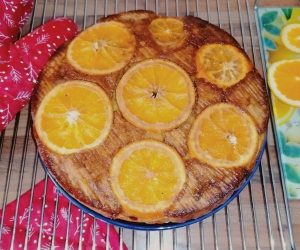
- Let the cake cool completely on a rack, then sprinkle with powdered sugar.
- Slice the cake and serve it preferably with a steamy cup of coffee or cappuccino. Enjoy!

Notes

An Italian Inspired Delight for Your Morning Coffee
The post How to Make Upside-Down Caramelised Orange Cake With Ricotta appeared first on The World Is an Oyster.
]]>The post How to Make the Softest Italian Pear and Almond Chocolate Cake appeared first on The World Is an Oyster.
]]>Valentine’s Day Delight or Daily Coffee Side?
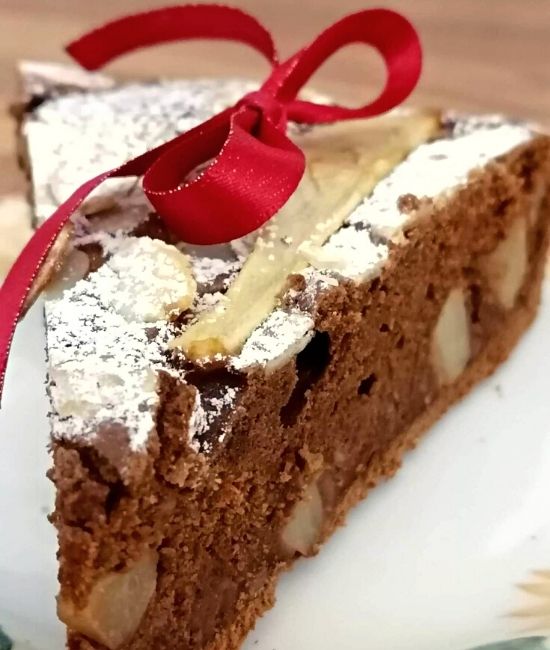
This Pear and Almond Chocolate Cake is a delicious and versatile dessert that works wonderfully as an indulgent dessert to finish a romantic Valentine’s Day dinner AND as a side for your daily coffee(s).
This post may contain affiliate links, which means I will receive a commission if you purchase through my links at no extra cost to you. Please read the full disclosure for more information. Thank you!
To the Italians, it is in most cases the latter, but that does not mean this pear and almond chocolate cake cannot make a perfect special occasion dessert. To me, it works the same way Tiramisù would: “wow!” And “can I have more, please?”
Imagine the combination of delicate, soft and juicy pears and the crunchiness offered by the crushed almonds. Add to that the richness of chocolate, and the result is an explosion of tastes on your palate! Nothing short than a heavenly dessert to the gluttonous!
As is often the case with Italian cuisine, this cake is easy to make and so scrumptious – a guarantee that you will impress the beneficiary no matter the occasion!
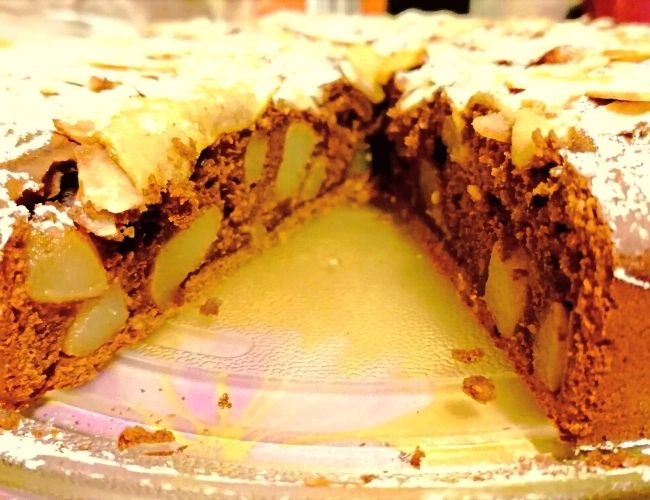
Ingredients for Pear and Almond Chocolate Cake
Flour + Baking powder
Almonds (crushed and flakes, slightly roasted)
Pears (ripe and juicy)
Butter (melted and cooled)
Eggs
Coconut sugar
Powdered sugar
Cacao powder (dark)
Unsweetened almond milk
Lemon zest and juice (always use organic to avoid chemicals and wax in the peel)
Almond essence
Salt
Method
Start by washing and peeling the pears. Slice half a pear for decoration and cut the rest in 1-2 cm cubes. Cover with lemon juice to prevent from oxidising.
Roast and ground the almonds. Separately, slightly roast the flaked almonds for decoration to enhance the taste.
In a large bowl, mix the coconut sugar with the egg yolks and lemon zest. Use a hand mixer at low velocity to start, then increase to high and keep whisking until the volume almost doubles and the consistency becomes creamy.
Add the milk and melted butter (cooled). Mix with a spoon.
Sieve the flour, baking powder and cacao powder in a large bowl and incorporate it one spoon at a time into the creamy mix.
Add the crushed almonds and the almond essence.
Separately, add a little salt to the egg whites and beat with a handheld mixer until stiff. Add it gradually to the creamy mix and incorporate slowly, using a spoon.
Add the cut pears and mix carefully not to crush them.
Preheat the oven to 170 C Fan/180 regular/350 F/ Gas mark 4. Place paper parchment on a round baking tin (mine has 24 cm in diameter; it is OK to use a smaller one, but I would not recommend a larger one – your cake will be too flat.)
Empty the composition into the tray and spread it evenly without pressing down too much.
Sprinkle a layer of roasted almond flakes, then decorate with pear slices.
Bake for 40 minutes and do the toothpick test to check that your chocolate, pear and almond cake is ready. If the toothpick comes out wet, you might need an additional 5-10 minutes of baking.
Transfer to a rack and wait until cool to sprinkle with powdered sugar.
Serve with coffee or a glass of Prosecco if the occasion is right.
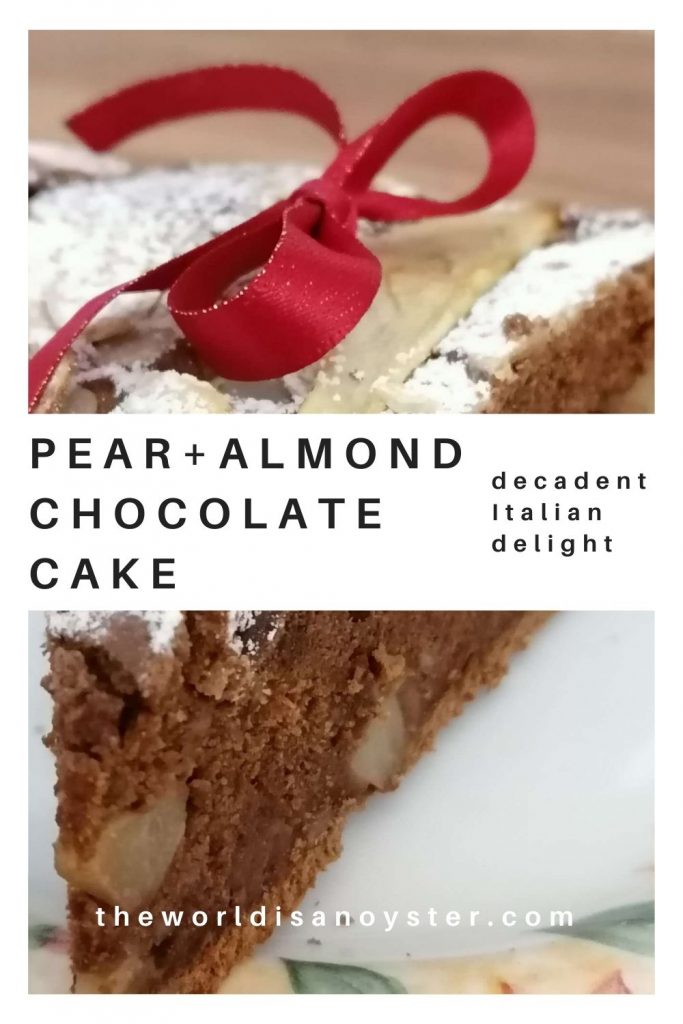
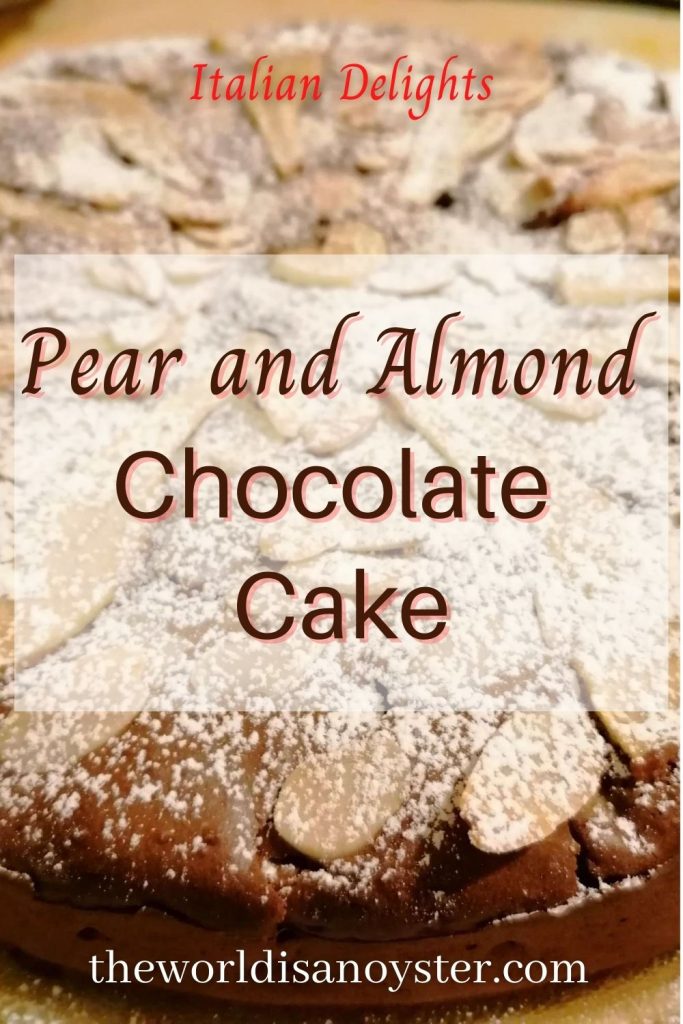
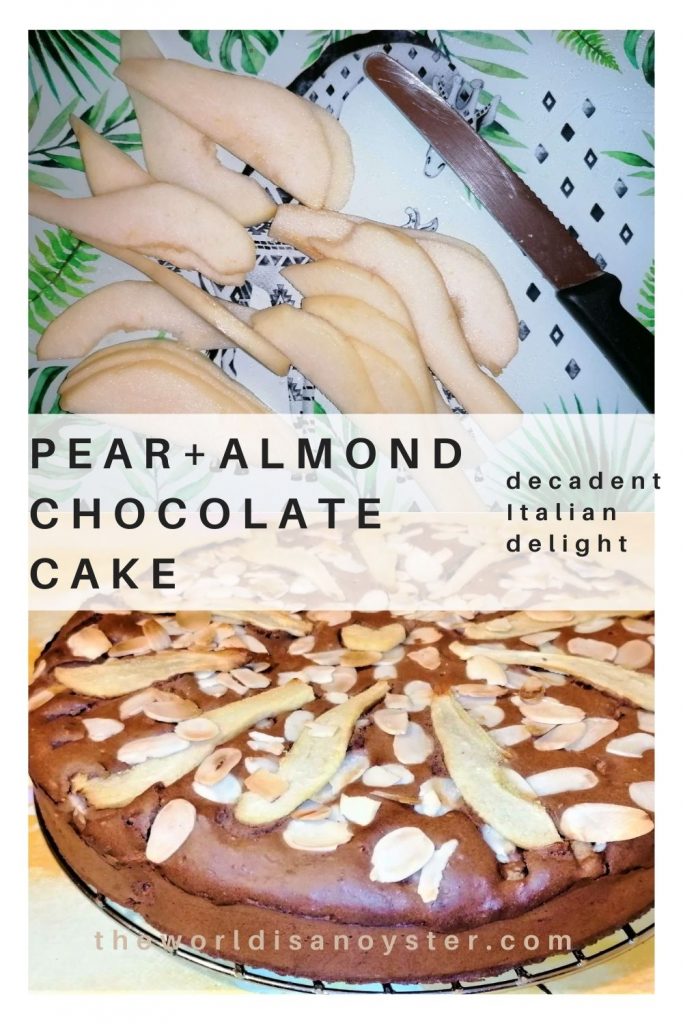
If it lasts, you could store the pear and almond chocolate cake in the fridge for 2-3 days (in an airtight container or covered with cling film) or in the freezer for up to three months. Preferably cut it in slices before freezing for easier defrosting.
I have made this Italian delight many times, and it never lasted more than a day and the next morning at our house. We put it down to being coffee addicts, but the truth is this cake is simply outstanding!
And there is that funny thing with visitors always arriving when there’s something baking in the oven. A bit of a mystery as to how that happens. I’m still unsure how long the wavelength of baking aroma is, but I’m sure these mysterious appearances have something to do with complex baking physics laws. As a result, my cakes will never see the inside of the freezer!
Buon appetito!
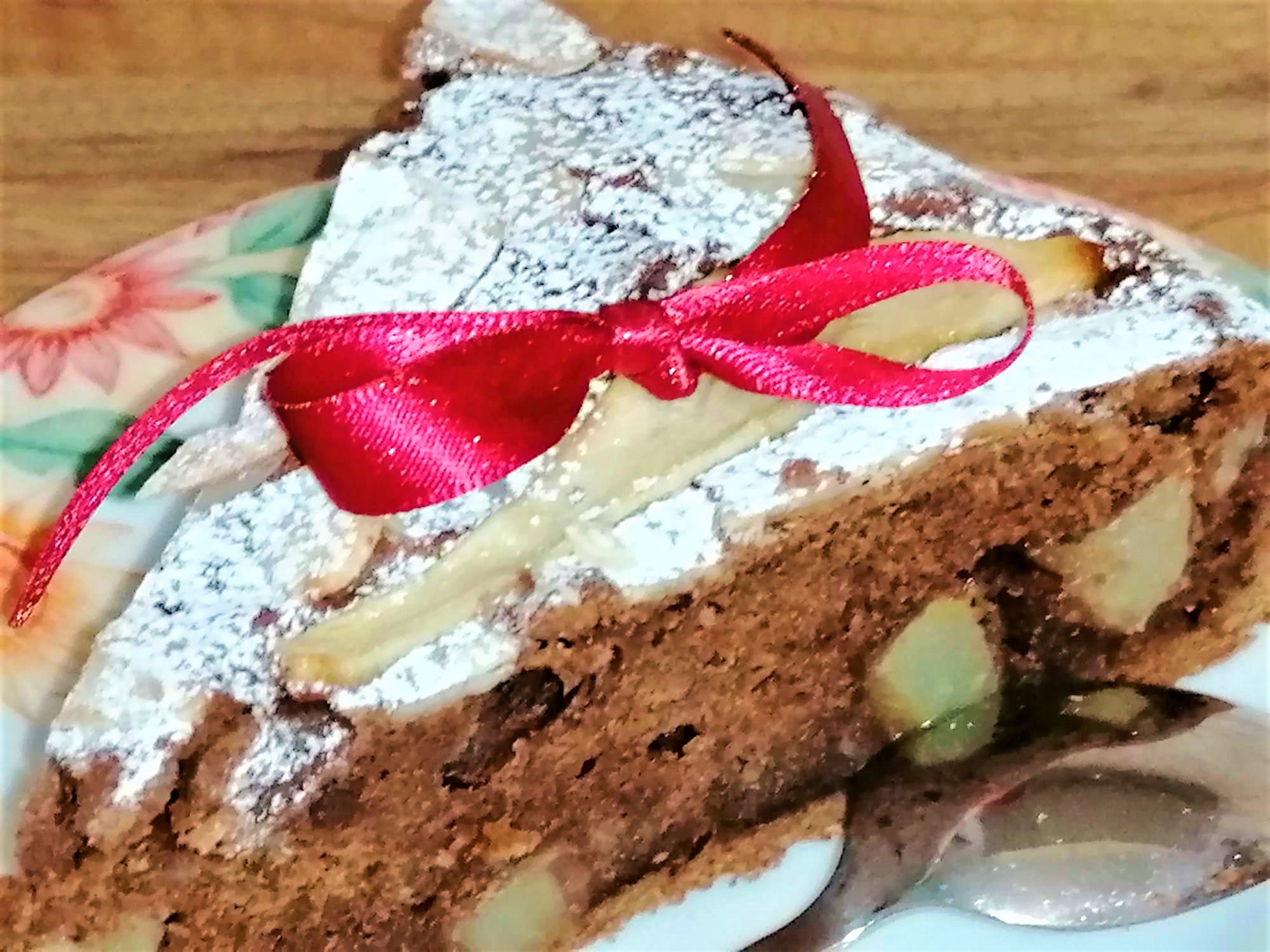
Pear and Almond Chocolate Cake
Ingredients
- 250 g white flour organic
- 100 g butter melted and cooled
- 120 g coconut sugar organic
- 4 pcs eggs organic, large
- 40 g cacao powder organic
- 6-7 tbsp almond milk unsweetened
- 150 g crushed almonds roasted
- 20 g flaked almonds roasted
- 3 pcs pear large
- 1 lemon zest and juice organic
- ½ tsp baking powder
- 1 tsp almond essence
- a pinch of salt
Instructions
- Choose large, ripe but firm pears. Wash and peel.
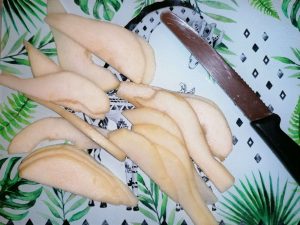
- Slice ½ pear for decoration and cut the rest in small cubes. Cover with lemon juice to prevent from oxidising.
- Roast the almonds, cool and grind finely. Slightly roast the flaked almonds for decoration to enhance the taste.
- In a large bowl, mix the coconut sugar with the egg yolks and lemon zest. Use a hand mixer at low velocity to start, then increase to high and keep whisking until the volume almost doubles and the consistency becomes that of soft cream.
- Add the milk and melted butter (cooled) and mix with a spoon.
- Sieve the flour, baking powder and cacao powder together in a large bowl and incorporate one spoon at the time into the creamy mix.
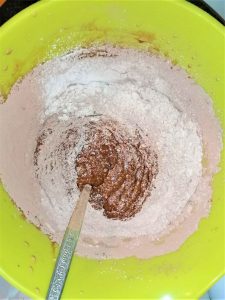
- Add the crushed almonds and the almond essence.
- Separately, add a little salt to the egg whites and beat with the handheld mixer until stiff.
- Add gradually to the creamy mix and incorporate slowly, using a spoon.
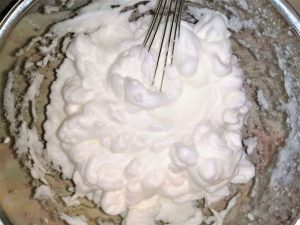
- Add the cut pears and mix carefully not to crush the pears.
- Preheat the oven to 170° C Fan/180° C regular oven/350° F/ Gas mark 4. Place paper parchment on a round baking tin (mine has 24 cm in diameter; it is OK to use a smaller one, but I would not recommend a larger one – your cake will be too flat.)
- Empty the composition into the tray and spread it evenly without pressing down too much.
- Sprinkle a layer of roasted almond flakes, then decorate with the pear slices. The pears' weight might sink them during baking, but I noticed that a thin layer of almond flakes underneath prevents this from happening.
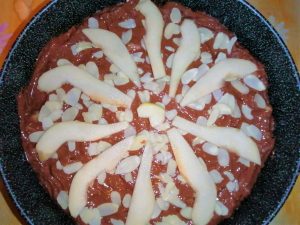
- Bake for 40 minutes and do the toothpick test to check that your chocolate, pear and almond cake is ready. If the toothpick comes out wet, you might need to bake for additional 5-10 minutes.
- Transfer to a rack and wait until cool to sprinkle with powdered sugar.
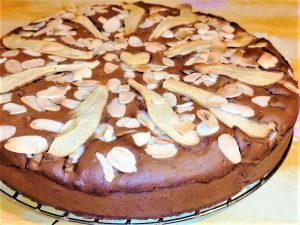
- Serve with coffee or a glass of Prosecco if the occasion is right.
Notes
I hope you enjoyed reading this romantic recipe and decided to give it a go! You can find more like this in the Savour the Flavour section of this blog or on my Pinterest board with the same name. Please share it on your desserts board; it will help this blog grow and motivate me to write more for your enjoyment! Thank you!
Valentine’s Day Delight or Daily Coffee Side?
The post How to Make the Softest Italian Pear and Almond Chocolate Cake appeared first on The World Is an Oyster.
]]>The post Perfect Bread Maker Panettone – Christmas Made Easy appeared first on The World Is an Oyster.
]]>The Bread of Toni
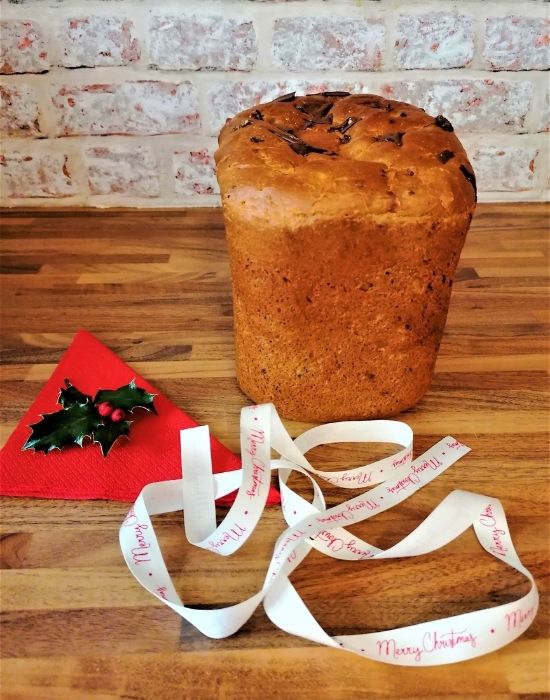
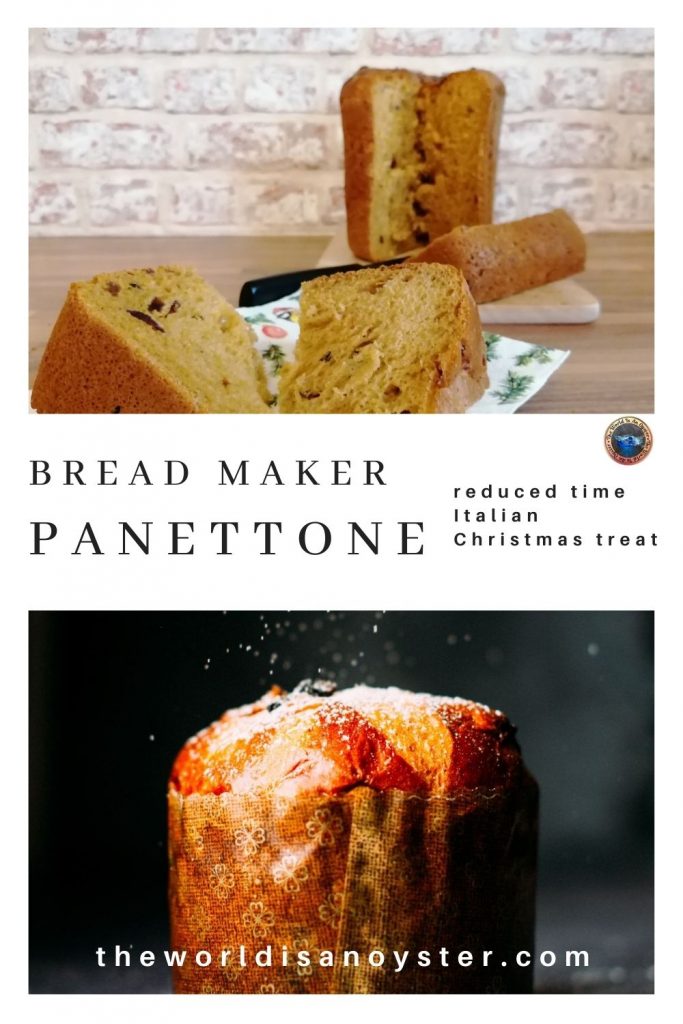
As is the case with everything Italian, the nation’s Christmas traditional dessert, Panettone, has its history that goes back to the fifteenth century.
This post may contain affiliate links, which means I will receive a commission if you purchase through my links at no extra cost to you. Please read the full disclosure for more information. Thank you!
A legend has it that one Christmas Eve, while the entire court and guests of Ludovico Sforza, Duke of Milan were sat at the festive table, disaster stroke in the kitchen. The cook managed to burn the dessert accidentally!
Mamma mia, che dolore che faccio ora il duce mi va cortare il capo! (Oh, dear God, what a disaster, the duke will chop my head off!)

While the unfortunate cook was pulling his hair off, a kitchen helper, Toni, threw a few ingredients in a bowl and made a soft dough he baked and served to the potent rulers of Milan.
The sweetbread was so successful among the guests that the Sforzas called it Pan di Toni (The Bread of Toni), which remained in history as the rich people’s traditional Christmas bread. Today, it is the classic Italian dessert the entire world knows as Panettone.
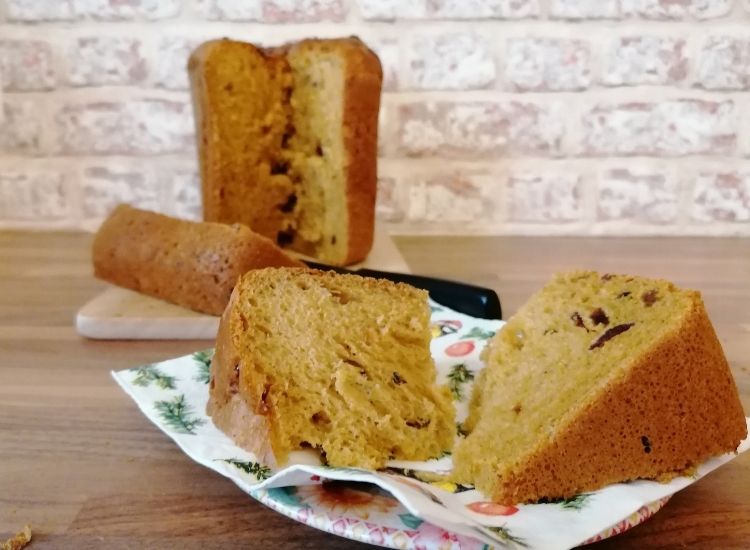
The traditional recipe for Panettone has a lengthy preparation process that takes two days. Thanks to modern technology, many of us use bread makers to save time and bake easier. If you own one and read through the manual, you might find a Panettone recipe adjusted to the type of machine you have.
Just a quick word about everybody should use a breadmaker. To me, it became a vital kitchen appliance during my chemotherapy sessions, years ago when I was diagnosed and treated for cancer. I started using it during my brutal treatment and never went back to buying supermarket bread since!
I know what ingredients I am using (all the healthy ones, always!), I know what type of bread or cake I want, and this beautiful invention provides it to me, as simple as that! All I have to do is add the ingredients, choose the program and press the start button. Then I go on with my business and come back only when I hear the beep that tells me my bread/cake is ready.
A breadmaker is a fantastic time-saver, but the best thing about using one is the tremendous health benefit to you! Say adiós to refined sugars, GMO flours and all sorts of additives that come with a bag of sliced bread and start a healthier lifestyle; you owe it to yourself and your family!
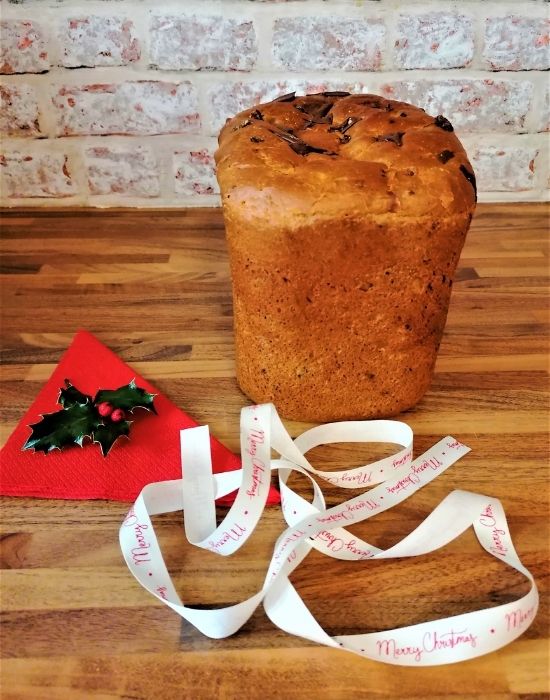
This Panettone is an adapted recipe from my bread maker’s booklet. The original sounded a bit blunt, and I wanted to get all the flavours that scream Christmas; hence I added a few things, and the result was an absolute success.

My bread maker Panettone lived a very brief life on the kitchen table! But this was only a try. On Christmas Eve, I’ll be sure to throw all the ingredients in the machine, and while we make the last-minute preparation, my Panettone will be ready just in time for dinner.
I’m sure our kitchen hero Toni would not mind that I wanted to save time and prepare his delight using modern means. It does cut the time from two days to three and a half hours!
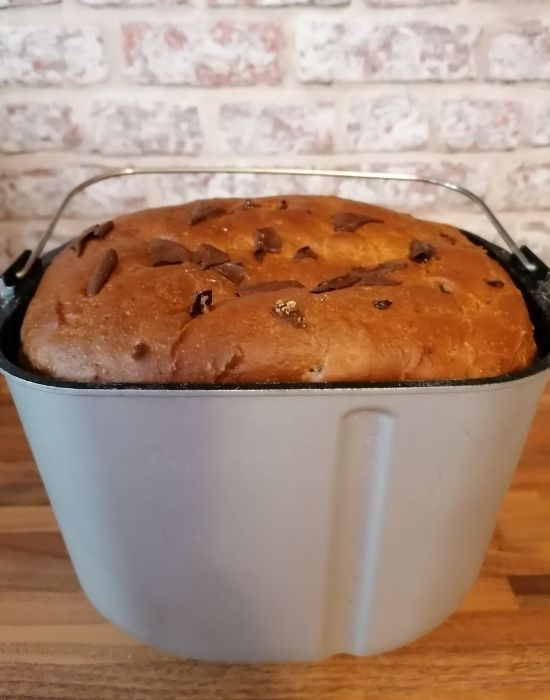
As a last note, the dough for Panettone is a soft one, completely different from bread dough and impossible to hand-knead. Even if you chose the traditional method, you would still need a food mixer, and why not leave it to the bread maker then?
Ingredients for bread-maker Panettone:
2 tsp dried yeast (make sure it is suitable for bread maker use)
400 g strong bread flour
5 tbsp coconut sugar
1 tsp sea/rock salt
1 tbsp coconut oil (at room temperature)
2 eggs (beaten)
200 ml (3/4 cup) almond/coconut milk
1 tbsp orange zest
Spices mix (ground cinnamon, nutmeg, ginger, clove)
Extras:
50 g butter
A handful of raisins
A handful of goji berries
A handful of dried cranberries
2 tbsp cacao nibs
Chocolate shreds (I picked some from a cereal box and spread them on top of my Panettone; improvisation is key!)
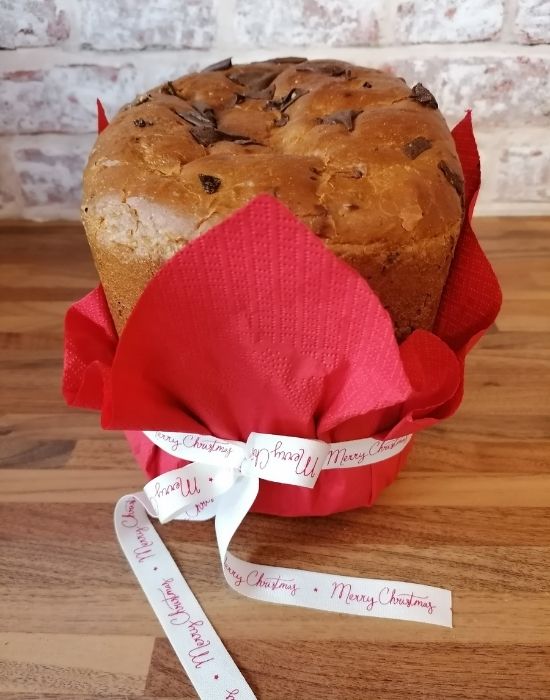
The programme for this bread is Brioche (13, on my device); crust option: light; total time: 3 hours 30 minutes.
My machine requires adding the dry ingredients first; the wet ingredients go over the flour, and the order in which I add them does not matter.
My bread maker would beep after 55 minutes when it was time to add the extras. Then I have to press the Start button again for the program to continue.
Each bread maker functions differently. The important thing is that the machine will do the job and will let you know when your beautiful, fluffy and aromatic Panettone is ready. Let it cool and use it within a week (if it lasts!)
Buon appetito and also Buon Natale for when you will serve it at your Christmas dinner!
Bread maker Panettone
Equipment
- Bread maker machine
- Spoon
- Small bowl+fork
- Cooling rack
Ingredients
Basic ingredients
- 400 g organic strong bread flour
- 5 tbsp organic coconut sugar
- 2 tsp dried yeast the suitable for bread makers type
- 1 tbsp organic coconut oil at room temperature
- 2 organic eggs beaten
- 1 tsp sea/rock salt
- 200 ml almond or coconut milk ¾ cup
- 1 tbsp organic orange zest
- 1 tbsp spice mix (ground cinnamon, nutmeg, ginger, clove)
Extras
- 50 g organic butter unsalted
- 1 handful raisins
- 1 handful goji berries organic, sundried
- 2 tbsp cacao nibs
- 1 handful chocolate shreds or dry fruits for decoration
Instructions
- The programme for this bread is Brioche (13, on my device); crust option: light; total time: 3 hours 30 minutes. Check the instruction booklet for your machine to choose the right programme.
- Each bread maker is different; my machine requires adding the dry ingredients first, then all the wet ones on top.
- After 55 minutes, the machine would beep and let me know that it was time to add the extras. Then I have to press the Start button again for the program to continue.
- When ready, carefully remove the pan from the bread maker using oven gloves.
- Remove the Panettone from the pan and allow it to cool completely on a cooling rack before serving.
- Each bread maker functions differently, but the end result will be a fluffy, flavourful Panettone ready in time for your Christmas dinner and a house filled with holidays aromas!
Notes
The Bread of Toni
The post Perfect Bread Maker Panettone – Christmas Made Easy appeared first on The World Is an Oyster.
]]>The post Cannelloni With Spinach and Ricotta: An Easy Dinner Idea appeared first on The World Is an Oyster.
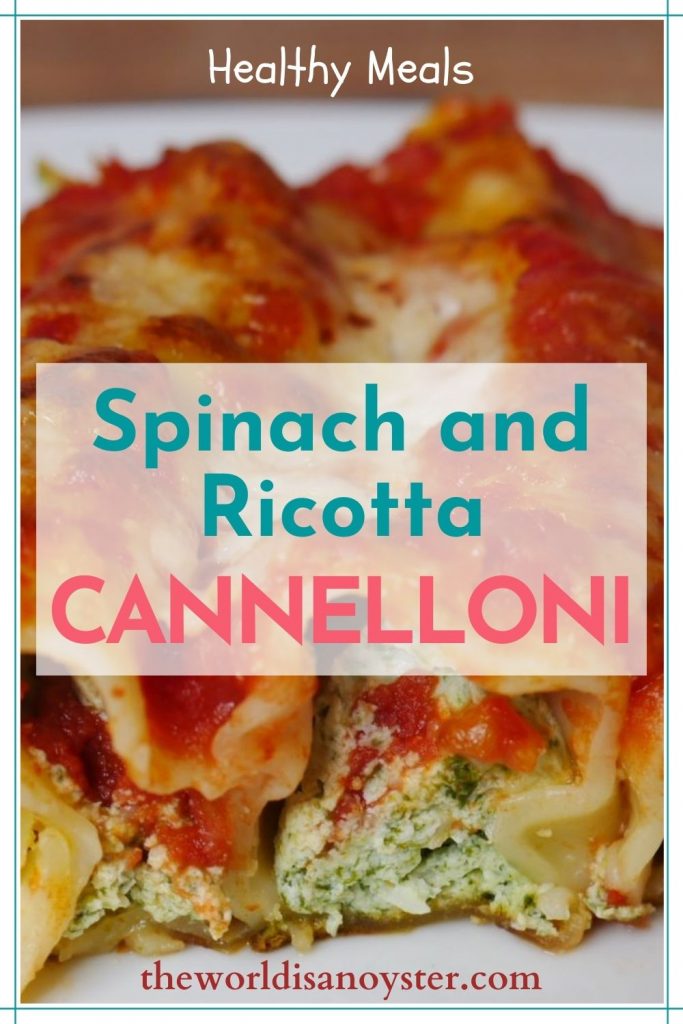
]]>Cannelloni With Spinach and Ricotta – The Best Italian Sunday Meal
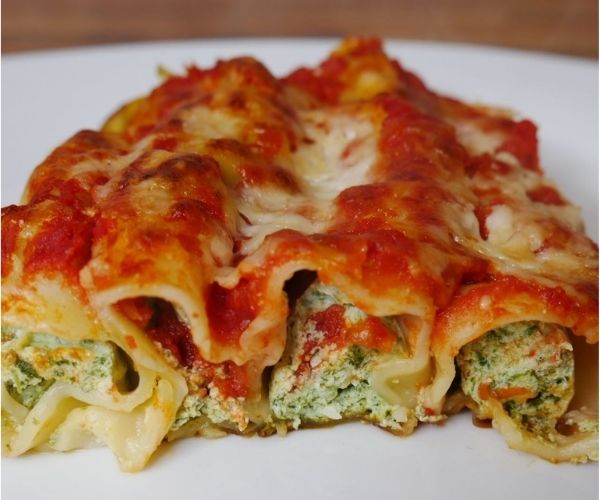
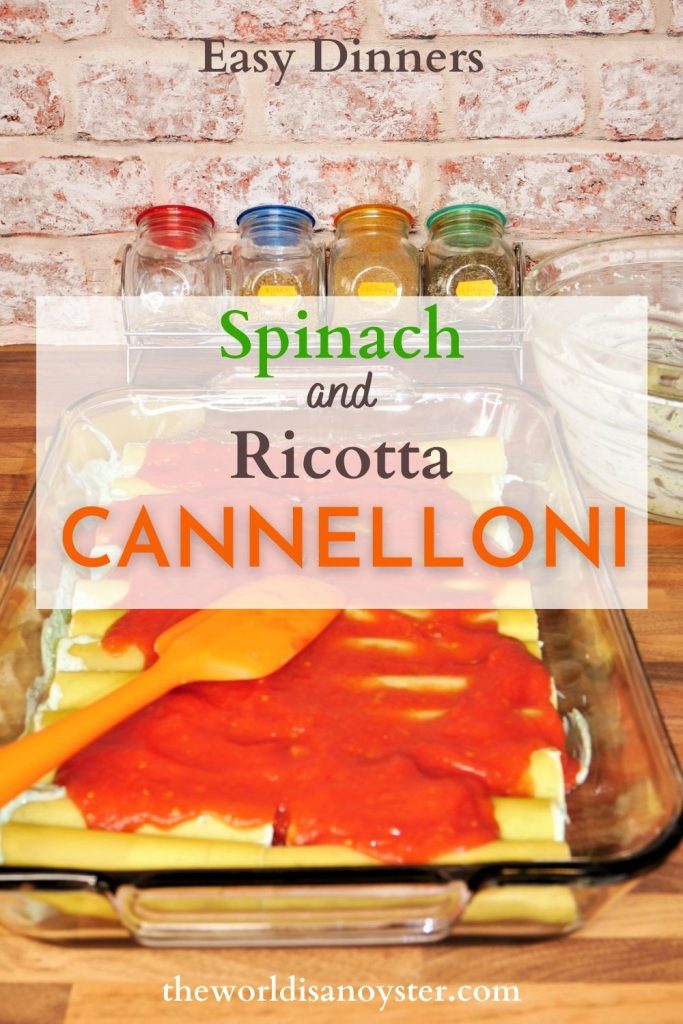
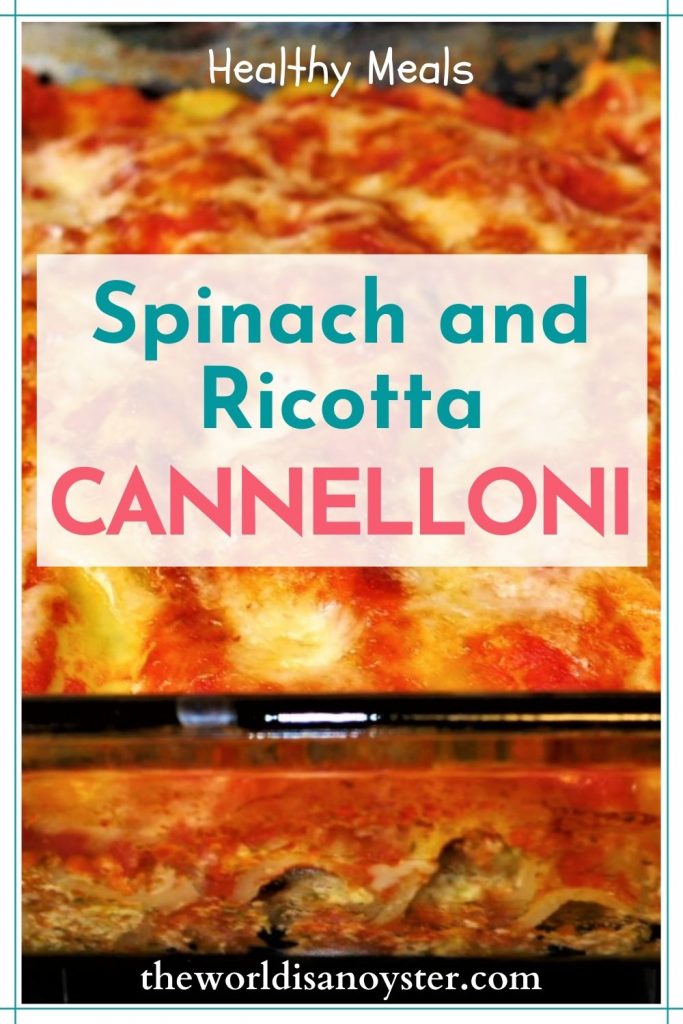
Cannelloni are, in essence, pasta tubes filled with ricotta and spinach or cooked mince meats.
Although Italy’s history of pasta goes back to the 4th century BC, cannelloni seems to be a bit younger. Their origin traced around the 8th century CE, in the Etruscan times. There are mentions of this dish in Toscana and Campania around the same time, even if there is some distance between the two regions.
This post may contain affiliate links, which means I will receive a commission if you purchase through my links at no extra cost to you. Please read the full disclosure for more information. Thank you!
Today, all supermarkets sell packs of dry tubes, and this saves time in cooking cannelloni. Nevertheless, the Italians praise themselves for making fresh pasta for all occasions; they will probably go for the longer cooking time, the more caloric result and the unique taste of homemade food.
This recipe sticks with quick and easy, as always. If you have some time you want to kill and want to give it a try, here is an original Italian recipe for fresh pasta published by Italy’s most successful cooking website, Giallo Zafferano.
The choice is yours, but have a look at this comparison chart before you make a decision:
Dry Cannelloni/100g Homemade pasta/100g
Calories 357 Calories 130
Carbohydrate 79.3g Carbohydrate 23.5g
Protein 7.5g Protein 5.3g
Fat 2.1g (Saturated 0.3g) Fat 1.7 (Saturated 0.4g)
Sodium 3mg Sodium 83mg
Keep in mind that if you make fresh pasta, it will weigh around 400g, so the above values multiply at least four times. Homemade pasta is yummier, but it adds to calories.
What you need for six portions of Cannelloni with spinach and Ricotta:
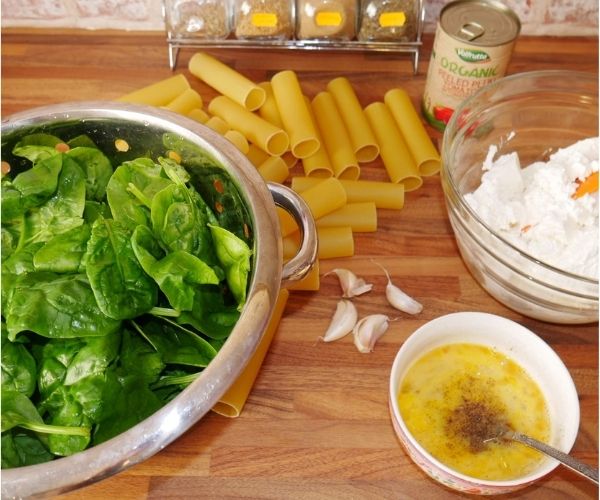
One pack dry cannelloni (26 tubes)
500 g ricotta cheese
400 g fresh spinach
Three eggs
4-5 garlic cloves
One glass of white wine
200 g hard cheese (grated)
One tin of tomatoes (blended) or one jar of passata
Spices: salt, ground pepper, ground nutmeg
How to make Cannelloni:
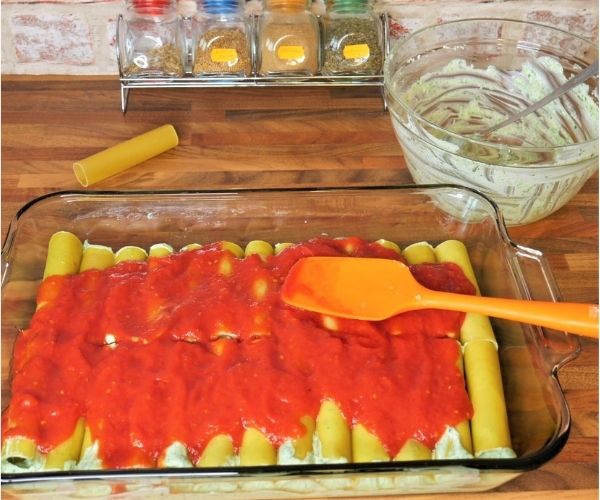
First, make a test with the tubes, see how they fill the tray you will use and how many pieces you need in total. Of a 250g box that contained 27 tubes, I used 26 that fitted my 25X36 cm tray perfectly.
Preheat the oven to maximum 190°C/fan 170°C/gas 5.
Wash and drain the spinach. Fill a saucepan with half a litre of water (two cups approximately). When the water starts boiling, add the spinach and simmer for 20-30 seconds until it softens.
Cool the spinach under cold water to stop it from boiling and preserve the vivid green colour.
Place the entire quantity of ricotta in a bowl, add the battered eggs, the cooled spinach, the smashed garlic, plus the spices and mix to incorporate well all the ingredients.
With this paste, fill the pasta tubes using a teaspoon. If you prefer, you can use a piping bag or place the paste in a plastic bag, cut a small piece at one of the corners to make a hole and fill the tubes one by one. I used a teaspoon, but I appreciate that a bag would make this process less messy.
Place the tubes in the baking tray as you fill them. If you have any spare paste, spread it on top, then spread the entire quantity of tomato puree over it. Lastly, pour the glass of wine on the sides; together with the tomato puree, it will soak the pasta tubes during cooking.
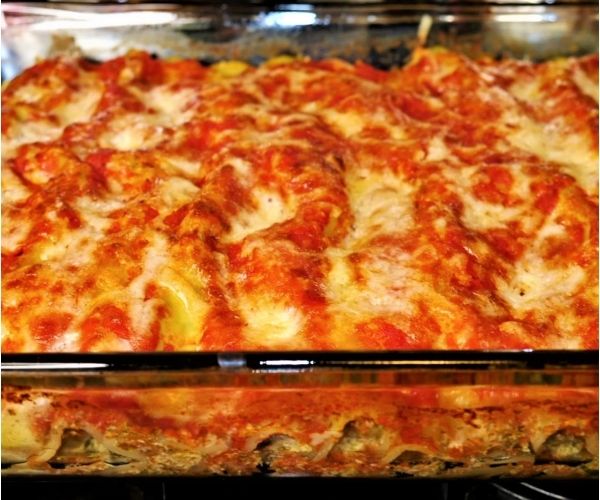
Place the tray on the middle rake and cook for about 40 minutes. When it is nearly ready, add the grated cheese and leave it another five minutes in the oven.
On this occasion, the only cheese I had in the fridge was a Provolone Picante semi-hard cheese with a strong aroma. A fussy eater that makes a third of my family was offended by the strong smell. I ignored them. Twenty minutes later, they licked the plate clean. Ha!
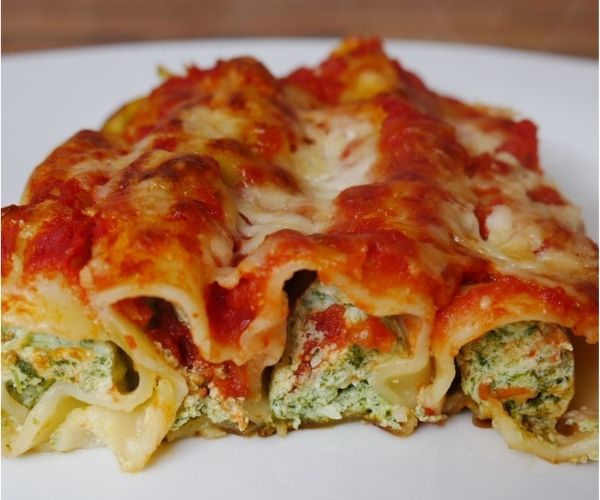
When it cools a tad, this easy version of cannelloni with spinach and ricotta is ready to serve.
Because we only ate half of it for dinner, I kept the other half in the fridge and reheated it the next day. It was still yummy!
Pour a glass of whatever white wine you used in the preparation and enjoy your dinner. Buon appetito!
This recipe is an example of an easier and healthier way to make cannelloni. If you feel like going for the full Italian recipe, you can find here how to make the béchamel sauce to add over the pasta tubes before they go in the oven.
You will still have to add the tomato puree over the béchamel layer and, of course, follow Giallo Zafferano’s video instructions for fresh pasta mentioned in a link at the beginning of this recipe.
Spinach and ricotta are just one way of filling the cannelloni. However, as with any pasta, this one is too a versatile recipe. If meat is your thing, you can prepare a completely different dinner!
Spinach and Ricotta Cannelloni
Equipment
- Saucepan
- Mixin bowl+spatula
- Baking tray 25X36 cm
- Piping bag or teaspoon
Ingredients
- 26 pcs cannelloni tubes 1 pack
- 400 g fresh spinach organic
- 500 g Ricotta cheese 2 packs
- 200 g hard cheese grated
- 3 pcs eggs organic
- 1 glass white wine dry
- 4-5 pcs garlic cloves organic
- 1 tin organic chopped tomatoes (blended) or organic passata jar
- 1 tsp spices (rock/sea salt, black ground pepper, ground nutmeg ) 1 tsp of each
Instructions
- Place empty tubes in the tray to check how they feet and establish how many you will need.
- Preheat the oven to 170°C/338°F/gas mark 3
- Wash and drain the spinach.
- Place two cups of cold water in a saucepan and bring to boil. Add the spinach, reduce the heat and simmer for 20-30 seconds until it softens.
- Cool the spinach under cold water to stop it from boiling and preserve the vivid green colour. Drain.
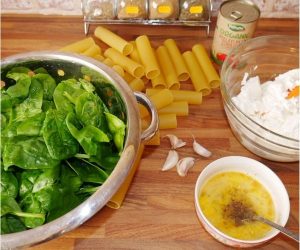
- In a large bowl, empty the Ricotta packs, add the battered eggs, cooled spinach, smashed garlic and spices. Mix well.
- Use a piping bag or a teaspoon to fill the cannelloni tubes with this paste.
- Place the filled tubes in the tray. If you have any left-over paste, spread it on top of the tubes.
- Spread the puréed tomatoes over the tubes.
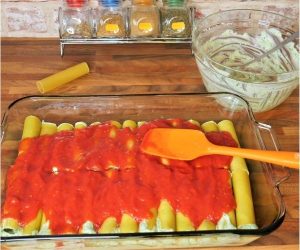
- Pour a glass of white wine on the side of the tubes; together with the tomato purée, it will help soak the pasta tubes during cooking.
- Place the tray on the middle rack in the oven and nake for 40 minutes.
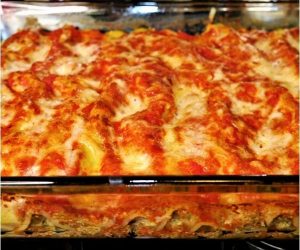
- Five minutes before the time is up, remove the tray from the oven, add the grated hard cheese and bake for the remainder of the time.
- When ready, allow a few minutes to slightly cool, then serve, preferably with a glass of white wine.
Notes
Cannelloni With Spinach and Ricotta – The Best Italian Sunday Meal
The post Cannelloni With Spinach and Ricotta: An Easy Dinner Idea appeared first on The World Is an Oyster.
]]>The post Make the Best Italian Ciabatta Bread appeared first on The World Is an Oyster.
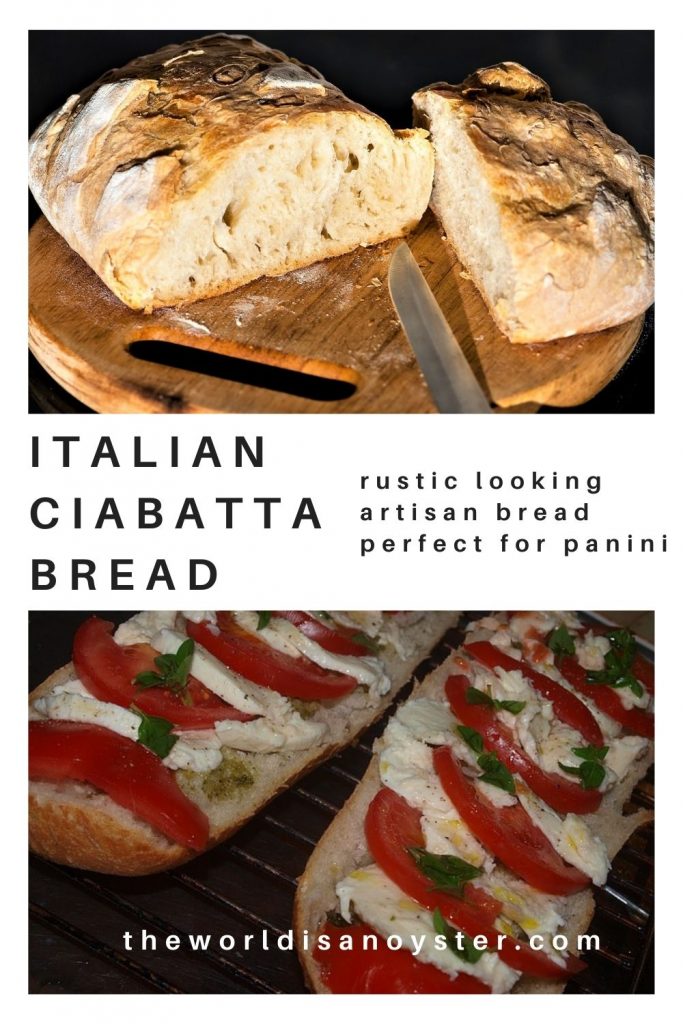
]]>Rustic Ciabatta: Our Daily Bread from the Eighties
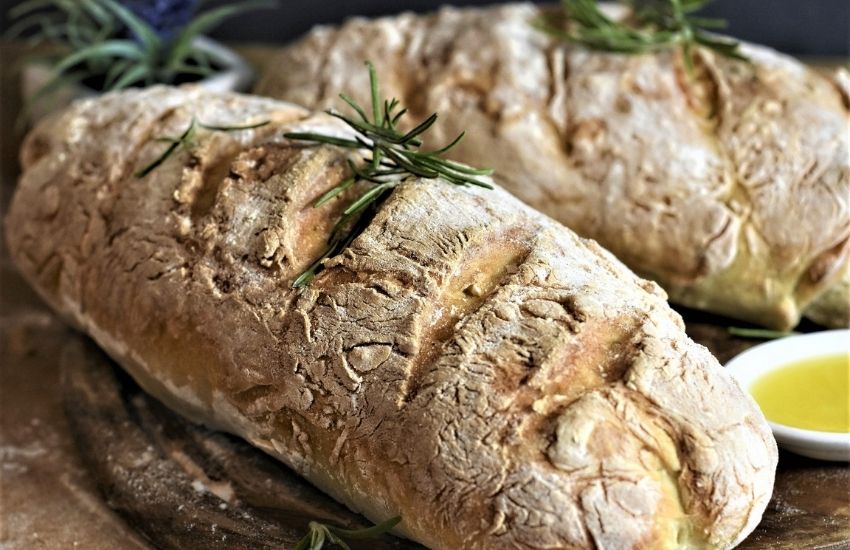
Bread might be one of the oldest foods created by humans, but people will always invent new varieties, especially the French or Italians. It is the case of rustic Italian ciabatta, our daily loaf from the eighties, which at nearly fifty is one of the youngest assortments of bread that found worldwide fame in just a few years from being invented.
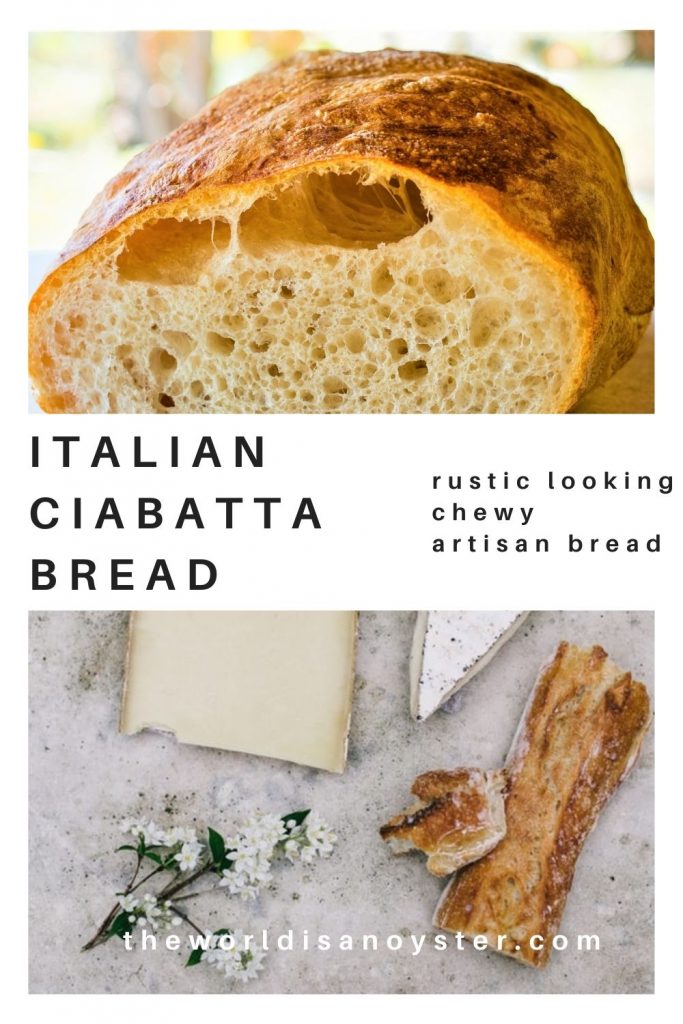
How has the delicious slipper-shaped bread with a smooth, crisp crust and porous, slightly humid interior come to be? It seems we owe it to the Italian rally pilot turned miller, Arnaldo Cavallari. The man experimented with flours until he obtained a 70% wet dough he shaped like a slipper before baking it (hence the name; la ciabatta in Italian translates as slipper).
The story happened in 1982 in the quaint and colourful city of Adria, not far from Venice, on the Adriatic coast. A year later, Cavallary patented the name. In 1985, ciabatta became famous in Britain, and by 1987 it was already mass-produced in the USA.
You can find a quick history of this beautiful and tasty bread here.
Before the eighties ended, ciabatta was already a much-appreciated worldwide bread, used mainly for sandwiches (panini in Italian).
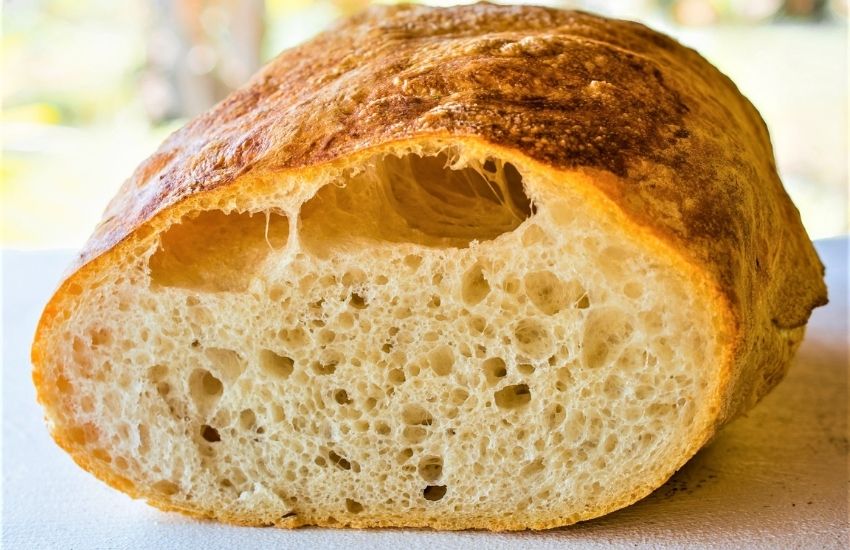
To make the perfect rustic ciabatta bread, you will have to follow a few steps. Firstly, know that it needs time to rise, so it is better to prepare the biga (pre-dough) the night before. Also, while making the final dough, you will have to allow it to rest and rise again for a much shorter period this time.
Secondly, because it is a wet dough, it might be sticky. If you use an electric kneader, it will do all the work for you. If not, I recommend using a pair of scrapers (you will have to flour them frequently so that the dough does not stick).
Ingredients
You need to make two types of dough for a perfect Italian Ciabatta: a mother dough (or a pre-dough, called biga in Italian) and a wet dough.
For the pre-dough (biga)
Flour (white/bread flour/Ciabatta flour)
Lukewarm water
Yeast (fresh or dried active, both work)
Mix the ingredients gently in a bowl until smooth, cover with clingfilm and let it rise for about twelve hours (preferably overnight) at room temperature (approx. 18-20°C)
For the wet dough
The raised biga
White bread flour (or Ciabatta flour)
Lukewarm water
Yeast (either fresh or dried active)
Organic extra virgin olive oil
Rock or sea salt
How to make rustic Italian Ciabatta bread
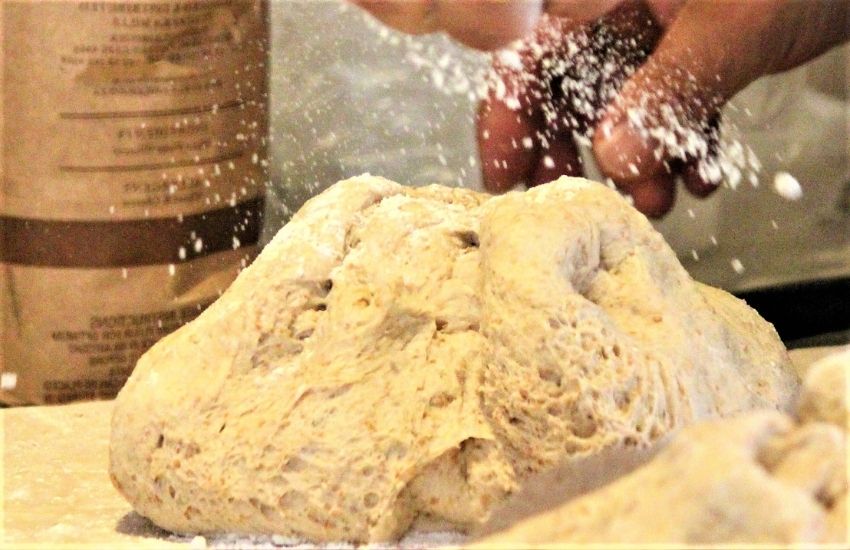
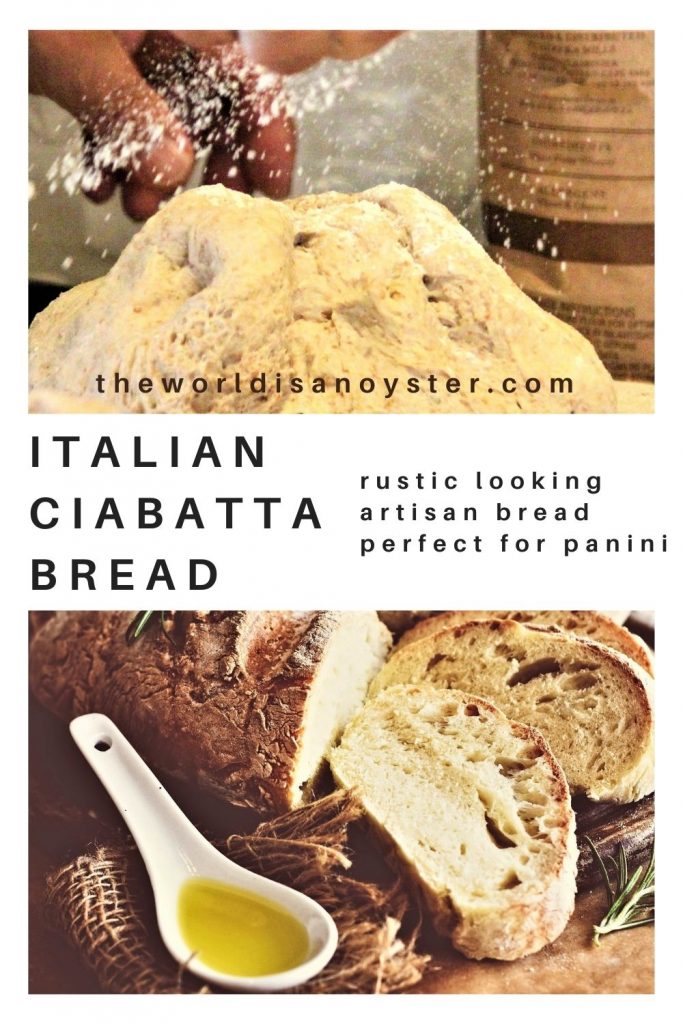
Dissolve the yeast in water and pour it over the pre-dough. Mix gently, then add half of the flour quantity and mix again. This dough will be very sticky. It needs to rise – cover the bowl with a tea towel, and rest for two hours. When raised, you will notice lots of tiny air pockets, which you should not break.
When the two hours are up, add salt and oil to the dough and mix it. Add the remaining quantity of flour and knead until smooth. Because the dough is humid and elastic, you can pull, fold and repeat a few times. When you’re done, cover again with a tea towel and let it rest for another hour.
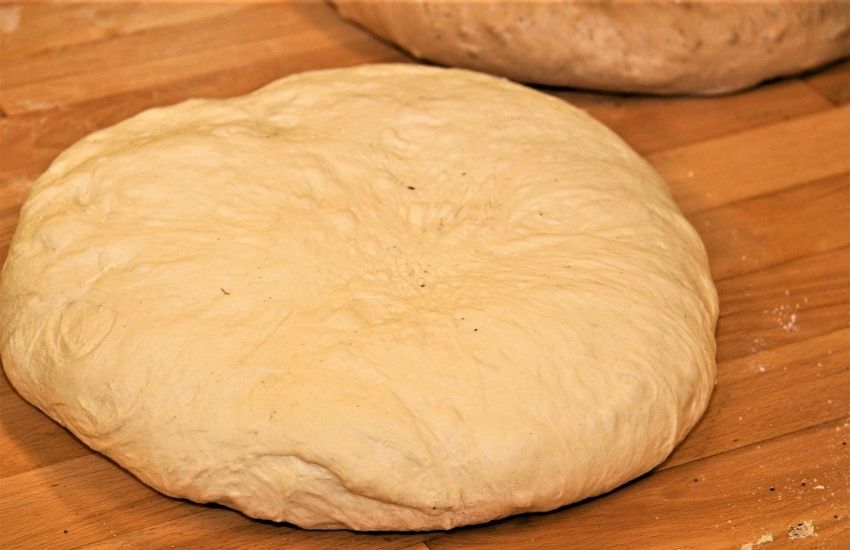
When the resting hour is up, you can shape your bread. This quantity of dough is enough for two loaves.
Before you start, make sure that you spread enough flour on the working table.
If you have scrapers, now is an excellent time to use them; if not, your hands will do. Just flour them generously.
Split the dough into two even parts, give them a cylindrical shape and roll each of them in flour. Do not mix again, as added flour will change the consistency, and you still want a wet dough.
Pull from the edges until you obtain the slipper form. The thickness should be around 5-6 cm. Do not press down (it will deflate and ruin all those hours of raising!). Elongate the dough until you get the size you want.
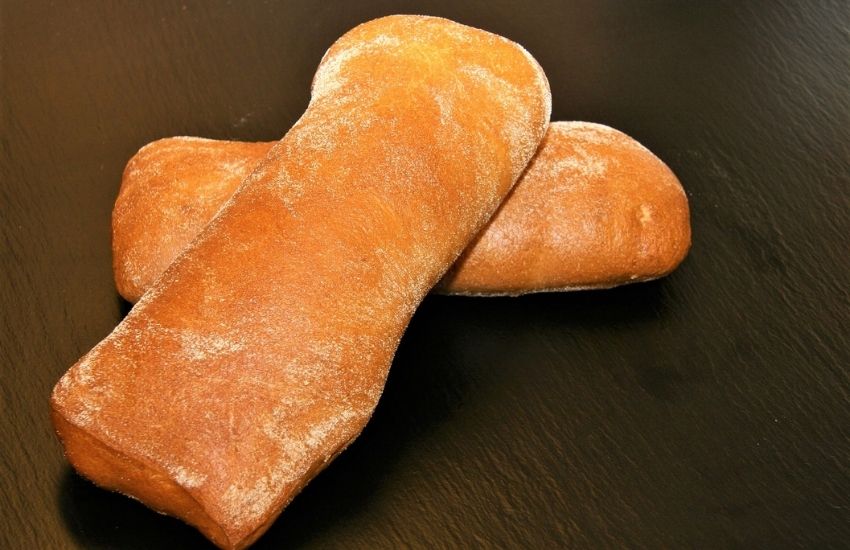
If you decided to use Ciabatta for panini, divide the dough into smaller parts. From this quantity, you should obtain about 10-12 pieces.
Put a sheet of greasy baking paper on a tray and place the bread on it, leaving about 10 cm between the two larger pieces (about 3-4 cm for the panini). Allow rising for another 45 minutes.
Meanwhile, preheat the oven to 225°C (200°C fan oven or gas mark 6).
Bake the Ciabatta for about 30-40 minutes until the crust is golden in colour. Allow cooling before you prepare your sandwiches or bruschette.
If you have a bread maker that makes artisan bread, you can make ciabatta by following the steps and respecting the quantities in the recipe provided in the machine’s booklet. The bread will not have the slipper shape as the hand made one, but it will still be tasty.
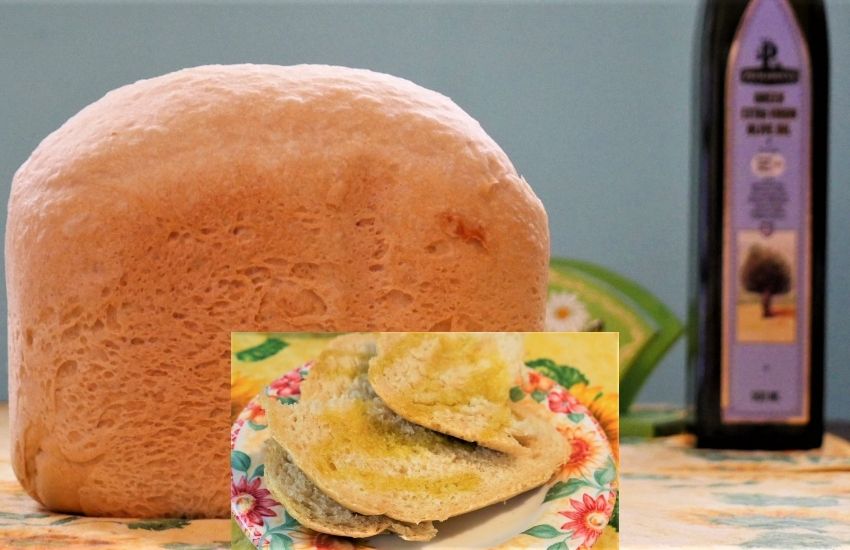
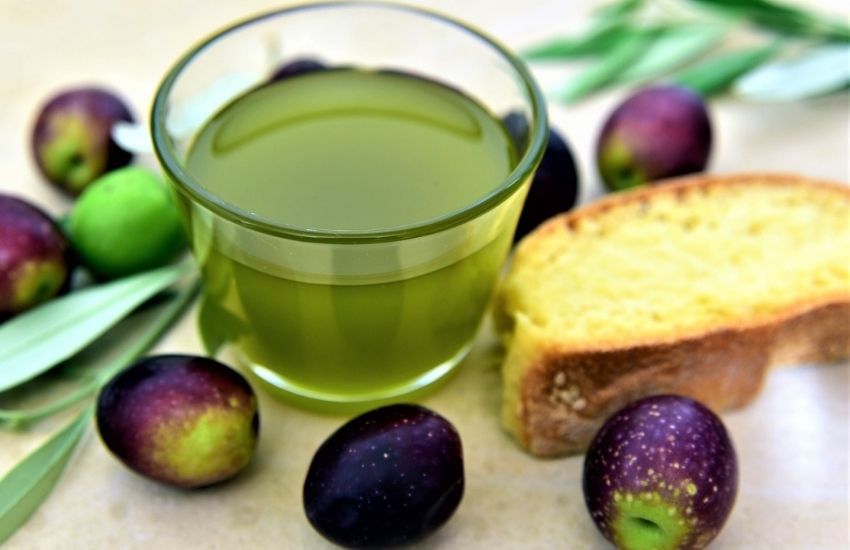
My favourite way to enjoy Italian Ciabatta bread is by spreading quality extra virgin olive oil on a thick slice. Heavenly! What is yours?
Buon appetito!
Italian Ciabatta Bread
Equipment
- Electric kneader
- Medium bowl
- Large mixing bowl
- Bread maker (optional)
- Plastic scrapers
- Baking tray/parchment
- Measuring scale
Ingredients
For the pre-dough (biga)
- 300 g bread flour
- 300 ml lukewarm water
- 5 g yeast I prefer dried active, but fresh works well, too
for the wet dough
- 1 biga after it raised for 12 hours/overnight
- 700 g bread flour
- 350 ml lukewarm water
- 15 g yeast fresh/dried active
- 4 tbsp olive oil organic, extra virgin
- 1 tsp salt sea/rock
Instructions
Biga (pre-dough)
- Mix all the ingredients in a medium bowl, cover with clingfilm and allow it to rise overnight (12 hours).
Wet dough
- Place the biga in a large bowl or kneader bowl.
- Melt the yeast in the lukewarm water and add it to the bowl. Mix gently.
- Add half of the flour quantity and continue mixing. This dough is sticky and needs to rise. Cover with a tea towel and let it rest for two hours. While rising, it will form air pockets that should not be popped.
- When the two hours of resting time are up, add salt, oil and the remainder of the flour and mix again.
- You will obtain a humid and elastic dough. Pull and fold a few times on the working table.
- Place back in the bowl, cover with a tea towel and let rise for another hour.
- When the resting hour is up, shape the dough using scrapers or well-flowered hands.
- Split the dough into two parts, give each a cylindrical shape and roll them in flour. There is no need to knead again. Ciabatta is a wet bread, and extra flour can change the consistency of the dough.
- Pull from the edges until you obtain a slipper form, about 5-6 cm high. If the loaf is too high, pull the edges until obtaining the desired shape rather than pressing down.
- If you chose to use the Ciabatta for panini, divide the dough into 10-12 smaller pieces.
- Place a greasy baking paper on the tray and preheat the oven to 200°C fan oven/225°C static/437°F/gas mark 6.
- Place the bread on the baking tray. Leave about 10 cm between the loaves or 3-4 cm between the panini.
- Allow resting for another 45 minutes.
- Bake for 30-40 minutes until golden and cool before preparing sandwiches or bruschette.
Notes
I hope you enjoyed reading this Italian Ciabatta bread recipe. Please share the love by saving a pin to your baking boards; it helps this blog grow and motivates me to write more for your enjoyment! Thank you!
Italian Ciabatta: Our Daily Bread from the Eighties
The post Make the Best Italian Ciabatta Bread appeared first on The World Is an Oyster.
]]>The post How to Make the Best Ever Classic Tiramisù appeared first on The World Is an Oyster.
]]>A Finger-Licking Delicious Italian Dessert
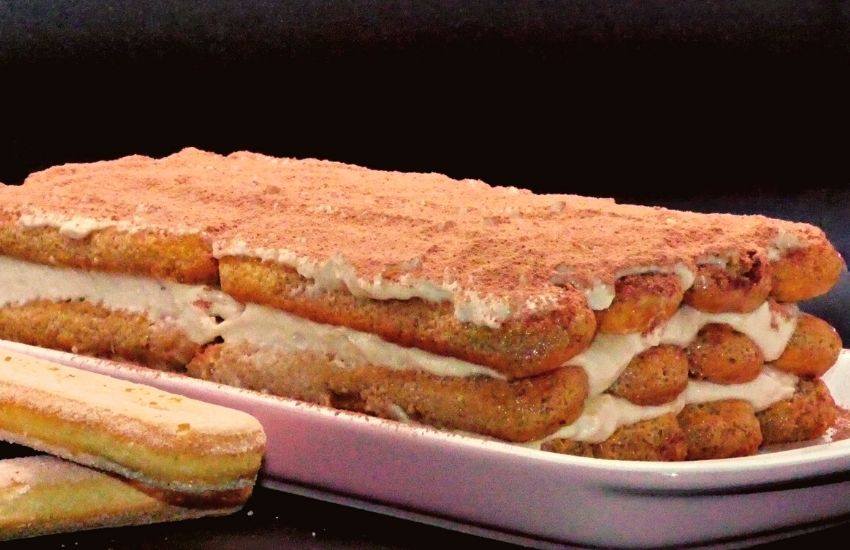
I had the idea to make a classic Tiramisù after reading this book: Every Day Is A Holiday by George Mahood.
The author, a family man, had an epiphany that people invented or created many holidays connected to something meaningful. The entire calendar, all 360 days of it, consists of something significant enough that deserves recognition. So, Mahood celebrated something every day for a whole year.
Anything is worth revelling, from Zombie Day on the first of January to Oopsie Daisy Day, Awkward Moments Day, Work Naked Day, No Diet Day and everything in between. The book is hilarious; by the time I finished reading it, I felt a lot happier than before I started it.
How is a book connected with our classic Tiramisù, you might ask? I don’t think it is. But, you probably guessed, there is a Tiramisù day in the calendar, established by Italians after Mahood published his book.
To be precise, each year we should celebrate this luscious Italian dessert on the twenty-first of March. We should also celebrate it every day before and after if you ask me!
I recommend you read this book; it will lift your spirits. As will do this finger-licking delicious Italian dessert that literary translates to “pick me up” or “lift me up”.
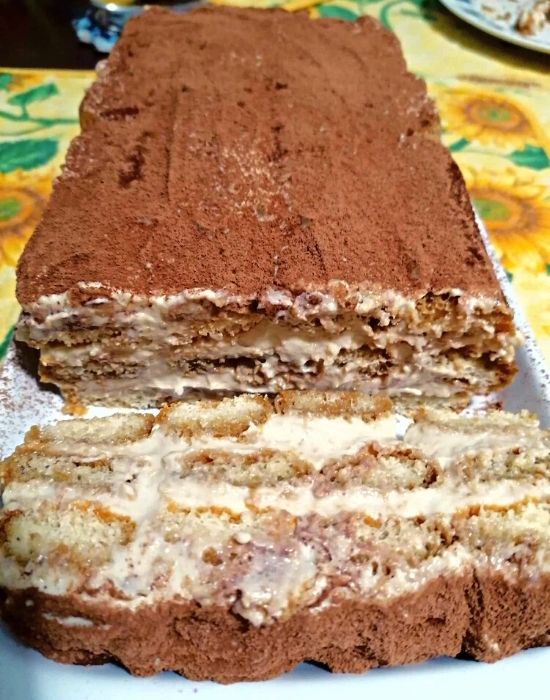
Tiramisù is easy to make and never fails to impress. Everyone who had it at my house asked for seconds. I’ve seen people getting happier by the minute as they eat this cake. Possibly, by the time your Tiramisù is ready, you’ll be in much higher spirits than you are at this moment!
As Italians are highly creative people, there is a legend related to Tiramisù’s origin. It is a bit raunchy; hopefully, you are an adult reading this post to yourself while any kids on the premises are happily and undisturbedly playing video games.
About two centuries ago, in the city of Treviso, not far from Venice, a brothel madam started to offer an alcohol-containing desert to the establishment’s guests. The purpose of the cake was to help the customers replenish their powers before they’d leave the pleasure house and return to their wives.
In Treviso dialect, the name madam chose for her aphrodisiac was “Tireme su”. This phrase later became the one Italian word that the entire global population is fluent in – Tiramisù.
Fast forward to 2020, it appears the world is actually crazy for a boozy nineteen century Viagra! The conundrum is: pharmacy or supermarket?
If you choose the latter, your shopping list must contain a few specific ingredients for this classic Tiramisù recipe.
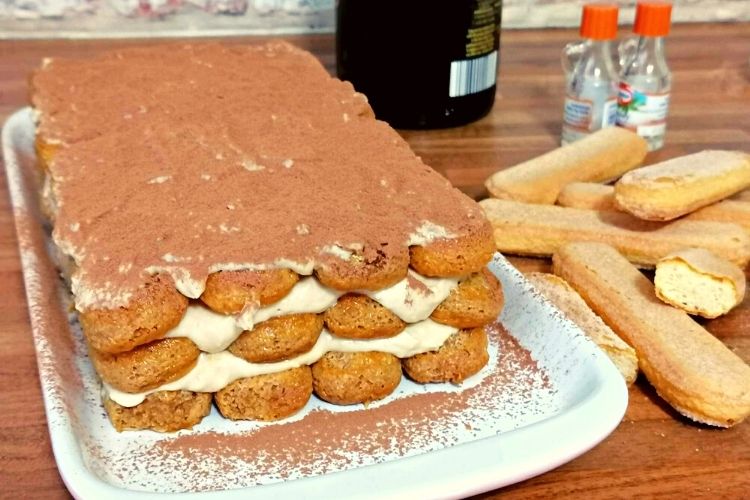
Disclaimer: If you are old enough to drink, you should always drink responsibly!
Ingredients for Classic Tiramisù
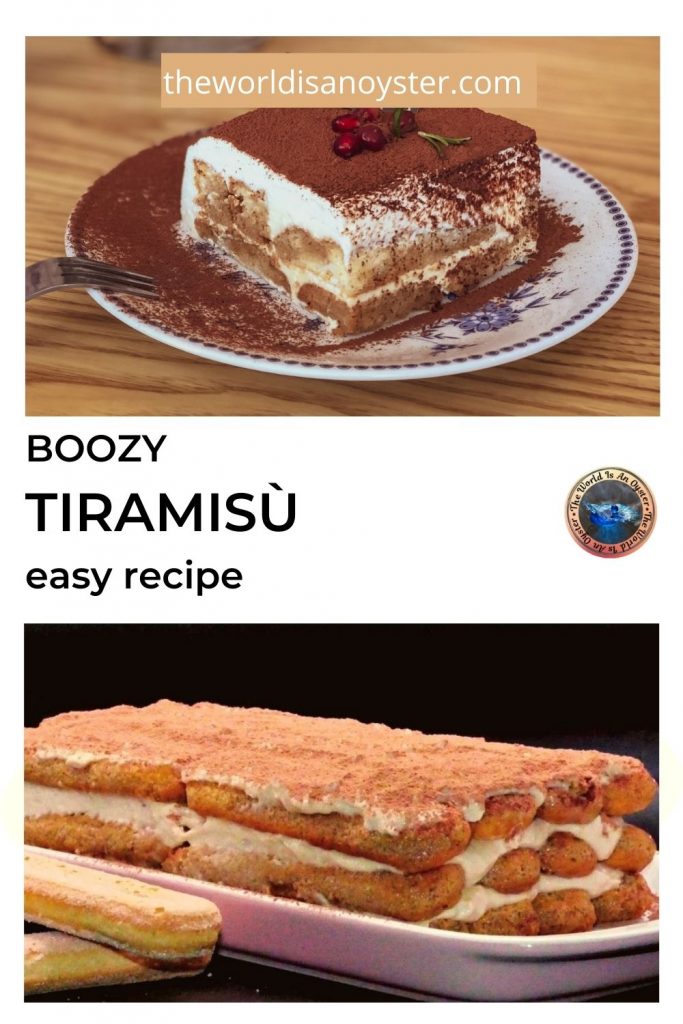
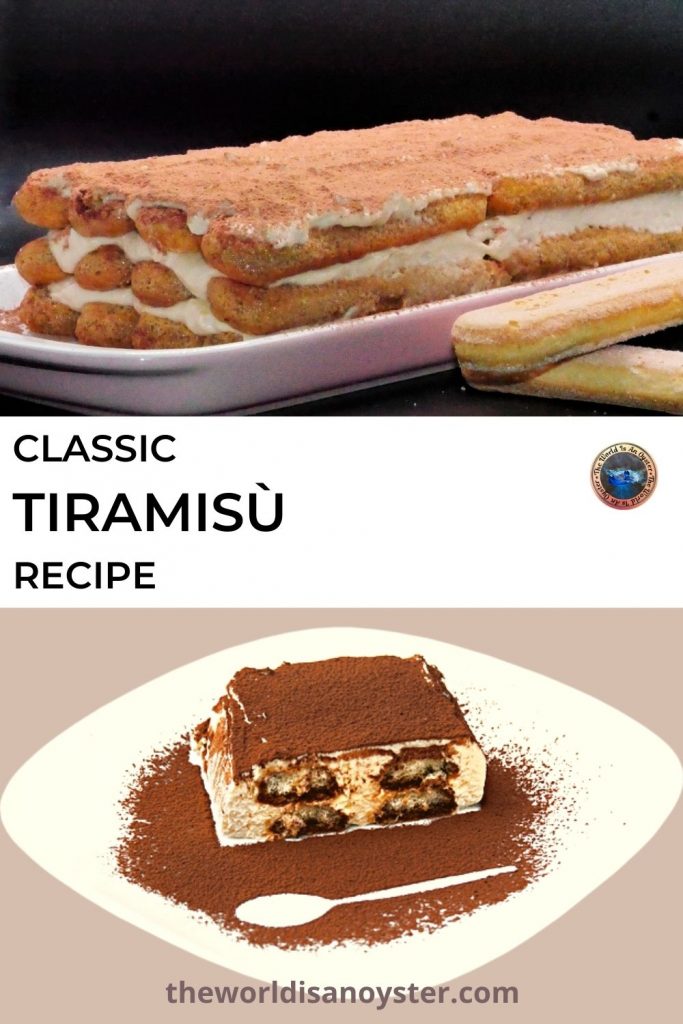
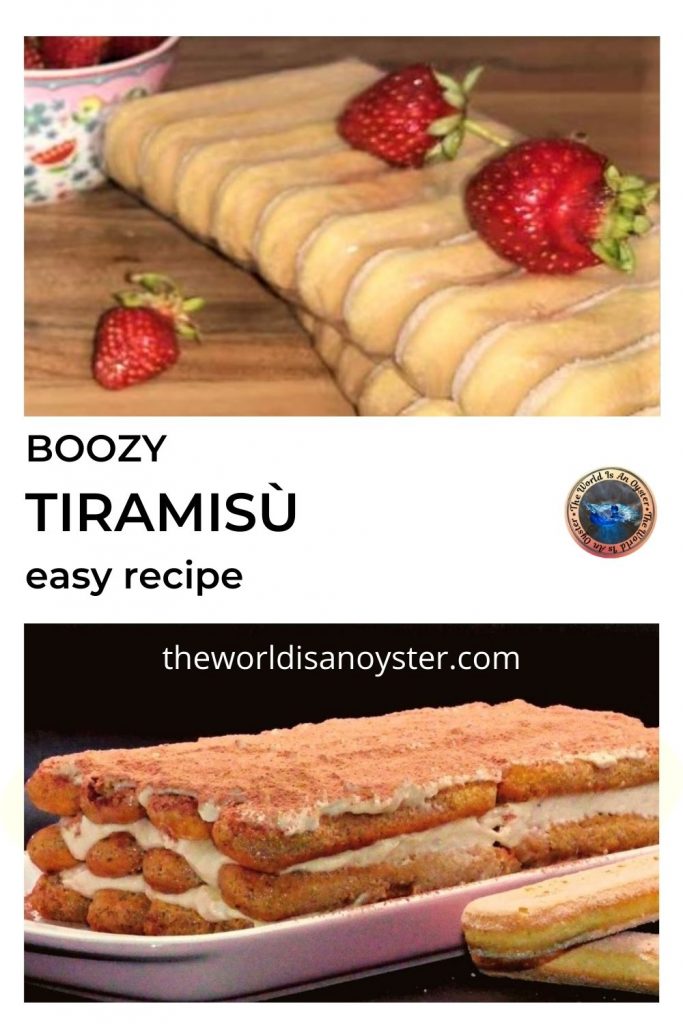
Savoiardi biscuits (ladyfingers). The quantity is relative as you can assemble it in anything from a couple of glasses to a large tray. I usually make more because I know it vanishes in minutes, so I use about twenty ladyfingers per level (x3 levels).
Coffee (ground or instant; decaf if shared with children)
Coconut sugar
Vanilla pods
Mascarpone cheese
Cacao powder
Liquor (I prefer Amaretto). Of course, forget about it for the child-friendly version of Tiramisù.
Optional (if you choose to make the cream from scratch) egg yolks, almond milk, corn/potato starch.
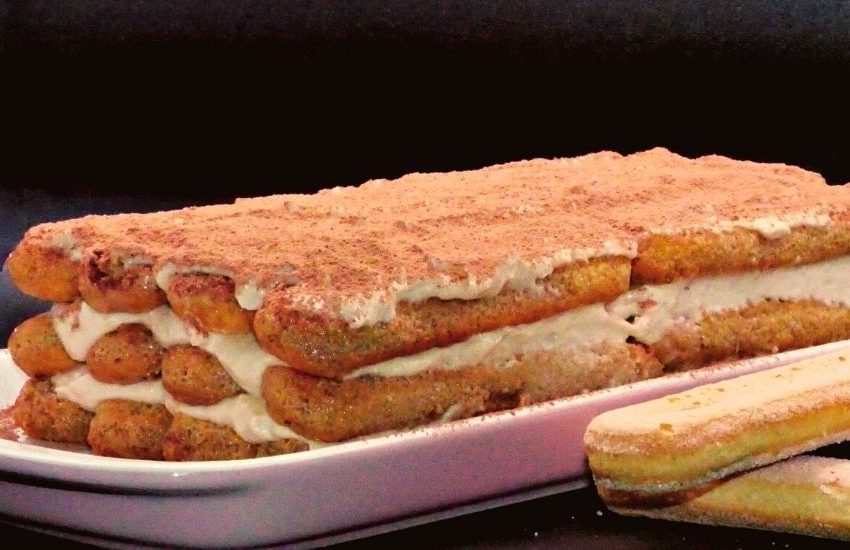
Classic Tiramisù
Ingredients
- 60 pcs Savoiardi biscuits (ladyfingers)
- 4-5 tbsp instant coffee (decaf if shared with children)
- 5 tbsp coconut sugar
- 2 pods vanilla
- 2 pcs Mascarpone cheese (about 500g)
- 5 pcs egg yolk
- 6 tbsp Amaretto (skip for the child-friendly version)
- 3-4 tbsp organic cacao powder
- unsweetend almond milk (optional, according to the filling method you choose)
- corn starch (optional, according to the filling method you choose)
Instructions
- Start by preparing the coffee. Boil circa half a litre of water with a spoon of sugar for a couple of minutes. Turn the hob off, add the coffee and stir until it dissolves completely. Let it cool down.
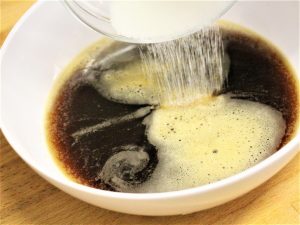
- Open a small bottle of Amaretto and pour a glass. Drink half and keep the rest for later. Add the required quantity to the coffee.

- There are two ways to prepare the cream: either use raw eggs or boil them, based on who is eating the cake. You should probably cook the eggs for young children, pregnant ladies, or persons with certain medical conditions.
The cooking method for the filling
- If you choose the cooking method, you will need to add 500ml milk and 2-3 tablespoons of corn starch.
- In a bowl, mix the sugar with egg yolks, corn starch and a few tablespoons of cold milk. Add the vanilla seeds to the remainder of the milk and boil it in a pan. Add the hot milk to the egg yolk mix spoon by spoon, stirring well after each one. You will have to balance the temperature patiently!
- When the composition is evenly mixed, pour it back into the pan and boil at low heat for 3-5 minutes or until it hardens, stirring continuously. Allow it to cool off before adding the mascarpone cheese.
The cold/raw version for the filling
- For the cold version, whisk the sugar and egg yolks until the volume doubles. The consistency should be that of soft cream. Scrape the vanilla pods and whisk. Add the mascarpone cheese gradually and mix until incorporated.
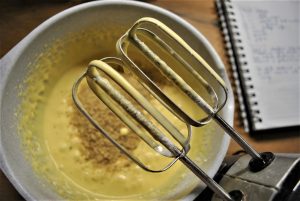
- At your discretion, you can add the egg whites whipped until stiff. Mix it slowly, careful not to spoil the entire thing. Have a sip of Amaretto.
Assembling the Tiramisù
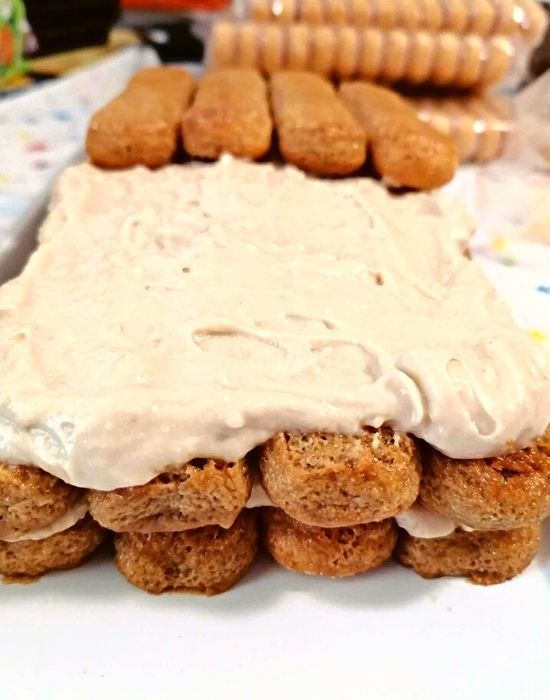
- Dip each ladyfinger in the coffee mix (for no longer than a second; you want the biscuits moist, not soggy) and place them in the glass or on the platter/tray. Continue until the level is complete. Have a sip of Amaretto. Even two!
- Divide the filling cream into three parts. Spread one part evenly over the first layer of ladyfingers.

- At this point, you won’t need more Amaretto in the coffee so you can pour another glass to yourself.
- Build the second layer of ladyfingers and spread the cream over it. Lift the glass. And drink the Amaretto. Continue with the third and last layer. Empty what’s left in the bottle into the glass. Drink!
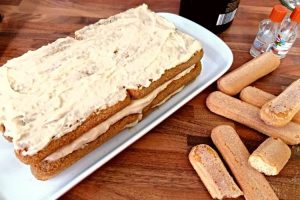
- After you’ve spread the remainder of the cream, lick the bowl. Check how much Amaretto is left. Then, sprinkle the cocoa evenly over the entire surface. Good luck with that!
- Leave the Tiramisù in the fridge for a few hours or overnight to set before serving.
- Before you tidy up, empty the glass. Preferably by drinking it. Not the glass! The content.
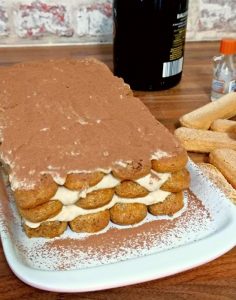
The hard to do part 
- Ask the kitchen to stop spinning. Mix the bowl in the washing machine and add shampoo in the dishwasher. Soap! If you can see the button that says On/Off, press on it. If not, it’s OK. Don’t call your optician yet!
- Presto, your Tiramisù is somehow complete and looking lofty. Lifting!
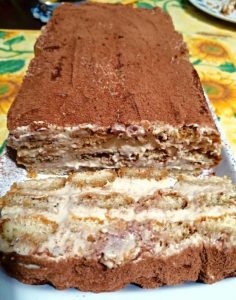
- Cheers! I possibly meant buon appetitito! Appetissimo! Buon Appetizing! I told you to read the damn book! Hiccup! Pardon you!
Notes
A Finger-Licking Delicious Italian Dessert
The post How to Make the Best Ever Classic Tiramisù appeared first on The World Is an Oyster.
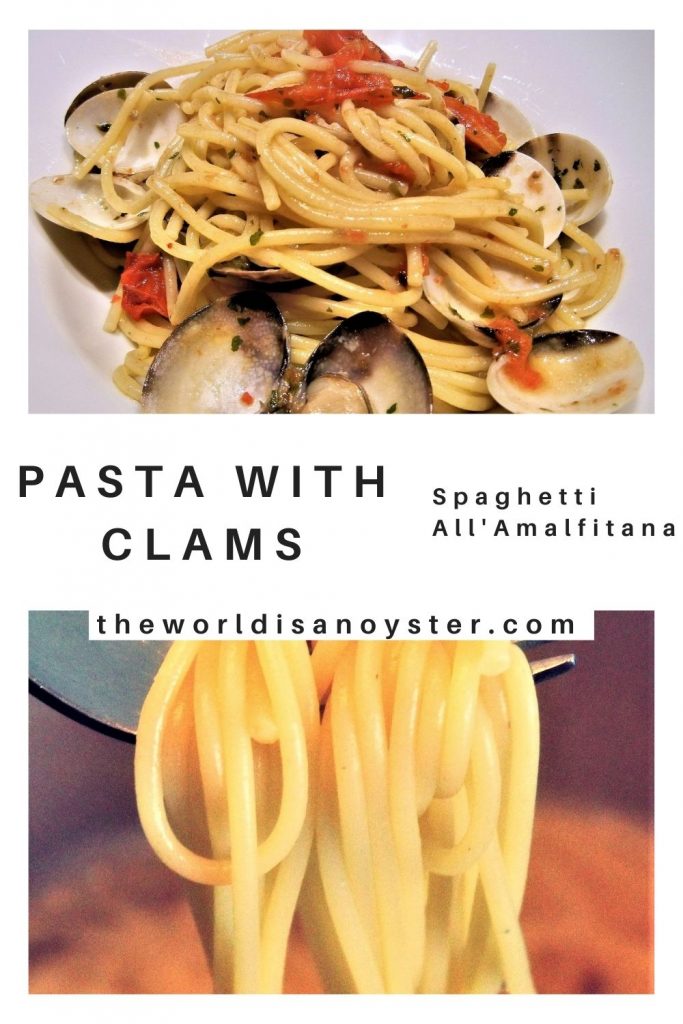
]]>The post Make the Best Spaghetti With Clams – Pasta All’Amalfitana appeared first on The World Is an Oyster.
]]>An Amalfi Coast Special
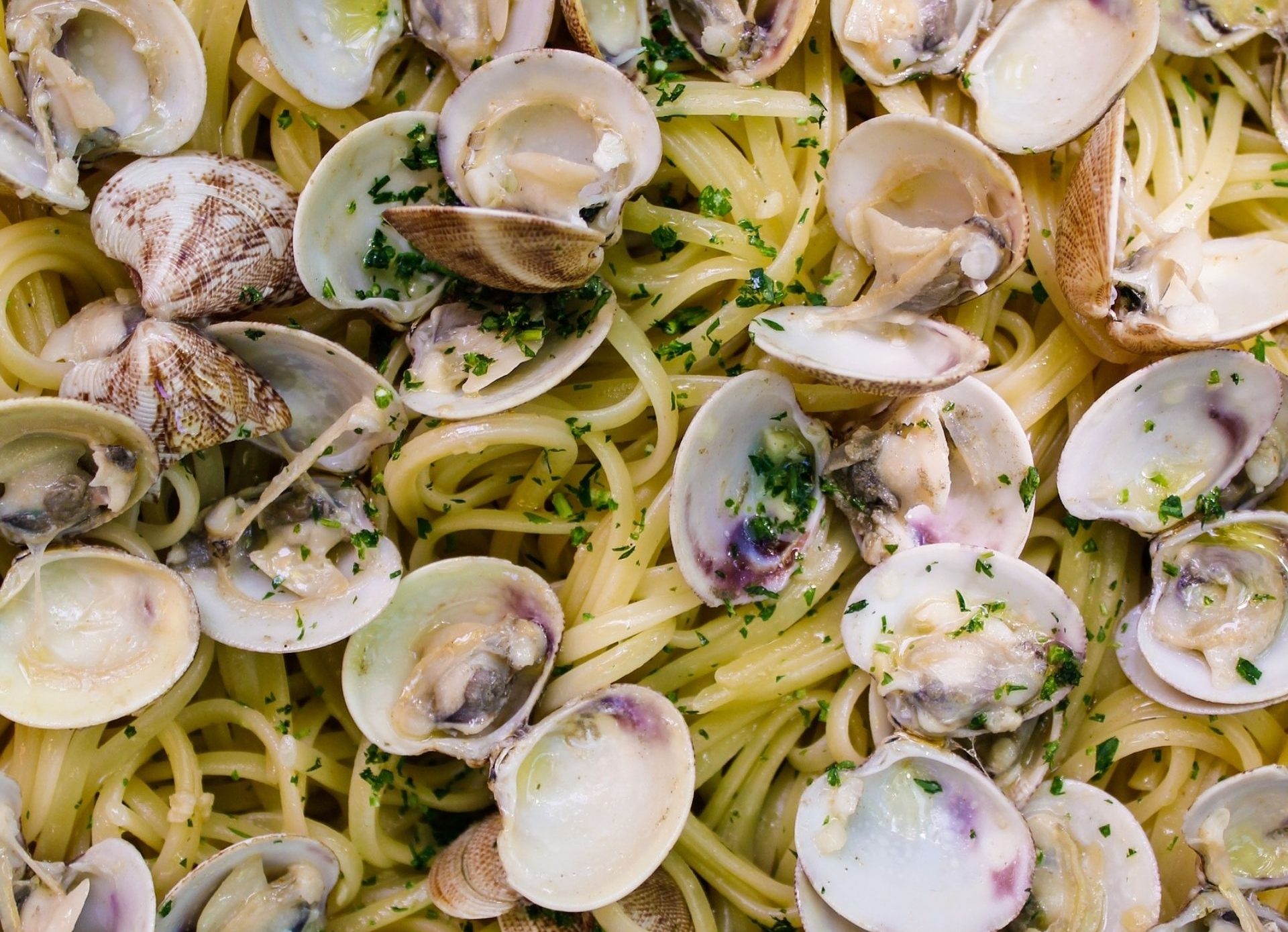
Release the well-known aphrodisiac power of seashells in this easy to make spaghetti with clams recipe that will make your dinner special! Date night, a memorable Valentine’s Day meal or even a regular easy dinner would become notable when you add a touch of Italian cuisine magic!
The truth be told, no Italian food can go wrong, but you can make it just a bit more particular by adding ingredients that work wonders to a relatively simple dish. Imagine the sparkle this dish can ignite on Valentine’s Day!
To many, pasta with clams does not even need a special occasion to make a great dinner. However, a good presentation, an excellent wine and a story to accompany it can make every evening a tad more distinctive!
The Story
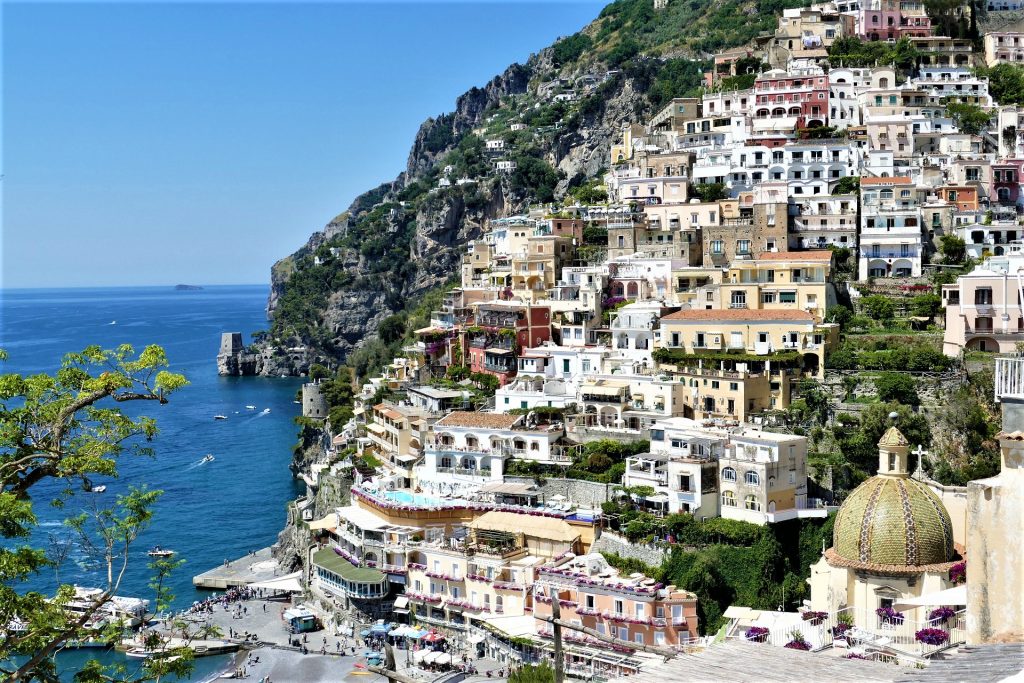
In Italy’s charming Campania region, South of Naples, there is a world-famous road called the Amalfi Coast Drive. Stretching a little over thirty miles From Positano to Vietri Sul Mare, the magnificent Amalfi Coast is nothing but breathtaking scenery.
The narrow road bends at various altitudes, from sea level to hundreds of metres up on sheer cliffs. You get the feeling that you hover over the azure abys of the Tyrrhenian Sea, part of the broader Mediterranean. Not an easy drive if you have an issue with heights, but still enthralling!
The region is insanely bright, with picturesque and quirky, picture-perfect towns strewn along in the yellow stone, the most well-known being Positano, Ravello or Amalfi.
Thousands of colourful houses perched upon the rock, church bell towers, chic hotels and restaurant terraces line up the length of the drive. Caves open in the limestone, and natural stone arches spring up from the mountain. It is an astonishing mix of natural beauty and human-made enrichment that mesmerizes anyone who visits the area.
I vividly remember one incident when the tour bus I was on got stopped by a flock of sheep crossing the road. The coastal drive was so narrow, quite harrowing at times, and the herd had no choice but to follow the asphalt way for about a hundred meters.
The modern-times shepherd, dressed in jeans and printed t-shirt, with headphones over his ears and a wooden stick to guide his flock, stopped for a casual chat with the bus driver. He recounted how often he had to do this.
Famous for their heated temperament, Italian drivers would protest vehemently and exaggeratedly gesticulate their exasperation.
Ma che posso fare io? Anche le povere pecorine devono mangiare! What can I do? The poor sheep must eat as well!
The man was calmness personified. The voice of reason spoke through him.
He was right! Rows upon rows of crammed houses covered the slope from sea level to as far high as people could carry building materials—the poor animals aimed for the top of the cliffs for green meadows.
I expect such encounters were frequent. The sheep got used to ignoring people, cars and irritating honking. The shepherd had an opportunity to chat with other humans. As for the tourists, what better opportunity to marvel at the scene and take thousands of clips to show back home?
If you’re driving towards Salerno, by now, you would have (probably) visited Naples, the ruins of Pompeii or Herculaneum and the stunning island of Capri. Hopefully, you would have stopped in Sorrento for a stroll on the beautiful commercial streets and entered at least one Pasticceria.
If any maleficent forces conspired against you to miss the mouth-watering Neapolitan pastries, you still have Salerno farther down the road to rectify the injustice!
When you stop for lunch, you’ll notice that seafood is omnipresent. After all, local fishers deliver every morning loads of fresh clams, molluscs, octopus, sea urchins and shrimps that make the delicious plates served in the elegant restaurants along the road.
Not only this is a thriving local industry, but the health benefits of what nature has to offer is an opportunity the Amalfitans moulded into culinary art.

The Italians eat pasta every day and still consider it a healthy lifestyle. I’ve had my doubts, but what if the western carb neurosis is just a myth in the end?
After all, the Mediterranean diet is considered one of the healthiest in the world. To understand more about it, watch Down to Earth With Zac Efron; you will be in for a few surprises.
Even if you have never tried seafood or find it funny to think of weird, other-worldly looking creatures that are not pork, beef or mutton on your plate, you should still give it a try. I am sure it will change your perception and level of appreciation!
If I could drive down the Amalfi Coast every day of my life, I would have spaghetti alle vongole each time, exquisite in their simplicity! Make an effort and learn the easy Italian words for spaghetti with clams if you want to impress the waiter and your entourage!
Like many other pasta dishes, spaghetti with clams require only a handful of ingredients, yet the result is so delightful that you’ll congratulate yourself for giving it a try!
So, give it a try, regardless of whether you are in a restaurant or your kitchen at home! And perhaps make it a habit around Valentine’s; you will love the effects of a perfect, romantic dinner!
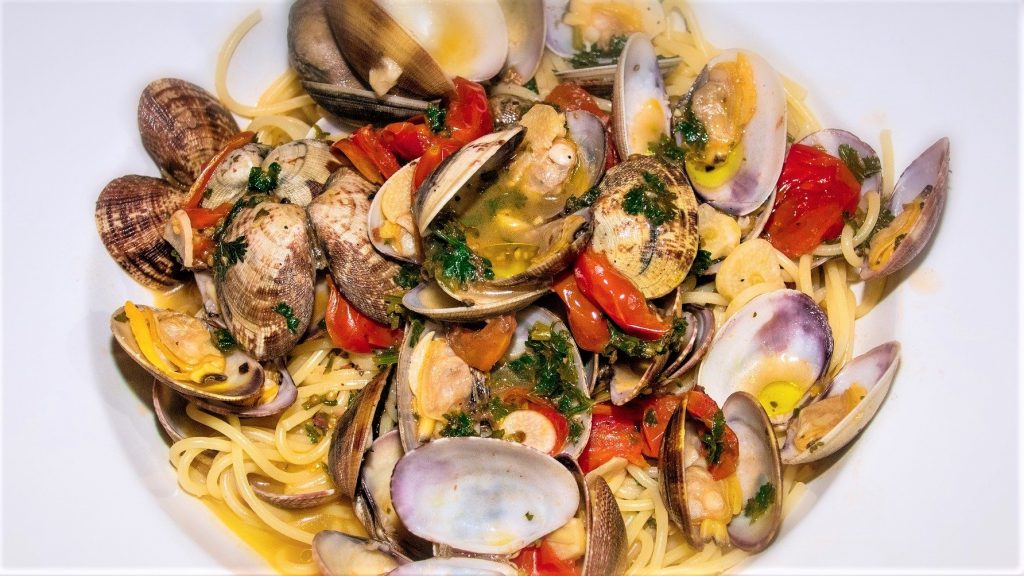
Ingredients for spaghetti with clams
A pack of spaghetti
Fresh clams (frozen, if fresh not available)
Prawns (optional)
Cherry tomatoes
A good quality extra virgin olive oil
Half a glass of dry white wine
Chilli flakes
Garlic cloves
A bunch of fresh parsley
A pinch of sea salt and a dash of freshly ground black pepper
Method
Rinse the clams thoroughly in cold water. Drain.
Before working on the sauce, boil the spaghetti in water (add a pinch of salt). I prefer pasta al dente, but there is no exact time to obtain the right texture. The only way to get it right is to try and see if you’ve reached the desired consistency. When you decide the pasta is ready, drain it immediately.
Meantime, in a large saucepan, heat the extra virgin olive oil. Add garlic (sliced), cherry tomatoes (halved), salt, pepper and chilli flakes—cook for a minute.
Add the wine. When it starts boiling, add the clams and cover the pan with a lid. Allow to steam for a few minutes until the shells begin to open.
If you decide to use prawns, now is the moment to add them (make sure to wash them before.) I prefer not to cut the prawns as they shrink at high temperatures. Stir for one minute.
Add the spaghetti to the saucepan over the clams and stir well. Turn the hob off and add the parsley (finely chopped). You should never cook the parsley if you want to preserve the aroma.
You can sprinkle a few drops of crude extra virgin olive oil to enhance the flavour, then serve, preferably with a Pinot Grigio or even a sparkling white.
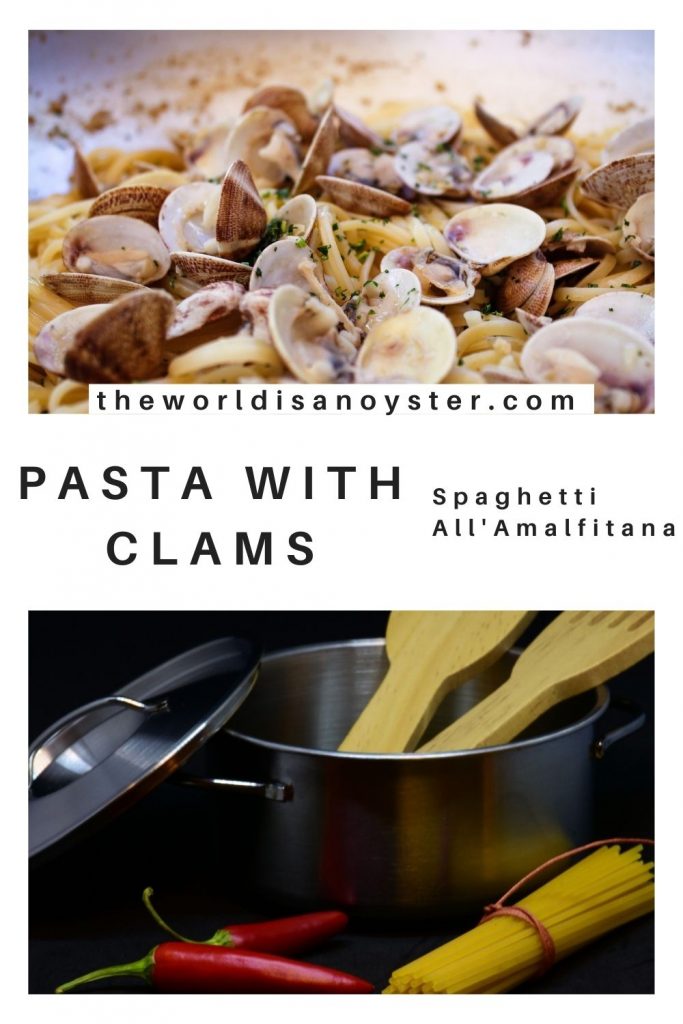
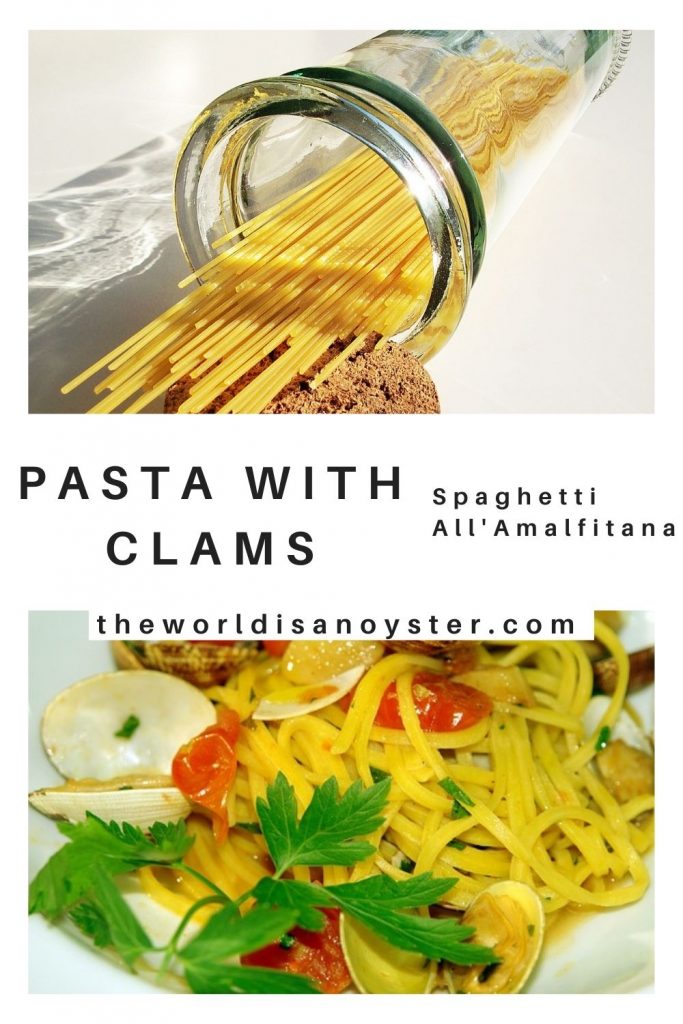
Buon appetito!
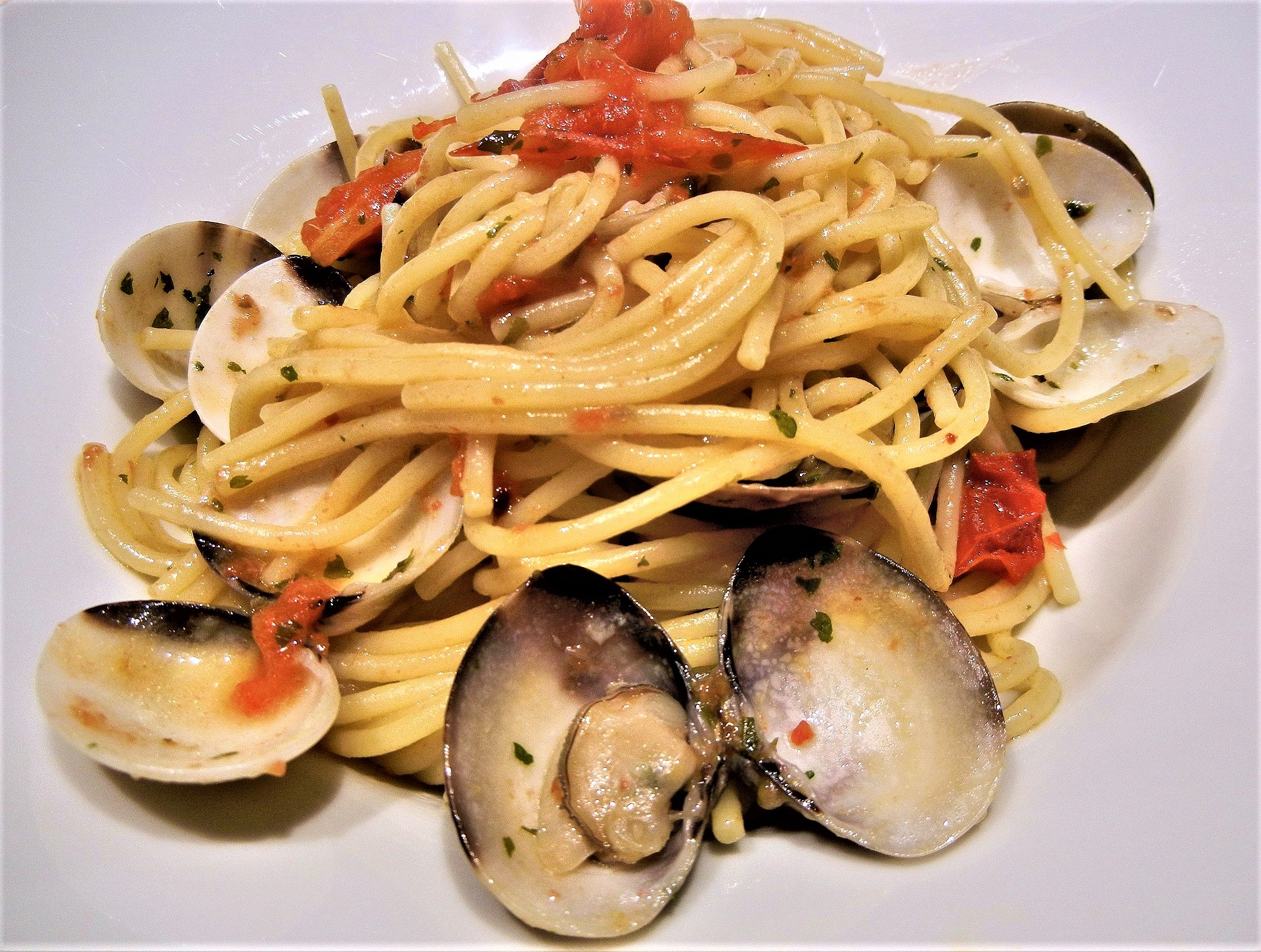
Spaghetti With Clams
Ingredients
- 500 g spaghetti
- 500 g clams
- 500 g cherry tomatoes
- 100 ml olive oil extra virgin
- ½ glass whte wine dry
- 1 bunch fresh parsley
- 1 pinch sea/rock salt
- 1 dash black pepper freshly ground
Instructions
- Rinse the clams thoroughly in cold water and drain well.
- Before you start working on the sauce, boil the spaghetti in slightly salted water.
- Meantime, in a large saucepan, heat the extra virgin olive oil.
- Add garlic (sliced), cherry tomatoes (halved), salt, pepper and chilli flakes. Cook for a minute.
- Add the wine.
- When it starts boiling, add the clams and cover the pan with a lid. Allow to steam for a few minutes, until the shells begin to open.
- If you decided to use prawns, wash and add them to the mix. I prefer not to cut the prawns as they shrink at high temperature. Stir for one minute.
- When you decide the pasta is ready, drain it immediately.
- Add the spaghetti to the clam mix in the saucepan and stir well.
- Turn the hob off and add the parsley (finely chopped). You should never cook the parsley if you want to preserve the aroma.
- You can sprinkle a few drops of crude extra virgin olive oil to enhance the flavour.
- Serve with a Pinot Grigio or even a sparkling white.
Notes

Disclaimer: If you have a shellfish allergy, do not follow this recipe!
I hope you enjoyed reading this easy spaghetti with clams recipe and decided to give it a go! You will find more like this in the Savour the Flavour section of this blog or on my Pinterest board with the same name. Please share it on your easy dinners board; it will help this blog grow and motivate me to write more for your enjoyment! Thank you!
An Amalfi Coast Special
The post Make the Best Spaghetti With Clams – Pasta All’Amalfitana appeared first on The World Is an Oyster.
]]>The post Venice. The Jewel Of The Adriatic appeared first on The World Is an Oyster.
]]>Game of Masks

Music: Winter in July, Sarah Brightman
Movie: Pane e Tulipani (Bread and Tulips)
Book: The Honest Courtesan, Margaret Rosenthal
For the entire summer, the cruise ship docks in Venice for three days every three weeks. A few minutes stroll through a sea of tourists that swarm the city in the summer months takes me to Piazza San Marco.
This post may contain affiliate links, which means I will receive a commission if you purchase through my links at no extra cost to you. Please read the full disclosure for more information. Thank you!
Even closer to the pier is an extension of the Giardini della Biennale, called Viale Giuseppe Garibaldi – my favourite quiet place in Venice. Here, I like to spend time alone with a book, sitting on one of the benches strewn along the shaded alley.
Most of the time, though, I am prowling along the secondary canals around the historic city looking for all things not famous, not noticeable, not picture-perfect but normal in this unique place.
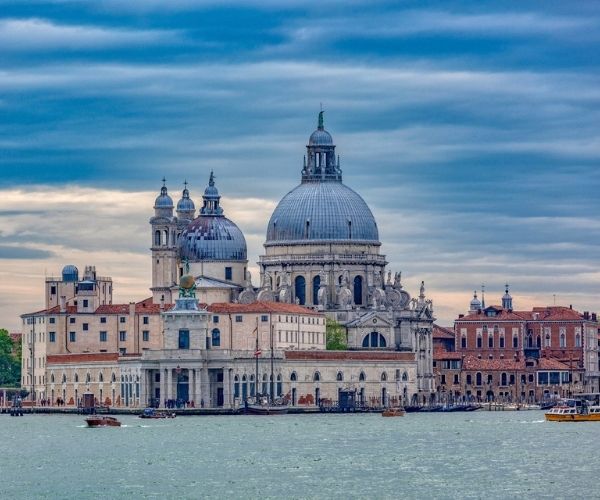
The Serenissima is the most beautiful city in the world; many could state this and win the argument. It undoubtedly is to the proud locals. I’m still debating, but I lean more towards Barcelona.
In the immense diversity of Italian geography, culture and history, Venezia is the most beautiful place. Not only because it is built like no other city on Earth on millions of upside-down-petrified-in-mud trees, but because her fabulous architecture still stands against all the odds. The sea is threatening the island with relentless steadiness. The city still stands, sixteen hundred years on.
Every minute I’m free, I’m out exploring the Serenissima, mesmerised by her duality.

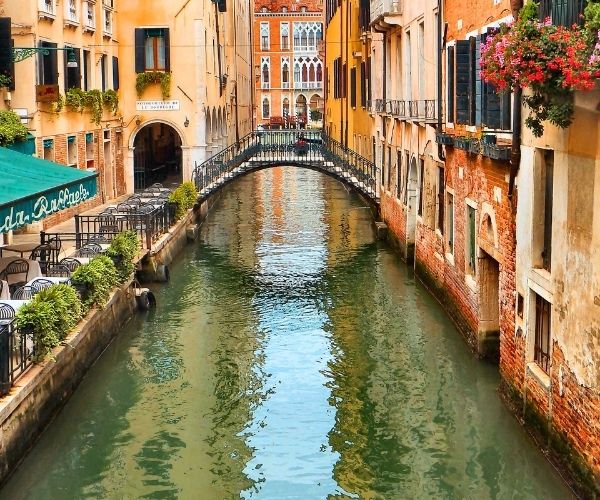
Venice is the Carnevale. She is also the mask. The imposing palazzi along the Grand Canal impress with a beautiful facade. At a second look, though, you’ll notice that the side walls are peeled bare exposing the bricks. They are also partly covered in slime and show signs of a losing battle with the water they spring from.
On the smallest canals, many modest houses don’t even have a facade. After all, Venice is no longer a rich city. It is, though, incredibly rich in history and art.
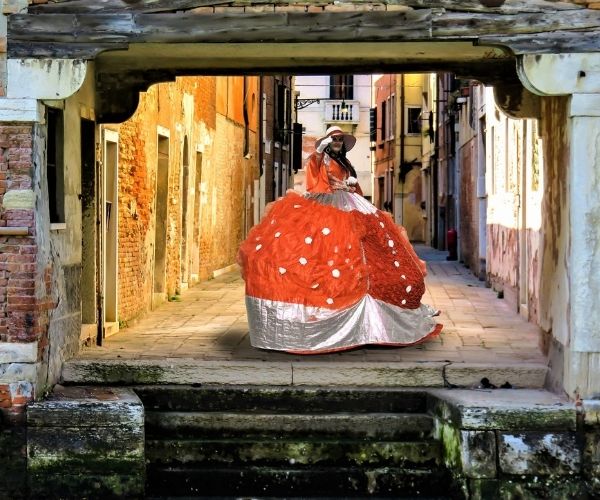
Long gone are the power and glory of the Venetian Republic. Today, the island presents an illusion. The maschera conceals her flaws. And yet, her beauty continues to strike all visitors.
Venice is the silent observer of the countless probing eyes mesmerised by her unique beauty. You’d think you see her, yet she takes great care to conceal her secrets.
The Serenissima, the name Venice is still referred by, has the meaning of “the most serene” of the Italian Republics. Peace was not always easy to keep in the long and troubled history of this place. But a sense of eerie tranquillity still emanates from all pores of this city choked by hordes of tourists every summer.
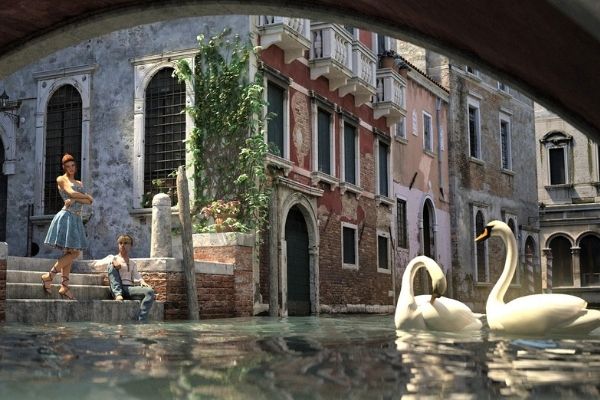
The Grand Canal divides Venice in a curved shape, from the world-famous Piazza San Marco to the train station and the carriageway that connects the island with the mainland.
The first time I set foot in Venice, I decided to walk along the Grand Canal. I wanted to discover what the Serenissima has to offer without a map in hand and preferably without getting lost in the city’s intricacy.
It took me a few hours to make it to Rialto Bridge. Not because it is that long a walk, but because I stopped countless times to take in the beauty of the island. As Fermo, the florist philosopher in the movie said, “Le cose belle sono lente!” (Beautiful things take time!)
Soon, I decided that I’d seen enough of the obvious. It was time to see the city and all its layers. I had no clue where I was, so I kept walking. I got lost in Venice, and I loved it!
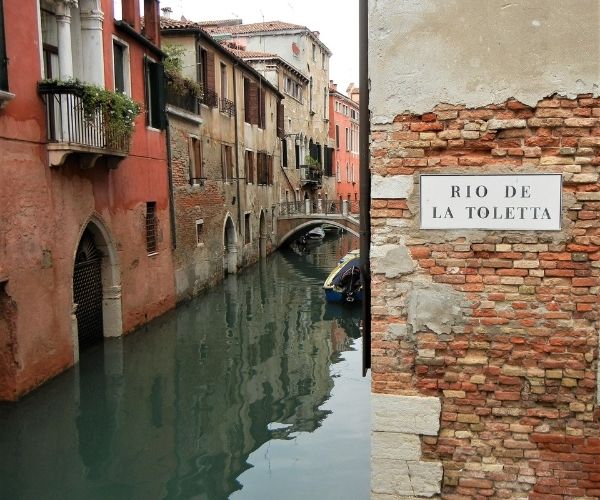
One small canal looks like the other. In time, I got comfortable enough with the whiff of stale water to ignore it. My eye recorded everything around me when the camera was off.
At some point, I got hungry. A salad bar to the right and a pasticceria to the left helped me decide quickly. A minute later, I continued my walk. I had a pack of baicoli (local biscuits) in one hand and a cup of divinely scented cappuccino in the other.
More canals and bridges, a myriad of balcony flowerpots and more peeled render came and went under the relentless Italian sun. At each corner, step by step, the Serenissima revealed her secrets to me.
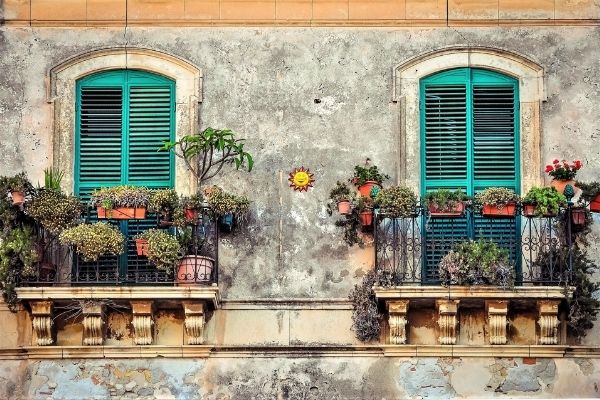
Adjacent to the State Archive, I bumped into Basilica dei Frari. A massive brick building, blending in perfectly with the rest of the constructions in this corner of this island called San Pollo.
Whenever I am in Italy, I have a compulsion to enter every church I see. And I do, not only to find a minute of peace and contemplation but because churches are authentic exhibition halls in this country.
Beyond a grand structure, intricate stone carvings and incredible stained glass, many Italian churches impress with their painted walls, some by great hands, as old as time. They are unexpected art galleries where one stops to search for the meaning of life and finds so much more.

The price of a coffee granted me entrance to Dei Frari. The experience, though, was priceless.
Did you ever have that feeling when you stepped into an old place that you got transported into another time? I did. The minute I set foot on the cold slabs of Dei Frari, I travelled back into a time of Republics, Renaissance, sublime art.
I was still holding a twenty-first-century camera. Yet, I saw a little redheaded boy running around and wondering at the arches suspended so high or at Donatello’s sculptures. I saw the awe in his big brown eyes. I saw what he saw when he caressed the bare brick walls: the paintings that will be. The boy’s name was Tiziano Vecellio.
I twirled round to see more of this massive place, more of the richness that adorns its walls. All the noise faded; all the visitors vanished.
The little boy metamorphosed into a grown man with splotches of paint in his scruffy beard. He was mixing colour with precision, focused on his masterpiece: The Assumption of the Virgin.
He did not know that his strenuous work will become the masterpiece that will mesmerize viewers for centuries to come. But he had an inkling that his bold use of colours will enthral simpletons and crowned heads alike.
At twenty-five, he had the Serenissima at his feet as the anointed official painter of the Republic. He climbed the squeaky wooden ladder in a rush to apply the fresh colour on the Virgin’s mantle, ignoring that paint from his pallet stained his smudged tunic.
Another spin. When I faced the Assumption again, I saw him, an older man now, taking his last pest filled breath. He was pointing to his burial place inside the same church.
The clamour returned, and people started moving around, paying more or less attention to what they came here to see.
I saw all I needed to see. What is left, is the artist’s tomb, at the foot of a non-existent Pietà he never finished; it was supposed to dominate the Altar of the Crucifix. Instead, the old artist’s marble figure was looking back at me with an all-pervading view transcending the centuries.
Titian, as his name is known in English, the master of brush and colour, requested to spend eternity in the Frari, the place where he spent years filling the bare brick walls with his inestimable gift.
To me, it was all juxtaposed images, snippets of time, and remarkable art displays. Dei Frari, only a minor church by Venetian standards, is my favourite place in the entire city.
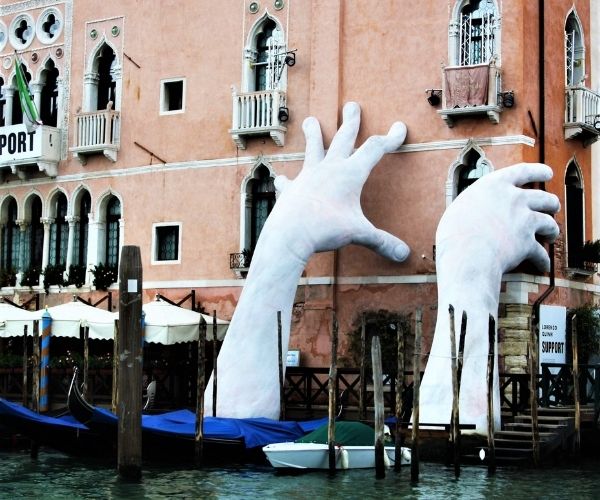
Soon, the canals held no secrets for me. I will come back here and pay the price of a coffee to enter this magical place again and again. And each time, I travelled back to another century! I could not get enough of it. This and reading some book on a bench, in the shade of the lofty trees off the fringe of Bonaparte’s Giardini della Biennale.
Over the summer, I did all that everyone who visits Venice does. I visited all the attractions. I’ve seen the Dodge’s Palace a few times, from the opulent salons to the desolate jails in stark contrast.
I went to see glassmaking in the industrial Murano and strolled on the canals of colourful Burano admiring the intricacy of another old trade: lacemaking.
I spent money in the city’s stylish shops. I took a gondola ride down the canals and bought a bag of cherries from Rialto Market every time I crossed the bridge.
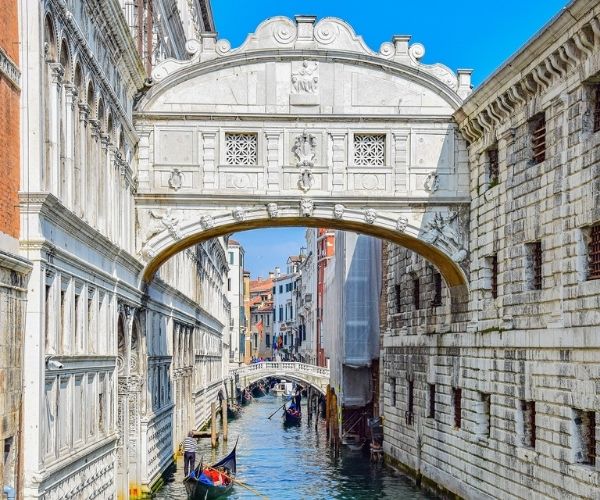
I visited museums and saw most of the exhibitions on the island. A few times, I took the bus to the mainland.
The only things I did not see were the smaller islands and the Lido. I don’t even remember if we offered a tour to the beach. I had no interest, anyway. I could swim all I wanted in Villefranche-sur-Mer or Barcelona. There was too much to see in Venice to idle by the beach.
In autumn, the ship sails to the Caribbean. At the end of the season, on the last Mediterranean cruise in late October, I went to see Titian one last time. To say goodbye until I will return.
The crowd of tourists that usually suffocate the city was gone. The church was almost empty—all the better. I got my time alone with all the artists and their works without having to worry that I might accidentally bump into other visitors.
Outside, in the crisp autumn, life went on in Serenissima as it did since the Romans built her. The locals went about their business, relieved that the summer rush is over and the city could breathe lighter. Until the Carnevale in February or March, the island will not see much tourism.

As it happens, I am still to return to Venice. I will, one day. And I know the first thing I will do will be spending a coffee’s worth on the entrance to Dei Frari to see a little boy running around in the coolness of the lofty arches above his redhead. This church will still be my favourite place in Venice. I have no doubt.
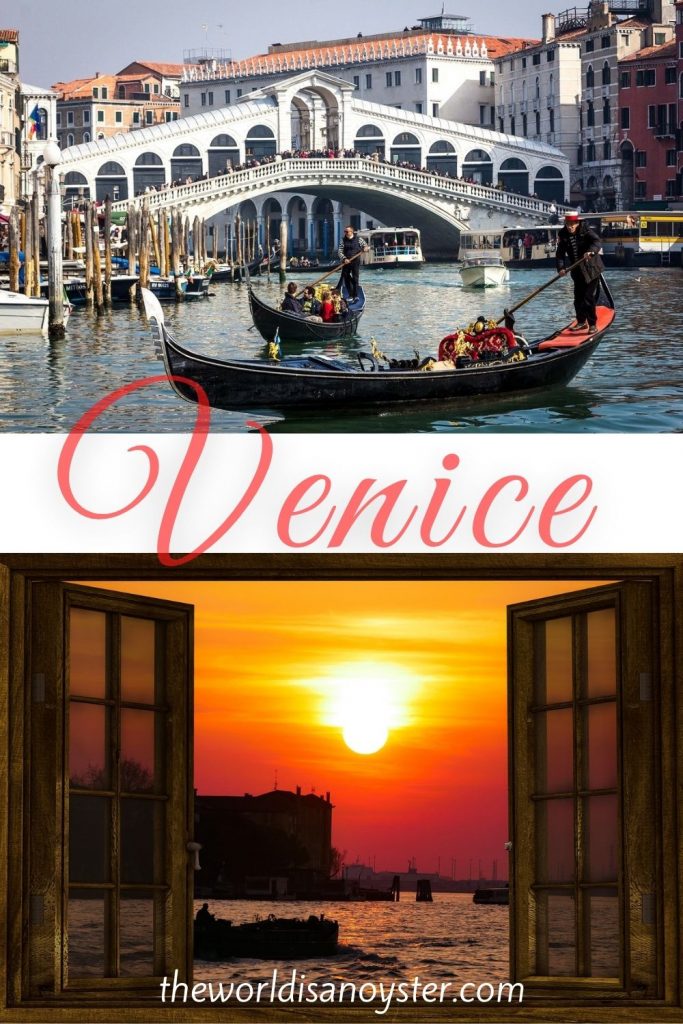
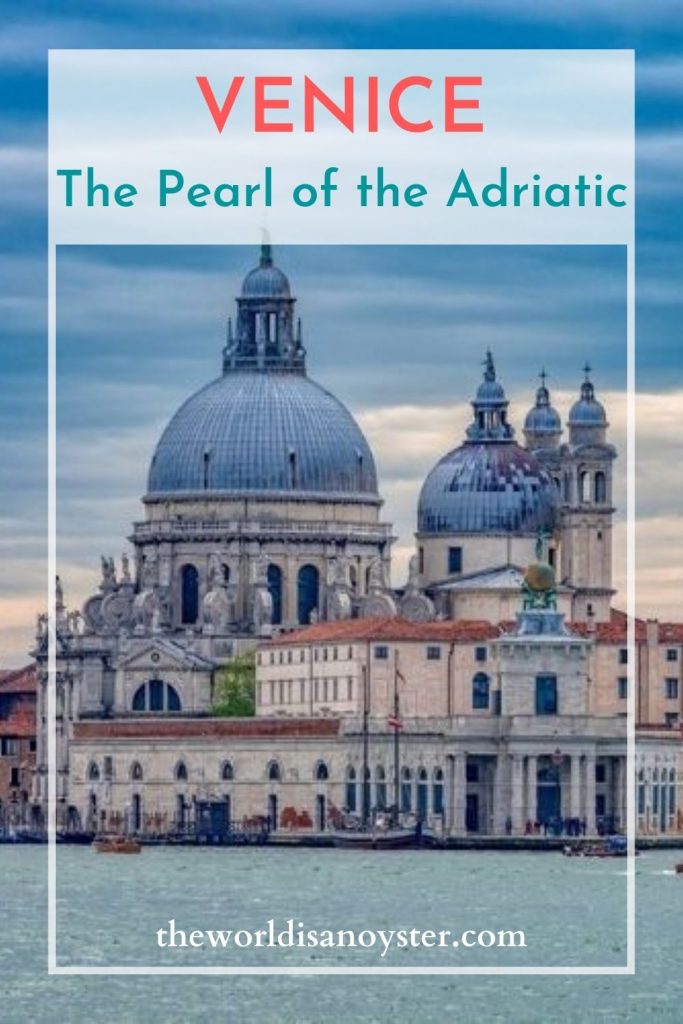

Game of Masks
The post Venice. The Jewel Of The Adriatic appeared first on The World Is an Oyster.
]]>