The post Why Do Christians Celebrate Catholic and Orthodox Easter On Different Occasions? appeared first on The World Is an Oyster.
]]>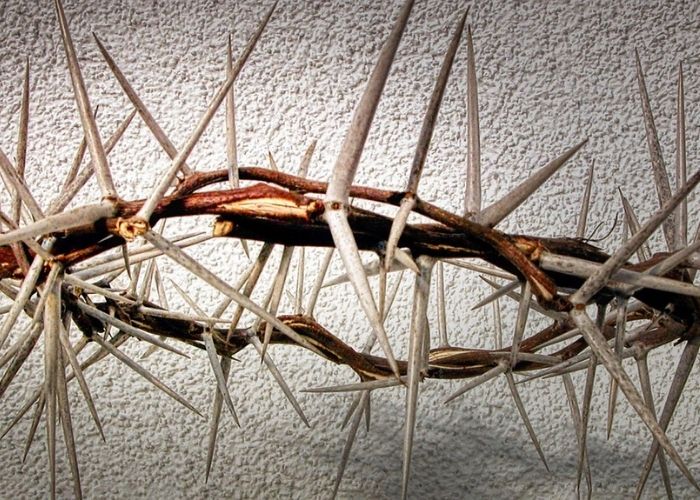
Why is Orthodox Easter celebrated at a different date than Catholic Easter? Well, it is almost impossible to grasp the intricacies of a two-thousand-year-old religion, especially when there is so much controversy around it. There is an ocean of written information for those interested in more profound diggings, but I will attempt a simplified explanation.
Christianity is not the first monotheistic religion. Allegedly, Zoroastrianism seems to be about 12.000 years old and has lasted a few thousand years (even until today in some areas).
In contrast, Akhenaten’s attempt to impose a monotheistic religion by instating Ra as the sun god and the creator of the universe in ancient Egypt did not last after the pharaoh’s demise.
Of course, all the history we know is based on the writings left by our ancestors. But where there was no alphabet or the form of writing is so old that it is impossible to decipher, the wisdom perpetuated orally is largely ignored. However, the knowledge of it has survived to our times (see Zalmoxianism).
Contempt seems to have survived better since today people still call the old polytheistic religious beliefs “paganism”. What if suddenly a new polytheistic religion emerges? What would the current ones be called then? I am not worried at all. We are sarcastic and bully enough species, able to find an equally scornful label!
Christianity is a monotheistic religion that followed the polytheistic ones after the ancient Greek and later Roman Empire’s demise.
From his star, the God we have known of for thousands of years must have a great view over his creation. He surely sees us squirming on a tiny planet, taking for granted a worry-free life, often putting everything we do on his shoulders (“It was God’s will!”) and begging for help and forgiveness when it gets tough.
Most likely, humans are not his only creation; if God does not answer every individual call, it might be because he’s busy contemplating others, on other planets, in different universes, also his work. Probably. Some of us accept this based on the current religious norms.
Spirituality and religion are different concepts. One has more to do with philosophy and inner, personal beliefs, while the other is a set of established dogmas, canons, etc. Does a deity or another impose religions on people? No. It is an efficient human attempt to control and manipulate large masses.
One’s connection with spirituality should have more to do with love and compassion than with fear that this or that will happen to you if you do or don’t do this or that as imposed by some humans. Hence each village on this planet has a different understanding, traditions and practices of the same belief.
Historically, armies of soldiers killed their fellow humans and sacrificed their lives in wars for millennia. If faith is all about love and compassion, I doubt any god has ever explicitly told anyone, “You must kill your fellow humans so that this or that king gains more power!” Yet, so many wars started on religious grounds by humans.
A ruler with more imagination and persuasive power would have easily won as his army would sacrifice lured by a promise of endless happiness or threatened by a fear of eternal damnation. In essence, GREED was and still is the real winner, a whim is a real motive, and manipulation is the effective delivery method.
It is all reduced to superb control skills, practised and mastered over millennia. Crash the real connection with the individual’s spirit and dominate by instilling irrational fear of the unknown.
One law governs the world beyond any physical law known to humans. It is called love. It has a funny way of healing, appeasing, pacifying.

Jesus mentioned it repeatedly, but the Romans were afraid this law based on human emotion would undermine their position of political power. So, they barbarically killed a man who did not wrong anyone.
Some three centuries later, emperor Constantin I (another Roman holding the reins of power) repented after killing left and right, including his wife and eldest son, and imposed an old-new state religion on remorse.
Almost from the start, the new (old) religion has known rifts based on doctrine; the East and the West (Rome and Constantinople) have had a hard time agreeing on many aspects, including calendars. But still managed to put together a set of rules that make a state religion. Made by humans. God has no religion!
Fast forward another seven centuries; a so-called great schism fractured Christianity during the dark ages. Constantinople and Rome finally separated. A thousand years old Roman Empire reached an end.
The two main branches of Christianity (the Catholic and Orthodox Church respectively) based their separate calendars on the lunar, respectively solar-lunar cycle on their division.
Hence, we celebrate Easter on different occasions, typically at a week’s distance.
2021 saw the longest distance I could remember. The Orthodox celebrated Easter about a month after the Western Easter. It is difficult to call it Catholic Easter since the Western Christian religion is also subdivided (does Henry VIII, for instance, breaking with Rome on love whims sound a bell?)
In 2022, the Orthodox Easter will be celebrated in Romania, Bulgaria, Greece, Cyprus, Serbia, Macedonia, Albania, Georgia, Ukraine (if the war will end by then to allow any celebrations at all!), Russia (largely brainwashed by bolshevik propaganda and unaware of its invasion of a sovereign neighbouring country!) and some parts of the Middle East and Africa on the 24th of April. The rest of the Christians will have had already observed it on the 17th of April.
Given the war in Ukraine, there is one thing I want to mention to underline the gap between religion and spirituality. The Russian Orthodox church’s highest in command agrees with his country’s war and killing of the children in Ukraine. That is not because his religion tells him something, but because his position of power depends on how much he agrees to his tyrant president.
In his desperate clinging to power and wealth, the patriarch bends to political power hoping his position will be saved. Given Russia’s history and the mingling of religion in state business for over a thousand years, he’ll probably get the exact opposite, so all his attempts to save his place at the expense of killed children will only count when he meets his maker.
Since we celebrate twice, perhaps it is a good idea to take a minute and give some thought to the beginnings of this religion, its spread and division, its complicated history and the meaning of believing in something not always easy to conceptualise. And also, do what we do best on holidays: splash cash on commercial goods and gorge on food! We are what we are.
At least, on the Orthodox Easter Sunday, the Romanians still greet each other with the acceptance of the only known miracle performed by a man: “Christ has risen!” And the reply still is: “In truth, he has risen!” before we wish each other a “Happy Easter!” and share red painted eggs and cozonac! All of these are old, thousand of years old customs that are gradually dwindling in the robotic era.
Other nations in the Balkans probably keep the same traditions. Still! Given the hallucinating speed of life the modern world is witnessing, traditions, history, beliefs, and everything else some of us still cling to might become just a thing of the past.
This was the hardest post to write. Honestly! Next time I’ll stick with chocolate bunnies – a lot less demoralising and thorny!



Sources: Historia, Britannica, World Library.
Why Do Christians Celebrate Catholic and Orthodox Easter On Different Occasions?
The post Why Do Christians Celebrate Catholic and Orthodox Easter On Different Occasions? appeared first on The World Is an Oyster.
]]>The post How to Make a Fluffy Easter Bunny Cake appeared first on The World Is an Oyster.
]]>Chocolate and Mascarpone Easter Cake
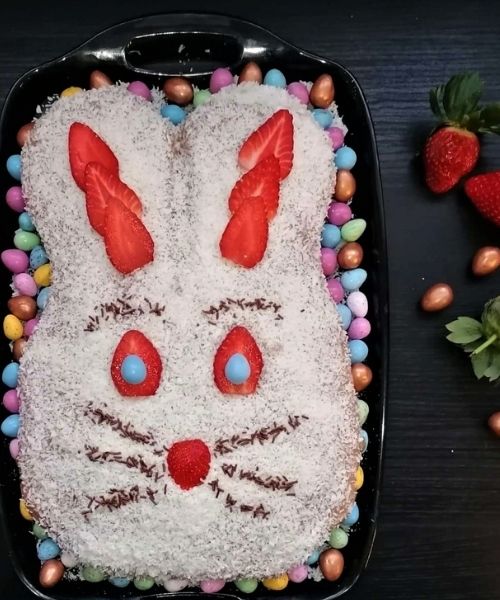
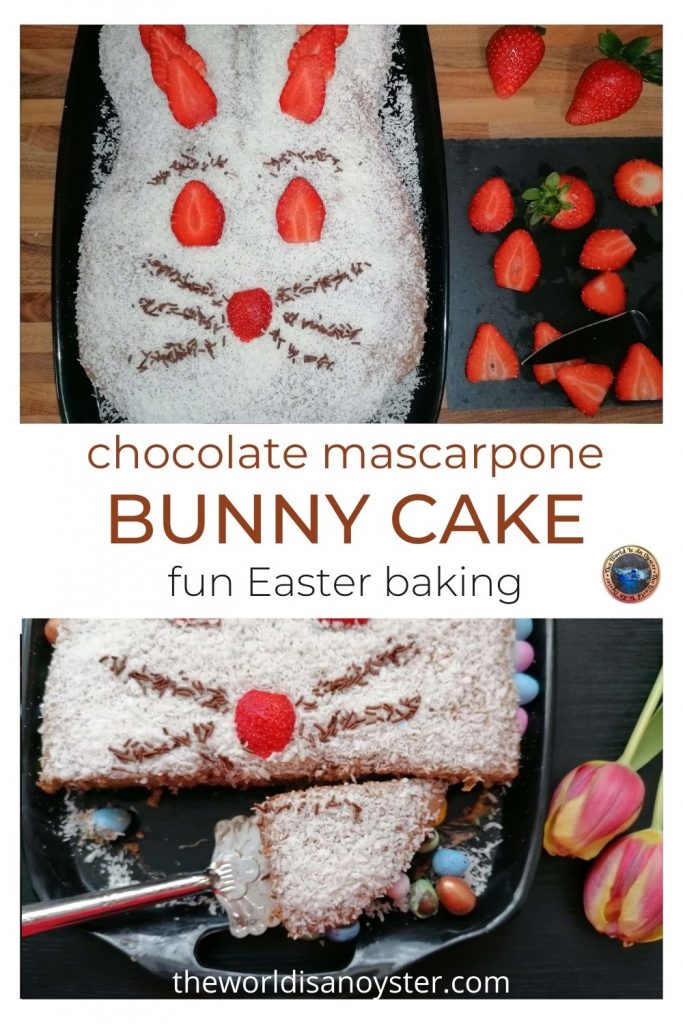
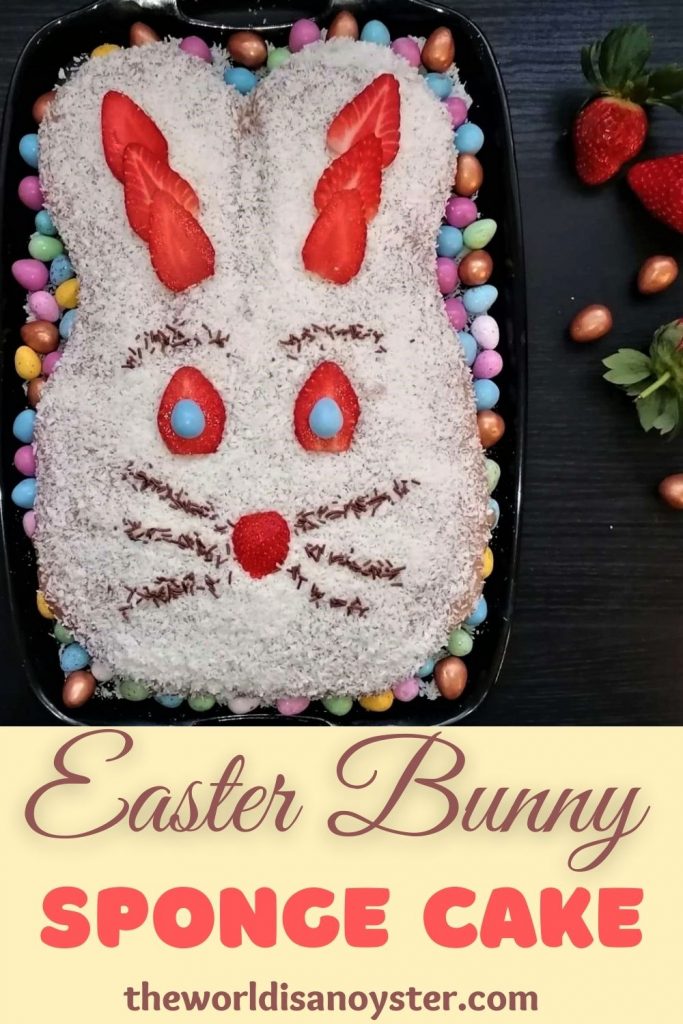
There is great fun for kids of all ages (going up to 45!) to pinch chocolate eggs and cut a chunk of this fluffy looking chocolate and mascarpone Easter bunny cake! I speak from personal experience.
This post may contain affiliate links, which means I will receive a commission if you purchase through my links at no extra cost to you. Please read the full disclosure for more information. Thank you!
For a long time, I searched online for a bunny-shaped cooking mould. As I am a bit picky and hard to impress with the available offers, I decided to ditch wasting time and make my easy shape.
If you have plenty of time to wait for a delivery, have a look at these options:
An A4 paper, a pair of scissors and a rectangular baking mould readily available made for the trouble of ordering online and waiting a couple of days for delivery. Easy, rapid and cheap!
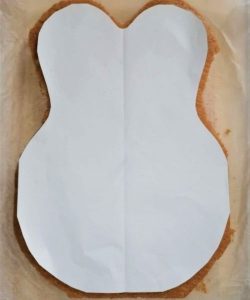
I pulled a sheet from the printer, drew a chunky bunny face and cut around the drawing. I’m no artist, but a steady drawing hand and some degree of imagination proved handy in the endeavour.
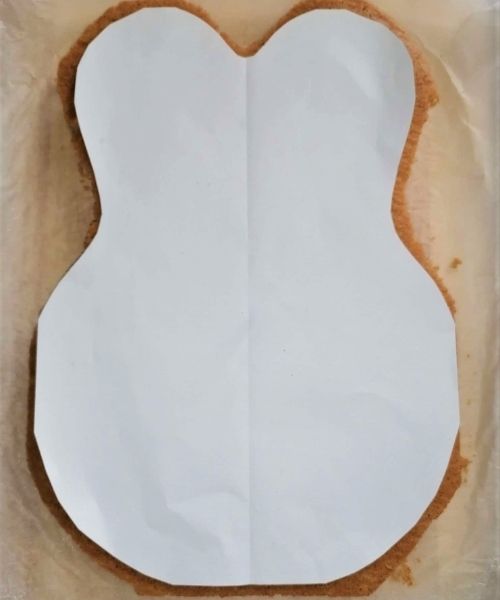
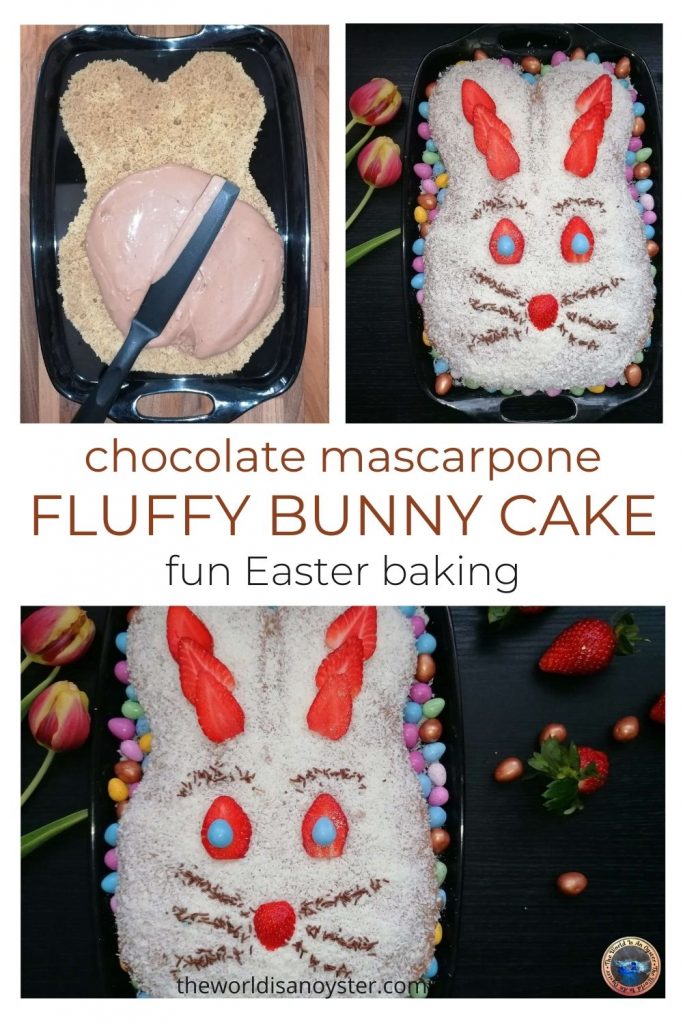
Meanwhile, I had prepared a simple sponge. After it cooled down, I just placed the cut shape on top and cut the sponge around the paper. Voila! My cake idea looked like a fun and festive little cutie!
This chocolate and mascarpone Easter bunny cake created on a Saturday turned out incredibly successful at our house. The recipe is tried and tested. If you are thinking to give it a go, add a few things to your shopping list and start cutting any shape you want.
As we got closer to Easter, a bunny was the obvious choice. A chick would have been a tad difficult because of skinny legs, but a massive egg shape would have worked just as great!
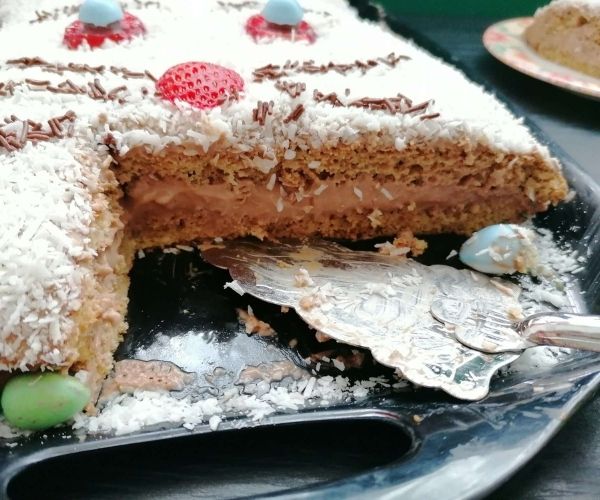
This fluffy mascarpone and chocolate cake would not necessarily be categorised as a traditional Easter cake, but it surely catches the eye and tantalises the taste buds!
Pasca would be the obvious choice for a more traditional recipe. Or you could find further inspiration in this Easter round-up of recipes from around the world. Whatever you choose to make, it is essential to have fun and enjoy!
Ingredients for Easter bunny cake
For the sponge:
Eggs
Organic white flour
Organic coconut sugar
Tepid water
Orange zest (chose organic, pesticide and wax-free oranges)
Baking powder
A pinch of salt
For the filling:
Mascarpone cheese (drained)
A sachet of vanilla pudding (can be purchased online)
Unsweetened almond milk
Organic coconut sugar
Cacao
Potato/corn starch (or flour)
A pinch of salt
Flavours (I used rum)
Whipped cream (optional)
To decorate
Shredded coconut
Strawberries (we’re out of season, and I could not find organic; the conventional ones were utterly tasteless, and we discarded them, but they got points for aesthetics.)
Chocolate strands
All sorts of tiny chocolate eggs
Pair your slice of sponge cake with a steamy cup of cappuccino, and your day will instantly look a lot brighter.
There is no way in the world a chocolate and mascarpone sponge cake would not wow, so have a go at it. Be creative, have fun in the process and enjoy the result. I vouch for yumminess!

Fluffy Easter Bunny Mascarpone and Chocolate Cake
Ingredients
Sponge
- 6 pcs eggs
- 6 tbsp organic white flour approx 200 g
- 1 tsp baking powder
- 6 tbsp organic coconut sugar approx 160 g
- 1 tsp orange zest organic
- 6 tbsp tepid water approx 60 ml
- 1 pinch salt rock/sea
Filling
- 250 g mascarpone cheese
- 1 sachet vanilla pudding I used Dr Oetker Original
- 1 tbsp potato/corn starch or white flour
- 2 tbsp cacao powder organic
- 500 ml almond milk unsweetened
- 180 ml whipping cream optional
- 6 tbsp coconut sugar organic
- 1 pinch salt
- flavours
Decoration
- 60 g shredded coconut
- 3-4 pcs strawberries
- chocolate strands
- chocolate eggs
Instructions
Sponge
- Preheat the oven to 180°C/356°F/gas mark 4.
- Place parchment paper on a rectangular baking tray. Mine measures 34/24 cm. If you use a larger tray, you might want to increase the quantities but keep the ratio.
- The key to a beautiful, fluffy sponge is the rule of 1, which translates into 1 egg/1 tablespoon of flour/1 tablespoon of sugar ratio. Depending on the egg's size and the type of flour, you might need extra, this is why I allowed 200 g flour, but I did not need the entire quantity. In general, I use less sugar than required, but this is a matter of taste.
- In a bowl, whisk the egg whites with a pinch of salt until stiff, then leave aside.
- In a different bowl (larger), whisk the egg yolks with sugar, orange zest and salt until the volume doubles. Add the tepid water gradually and keep whisking, preferably with an electric hand mixer.
- Add the egg whites and mix carefully using a large spatula in a circular motion, from the bottom of the bowl to the top.
- Gradually add the sieved flour together with the baking powder. Keep mixing carefully until the consistency is that of a dense cream. You might not need all the flour if enough has been absorbed to confer the desired consistency.
- Pour the entire content into the baking tray. It is essential to level the batter evenly. I do this by gently slamming the tray to the worktop a few times. When happy with the result, bake for 25-30 minutes. Do not open the oven's door for the first 20 minutes!
- My oven bakes quickly, so I usually reduce the temperature to 170°C as I place the tray inside.
- Perform the toothpick test to check the sponge is thoroughly baked; if needed, allow extra baking time.
- When ready, remove from the tray, flip upside-down on a cooling rake, and cool completely before cutting around the paper shape and dividing the sponge horizontally.
Cream filling
- Start by preparing the vanilla pudding by following the sachet's instructions: mix the powder with 4 tablespoons of sugar and 4 tablespoons of milk. Additionally, add 1 tbsp of starch/flour and 2 tbsp of cacao powder). You might need 2-3 extra tbsps of milk.
- Bring the rest of the milk to boil in a pan. Reduce the heat and pour the mix.
- Cook for about three-four minutes until it boils while stirring continuously. The pudding should change consistency reasonably quickly.
- When ready, turn the heat off and allow it to cool completely, then add the flavour of your choice and mix.
- Separately, batter the mascarpone cheese with 2 tablespoons of sugar and a tiny pinch of salt until it becomes fluffy.
- If you choose to use whipped cream, whip it in a separate bowl. Be careful not to spoil it and add it to the mascarpone when ready. Mix until it incorporates evenly.
- Add the boiled and cooled pudding to the composition and mix either using a hand mixer or a spatula. The cream should have a uniform colour and a pretty thick consistency.
Assembling the cake
- Chose the tray/platter for your cake.
- As the sponge is thoroughly cooled and has the desired shape, you can use sweet compote syrup to moisten the sponge. This step is optional. The sponge should absorb enough humidity from the cream while in the fridge to become moist.
- If you need to prepare syrup, boil 6 tablespoons of water with 3 tablespoons of sugar until it thickens slightly. Cool completely before use.
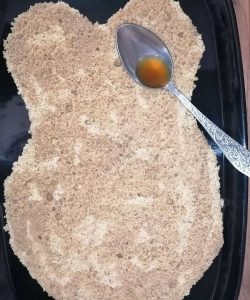
- Place the first sponge layer on the chosen platter, moist slightly and allow a few minutes for the sponge to absorb the syrup.
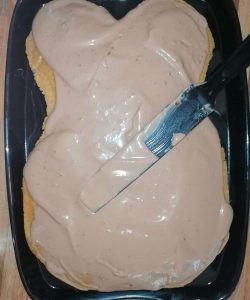
- Add a little more than half the quantity of cream and spread evenly.
- Place the second half of the sponge on top, moisten and cover the top and sides with the remaining cream.
- Sprinkle shredded coconut to cover the entire cake.
- With a dry spatula, press slightly to create an indentation. It will make a 3D impression of bunny ears.
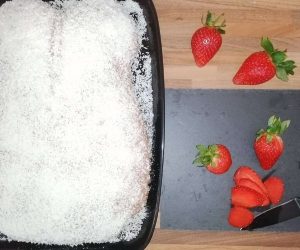
- Decorate as desired and enjoy!
Notes
How to Make a Fluffy Easter Bunny Cake
The post How to Make a Fluffy Easter Bunny Cake appeared first on The World Is an Oyster.
]]>The post Traditional Easter Foods For A Special Celebration appeared first on The World Is an Oyster.
]]>What Traditional Easter Foods Do You Have on Your Festive Table?
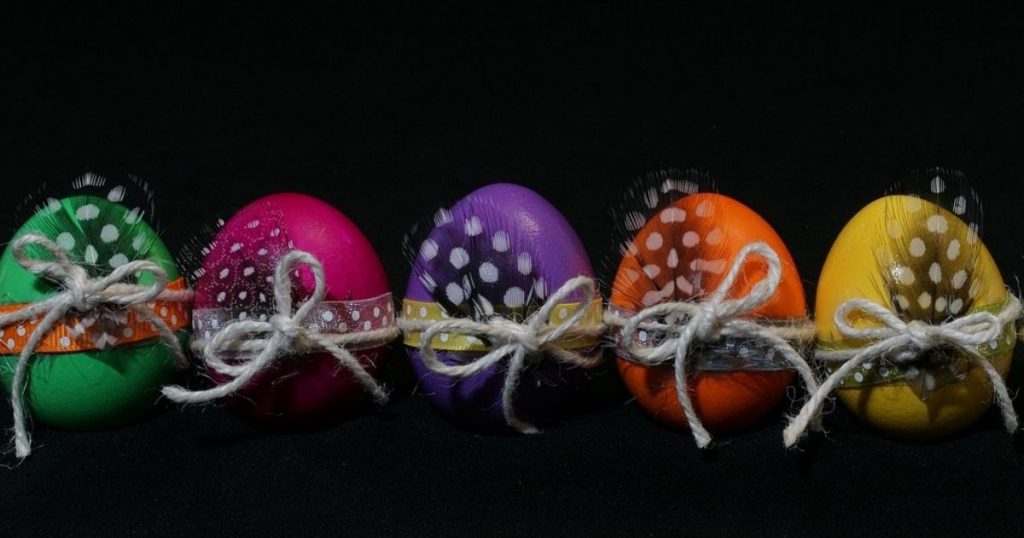
Before listing a few traditional Easter foods, let’s take a minute and recap why a big part of the world celebrates Easter.
Easter – Meaning and a Brief History
Easter is the Christian celebration of Jesus’ resurrection three days after his horrific killing by human fellows.
Chronologically (according to the Bible), Easter or Passover in Hebrew has been celebrated 1500 years before Jesus’ time, since the Israelites’ liberation from Egypt.
Etymologically, the Latin word for Easter – Pascha, of Aramaic origins – is at the base of the names for this religious holiday in all Latin languages today (Paşte in Romanian, Pasqua in Italian, Pâques in French, Pascua in Spanish and Páscoa in Portuguese.)
The English word is newer and has Anglo-Saxon roots leading back to a Teuton goddess, Eostrae, to whom people offered sacrifices around the spring equinox.
Historically, Jesus’ crucifixion happened around Passover. In a desperate attempt to maintain their power and domination over a large chunk of the world as they knew it, the Romans provided the context to the only known miracle: the resurrection from the death of one man they feared would undermine their dominance. The greed for evermore power is such a human peculiarity!
What boggles the mind is that a few centuries later, the same Romans have set the foundations of a whole new religion on the same atrocious event they allowed to happen in the first place out of fear of losing power! Idiosyncratic – another synonym for uncanny! Oh, how I love words and their meaning!
The exact date of the crucifixion is shrouded in controversy. As a result, this year, I will celebrate Easter a month later than most of you since the Christian Orthodox religion has set the date a week apart from the Catholic one. Humans do funny things, especially if they have a certain degree of power; who am I to judge?
I’m not even going there. Anyone curious can read mountains of books, search all lost and recently found Dead Sea scrolls, and put together all the missing pieces.
To some, history (if recorded accurately and without bias) might matter more than a form of mass control and manipulation or another. However, many agree that there might be a force that keeps the universes out of chaos, whatever people call it. Let’s not forget that religions have changed often and have been either monotheistic or polytheistic in human history. This was people’s choosing, as it fitted them and the interests of those in power.
History, though, has a habit of repeating itself. I briefly mentioned the similarities between Mithras or Zalmoxis and Jesus in my posts about time travel and autumn walk. Likewise, new beliefs overlapped or adopted and modified old ones over time. But there must be an origin to everything.
Humankind has seen a few crucial turning points, and we might very well face a new one. Sadly, we also have a habit of not learning from mistakes; hence, history always gets a chance to repeat itself.
Although the new generations gradually show less interest in religion, the historical and anthropological facts remain beyond the myths.

A Holiday Important Enough to Deserve Traditional Easter Foods
Since we still have a reason to celebrate Easter, what better way to contemplate our fate as a species than through enjoying our traditional Easter foods?
Thanks to a few fellow food bloggers, I put together a few traditional Easter recipes from different parts of the world. Hopefully, they will inspire you to cook or bake something other than what you traditionally prepare for the Easter feast.
Whatever you choose to make, please take a minute to think of our religious holidays’ meaning beyond consumerism and, whatever you believe, remember that kindness does not cost money, although it is priceless!
Happy Easter!
Traditional or Fun Easter Foods For A Special Celebration
Pasca: A Traditional Romanian Easter Cake
Recipe provided by theworldisanoyster.com
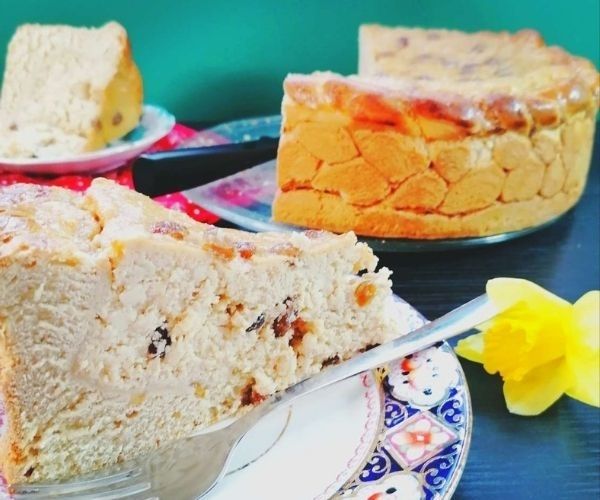
Pasca is a specific Romanian Easter cake filled with sweet cheese and raisins. The recipe consists of a basic Romanian cozonac dough or the Italian version of it, Panettone, with added sweet cheese filling.
Simple Easter Egg Sugar Cookies
Recipe provided by buttercreamparties.com
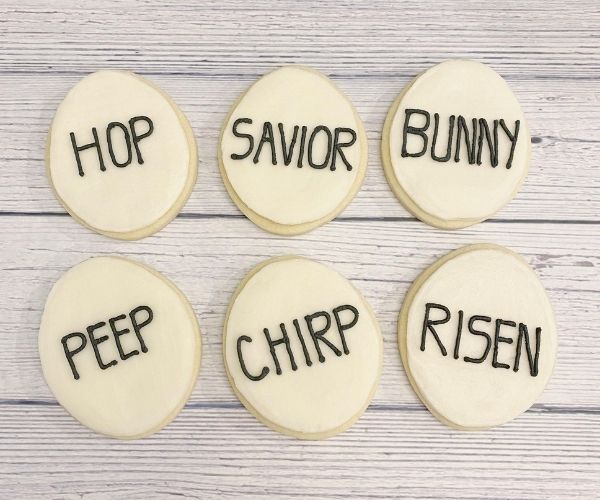
The sure way to impress little people and adults alike is by offering them cute cookies. Find your favourite buttercream cookie tutorial and more ideas for Easter on the website.
Pastiera Napoletana
Recipe provided by cucchiarella.com
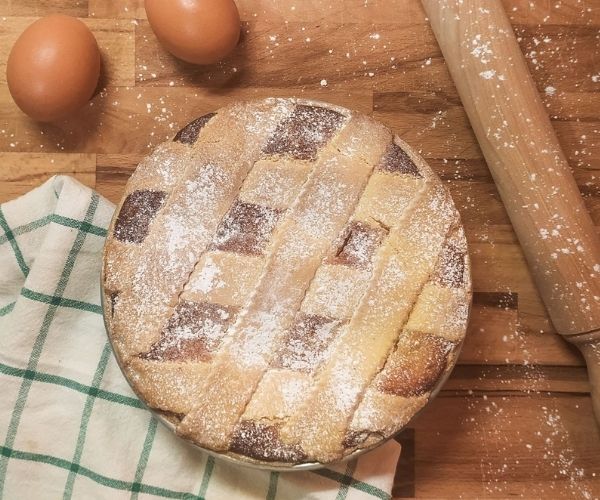
An absolute delight, this Italian Easter cake is based on a beautiful marine legend. Check the website for all things Italian, mouth-watering goodies.
Cozonac
Recipe provided by theworldisanoyster.com
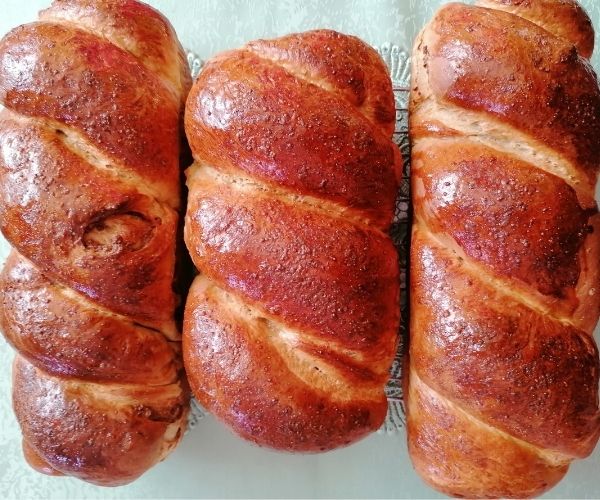
This special festive nut and fruit-filled treat has plenty of history and goodness. At Easter, the Romanians would bake enough loaves to feed an army, although only the family and guests would indulge! Cozonac is to us the best among all the Easter foods we will have on the festive table!
Easter Crack Toffee Candy
Recipe provided by homeatcedarspringsfarm.com
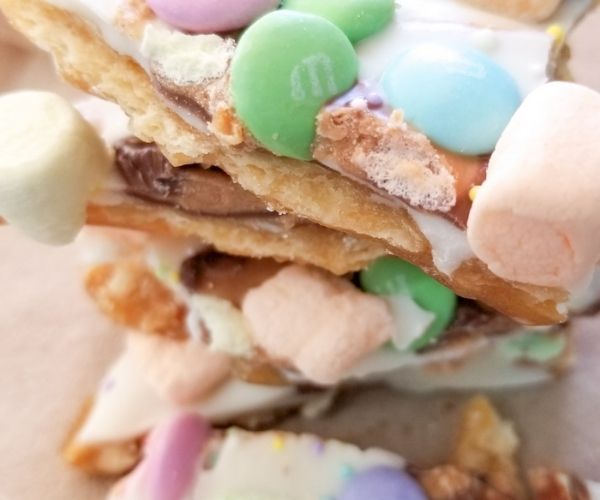
Try an easy dessert that will bring spring colours to your festive Easter table. This treat requires only two ingredients and imagination to decorate it.
Traditional German Easter Bread with Marzipan and Almonds
Recipe provided by mydinner.co.uk
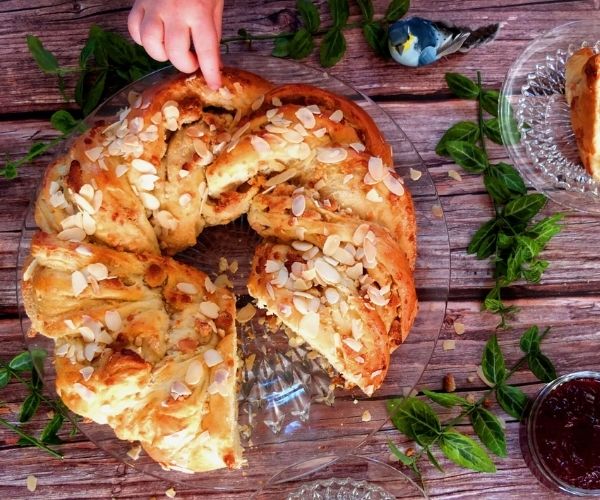
Are you feeling artistic? Have a go at a beautiful wreath bread with a rich history behind it and a step by step tutorial. Other Easter treats are available on the website, including a lamb shaped cake and a Hefezopf.
Sicilian Easter Bread Baskets
Recipe provided by breadbakes.com
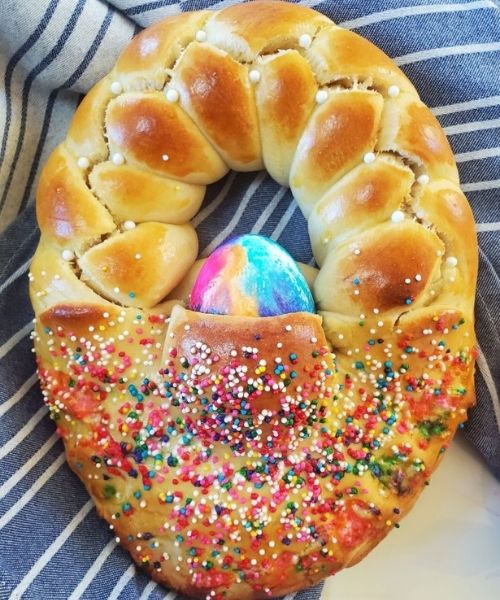
This is a beautiful recipe with fascinating family history and loving memories shared with the younger generations. Check the website for all you need to know about different types of bread for all occasions.
Sweet and Easy Vegan Carrot Oatmeal Cookies
Recipe provided by therunningbaker24.com
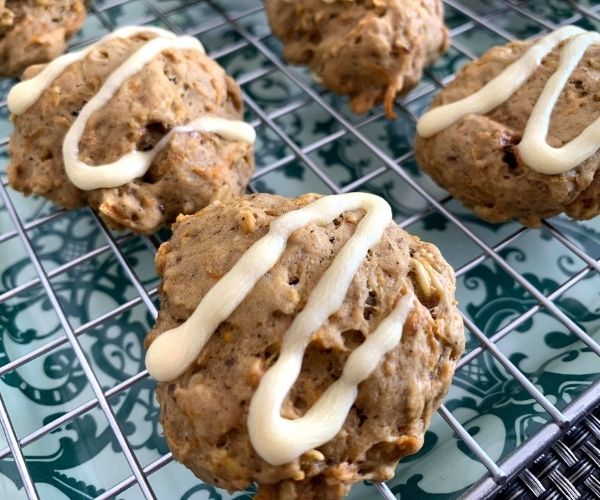
These treats suit various diets and are healthy and easy to make, and could be a favourite cookie on the festive Easter table!
Easter Chick Cookies
Recipe provided by emilyfabulous.com
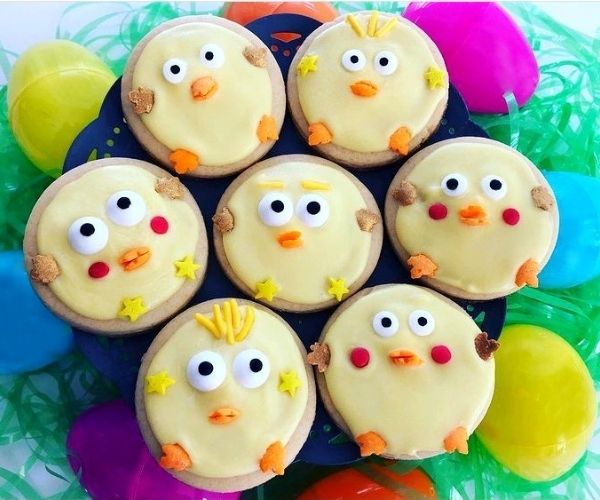
Creativity knows no limits in baking! Cuteness by sprinkling is a sure way to have fun while baking and impress when serving.
Fluffy Easter Bunny Cake
Recipe provided by theworldisanoyster.com
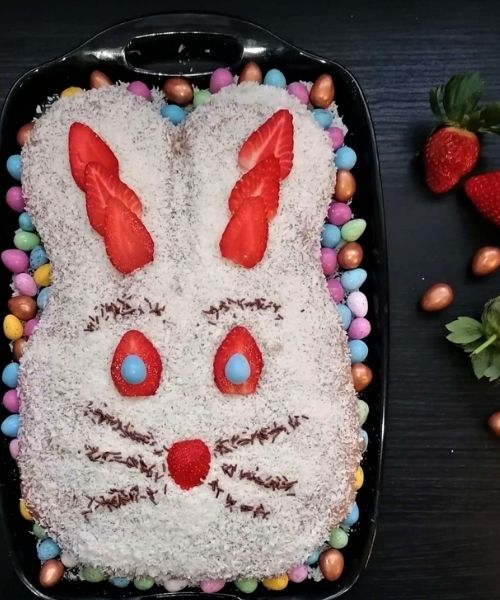
Not precisely an Easter food in the traditional way, a fluffy Easter Bunny cake is more of a fun baking idea, especially when little helpers get involved.
Quick and Easy Vegan Challah Bread
Recipe provided by therunningbaker24.com
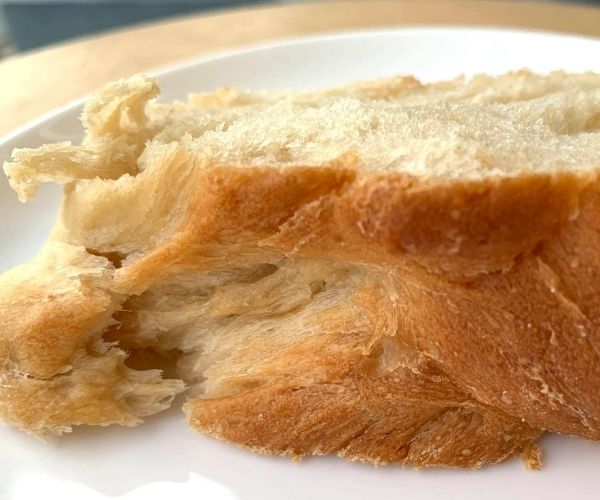
A vegan Challah bread is fun to bake, not to mention that it makes an excellent side for other recipes on this list and not only!
Vegan Cinnamon Rolls
Recipe provided by theurbenlife.com

These chewy rolls are delicious and easy to make and will surely look good on any festive table; besides, they suit perfectly a healthy lifestyle.
Easter Bread With Raisins
Recipe provided by coffeefitkitchen.com
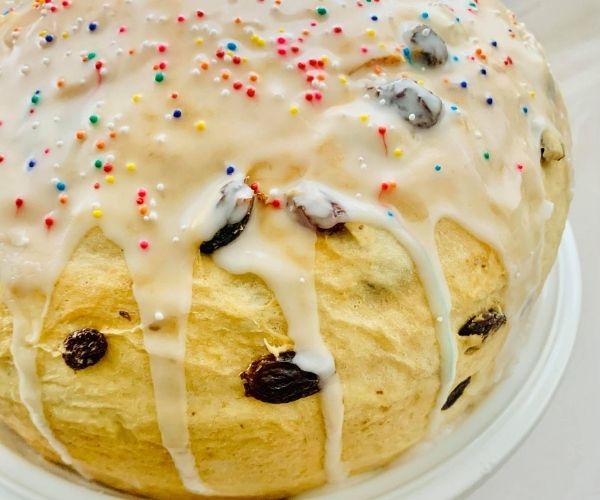
This celebratory bread is so yummy you might want to make it any other time, not only at Easter! Did I mention how easy it is to make? Well, it is!
Incredible Snickerdoodle Cake
Recipe provided by givemetherecipedammit.com
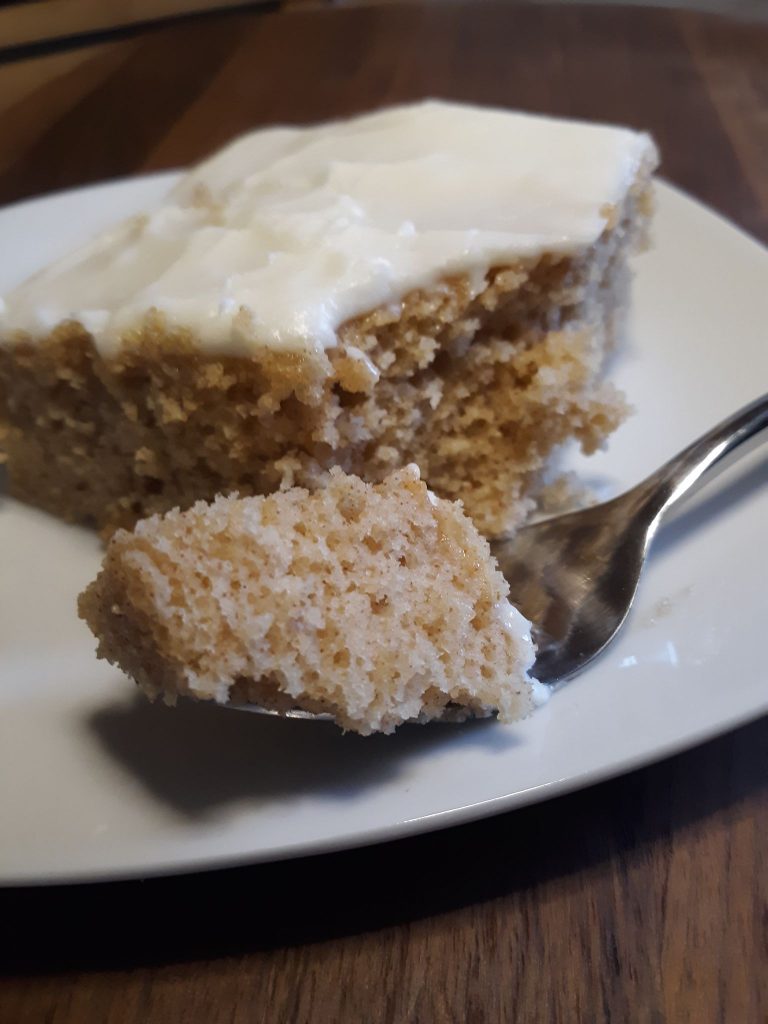
There can be no Easter without dessert, but if you ever need an emergency backup, look no further. This recipe has a funny backstory, too!
Double Chocolate Chip Hot Cross Buns (vegan)
Recipe provided by rainbownourishments.com.
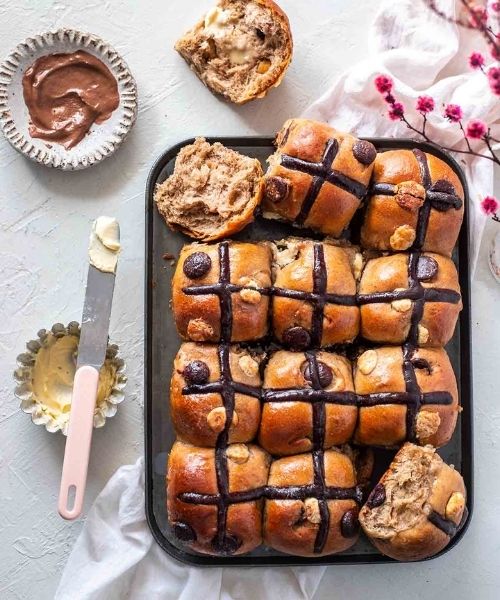
This Easter, bake a few vegan hot cross buns with two types of chocolate chips. They are fluffy, will melt in your mouth and are better than store-bought!
Bacon Cheddar Deviled Eggs
Recipe provided by momthelunchlady.ca
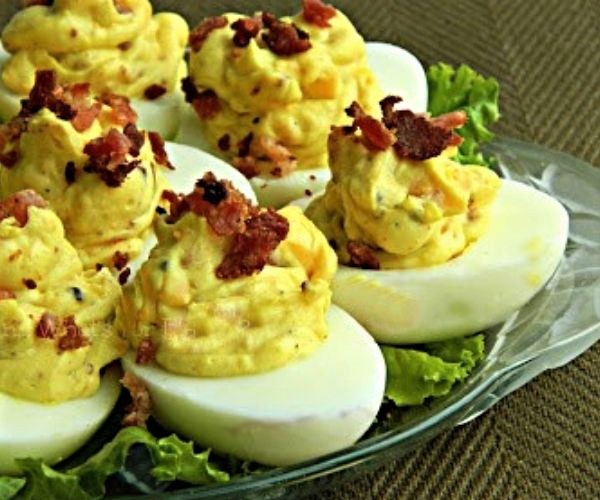
A decadent and hot appetiser, deviled eggs should be present on any festive table, no matter the occasion. At Easter, they complement the coloured eggs beautifully.
Rainbow Carrots In Tarragon Brown Butter
Recipe provided by senseandedibility.com
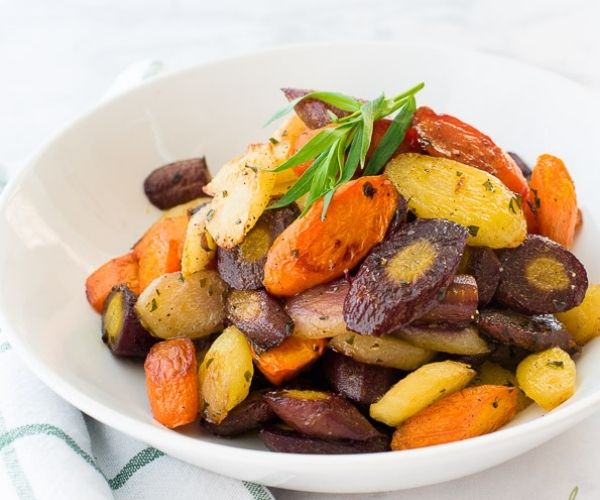
Rainbow carrots make a scrumptious side dish to share with loved ones at the Easter table. Perfect for lamb and not only.
Easy Riz Cantonais
Recipe provided by cheapdeliciousdinner.com

If you plan an Easter foods picnic, this is a popular Madagascan recipe with Asian influences, easy to make and carry in a picnic basket.
Pepper Crusted Racks Of Lamb With Horseradish Creme Fraiche
Recipe provided by giangiskitchen.com.
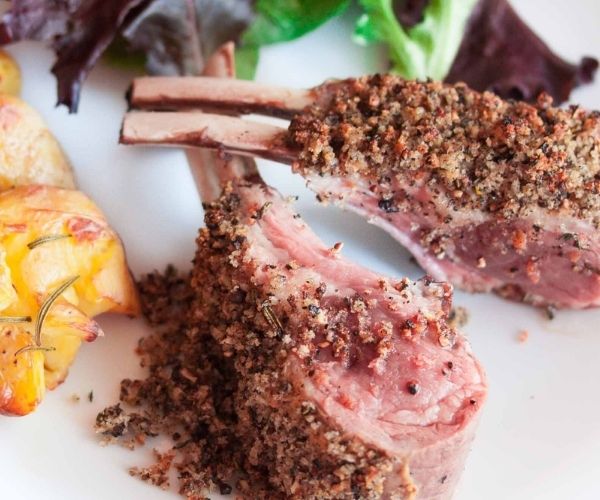
The pepper-crusted rack of lamb with horseradish crème fraiche is a wonderful combination of peppercorns, lemon zest, garlic, fresh herbs, and panko—a tasty outer crust over a perfectly juicy lamb.
Slow Roasted Shoulder of Lamb
Recipe provided by greedygourmet.com.
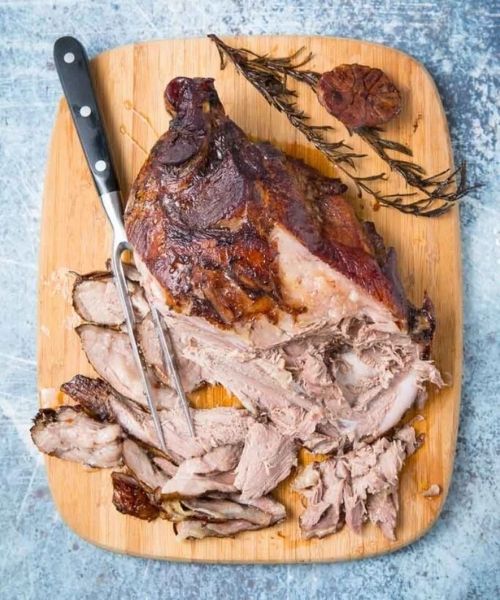
This slow-cooked shoulder of lamb is one of those memorable lamb recipes that will remain with you forever. It’s one of those wow dishes that you can proudly serve to a special someone or for your family on a special occasion
Leg Of Lamb With Fresh Mint Sauce
Recipe provided by whatagirleats.com.
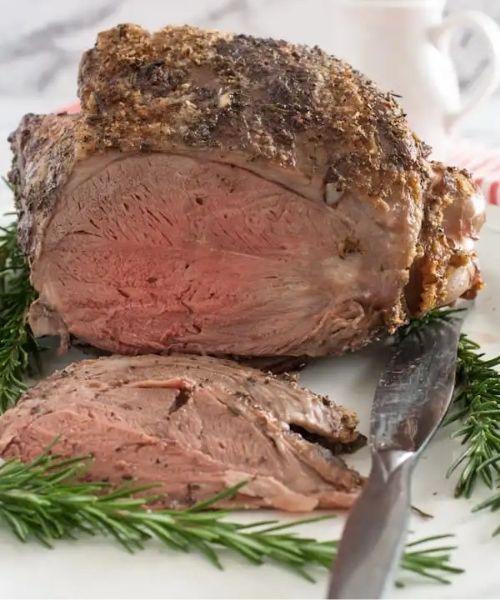
Leg of Lamb with Fresh Mint Sauce is studded with garlic and roasted with rosemary, salt and pepper. It’s the perfect Easter meal or Sunday supper.
Welsh Lamb and Pumpkin Pie
Recipe provided by intheplayroom.co.uk.
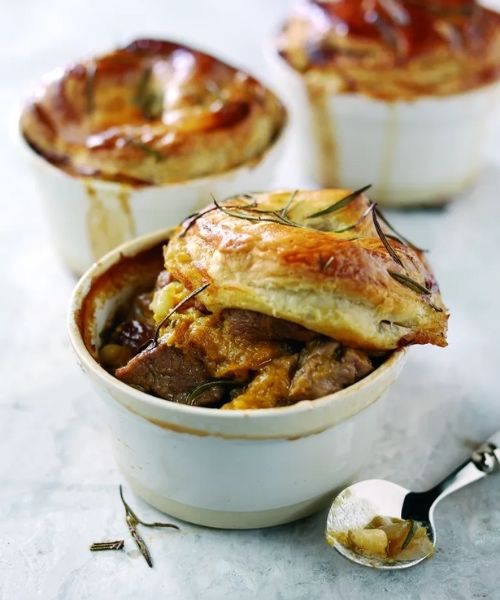
A traditional Welsh recipe for all seasons and perfect for Easter, too!
Classic Passion Fruit Daiquiri
Recipe provided by senseandedibility.com
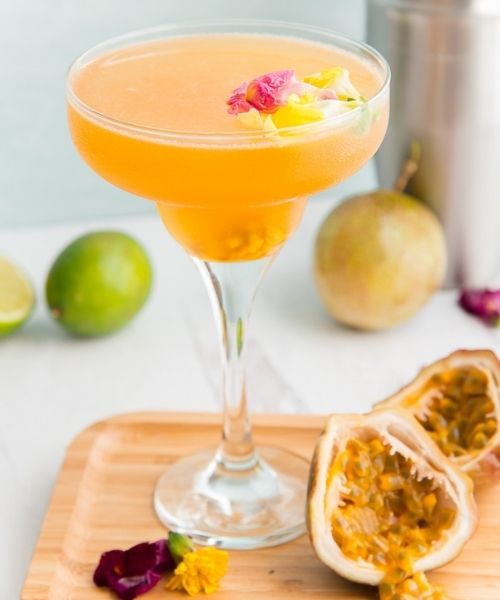
This is a spring shaken cocktail that goes perfectly with any of the above. According to its creator, passion fruit “transcends seasons and cultures”. I believe her. I have tried many of her creations and will surely have this one at Easter!



Easter Gifts and Crafts Ideas
If you are looking for teen Easter baskets ideas this year, you might find inspiration in this teen collection kindly provided by dailychristmasinspo.com.
For younger kids, there is plenty in this post put together by Sarah at journeyforjasmine.com. You’ll find many cute ideas that will make Easter a lot more exciting for the entire family.
This time last year, the world was still dealing with total lockdowns. At the moment, there is hope the pandemic will soon reach an end. I also have immense hope that the insane war and suffering in Ukraine will be over before the Orthodox celebration of Jesus’ resurrection.
Perhaps we all need to take a minute and reconsider the past couple of years and all that it meant to each of us and humankind collectively. If we are as smart as we believe we are, we will never allow history to repeat ever again! And we will have health, peace and traditional Easter foods on our table!
There is hope for our species!
The post Traditional Easter Foods For A Special Celebration appeared first on The World Is an Oyster.
]]>The post Easter Pasca: A Traditional Cheesecake for A Special Occasion appeared first on The World Is an Oyster.
]]>The Romanian Traditional Recipe
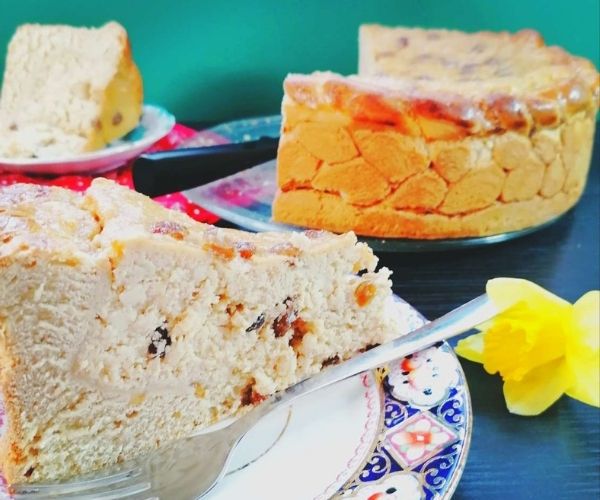
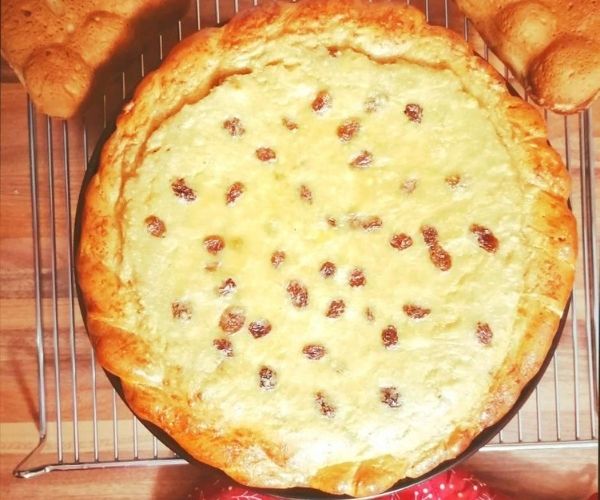
Easter pasca cheesecake is a specific Romanian dessert made at Easter. In essence, it is a baked cheesecake cake filled with sweet cheese and raisins. The recipe consists of a basic Romanian cozonac dough or the Italian version of it, Panettone, with added sweet cheese filling.
Pasca has a deep religious symbolism that revolves around Jesus’ resurrection. The name of the cake itself has prehistoric roots. It is associated with the Christian feast commemorating the miracle of resurrection for over two millennia.
Pasqua in Italian means Easter, and derivates of the word mean the same thing in all Latin languages. In Romanian, it would be Paşte (pronounced Pashte), hence the special cake to celebrate the occasion: Easter pasca cheesecake.
Many would call it Easter bread, but this might sound a tad demeaning to the Romanians. To us, bread is never sweet and is purely a side for main dishes. Something that requires extended time, a lot of care in preparation and includes sugar is definitely a cake.
As there are three days of Easter, Romanians prepare in advance for the celebration.
A forty-day long lent leading to Easter is strictly observed mainly in countryside Romania and allows people to reflect on the meaning of life or death and find their religious roots.
Towards the end of the lent, the ladies would get busy preparing traditional holiday food that includes appetisers (Boeuf Salad is one) and main lamb courses. Of course, desserts cannot miss from the festive Easter table. Lots of nut, poppy or chocolate-filled cozonac, a large, rounded Easter pasca cheesecake and red-painted eggs would be the centrepiece.
Although baking can sound tedious, it consists mainly of resting time. The dough contains yeast that needs time to activate and rise, so should you decide to give it a go, make sure you plan a day off to make the treats.
Traditionally, Romanians would make cozonac and pasca on the Maundy Thursday, the day Jesus asked his disciples to love one another as He loved them. There is a lot to discuss here, and everything has way wider historical, philosophical, religious and political implications, but this is a mere recipe, so let’s get on with it.
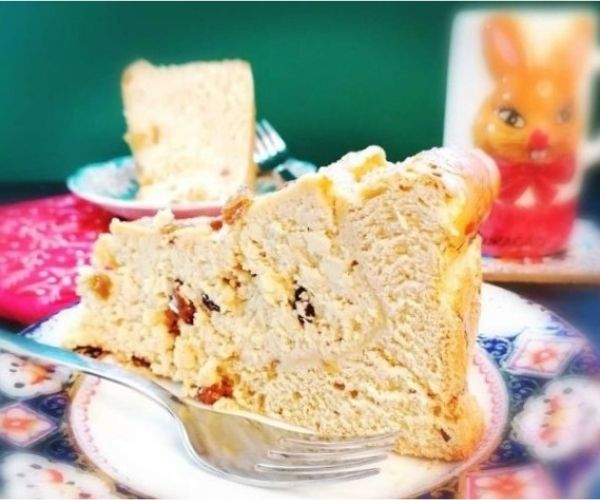
Ingredients for Easter Pasca Cheesecake
For the dough:
White flour (I used strong bread flour)
Coconut sugar
Tepid water
Yeast
Butter
Orange/lemon zest (or in combination)
Milk
Eggs
Vanilla essence
Salt
For the sweet cheese filling:
Cheese. The best option would be farmer’s (cottage) cheese or ricotta. It is essential to drain the cheese well before use. For this pasca, I used homemade cheese that I prepared in advance.
Coconut sugar
Raisins
Orange or lemon zest (or a mix)
Semolina
Eggs
Essences (I prefer rum in combination with raisins)
A pinch of salt.
Method
To make the starter dough, mix the sugar with yeast, a little sieved flour and tepid water and allow 10-15 min to activate the yeast, preferably in a warm place.
Once the yeast has activated and started making tiny bubbles, add the butter (melted and cooled previously), milk, eggs, the zest of organic orange, salt and the rest of the sieved flour.
Depending on the type of flour, the exact quantity might vary. Add it gradually while kneading, either with a standing mixer or using your hands. When the dough makes little air pockets as you fold it, you will know it has enough flour. Even if it is still a bit sticky, no extra flour is necessary. The dough has to remain soft and supple.
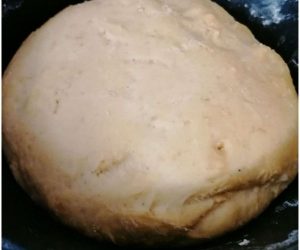
At this point, I heat the oven to 50°C/122°, then turn it off and place the bowl on the middle rack to let the dough rest for at least 30 minutes. Typically, it has rested enough when the volume has doubled.
You can use the waiting time to prepare the filling by mixing the well-drained cheese with sugar, raisins, eggs, semolina, essences and orange zest, plus a pinch of salt to enhance the taste.
The composition has to be similar to a regular cheesecake. If it is too soft, you can add more semolina. If it is too hard, it might require another egg.
When the resting time is up, use a part of the dough for the braided wall and keep a larger amount for the base.
Before you start, preheat the oven to 160°C/320°F.
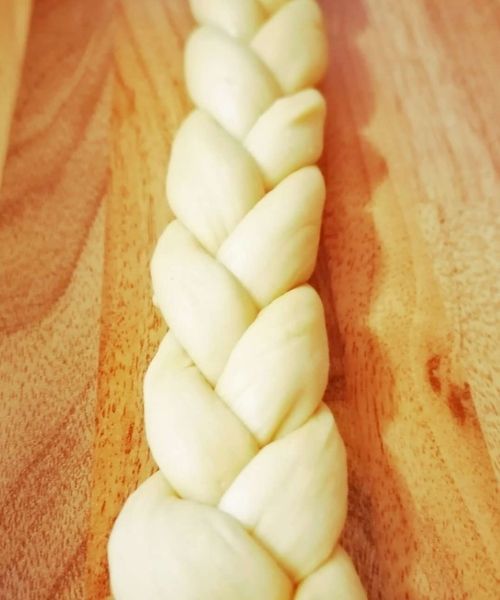
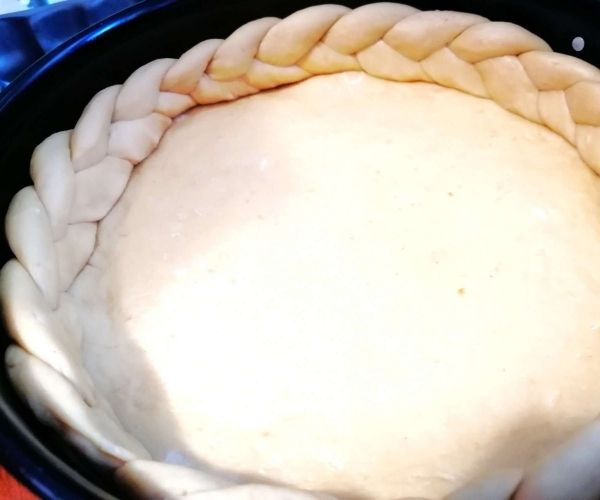
I rolled three thin threads from the smaller dough piece to braid the wall as I prefer to taste more the filling than the paste. Be aware that the dough will expand further during the initial stage of baking.
The rest of the dough will go on the base of the baking mould. It is OK to use a rolling pin to shape it in a 1-1.5 cm thick round form; it will still fluff once in the oven.
I used a 24 cm diameter loose base baking tray with parchment paper fit on the base and well-oiled walls.
You might need extra hands to help fit the braided dough to the mould’s wall; I certainly appreciated the involvement of a little helper!
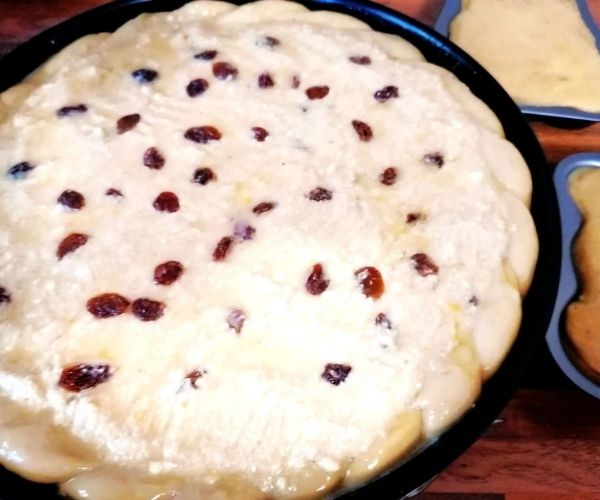
As the helper holds the braided dough in place, add the cheese filling in the middle and spread it evenly using a large spatula.
Separately, beat an egg with a teaspoon of sugar and brush the entire surface of your pasca.
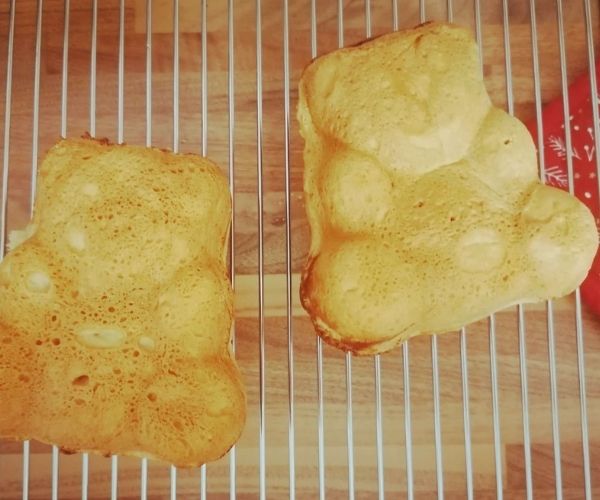
Because I had some dough left, I used it to make two tiny cheese-filled teddies using some small moulds included in my baking set. Needless to say, they turned up way more exciting than my pasca, laden with deep metaphysical meaning! Something like the chocolate eggs and Easter bunnies hidden around the house! The times are ever-changing, although some traditions carry on, even two thousand years later.
The tray goes on the oven’s middle rack. Also, reduce the temperature to 150°C/302°F. As each oven is slightly different, the baking time might vary, but it should be around 30-40 minutes or until the dough turns golden brown. If it burns too early, you might need to cover it with another tray.
My mould was quite full, and as it started to bake, my pasca raised a bit too much, so I could not cover it. Luckily, it did not burn either.
You should not open the oven’s door during the first 20 minutes, but it is OK to turn the tray after this initial time to allow thorough baking.
Perform the toothpick test to check if the cake is baked thoroughly and cool on a rack before removing it from the tray.
If you are baking on Holy Thursday, Easter is still a few days away. You can keep the pasca in the fridge, preferably in a cake box.
If desired, bring to room temperature before slicing and serving.
Happy Easter!
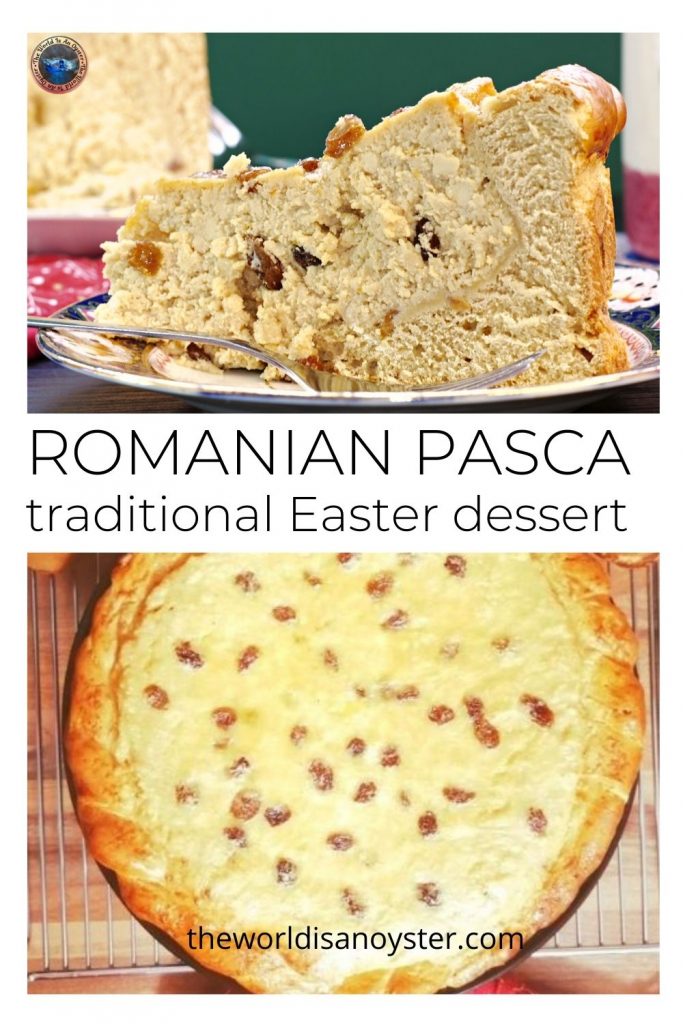
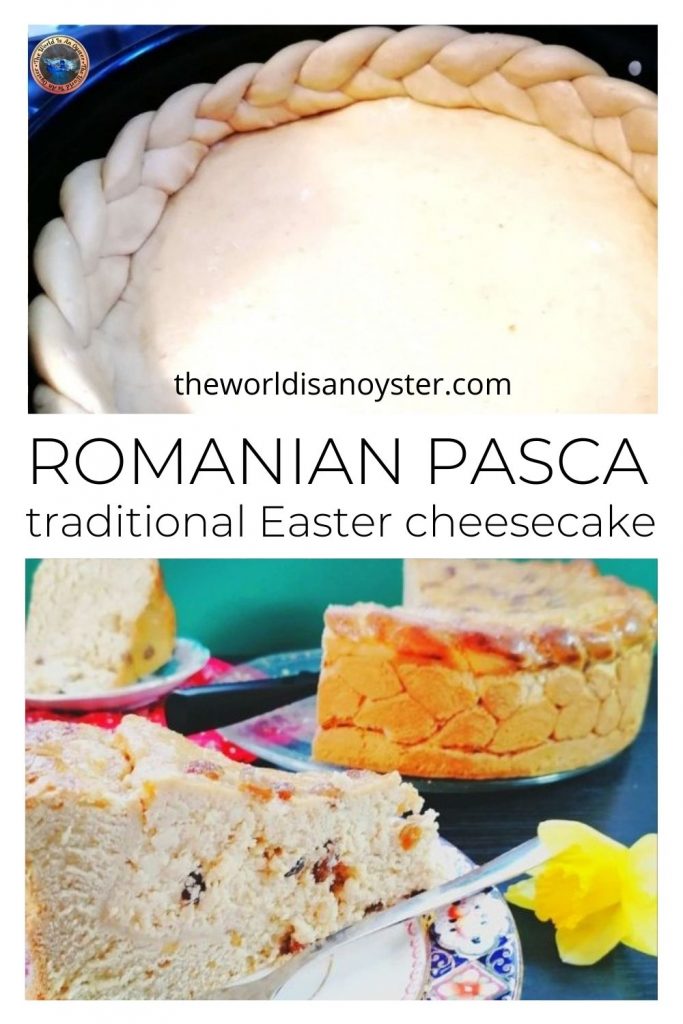
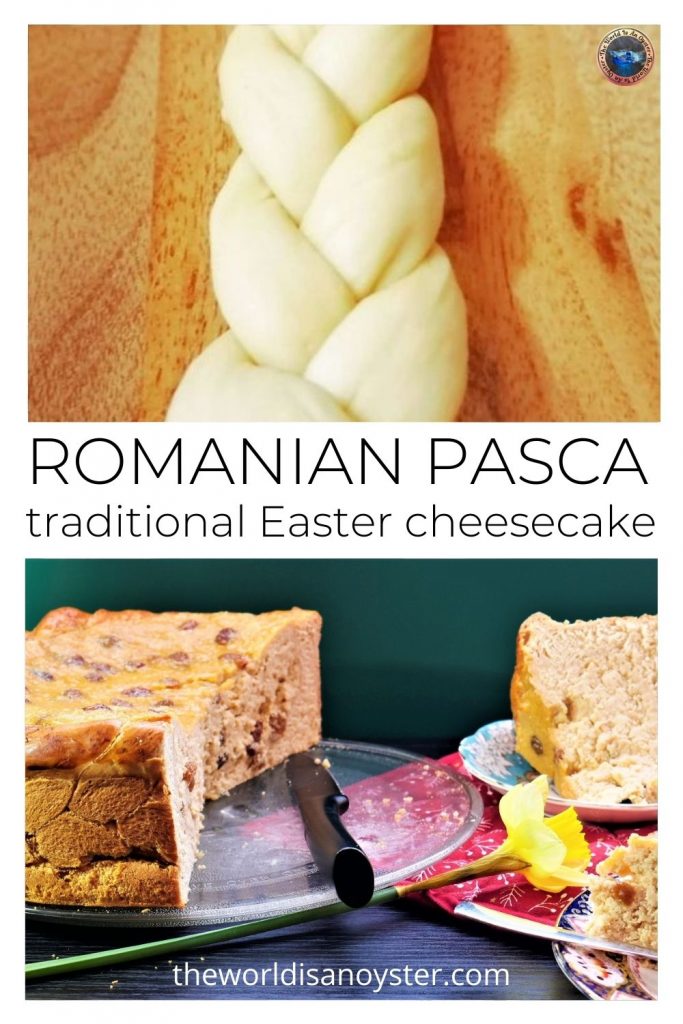

Traditional Easter Pasca Cheesecake
Ingredients
Pasca Dough
- 600 g white flour plain or strong bread
- 120 g sugar coconut
- 125 ml tepid water
- 10 g dried yeast
- 125 ml tepid milk
- 3 eggs plus 1 for coating before baking
- 60 g butter melted and cooled
- 1 pcs orange/lemon zest organic
- 1 tsp vanilla essence
- 1 tsp rock/sea salt
For the filling
- 1 kg cheese cottage, ricotta or homemade, drained
- 150 g raisins
- 3 pcs eggs
- 70 g semolina use gradually
- 4 tbsp coconut sugar
- 1 tsp rum essence
- 1 tbsp orange zest organic
- ¼ tsp salt
Instructions
Pasca Dough
- For the starter dough, mix the sugar with yeast, a little sieved flour and tepid water. Allow 10-15 min to activate the yeast, preferably in a warm place.
- Once the yeast has activated and started making tiny bubbles, add the butter (melted and cooled previously), milk, eggs, organic orange zest. Mix well.
- Add the salt and the rest of the sieved flour and start kneading. Depending on the type of flour used, the exact quantity needed might vary. Add it gradually while kneading either with a standing mixer or using your hands.
- When the dough makes little air pockets as you fold it, you will know it has enough flour.
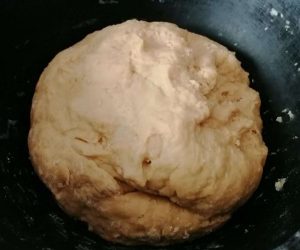
- At this point, heat the oven to 50°C/122°, then turn it off and place the bowl on the middle rack to let the dough rest for at least 30 minutes. Typically, it has rested enough when the volume has doubled.
- Before the last stage of preparation, preheat the oven to 160°C/320°F.
- When the resting time is up, use a part of the dough for the braided wall and keep a larger amount for the base.
- Depending on how many threads you want to use, roll thin ones and braid them. I only used three and rolled them up as thin as I could.
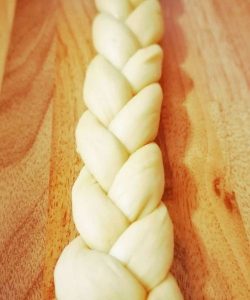
- The rest of the dough will go on the base of the baking mould. Use a rolling pin to shape it in a 1-1.5 cm high round form; even if you press the dough, it will still fluff up once in the oven.
- Prepare your baking mould. I used a 24 cm diameter loose base baking tray with parchment paper fit on the base and well-oiled walls.
- Place the base dough in the tray and the braided dough vertically on the wall. You might need extra hands for this step, as the dough is elastic and will tend to fall and shrink.
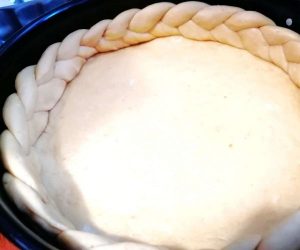
- As the helper holds the braided dough in place, add the cheese filling in the middle and spread it evenly using a large spatula.
- Separately, beat an egg with a teaspoon of sugar and brush the entire surface of your pasca.
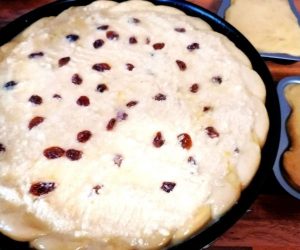
- Reduce the oven's temperature to 150°C/302°F and place the baking mould on the middle rack (position 3).
- Bake for 30-40 minutes or until pasca turns golden brown. If it burns too early, you might need to cover it with another tray.
- Do not open the oven's door during the first 20 minutes. After that, you can turn the pasca to allow even baking.
- Perform the toothpick test to check if the cake is baked thoroughly and cool on a rack before removing it from the tray.
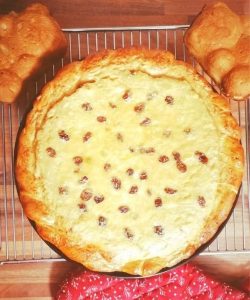
Cheese Filling
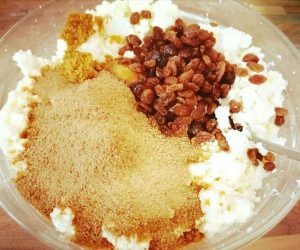
- In a large bowl, mix the well-drained cheese with sugar, raisins, eggs, semolina, essences and orange zest, plus a pinch of salt to enhance the taste.
- The composition has to be similar to a regular cheesecake. If it is too soft, you can add more semolina. If it is too hard, it might require another egg.
Notes
Easter Pasca: A Traditional Cheesecake for A Special Occasion
The post Easter Pasca: A Traditional Cheesecake for A Special Occasion appeared first on The World Is an Oyster.
]]>The post How To Make Homemade Chocolate From Scratch appeared first on The World Is an Oyster.
]]>The Best Chocolate Is Always Homemade!
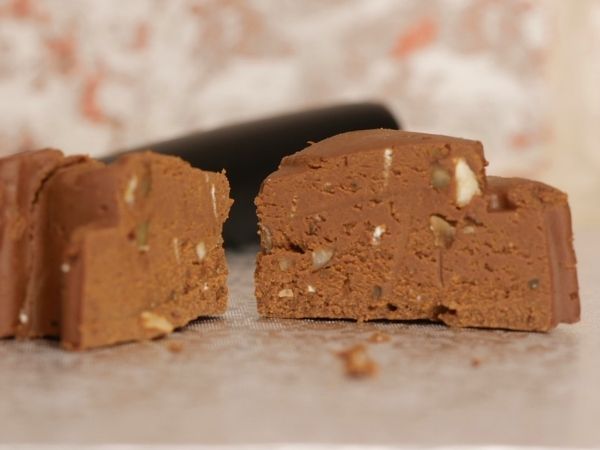
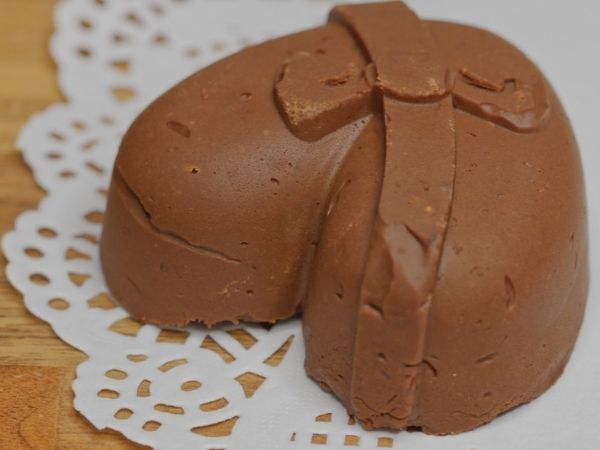
Homemade chocolate is the most delicious treat mom used to make when I was a child. Using simple ingredients and requiring little time and effort, homemade chocolate is easy to make from scratch, and the taste is divine!
The velvety softness and aromas will make you fall in love with it and prefer it over the classical bars, guaranteed!
This post may contain affiliate links, which means I will receive a commission if you purchase through my links at no extra cost to you. Please read the full disclosure for more information. Thank you!
Mom always saved it for special occasions, Christmas, Easter or birthdays, making it more desirable.
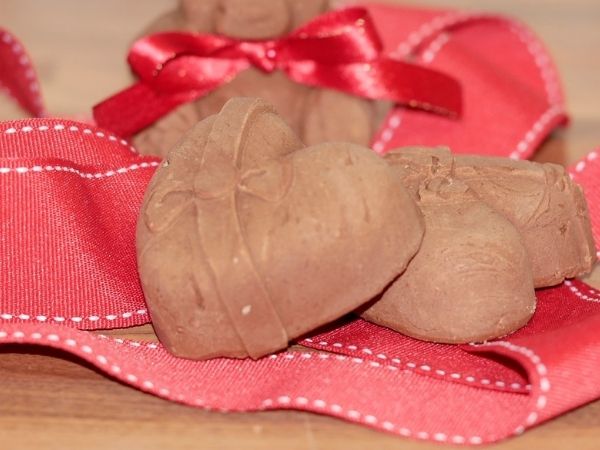
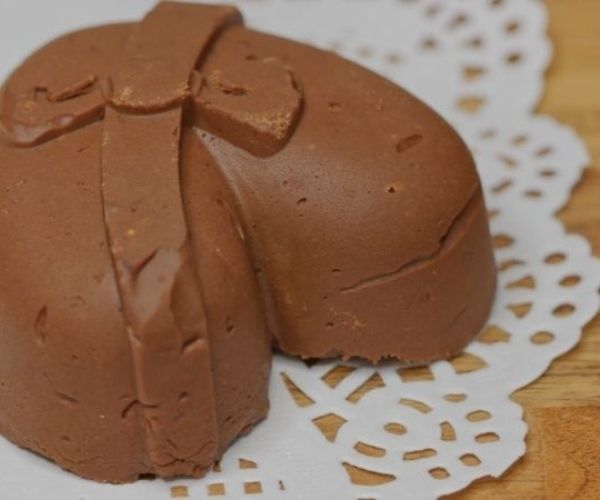
These days, homemade chocolate would make a perfect Valentine’s Day treat or gift or a unique addition to the special meals you would prepare for your loved ones on this occasion.
I make this sweet treat rarely, but I always prefer the scratch version rather than melting another already-made chocolate or making fudge.
Homemade Chocolate VS Fudge
Fudge might be the closest version to homemade chocolate, but it is not the same thing. The difference is the proportion of sugar used in fudge – way too much for my taste!
When I moved to the UK, I visited a candy shop and witnessed their fudge making. Although the location was picturesque and the fudge business very successful, I lost interest in the demonstration when the makers emptied an entire sack of white, refined sugar in the massive bowl they used for making fudge.
Anyone who cares the slightest bit about their health knows that refined sugar is a no-no. I will not debate here; there are enough facts easily accessible on the internet to make an informed choice.
I prefer coconut sugar for two main reasons: it is less refined than white sugar and is a healthier option than artificial sweeteners!
Besides, I always use it in small quantities. I never liked anything sickening sweet, and I understand that sugar is not a preservative, although there are enough people who believe so!
If you add 2kg of sugar to a kilogram of fruit when you make jam, for instance, it will not preserve it for longer but will surely make the jam sickeningly sweet!
Likewise, I use reduced sugar quantities in baking; I would rather taste other flavours besides sugar in my cakes!
Homemade Chocolate VS Chocolate Bar
Although I love dark chocolate, I am very selective with the brands I choose to buy. A sickly sweet one won’t do!
In time – and persistent tasting (Oh, I know, I was talking about health barely a minute ago, oops!) I settled mainly with German/Swiss/Austrian chocolate producers. And I will always pay a few pence extra for quality than still paying and not enjoying a bar of chocolate!
I want to feel the taste of cacao in my chocolate and distinct flavours, not tons of sugar that would diminish any other savour!
Because I am picky, I make my chocolate the way I fancy, and this offers me a variety of aromas to enjoy.
I love the punch pepper or chilly gives to chocolate, just as I enjoy a citrusy flavour or a boozy one. Plus, I relish hazelnuts, dried fruits or nougat crumbs in my chocolate.
It is so easy to adapt the recipe, and creativity is essential!
Who can say making homemade chocolate from scratch is no fun when you are free to experiment all you like?
It might get a bit messy in the process, but this is cooking: you are in your kitchen, not in a pharmaceutical production line! Enjoy the fun part and leave the chores for later! Or even better – persuade someone else to clean up; after all, you’ve already done your bit!
Ingredients:
Water
Organic coconut sugar
Organic cacao powder
Powdered milk
Unsalted butter
Flavours to your taste
Roasted hazelnuts (optional)
Method:
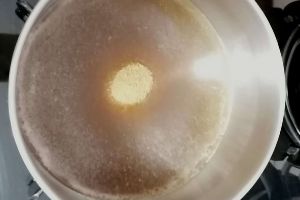
In a pan, boil the water with sugar for eight minutes until it becomes syrupy.
Add the cacao powder, mix well and continue boiling at low temperature for another four minutes. Stir occasionally so that it does not crystalise or stick to the pan.
Remove the pan from the hob, add the powdered milk and mix well.
Depending on the type of powdered milk used, you might want to grind it before if it is too lumpy.
During this step, you will see how the powdered milk quickly absorbs the syrupy composition and thickens. The thickness will balance when you add butter. Keep mixing until all lumps dissolve and the consistency is of thick cream.
Add the butter and mix well. Optionally, add roasted crushed hazelnuts, dried fruits, or anything else you might think of that goes well with chocolate.
Add flavours of your choice, and feel free to experiment with small bits first to see if you want to go for that specific taste.
My favourite flavours are rum essence with a dash of ground pepper or orange essence with pepper. The choice is yours!
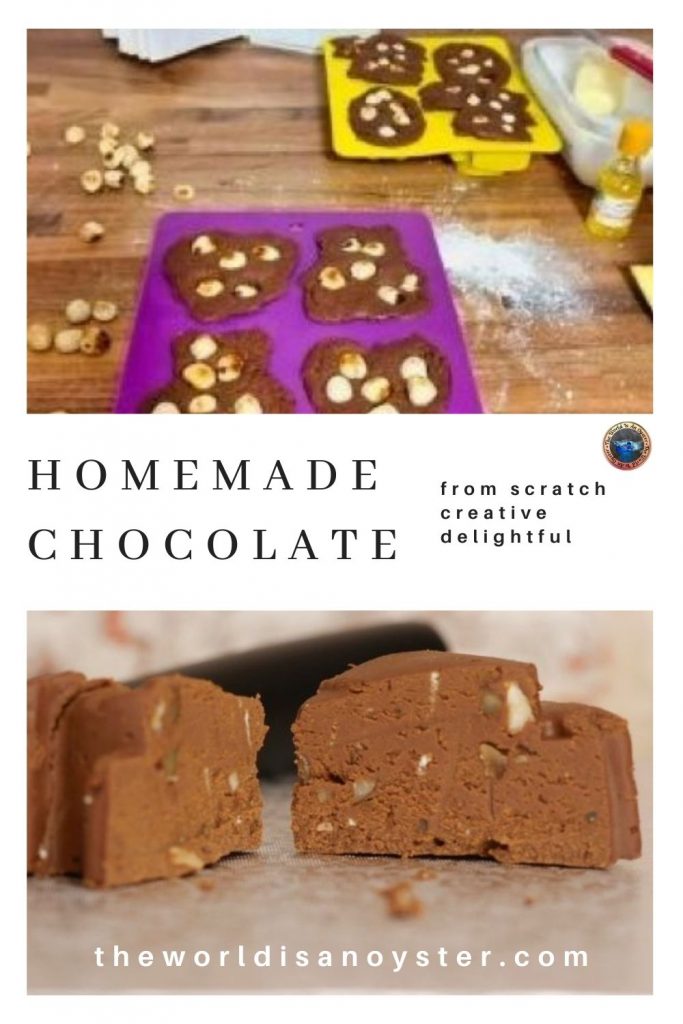
At this point, the composition should be malleable enough to pour in silicone moulds if you decide to go for unique occasion shapes.
If you are going for simple bar shapes, place parchment paper on a tray, empty the content from the pan and level nicely with a spatula.
Cool in the fridge for at least 4-6 hours, depending on the layer’s thickness. Overnight is better!
If you used shapes, carefully remove your chocolate from the silicone moulds. Otherwise, cut bars of desired thickness and enjoy when you are craving something sweet!
Homemade Chocolate
Ingredients
- 200 ml water
- 200 g coconut sugar organic
- 50 g cacao powder organic
- 200 g powdered milk (extra 30-50 g if needed)
- 100 g unsalted butter
- flavours of choice
- 60 g roasted hazelnuts optional
Instructions
- In a pan, boil the water with sugar for 8 minutes, until it becomes syrupy.
- Add the cacao powder, mix well and continue boiling at low temperature for another 4 minutes. Stir occasionally, so it does not crystalise or stick to the pan.
- Remove the pan from the hob, add the powdered milk and mix well. Depending on the type of powdered milk used, you might want to grind it before if it is too lumpy.
- During this step, you will observe that the powdered milk will quickly absorb the syrupy composition and thicken. Keep mixing until all lumps dissolve.
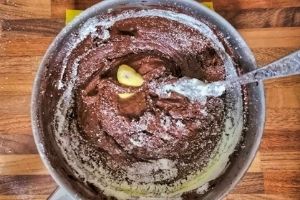
- Add the butter and mix well. Optionally, add roasted crushed hazelnuts.
- Add whatever flavours you wish. Try with small quantities first to see if you want to go for it. My favourite flavours are rum essence with a little dash of ground pepper or orange essence with pepper. The choice is yours!
- At this point, the composition should be malleable enough to pour in silicone moulds if you decided to go for special occasion shapes. Larger moulds work better than smaller; the Christmas shapes I tried were not quite successful because of this!
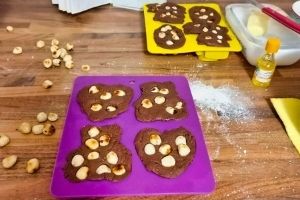
- If you are going for simple bar shapes, place a parchment paper on a tray, empty the content from the pan and level nicely with a spatula.
- Cool in the fridge for at least 4-6 hours, depending on the layer's thickness. Overnight is better!
- If you used shapes, carefully remove your chocolate from the silicone moulds. Otherwise, cut bars of desired thickness and enjoy when you are craving something sweet!
Notes
The Best Chocolate Is Always Homemade!
The post How To Make Homemade Chocolate From Scratch appeared first on The World Is an Oyster.
]]>The post Walnut Snails Recipe Inspired by a Famous German Pastry appeared first on The World Is an Oyster.
]]>How the Walnut Snails Recipe Made It to Mom’s Recipe Book
Mom’s walnut snails recipe is an adaptation of the Nussschnecken desert which is basically a sweet bun of Saxon origins, filled with nuts and cinnamon. Schnecken is the German word for snails, which suggests the unique shape of this finger-licking delicious walnut filled treats.
Given Transylvania’s Saxon heritage, our cooking and especially baking have seen a tremendous German influence over the centuries.
When I was a child, mom’s best friend was a German lady who used to bake weekly. She would always invite us to keep her company while she was dancing between the island in her massive kitchen and the oven, mixing ingredients and filling tray after tray. She was not dancing-dancing, but the elegant way she moved, her precision and amazing skills made it look like dancing in my awe-filled eyes.
Of course, the good lady always shared her recipes and many baking secrets with mom, who later shared everything she’d learnt with her kids – my sister and I.
Essentially, my mom had learned how to bake from Frau Francu – that was the lady’s name. Mom filled her first recipe book with mostly German recipes during that time, such as this delicious apple cake, one of my favourite desserts for special occasions.
I used to sneak into Frau Francu’s large kitchen and count the seconds until the first batch of whatever cake she was baking would come out of the oven.
Because I was born without patience, I could never wait for the cakes to cool properly. I would always pinch at least one and run outside to cool it in the wind (lame excuse, I know!)
I fondly remember how Frau Francu would bake four or five different and complex cakes in half a day every Saturday. She would always giggle as I was sneaking in to pinch samples from her trays. The lovely lady had no children and loved to see me around, as impish as I was.
If I regret one thing from those good old times is that whenever Frau Francu wanted to teach me German, I would bolt out the door pretending that I needed to play in her vast garden.
I regretted that the minute the Romanian Revolution of 1989 changed our contemporary history and freed our country of communism. I was very young, still a teenager, but I would have had a chance to move to Germany a few years later and radically change my life.
Now, a few decades on, the only thing that is still preventing me from doing just that is again the fact that I can’t speak German. Although I am fluent in five other languages, I’ve lost the train to learn what should have been the most important foreign language to me.
Ironically, now I have the liberty to choose where I want to live, but the language barrier still makes the choice difficult. Ugh, one day …
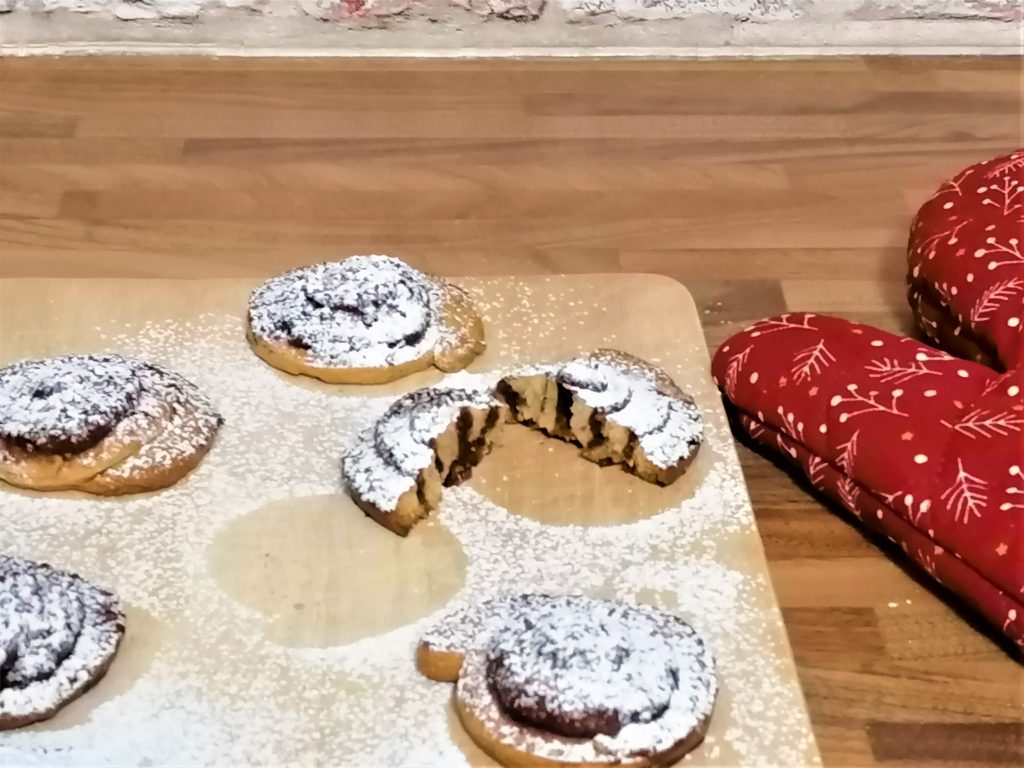
Mom’s Walnut Snails Recipe – Ingredients
The adaptation mom made of Nussschnecken means that instead of getting the giant, fluffy snails the size of a dessert plate, she would make them smaller and would not smother them in sticky sirup, so we could eat them the same way we’d eat biscuits.
I would always bake these treats around the festive winter season or at Easter time and all family anniversaries. We can never have enough of it!
Ingredients for the dough
400 g flour (I always use white organic)
100 ml melted organic butter
100 ml melted organic coconut oil
2 organic egg yolks (you will use the whites later, for the filling)
80 g organic coconut sugar (about 6-8 tbsp)
5 g dried yeast (1 tsp)
½ tsp ammonium bicarbonate
3-4 tbsp tepid unsweetened almond milk (to activate the ammonium bicarbonate)
Organic orange zest
A pinch of salt
Ingredients for the filling
150 g ground walnuts
2 tbsp organic cacao powder
1 tbsp ground cinnamon
2 egg whites + a pinch of salt
Rum oil essence
Preparation tips
The dried yeast requires a warm temperature and time to activate. For this recipe, use the lukewarm milk to activate the ammonium bicarbonate first, then pour it over the yeast mixed with sugar and one tbsp of the flour quantity. Cover with a dry towel and leave aside for about 20 minutes. When the time is up, you will observe that the yeast had dissolved and the pre-dough had increased in volume.
Secondly, any dough that uses melted oils needs refrigeration to solidify the oil molecules and make it easier to roll the dough. When your dough is ready, cover it in cling film, press it down to allow a quicker and thorough cooling and place it in the fridge for about 20 minutes. Meanwhile, you can prepare the filling.
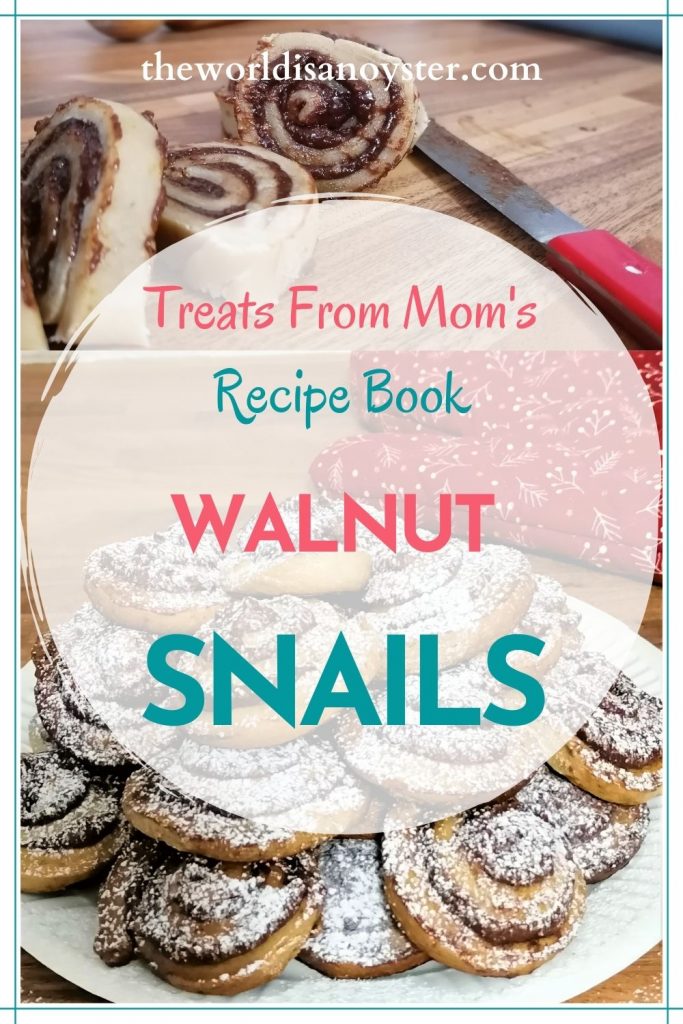
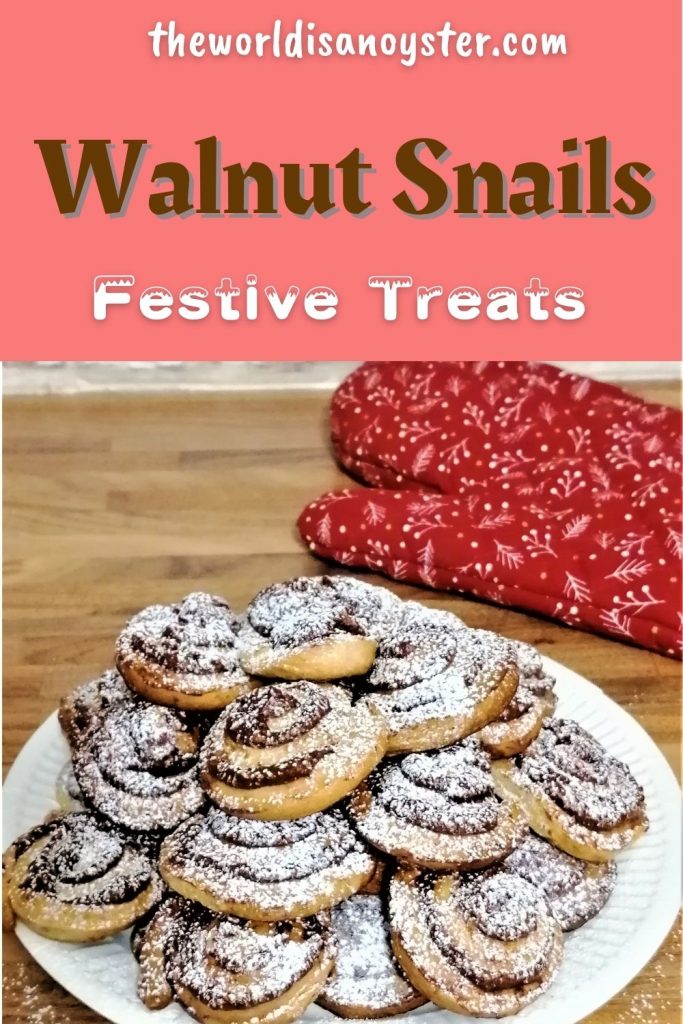
As the title suggests, this recipe includes allergens.
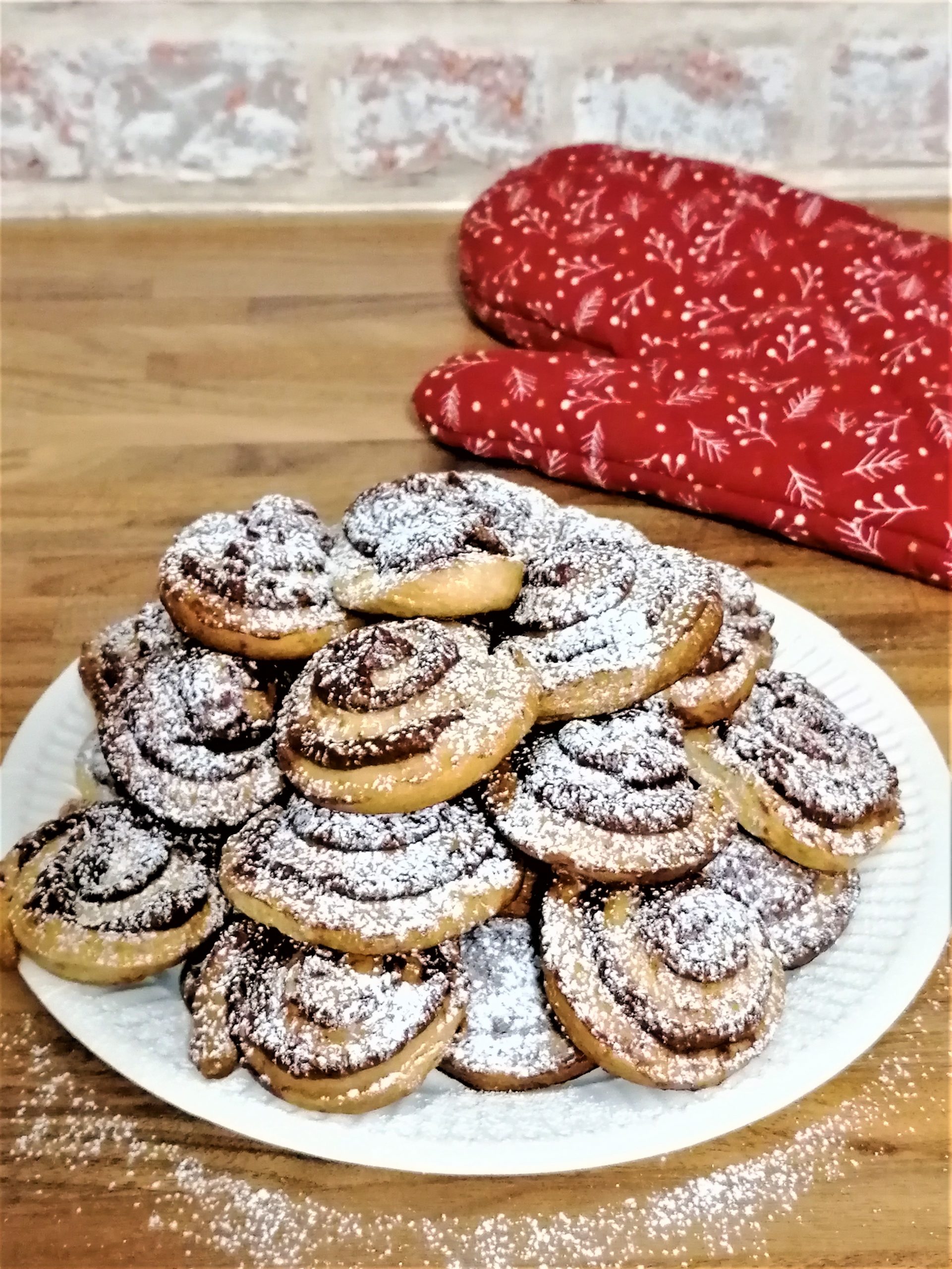
Mom’s Walnut Snails Recipe
Equipment
- Large bowl/small bowl
- Baking tray
- Parchment paper
- Roller pin
- Hand held electric mixer
Ingredients
For the dough
- 400 g organic white flour
- 100 ml melted butter (cooled a bit)
- 100 ml melted organic coconut oil (cooled a bit)
- 2 pcs egg yolks (the whites needed for the filling)
- 80 g organic coconut sugar (approx. 6-8 tbsp)
- 5 g dried yeast (approx. 1 tsp)
- ½ tsp ammonium bicarbonate
- 4-5 tbsp tepid almond milk (unsweetened)
- 1 pcs orange zest
- A pinch of rock/sea salt
For the filling
- 150 g ground walnuts
- 5-6 tbsp organic coconut sugar
- 2 tbsp organic cacao powder
- 1 tbsp ground cinnamon
- 2 pcs egg whites (beaten stiff)
- A pinch of salt (for the egg whites)
- 1 vial rum oil essence (or 2 tsp rum)
Instructions
Prepare the dough
- In a bowl, use the lukewarm milk to activate the ammonium bicarbonate first, then pour it over the yeast mixed with sugar and one tbsp of the flour quantity.
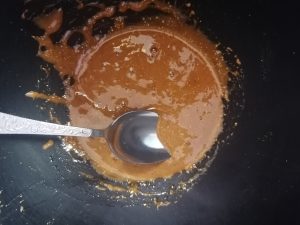
- Cover with a dry towel and allow the yeast to activate for about 20 minutes.
- Add the tepid butter and coconut oil, egg yolks, orange zest and salt and mix until all ingredients incorporate nicely.
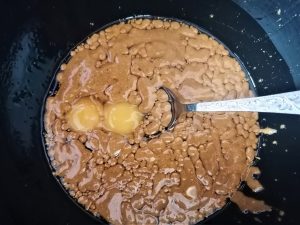
- Add the sieved flour gradually and keep mixing using your hand.
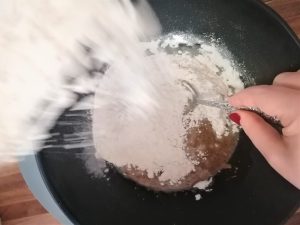
- Cover the dough with a piece of cling film, press it down and refrigerate for about 20 minutes.
- Divide the dough in two parts and roll each in a 2-3 mm thick sheet.
Prepare the filling
- While the dough is cooling, in a bowl mix the ground walnuts with sugar, cacao powder, cinnamon and rum.
- Separately, add a pinch of salt to the egg whites and whip until stiff. Use a large bowl and start with a lower speed until the egg whites foam, then increase the speed to maximum and continue whipping until they become firm.
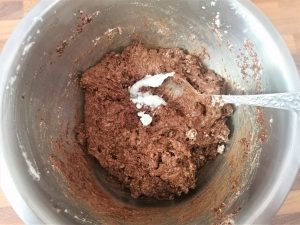
- Slowly incorporate the egg whites into the dry ingredients.
Prepare the snail shapes
- Preheat the oven to 180°C/356°F/Gas mark 4.
- Place parchment paper on the baking tray.
- Place half of the nut filling on the first dough sheet. Spread evenly, leaving about 2 cm filling-free at one edge.
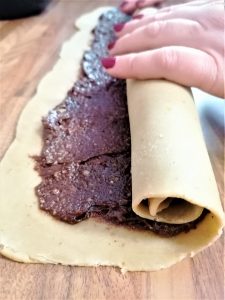
- Roll the sheet and cut 1 cm thick slices.
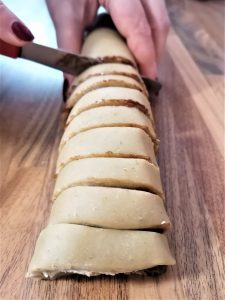
- Transfer the slices onto the baking tray, leaving enough space in between them.
- Bake for 10-15 minutes or until the dough turns golden brown.
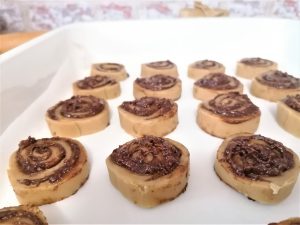
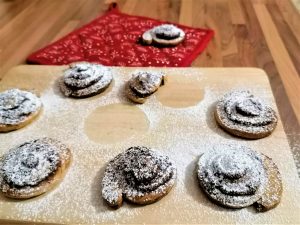
- Allow the first batch to cool and repeat the baking process until all the walnut snails are ready.
- Optionally, sprinkle with powdered sugar.
Notes
I hope you enjoyed reading this recipe. If you would like to see more, please check the Savour the Flavour section of this website or follow my Pinterest recipe board. Have fun baking!
How the Walnut Snails Recipe Made It to Mom’s Recipe Book
The post Walnut Snails Recipe Inspired by a Famous German Pastry appeared first on The World Is an Oyster.
]]>The post Romanian Cozonac: The Best Treat on Your Festive Table appeared first on The World Is an Oyster.
]]>A Culinary Delight with A Long History
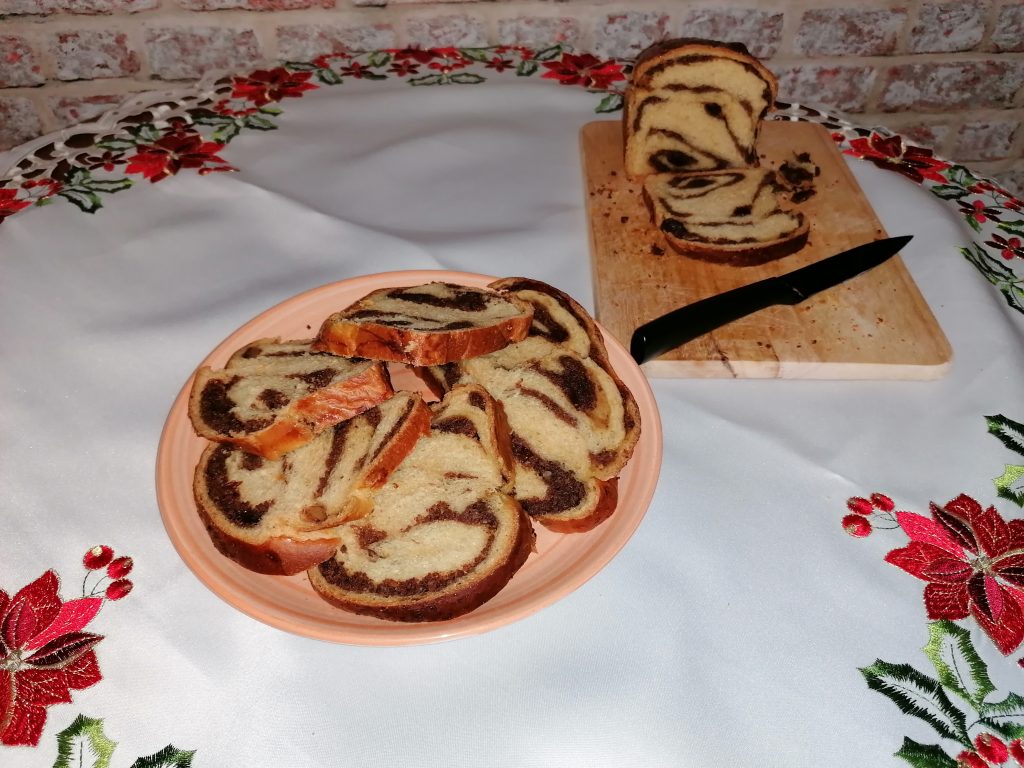
A Word About Romanian Cozonac
Romanian Cozonac is a beautiful festive delight I grew up with as a child in my country of origin.
Each major holiday mom would bake the best treat there could be. Be it Christmas or Easter, our house would smell wonderful, filled with delightful flavours escaping from the oven. And I would wait impatiently for the festive dinner to finally savour the best treat created by humankind!
This post may contain affiliate links, which means I will receive a commission if you purchase through my links at no extra cost to you. Please read the full disclosure for more information. Thank you!
The ladies of Romania, especially in the countryside, would take at least half a day before a holiday to bake lots of cozonaci (plural [cozonach]) for the festive dinner, and mom is still not an exception.
How Cozonac Evolved During the Ages
Based on bread baking and using a raised dough, cozonac (kozunak in Bulgarian, or Panettone in Italian) has seen a long history, going back to pharaohs’ old times.
Apparently, the ancient Egyptians made fermented dough sweetened with honey they would bake in ovens, as shown in some wall paintings.

The ancient Greeks also made honey-sweetened bread they would fill with nuts and call plaukos.
The more advanced and ever so posh Romans have improved the recipe by adding eggs, butter and dried fruits.
In Middle Age Europe, dried fruits would mostly fill the sweet loaves of bread because they lasted longer.
In England, a mention dates from 1718 of a sweet bread filled with dried fruits and baked in long, thin loaves – the shape primarily used today.
In France, the famously infamous Marie Antoinette remained in history with her uninspired advice to the poor to eat brioche if they could not afford bread. The said brioche seems the be our same delight. Unfortunately, she paid with her head for her lack of touch with her country’s harsh reality!
By the nineteenth century, cozonac became a traditional holiday treat around Europe with slight recipe variations.
To any Romanian, the presence of cozonac on each festive dinner table is an absolute must.
In recent years, cozonac, like anything else, has become a commodity sold in supermarkets.
But most Romanian ladies would still bake it at home using different types of filling, from walnuts to poppy seeds, Turkish delight or chocolate. These last three ingredients also make a perfect substitute for nuts for persons with an allergy.
To me, Romanian cozonac is the best festive treat there can be, and I can never get enough of it!
You can offer me the most elaborated sweet made by the most in-demand French pastry chef at a fancy king’s court, and I would always choose cozonac! Nothing beats the aromas that fill the air when you bake it and the taste offered by the combination of spices used in the preparation!
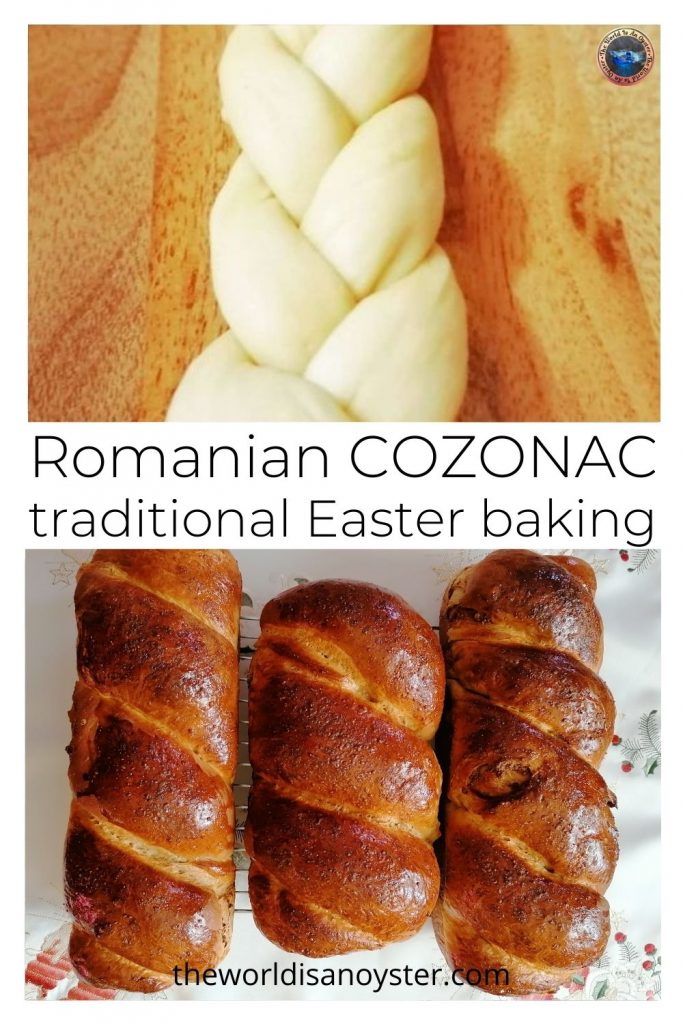
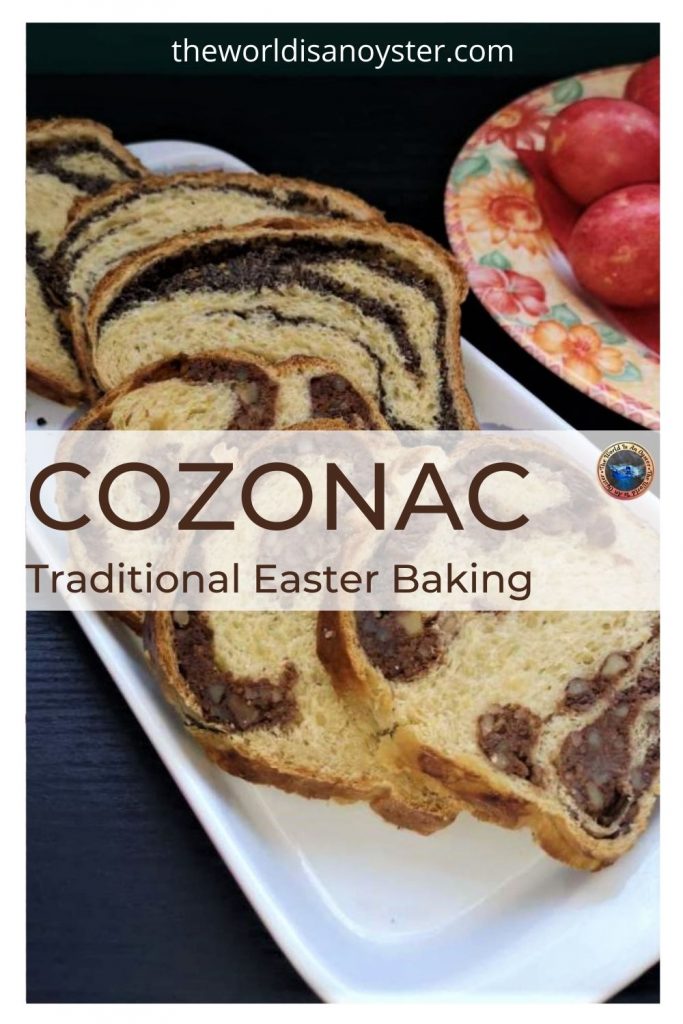
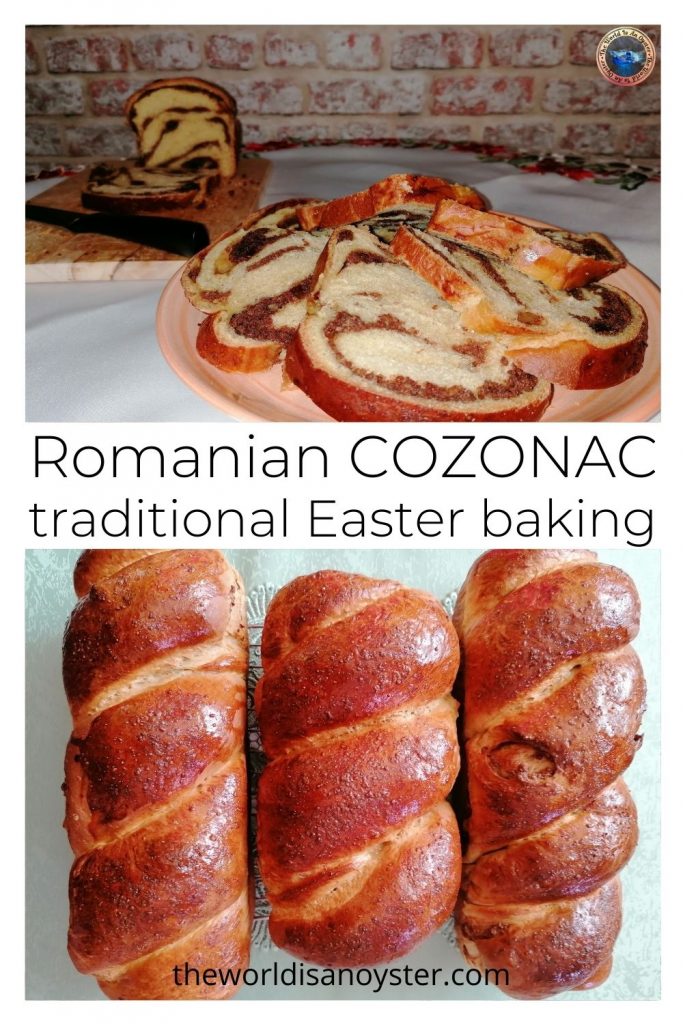
As you get in the holiday spirit, may you have the table filled with goodies and your soul overflowed with goodness and cheerfulness!

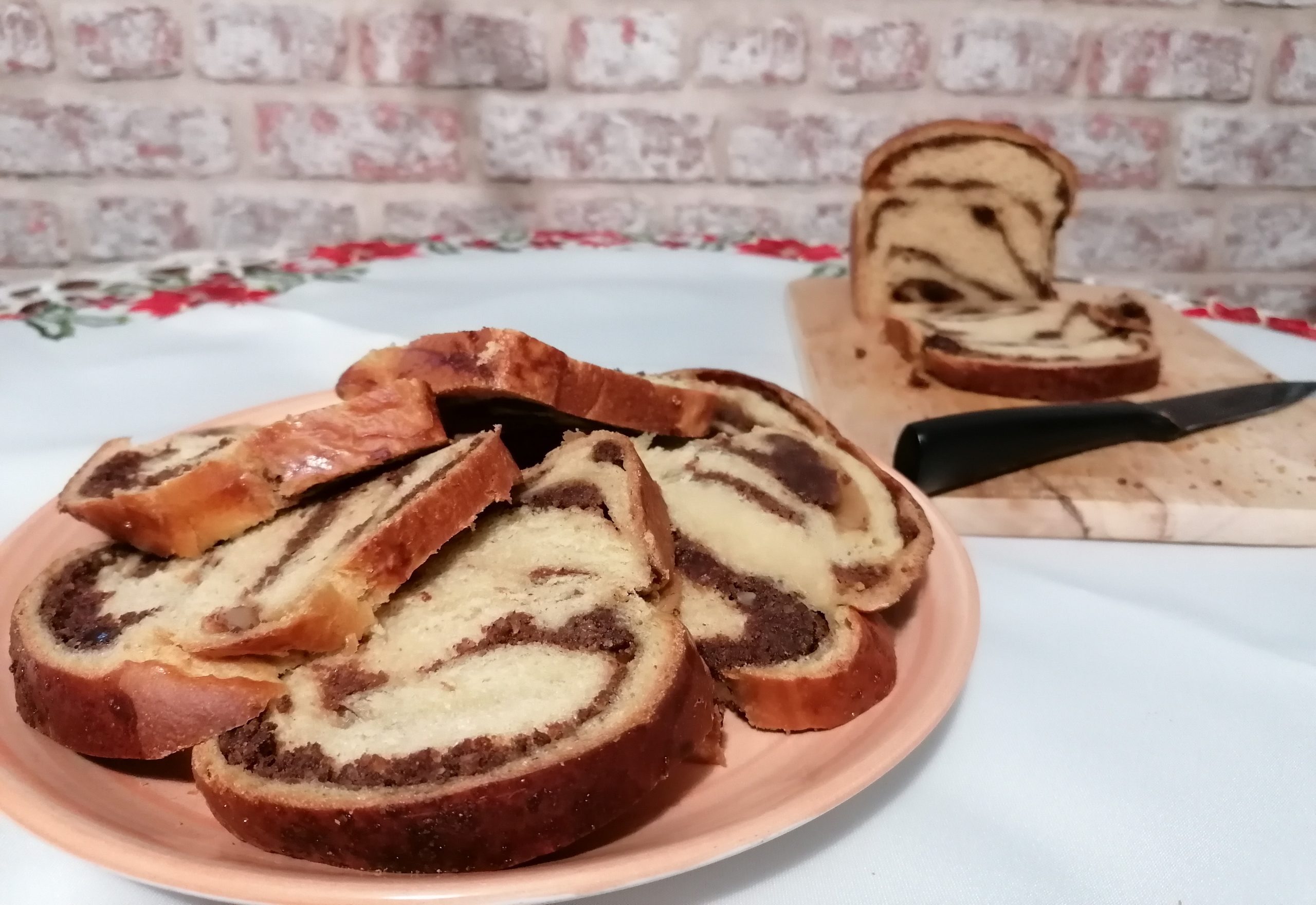
Romanian Cozonac
Ingredients
- 1 kg plain flour (sieved)
- 4 tbsp coconut sugar (spoonfuls)
- 600 ml (2½ cups) milk (tepid)
- 2 tbsp youghurt (at room temperature)
- 100 g (½ cup when melted) butter (melted and tepid, not hot)
- 140 ml (⅔ cup) sunflour oil (tepid)
- 3 egg yolks
- 20 g (5 rounded tsp) dried yeast
- 1 orange zest
- 1 pod vanilla
- ¼ tsp saffron/turmeric (for colour)
- ½ tsp salt
For the nut filling
- 700 g (7⅓ cups) walnuts
- 100 g (⅔ cup) raisins
- 1 vial rum oil essence
- 7 tbsp coconut sugar
- 2 tbsp cocoa powder
- 1 tbsp cinnamon (ground)
- 1 tsp clove (ground)
- 1 orange zest
- 3 egg whites (whisked stiff)
Alternative poppy seeds filling
- 600 g (4¼ cups) poppy seeds (ground)
- 6 tbsp coconut sugar
- 1 tbsp cinnamon (ground)
- 1 ornge zest
- 1 vial rum oil essence
- 3 egg whites (whisked stiff)
Instructions
- Mix the egg yolks with salt, yoghurt, orange zest, vanilla in a bowl, and leave it aside. Heat the milk in a pan and pour a part of it over the above mix.
- The other part goes in another bowl over the yeast mixed with sugar. Allow 10-15 min to activate the yeast, preferably in a warm place.
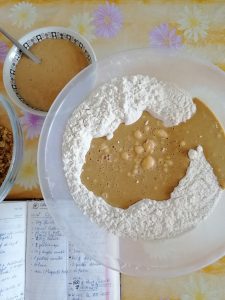
- Place the flour in a large bowl and add the wet ingredients. Knead with one hand. The dough might be soft and sticky at first, but do not add extra flour! As you knead it, the consistency will change.
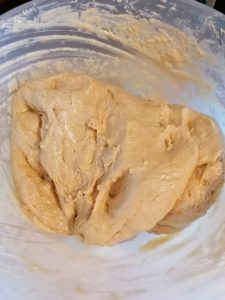
- Add the tepid butter mixed with oil little by little and keep kneading.
- When the oil is absorbed, you can move the dough on a floured worktop and continue to knead. The whole kneading process should take approximately 20-30 minutes.
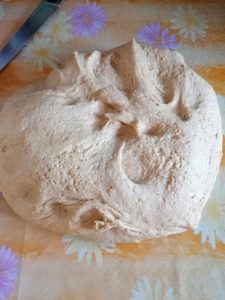
- Place the dough back into the large bowl, cover it with a dry kitchen towel and let it rise until the volume doubles, preferably in a preheat oven to 40°C (104°F).
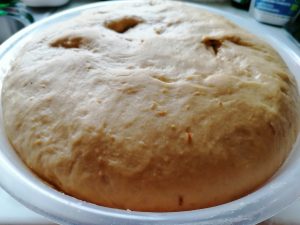
- Importantly, before you cover the dough, you should make a cross sign over it. Believe it or not, it will make your dough rise – so say all the Romanian, Italian or Balkan lady bakers. Since I only made cozonac once in my life and a long time ago, I don't remember if I respected this tradition/superstition. To me, all baking and cooking ingredients, in general, are chemical compounds that produce a chemical reaction at a temperature and mix nicely to result in the food we eat. Try to convince a granny, especially one who lives in the countryside, that cooking is biochemistry! It's way easier to cross the dough and spare a long scientific debate that will not convince the granny in the least! This year, I baked with mom and had fun when we got to this point in preparation, but she still respected the tradition!
Method for the nut filling (makes three cozonaci)
- While the dough rises, prepare the filling by mixing well the dry ingredients.
- Separately, whisk the egg whites until stiff, then incorporate spoon by spoon into the dry mix until obtaining a thick paste.
Method for the poppy seeds filling (makes three cozonaci)
- Place the ground poppy seeds in a pan and cover them with milk.
- Place the pan over medium heat and mix continuously until the poppy seeds absorb the milk.
- Add the sugar, orange zest, cinnamon and rum essence and keep stirring until the ingredients incorporate nicely.
- Remove the pan from the heat and let the content cool before use.
Method for filling and baking cozonaci
- Oil the worktop, divide the dough into six equal pieces and let it rest for 10 minutes.
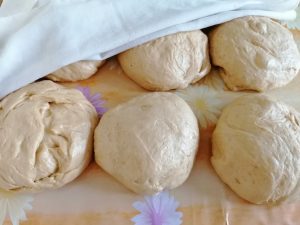
- Using your hands, spread each part at a time in a rectangular shape and cover it evenly with 2-3 spoonfuls of the walnut mix, leaving the edges free.
- Roll it and leave it on the side.
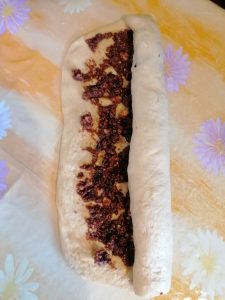
- Repeat the process with a second piece, braid them together and place your first cozonac in a loaf tray coated with parchment.
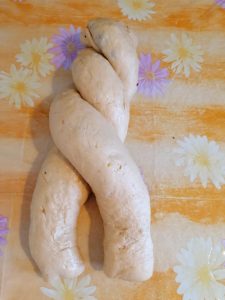
- Because the dough is elastic, you can pull or tuck it to adjust to the tray size.
- Repeat the process with the rest of the dough pieces and nut/poppy seeds filling.
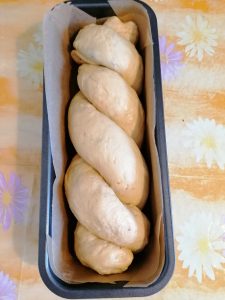
- Preheat the oven to a maximum of 40°C/104°F, turn the heating off and place all three loaves on racks. Close the oven door and let the cozonac rise for about 20 minutes.
- Remove the trays from the oven.
- Beat an egg and use a brush to coat the entire surface, then sprinkle a little bit of sugar evenly.
- Place all three trays back in the oven on the same rack so that they are positioned right in the middle, but leave some space between them to allow hot air to reach the trays evenly.
- Heat the oven to 130°C/266°F at first, for about 10-15minutes, then increase the temperature to no more than160°C/320°F (fan oven) and let the cozonaci bake for another 45 minutes until they turn golden brown.
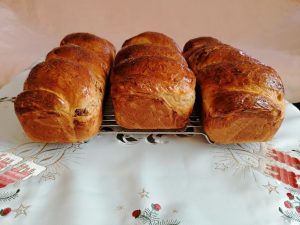
- When ready, remove from trays, place the loaves on a rake and let cozonac cool completely before you slice them.
Notes
The post Romanian Cozonac: The Best Treat on Your Festive Table appeared first on The World Is an Oyster.
]]>