The post Easter Pasca: A Traditional Cheesecake for A Special Occasion appeared first on The World Is an Oyster.
]]>The Romanian Traditional Recipe
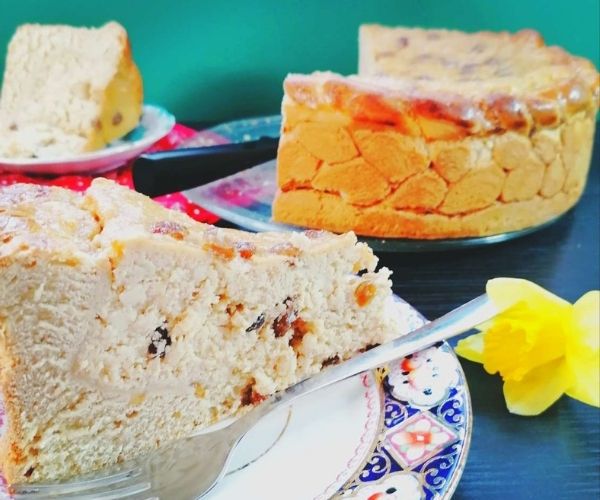
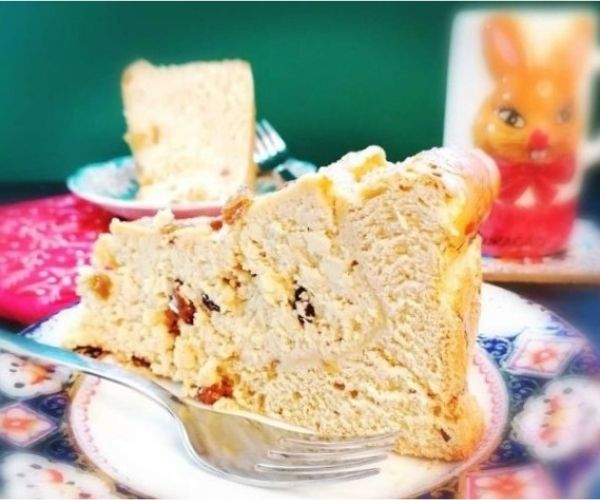
Easter pasca cheesecake is a specific Romanian dessert made at Easter. In essence, it is a baked cheesecake cake filled with sweet cheese and raisins. The recipe consists of a basic Romanian cozonac dough or the Italian version of it, Panettone, with added sweet cheese filling.
Pasca has a deep religious symbolism that revolves around Jesus’ resurrection. The name of the cake itself has prehistoric roots. It is associated with the Christian feast commemorating the miracle of resurrection for over two millennia.
Pasqua in Italian means Easter, and derivates of the word mean the same thing in all Latin languages. In Romanian, it would be Paşte (pronounced Pashte), hence the special cake to celebrate the occasion: Easter pasca cheesecake.
Many would call it Easter bread, but this might sound a tad demeaning to the Romanians. To us, bread is never sweet and is purely a side for main dishes. Something that requires extended time, a lot of care in preparation and includes sugar is definitely a cake.
As there are three days of Easter, Romanians prepare in advance for the celebration.
A forty-day long lent leading to Easter is strictly observed mainly in countryside Romania and allows people to reflect on the meaning of life or death and find their religious roots.
Towards the end of the lent, the ladies would get busy preparing traditional holiday food that includes appetisers (Boeuf Salad is one) and main lamb courses. Of course, desserts cannot miss from the festive Easter table. Lots of nut, poppy or chocolate-filled cozonac, a large, rounded Easter pasca cheesecake and red-painted eggs would be the centrepiece.
Although baking can sound tedious, it consists mainly of resting time. The dough contains yeast that needs time to activate and rise, so should you decide to give it a go, make sure you plan a day off to make the treats.
Traditionally, Romanians would make cozonac and pasca on the Maundy Thursday, the day Jesus asked his disciples to love one another as He loved them. There is a lot to discuss here, and everything has way wider historical, philosophical, religious and political implications, but this is a mere recipe, so let’s get on with it.
Ingredients for Easter Pasca Cheesecake
For the dough:
White flour (I used strong bread flour)
Coconut sugar
Tepid water
Yeast
Butter
Orange/lemon zest (or in combination)
Milk
Eggs
Vanilla essence
Salt
For the sweet cheese filling:
Cheese. The best option would be farmer’s (cottage) cheese or ricotta. It is essential to drain the cheese well before use. For this pasca, I used homemade cheese that I prepared in advance.
Coconut sugar
Raisins
Orange or lemon zest (or a mix)
Semolina
Eggs
Essences (I prefer rum in combination with raisins)
A pinch of salt.
Method
To make the starter dough, mix the sugar with yeast, a little sieved flour and tepid water and allow 10-15 min to activate the yeast, preferably in a warm place.
Once the yeast has activated and started making tiny bubbles, add the butter (melted and cooled previously), milk, eggs, the zest of organic orange, salt and the rest of the sieved flour.
Depending on the type of flour, the exact quantity might vary. Add it gradually while kneading, either with a standing mixer or using your hands. When the dough makes little air pockets as you fold it, you will know it has enough flour. Even if it is still a bit sticky, no extra flour is necessary. The dough has to remain soft and supple.
At this point, I heat the oven to 50°C/122°, then turn it off and place the bowl on the middle rack to let the dough rest for at least 30 minutes. Typically, it has rested enough when the volume has doubled.
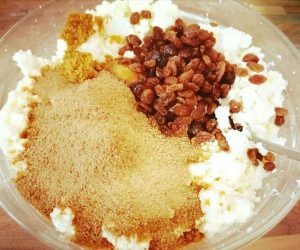
You can use the waiting time to prepare the filling by mixing the well-drained cheese with sugar, raisins, eggs, semolina, essences and orange zest, plus a pinch of salt to enhance the taste.
The composition has to be similar to a regular cheesecake. If it is too soft, you can add more semolina. If it is too hard, it might require another egg.
When the resting time is up, use a part of the dough for the braided wall and keep a larger amount for the base.
Before you start, preheat the oven to 160°C/320°F.
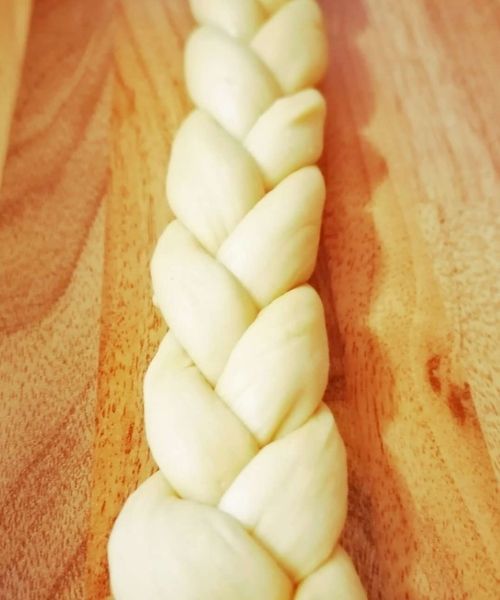
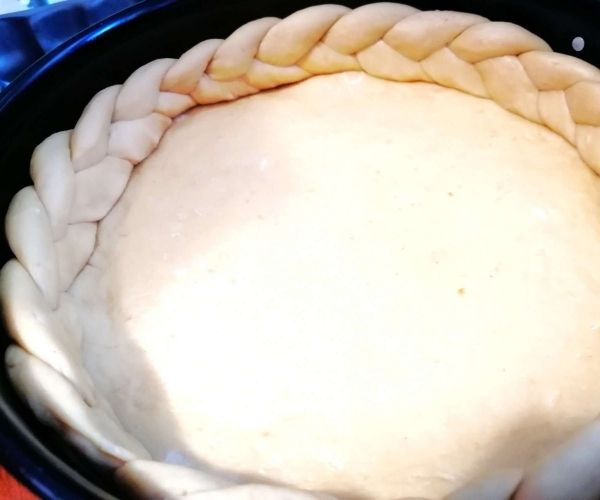
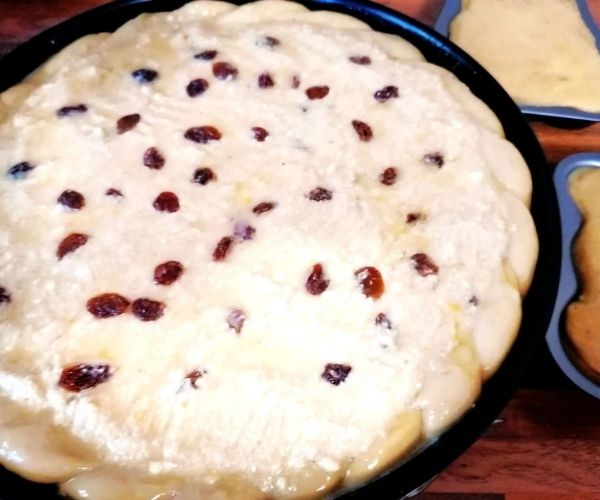
I rolled three thin threads from the smaller dough piece to braid the wall as I prefer to taste more the filling than the paste. Be aware that the dough will expand further during the initial stage of baking.
The rest of the dough will go on the base of the baking mould. It is OK to use a rolling pin to shape it in a 1-1.5 cm thick round form; it will still fluff once in the oven.
I used a 24 cm diameter loose base baking tray with parchment paper fit on the base and well-oiled walls.
You might need extra hands to help fit the braided dough to the mould’s wall; I certainly appreciated the involvement of a little helper!
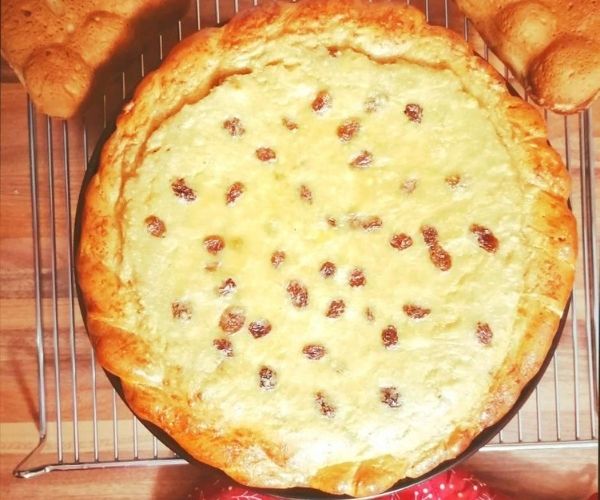
As the helper holds the braided dough in place, add the cheese filling in the middle and spread it evenly using a large spatula.
Separately, beat an egg with a teaspoon of sugar and brush the entire surface of your pasca.
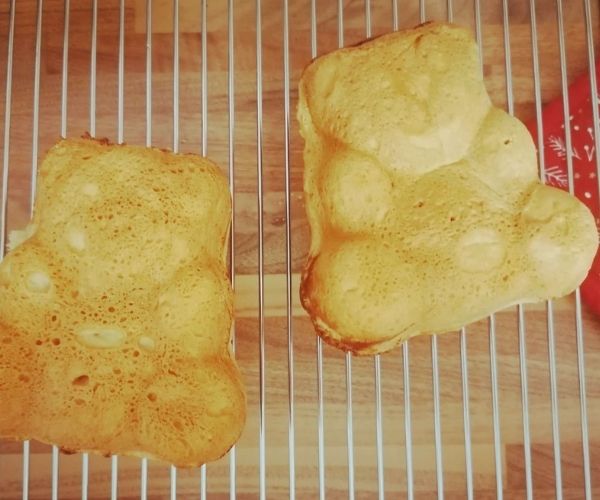
Because I had some dough left, I used it to make two tiny cheese-filled teddies using some small moulds included in my baking set. Needless to say, they turned up way more exciting than my pasca, laden with deep metaphysical meaning! Something like the chocolate eggs and Easter bunnies hidden around the house! The times are ever-changing, although some traditions carry on, even two thousand years later.
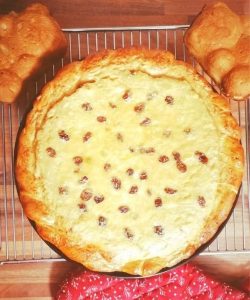
The tray goes on the oven’s middle rack. Also, reduce the temperature to 150°C/302°F. As each oven is slightly different, the baking time might vary, but it should be around 30-40 minutes or until the dough turns golden brown. If it burns too early, you might need to cover it with another tray.
My mould was quite full, and as it started to bake, my pasca raised a bit too much, so I could not cover it. Luckily, it did not burn either.
You should not open the oven’s door during the first 20 minutes, but it is OK to turn the tray after this initial time to allow thorough baking.
Perform the toothpick test to check if the cake is baked thoroughly and cool on a rack before removing it from the tray.
If you are baking on Holy Thursday, Easter is still a few days away. You can keep the pasca in the fridge, preferably in a cake box.
If desired, bring to room temperature before slicing and serving.
Happy Easter!
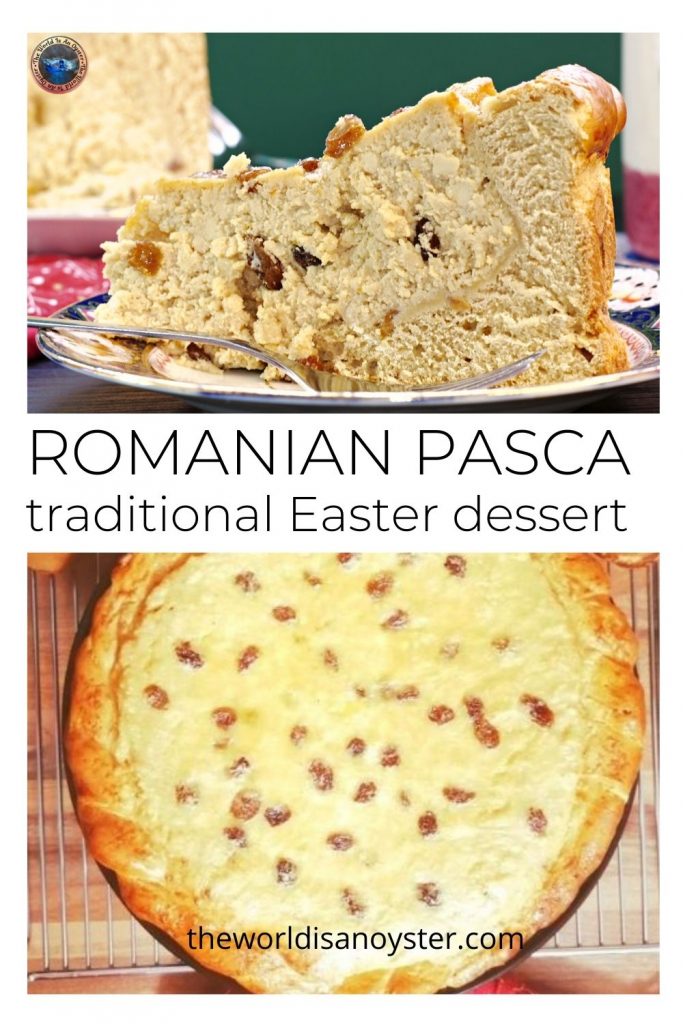
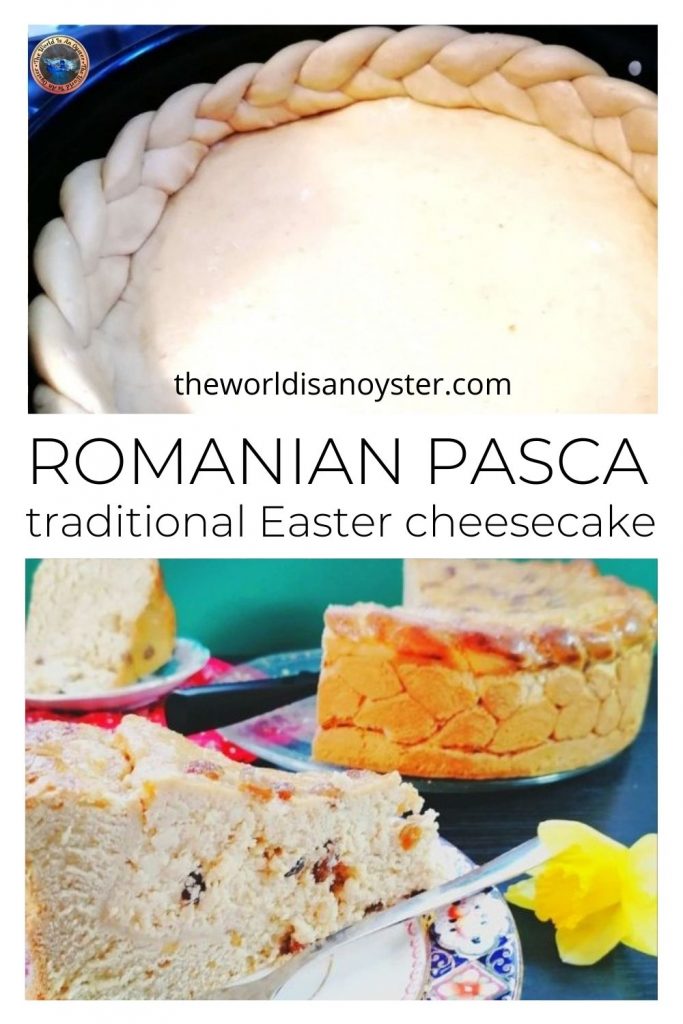
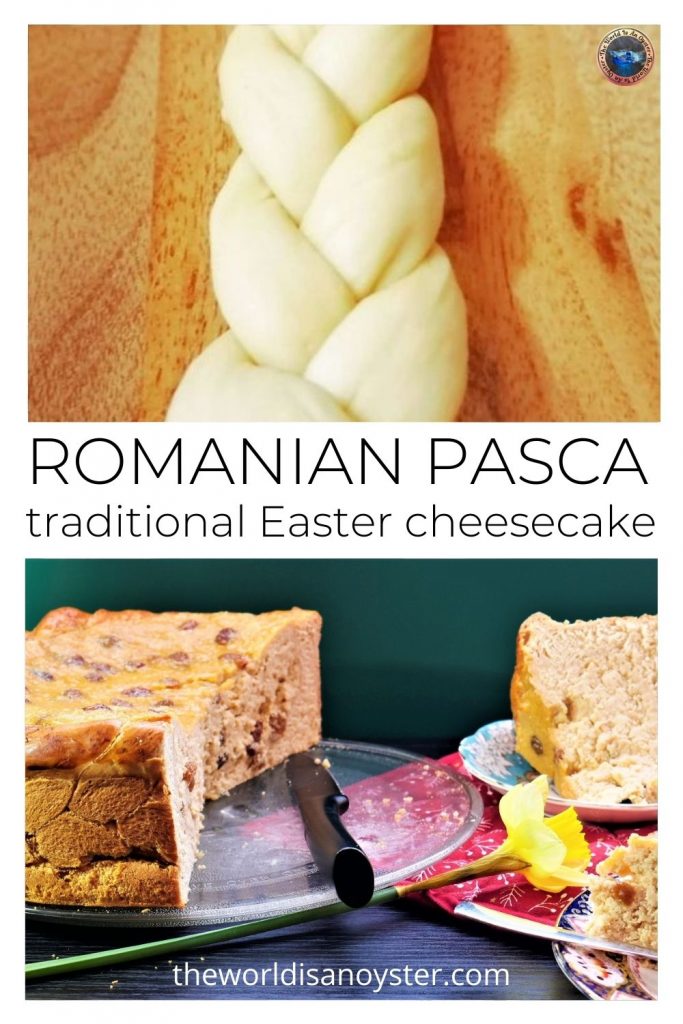

Traditional Easter Pasca Cheesecake
Ingredients
Pasca Dough
- 600 g white flour plain or strong bread
- 120 g sugar coconut
- 125 ml tepid water
- 10 g dried yeast
- 125 ml tepid milk
- 3 eggs plus 1 for coating before baking
- 60 g butter melted and cooled
- 1 pcs orange/lemon zest organic
- 1 tsp vanilla essence
- 1 tsp rock/sea salt
For the filling
- 1 kg cheese cottage, ricotta or homemade, drained
- 150 g raisins
- 3 pcs eggs
- 70 g semolina use gradually
- 4 tbsp coconut sugar
- 1 tsp rum essence
- 1 tbsp orange zest organic
- ¼ tsp salt
Instructions
Pasca Dough
- For the starter dough, mix the sugar with yeast, a little sieved flour and tepid water. Allow 10-15 min to activate the yeast, preferably in a warm place.
- Once the yeast has activated and started making tiny bubbles, add the butter (melted and cooled previously), milk, eggs, organic orange zest. Mix well.
- Add the salt and the rest of the sieved flour and start kneading. Depending on the type of flour used, the exact quantity needed might vary. Add it gradually while kneading either with a standing mixer or using your hands.
- When the dough makes little air pockets as you fold it, you will know it has enough flour.
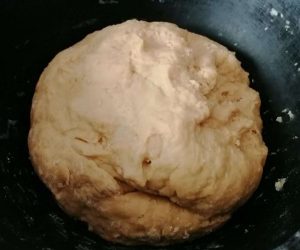
- At this point, heat the oven to 50°C/122°, then turn it off and place the bowl on the middle rack to let the dough rest for at least 30 minutes. Typically, it has rested enough when the volume has doubled.
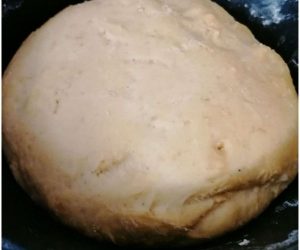
- Before the last stage of preparation, preheat the oven to 160°C/320°F.
- When the resting time is up, use a part of the dough for the braided wall and keep a larger amount for the base.
- Depending on how many threads you want to use, roll thin ones and braid them. I only used three and rolled them up as thin as I could.
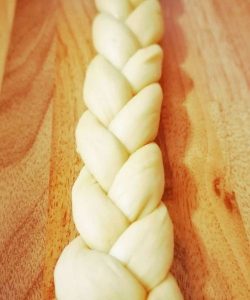
- The rest of the dough will go on the base of the baking mould. Use a rolling pin to shape it in a 1-1.5 cm high round form; even if you press the dough, it will still fluff up once in the oven.
- Prepare your baking mould. I used a 24 cm diameter loose base baking tray with parchment paper fit on the base and well-oiled walls.
- Place the base dough in the tray and the braided dough vertically on the wall. You might need extra hands for this step, as the dough is elastic and will tend to fall and shrink.
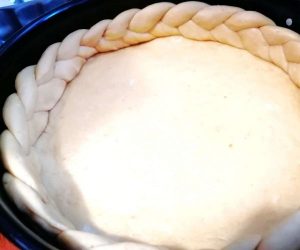
- As the helper holds the braided dough in place, add the cheese filling in the middle and spread it evenly using a large spatula.
- Separately, beat an egg with a teaspoon of sugar and brush the entire surface of your pasca.
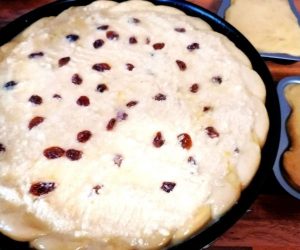
- Reduce the oven's temperature to 150°C/302°F and place the baking mould on the middle rack (position 3).
- Bake for 30-40 minutes or until pasca turns golden brown. If it burns too early, you might need to cover it with another tray.
- Do not open the oven's door during the first 20 minutes. After that, you can turn the pasca to allow even baking.
- Perform the toothpick test to check if the cake is baked thoroughly and cool on a rack before removing it from the tray.
Cheese Filling
- In a large bowl, mix the well-drained cheese with sugar, raisins, eggs, semolina, essences and orange zest, plus a pinch of salt to enhance the taste.
- The composition has to be similar to a regular cheesecake. If it is too soft, you can add more semolina. If it is too hard, it might require another egg.
Notes
Easter Pasca: A Traditional Cheesecake for A Special Occasion
The post Easter Pasca: A Traditional Cheesecake for A Special Occasion appeared first on The World Is an Oyster.
]]>