The post Why Do Christians Celebrate Catholic and Orthodox Easter On Different Occasions? appeared first on The World Is an Oyster.
]]>
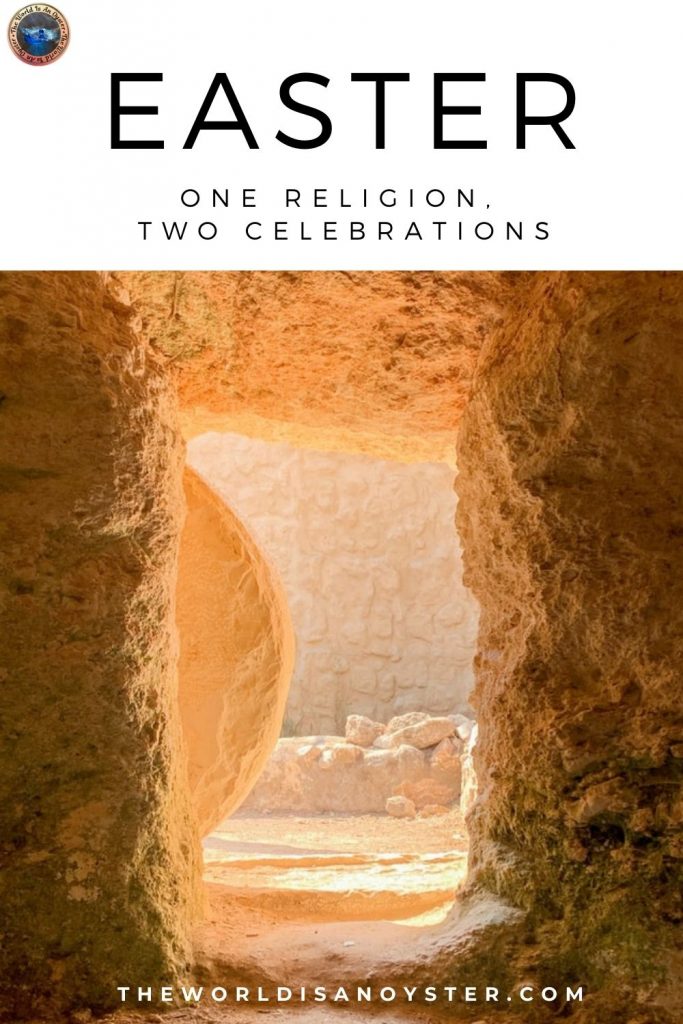
Why is Orthodox Easter celebrated at a different date than Catholic Easter? Well, it is almost impossible to grasp the intricacies of a two-thousand-year-old religion, especially when there is so much controversy around it. There is an ocean of written information for those interested in more profound diggings, but I will attempt a simplified explanation.
Christianity is not the first monotheistic religion. Allegedly, Zoroastrianism seems to be about 12.000 years old and has lasted a few thousand years (even until today in some areas).
In contrast, Akhenaten’s attempt to impose a monotheistic religion by instating Ra as the sun god and the creator of the universe in ancient Egypt did not last after the pharaoh’s demise.
Of course, all the history we know is based on the writings left by our ancestors. But where there was no alphabet or the form of writing is so old that it is impossible to decipher, the wisdom perpetuated orally is largely ignored. However, the knowledge of it has survived to our times (see Zalmoxianism).
Contempt seems to have survived better since today people still call the old polytheistic religious beliefs “paganism”. What if suddenly a new polytheistic religion emerges? What would the current ones be called then? I am not worried at all. We are sarcastic and bully enough species, able to find an equally scornful label!
Christianity is a monotheistic religion that followed the polytheistic ones after the ancient Greek and later Roman Empire’s demise.
From his star, the God we have known of for thousands of years must have a great view over his creation. He surely sees us squirming on a tiny planet, taking for granted a worry-free life, often putting everything we do on his shoulders (“It was God’s will!”) and begging for help and forgiveness when it gets tough.
Most likely, humans are not his only creation; if God does not answer every individual call, it might be because he’s busy contemplating others, on other planets, in different universes, also his work. Probably. Some of us accept this based on the current religious norms.
Spirituality and religion are different concepts. One has more to do with philosophy and inner, personal beliefs, while the other is a set of established dogmas, canons, etc. Does a deity or another impose religions on people? No. It is an efficient human attempt to control and manipulate large masses.
One’s connection with spirituality should have more to do with love and compassion than with fear that this or that will happen to you if you do or don’t do this or that as imposed by some humans. Hence each village on this planet has a different understanding, traditions and practices of the same belief.
Historically, armies of soldiers killed their fellow humans and sacrificed their lives in wars for millennia. If faith is all about love and compassion, I doubt any god has ever explicitly told anyone, “You must kill your fellow humans so that this or that king gains more power!” Yet, so many wars started on religious grounds by humans.
A ruler with more imagination and persuasive power would have easily won as his army would sacrifice lured by a promise of endless happiness or threatened by a fear of eternal damnation. In essence, GREED was and still is the real winner, a whim is a real motive, and manipulation is the effective delivery method.
It is all reduced to superb control skills, practised and mastered over millennia. Crash the real connection with the individual’s spirit and dominate by instilling irrational fear of the unknown.
One law governs the world beyond any physical law known to humans. It is called love. It has a funny way of healing, appeasing, pacifying.
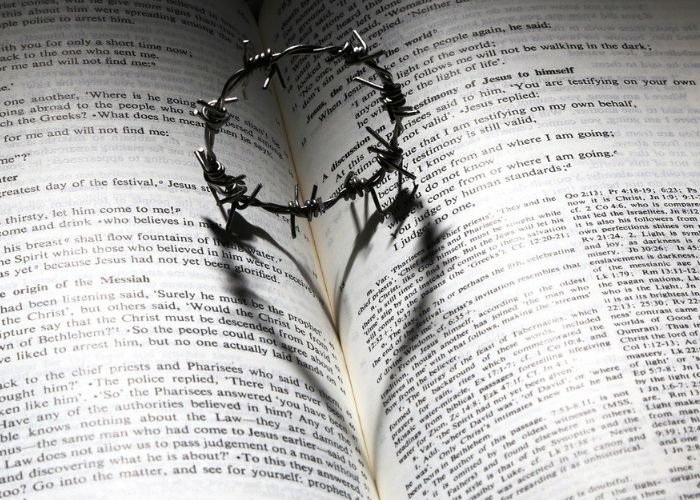
Jesus mentioned it repeatedly, but the Romans were afraid this law based on human emotion would undermine their position of political power. So, they barbarically killed a man who did not wrong anyone.
Some three centuries later, emperor Constantin I (another Roman holding the reins of power) repented after killing left and right, including his wife and eldest son, and imposed an old-new state religion on remorse.
Almost from the start, the new (old) religion has known rifts based on doctrine; the East and the West (Rome and Constantinople) have had a hard time agreeing on many aspects, including calendars. But still managed to put together a set of rules that make a state religion. Made by humans. God has no religion!
Fast forward another seven centuries; a so-called great schism fractured Christianity during the dark ages. Constantinople and Rome finally separated. A thousand years old Roman Empire reached an end.
The two main branches of Christianity (the Catholic and Orthodox Church respectively) based their separate calendars on the lunar, respectively solar-lunar cycle on their division.
Hence, we celebrate Easter on different occasions, typically at a week’s distance.
2021 saw the longest distance I could remember. The Orthodox celebrated Easter about a month after the Western Easter. It is difficult to call it Catholic Easter since the Western Christian religion is also subdivided (does Henry VIII, for instance, breaking with Rome on love whims sound a bell?)
In 2022, the Orthodox Easter will be celebrated in Romania, Bulgaria, Greece, Cyprus, Serbia, Macedonia, Albania, Georgia, Ukraine (if the war will end by then to allow any celebrations at all!), Russia (largely brainwashed by bolshevik propaganda and unaware of its invasion of a sovereign neighbouring country!) and some parts of the Middle East and Africa on the 24th of April. The rest of the Christians will have had already observed it on the 17th of April.
Given the war in Ukraine, there is one thing I want to mention to underline the gap between religion and spirituality. The Russian Orthodox church’s highest in command agrees with his country’s war and killing of the children in Ukraine. That is not because his religion tells him something, but because his position of power depends on how much he agrees to his tyrant president.
In his desperate clinging to power and wealth, the patriarch bends to political power hoping his position will be saved. Given Russia’s history and the mingling of religion in state business for over a thousand years, he’ll probably get the exact opposite, so all his attempts to save his place at the expense of killed children will only count when he meets his maker.
Since we celebrate twice, perhaps it is a good idea to take a minute and give some thought to the beginnings of this religion, its spread and division, its complicated history and the meaning of believing in something not always easy to conceptualise. And also, do what we do best on holidays: splash cash on commercial goods and gorge on food! We are what we are.
At least, on the Orthodox Easter Sunday, the Romanians still greet each other with the acceptance of the only known miracle performed by a man: “Christ has risen!” And the reply still is: “In truth, he has risen!” before we wish each other a “Happy Easter!” and share red painted eggs and cozonac! All of these are old, thousand of years old customs that are gradually dwindling in the robotic era.
Other nations in the Balkans probably keep the same traditions. Still! Given the hallucinating speed of life the modern world is witnessing, traditions, history, beliefs, and everything else some of us still cling to might become just a thing of the past.
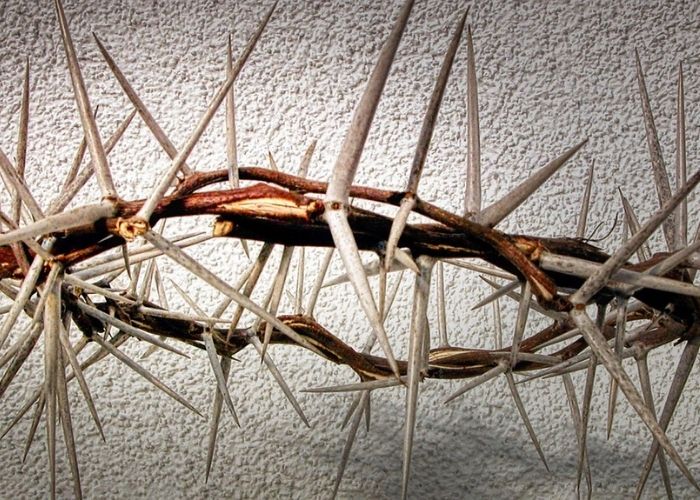
This was the hardest post to write. Honestly! Next time I’ll stick with chocolate bunnies – a lot less demoralising and thorny!
Sources: Historia, Britannica, World Library.
Why Do Christians Celebrate Catholic and Orthodox Easter On Different Occasions?
The post Why Do Christians Celebrate Catholic and Orthodox Easter On Different Occasions? appeared first on The World Is an Oyster.
]]>