The post A Walk in Time. Born in October appeared first on The World Is an Oyster.
]]>Ice Age Old
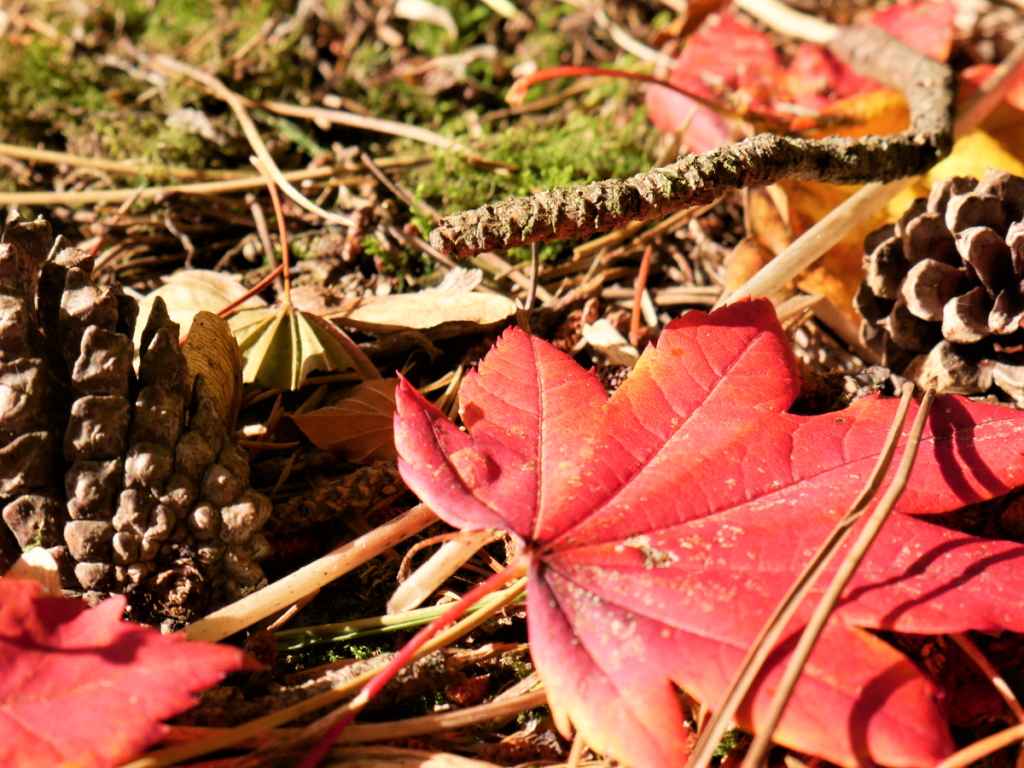
We all love an autumn walk and dragging our feet through the rustling carpet of colourful leaves bedding a forest path in fall. Ochre, crimson, copper or brown, depending on what decomposing stage they were when they fell from the trees, the dead leaves work their magic on us.
We greedily take in the soothing feeling selflessly provided by nature, the bit of sanity so much needed, and the escape provided by a few hours hike to recharge our batteries. We selfishly don’t give anything back, though.
We walk, drag our feet, pick a chlorophyll-deprived leaf and discard it later when the acceptance follows. The acceptance that the summer is gone, the vegetation is dying again its implacable death, and the earth takes a break to recover and replenish its strength to sustain a new life cycle in the coming spring.
Then we close our eyes and turn to the sunlight. The colour we perceive is not a warm, bright coral as in the summer months but a more sluggish, glowing peach.
This is the time when the mind becomes free to wander.
Mine is invariably attracted like a magnet to the old times. Ice age-old. Older than that. And so starts a walk in time.
With the amalgamation of thoughts comes the acceptance that I don’t know something that feels essential. Sixteen years of state education are wasted on me. It gets worse. Over two decades of intense reading, researching various sources and putting the information together takes me nowhere else than to the acceptance that Socrates’s words will forever be painfully right: the only true wisdom is knowing you know nothing!
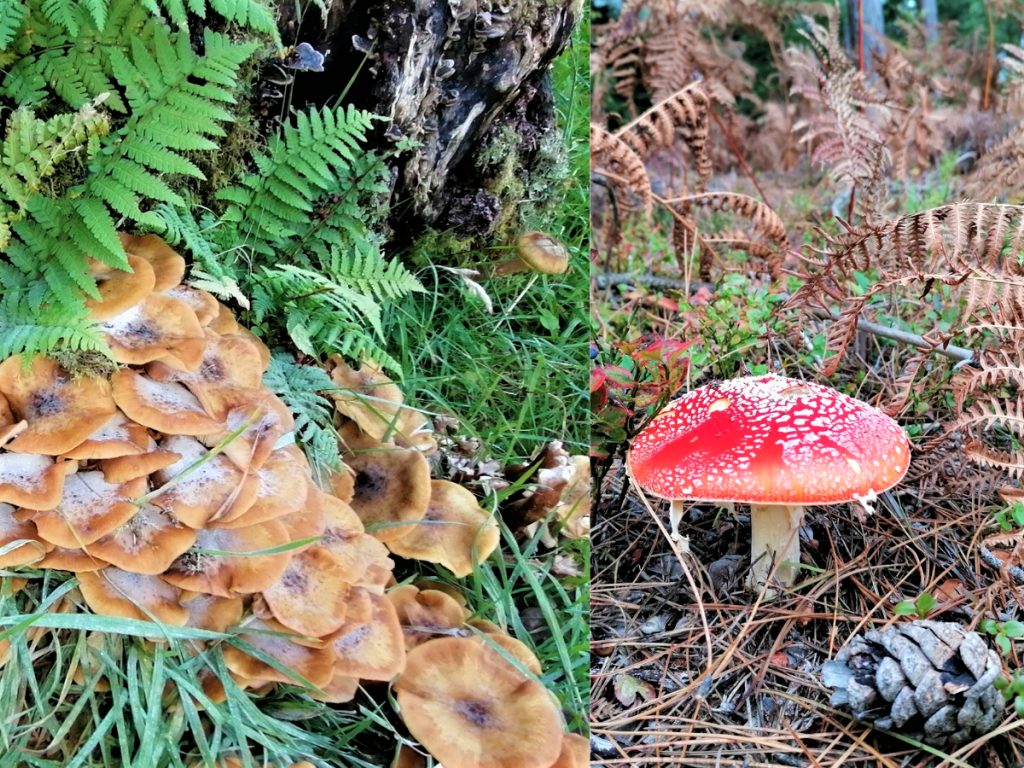
And it is true. I walk onto the rustling carpet and know nothing beyond recognising the names of the trees by their leaves or trunks. Or that I’m not supposed to eat a beautiful red mushroom springing up from among dried ferns. Or any other mushroom, for that matter, even if some are edible (not that I know precisely which are); spores might contaminate them from the poisonous ones carried by the wind. Helluva valuable knowledge!
I wonder again, for the umpteenth time, when had my species decided it was the brightest there ever was and based on what?
Neanderthals had a brain once and a half bigger than ours. Yet, our “experts” believe they did not have a language. Based on what, I wonder again? On the fact that they did not write endless, useless dinosaur treaties on their cave’s walls?
Well, I’m writing on a PC right this moment; where will this insignificant piece of “wisdom” be in thirty thousand years? My PC will be prehistoric plastic by then, and the entire internet will be lost in the ether. The difference is, whatever species will live then won’t be far from the truth when they establish our species was pretty dumb.
Somehow, the Neanderthals dwindled and disappeared about 30,000 years ago. Not before they interbred with Homo sapiens, the fancy new species – sexier, taller, cooler. The new kids in town! So that we all have at least two per cent Neanderthal in our genes – perhaps where our intelligence resides.
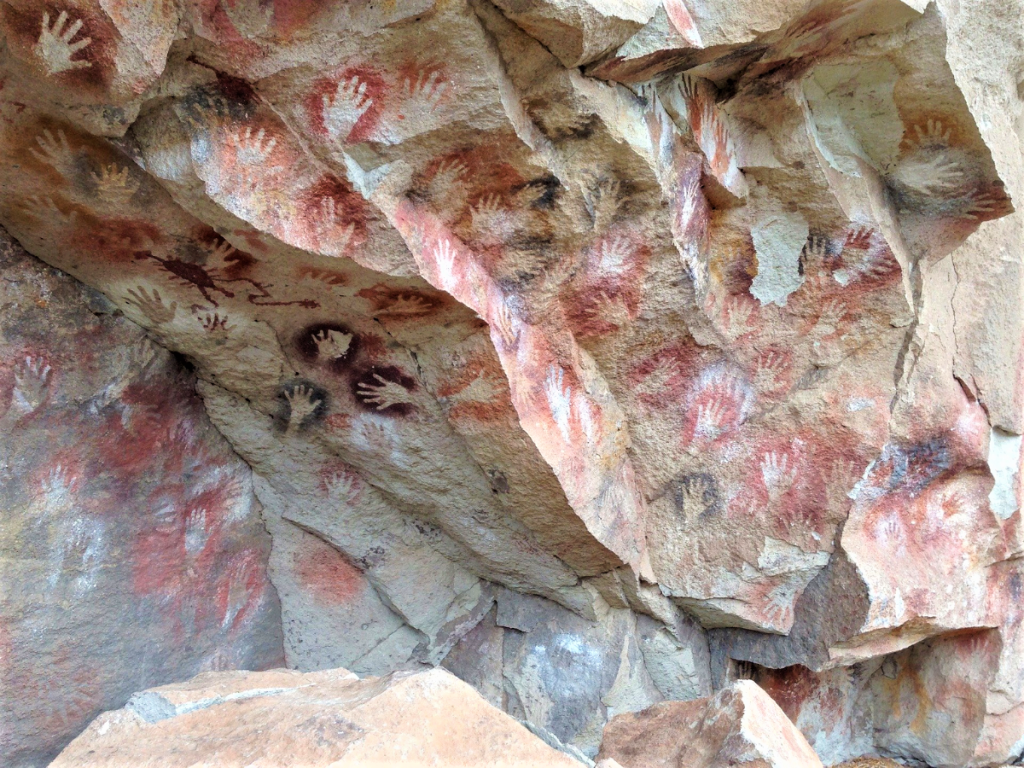
Some more time after that moment, a long winter (no, not that one John Snow was obsessed about, but a real one) took over a large part of the planet. No farther than ten thousand years ago, the tribes that populated Southern Europe (nowadays scorched under a torrid sun in the summer) had to hide deep into the caves to survive the endless months of snow and ice. Many never made it out alive. Their bones were recently discovered, and yet another set of suppositions became the norm. More lengthy treaties filled the libraries’ shelves.
Indeed, the truth might be far from everything we suppose. No way to argue either way. Even if supposedly somebody lived that long to witness all this, who would believe a word they say? (I’m only saying this because I’m reading a book based on such a hypothesis; everything is allowed in fiction! The book is part of a series called The Immortal Collection by Eva García Sáenz for those curious.)
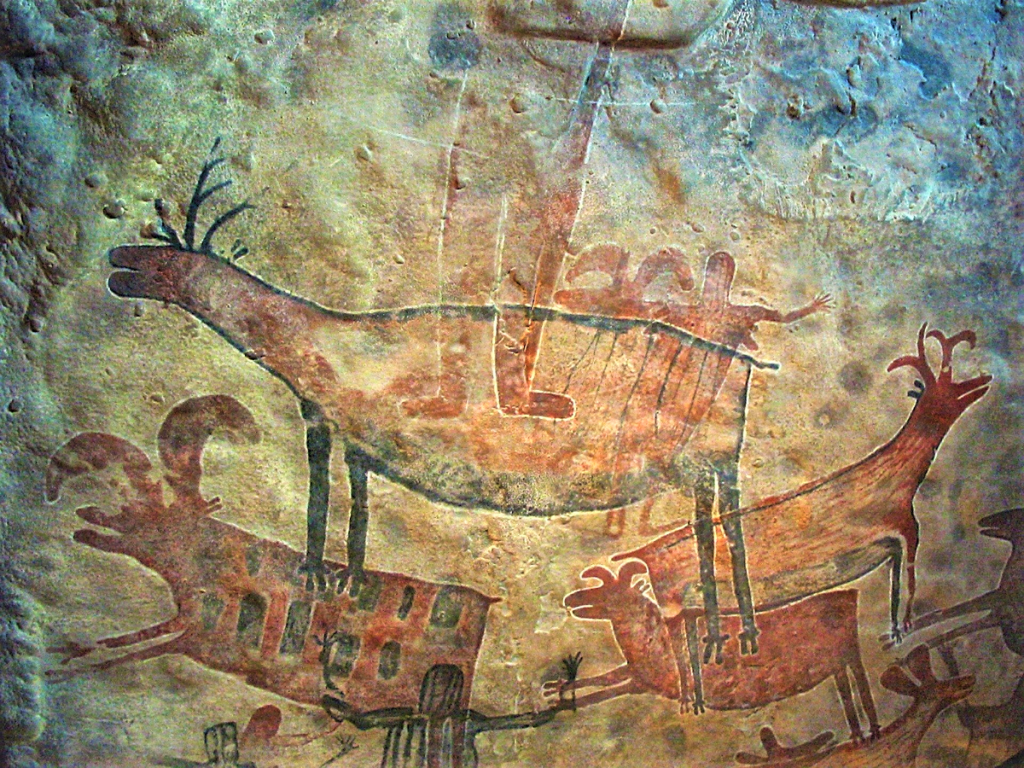
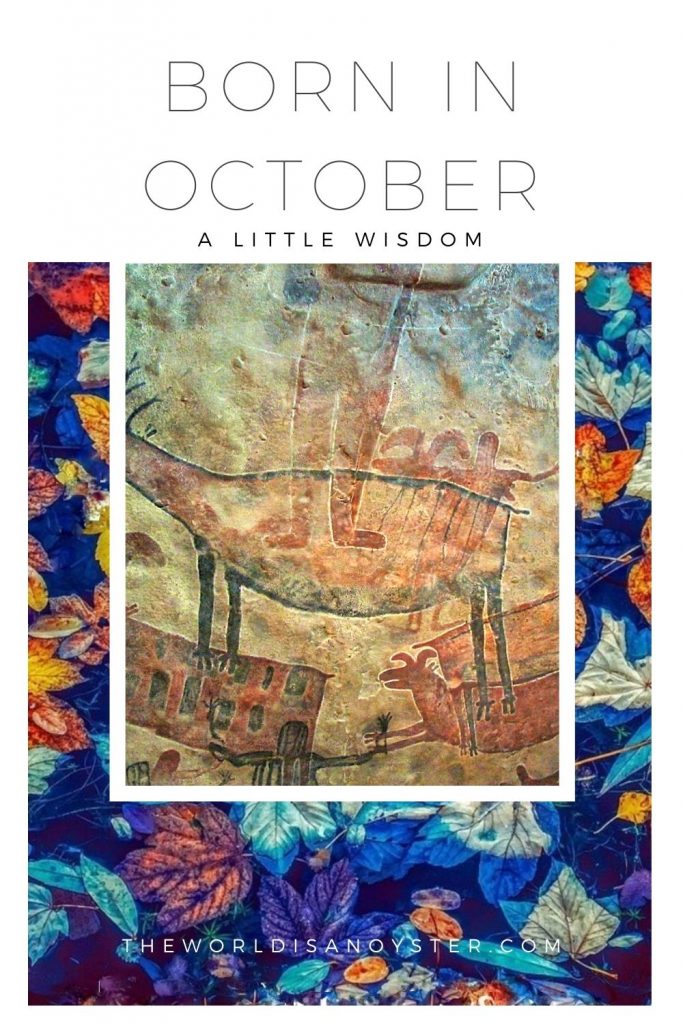
What we smugly call “primitive people” (conveniently dismissing the reality that we will also be “primitives” not long from now!) indeed painted their caves. Unfortunately, they did not leave anything written, so possibly they did not have a language either. Right? The ways of logic…
Later, the ice retreated to the steppes in the far north. The humans came out of their caves. Their lands and horizons expanded. The mammoths were long gone, so they had to invent something other than hunting to occupy their time and thrive.
Agriculture came into the picture, ever-growing communities, greed. Wars to claim what belonged to others. More greed. Flourishing civilisations. Crumbling civilisation. Even more greed – the root of all evil!
Somewhere in the middle of all this, there was a long-lasting and widespread European civilisation called Getae. They loved and protected the forests in which they lived. They ought to have known the uses of all the plants I’m looking at as I walk the woods and many others, long extinct.
(Diverging, because it bugs me: Australia, a massive slice of the supercontinent Gondwana that split up almost 200 million years ago, has managed to preserve prehistoric flora and fauna beautifully. All until the Brits colonised their shores about two hundred years ago. Today, Australia witnesses the worst extinction rate in the world, affecting plants, animals and aboriginals. All courtesy to the “enlightenment”.)
Back to the Getae. Of course, they did not leave written traces, so “logically”, they were pretty dumb. Except they understood nature, knew the use of every single plant at which I was staring cluelessly, and could perform brain surgery using natural sedatives that worked just as well as the chemical cocktail of anaesthetics and analgesics used today.
They understood it was out of the question to heal the body while ignoring the soul. Their mysticism is almost impossible even to fathom today.
They knew so many things, which they passed on to the next generation orally, as the tradition continues nowadays in small, isolated communities around the Carpathian Mountains. Orally!
One of these days, somebody ought to crack the writings on the eight-thousand-year-old clay tablets found in the heart of Romania, the Getae’s territory. Yes, tablets scribbled in an alphabet so old nobody knows how to interpret. Eight thousand years ago is long before the hieroglyphs or cuneiforms popped up.
Their healing knowledge must have been reliable since, many millennia later, the Greeks assumed it and used it to create the basis of modern medicine.
Later, but still far back in BC, a smart old guy called Zalmoxis came into the picture. A wise king, Zalmoxis renounced his Getae throne to become an ascetic and initiate his nation in immortality’s metaphysical secrets.
Like a few others after him, this guy went into a cave at some point, and his people believed him dead. He re-emerged four years later (not three days!), very much alive and mega-spiritualised and taught his people that the soul is immortal. It does not commence nor end with a physical form. The physical form is only temporary accommodation for the soul capable of transcending infinite time and space.
It might be why the Getae accepted that the ephemeral body is not as important as the spiritual existence. It might be why they fought their wars with a ferocity never matched, not afraid of death but looking forward to the next reincarnation, the next temporary accommodation.
Others who wrote their history on sheep-skin parchments, such as a certain Alexander the Great, advised their armies to carefully avoid upsetting the Getae because that would be their (tragic) end.
The Getae did not fear death, and rightfully so. What would one have to worry they would die when immortality was always going to be more alluring? When the soul will always find another vessel. When, if the current life might not be fabulous, the next one could be quite different, and reincarnation would always be an option?
Wiser beyond our current understanding capacity, the Getae would cry and woe the day a child was born into this wicked world and partied hard at each funeral.
To think of it, what a better send-off than with barrels of drinks splashed in your memory with best wishes of “have a great next existence, mate!” organic food, music and ritual dancing?
Who today understands this? Many are strangers to the knowledge. Who really cares about origins, roots, and spirituality in a highly materialised existence?
The few who give a damn wrote books with their suppositions we are free to accept or not. My genial late friend used to say this.
I’m still hiking the forest and having this strange and challenging time explaining that nothing is as we believe it to be. And I mean nothing, from mammoth extinction to the first acknowledged written alphabet and the Pyramids.
I drag my feet through the rustling leaves and take pleasure from their death. And I enjoy better nature in its dying hour – when it is at its most beautiful, than when it comes back to life in spring—somewhat celebrating its death and lamenting its birth.
But what do I know? I was born in October and might be ten thousand years old. Though I still know nothing.
Ice Age Old
The post A Walk in Time. Born in October appeared first on The World Is an Oyster.
]]>