The post How to Make Light Greek Moussaka appeared first on The World Is an Oyster.
]]>A Greek Dish With International Influences
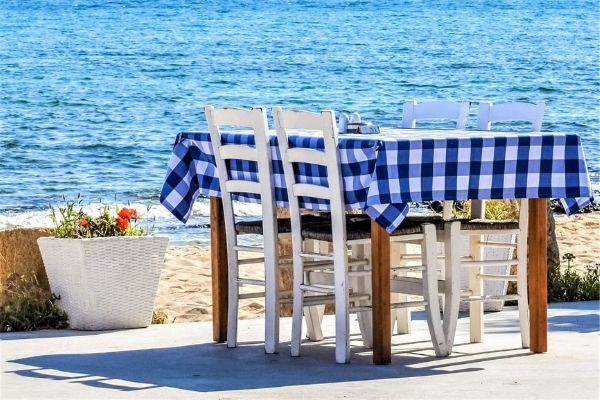
Greek moussaka (or light Greek moussaka for those who don’t care about the heavy béchamel sauce) is a must-have dish if you travel to Greece, just as it is proper to try Greek coffee or wine. The flavours are unique!
As you sit on a tavern terrace and (preferably) enjoy a fabulous sea view, remember that the stress is on the last syllable when you ask the waiter for moussaka.
Original from the Levant and updated by adding a posh French sauce, moussaka is known as a Greek dish, cooked with variations in most south-eastern Mediterranean and not only. Romanians and Bulgarian also love it.
My recipe of light Greek moussaka is somehow altered, due to health factors. Because time is also an issue for multitasking people, I always chose the least time-consuming method; therefore, the recipe might differ from the original. The taste is still excellent, though!
I like to keep cooking fun but rapid and straightforward. First of all, my moussaka will not contain the famous béchamel sauce. It might sound fancy and add flavour to the dish but, to me, is merely a calorie bomb!
After all, the primary role of the béchamel is to help set the meat layer (it is, in essence, a glue sauce, with origins in medieval Tuscany) and confer superior aesthetics to the finished product.
If you are not concerned about your cholesterol level and want to try it, I will explain later how to make the sauce. I did make the original recipe a few times for others; nobody complained about it, on the contrary!
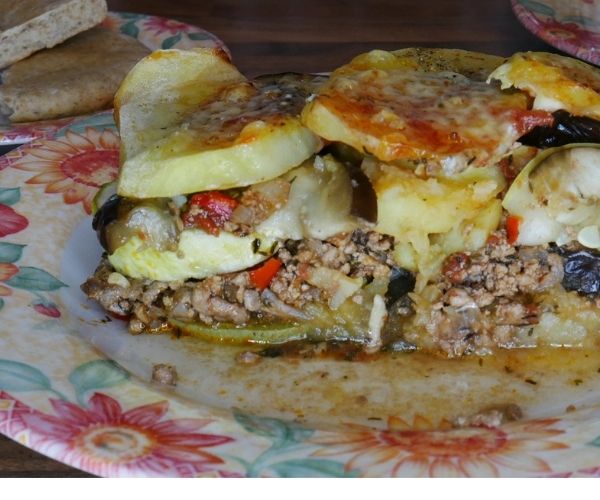
Now that I have all the Greeks against me, it won’t make any difference to tell you that a bit of Parmesan cheese grated on top during the last minutes of baking will give a lovely flavour to the dish. On occasions, when I did not have hard cheese in the fridge, I just grated some Cheddar and let it melt and bake a little. I did say this dish has international influences!
If for any health reasons, or if you are lactose intolerant and prefer dishes low in fats, remember that the flavour is in the spices, not necessarily in heavy sauces or cheeses.
Speaking about spices, a Greek friend of mine once told me that beef must be the only type of meat in moussaka, and oregano the only other seasoning alongside salt, pepper and nutmeg.
I like a dash of cinnamon and always use thyme in mince meats. But I won’t dare upset the Greeks any farther than this! Though, maybe, just a tiny bit of ground coriander, perhaps?
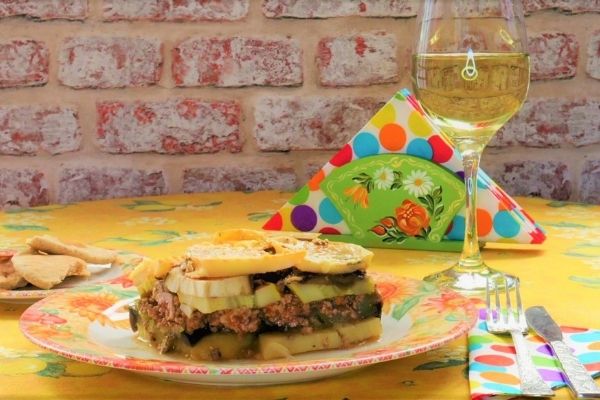
Ingredients for Light Greek Moussaka:
2.5 kg of potatoes (have a few spare ones, in case you remain with an incomplete layer)
800 g (lean) minced beef
Two large onions
One pepper (I prefer the taste of pointed peppers)
Four large tomatoes (or a tin of chopped tomatoes)
Two large aubergines
Three courgettes
Six garlic cloves
Spices: dry oregano, thyme, salt, pepper, freshly grated nutmeg (optional: cinnamon and ground coriander)
Optional – Ingredients for Béchamel Sauce:
1l full-fat milk
100 g butter
100 g plain flour
100 g grated Parmesan or any other hard cheese
Two egg yolks (for colour)
Spices: a tiny pinch of salt (the cheese is salty enough), white ground pepper, freshly grated nutmeg
How to Make Light Greek Moussaka:
Preheat the oven (180°C/350°F).
I always start by preparing the meat. I usually buy two packs of organic lean minced beef. Even the lean meat will have some fats in it, so I do not add any oil. Believe me when I say that your liver will thank you for not caramelizing the onions in oil!
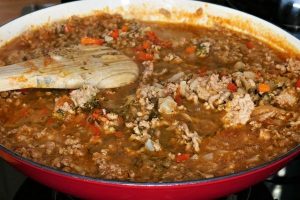
Place the mince in a large pan over medium heat, add a large glass of wine, the finely chopped onions, pepper and tomatoes and stir. Cook it for about ten minutes, stirring occasionally.

When is nearly ready, add the chopped garlic. I always cut garlic with a ceramic knife because stainless steel can oxidise it. Sprinkle the spices, stir for 3-5 minutes, then turn the heat off.
For the veggies, you have three options: fry them in oil (they will absorb it like a sponge!), bake them in the oven for 15-20 minutes, or use them raw.
I prefer the latter option (the other two are either too unhealthy for my taste or time consuming). The result is the same; the heat in the baking phase is enough to cook everything evenly.
Regardless of your chosen method, cut the potatoes, aubergines and courgettes into no thicker than one cm slices.
Perhaps it is a good idea to start with the potatoes and soak them in cold water for a few minutes until you cut the other veggies (to get rid of the excess starch).
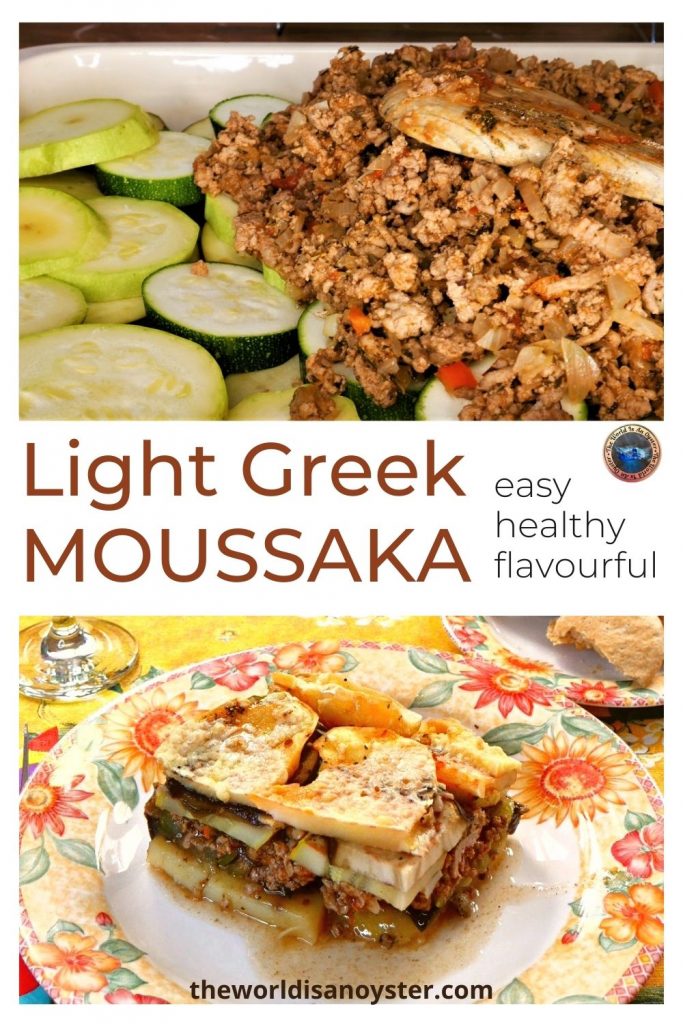
In a large baking tray, start with a layer of potatoes (sprinkle a little salt and dried oregano). Continue with a layer of aubergines and courgette (slightly salted).
The next layer is the prepared meat (add half of the béchamel sauce and mix well if you decided to go for it).
Continue with another layer of courgette, aubergines and potatoes, slightly salted. Sprinkle a little dried oregano over the potato slices.

To avoid burning the potatoes, I usually spread a couple of tomato sauce spoonfuls over the last layer before baking. If you made your béchamel sauce, lay the remains of it evenly over the entire surface.
The tray is ready to go in the heated oven for about 50-55 minutes (a little longer for raw veggies – test them with a fork, you’ll know when they are done), at medium temperature (180°C should do).
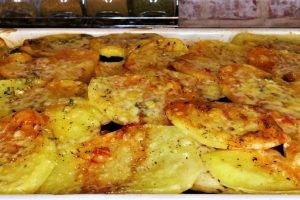
Just before the time is up, grate some hard cheese on top and bake the moussaka until the cheese starts bubbling.
Let the moussaka cool before you cut it; otherwise, the non-béchamel version can be a bit challenging to place on a plate in one piece (it will not be as glued).
This is a recipe for eight portions because moussaka is a dish that can be stored in the fridge for two to three days or frozen (for a maximum of three months). Of course, fresh is tastier; this is why I make sure to cook it close to mealtime. On the subsequent days, you will have to reheat it before serving.
Light Greek Moussaka goes well served with a Greek salad or a simple salad and pita bread.
Enjoy it with a glass of chilled Retsina, my favourite Greek wine!
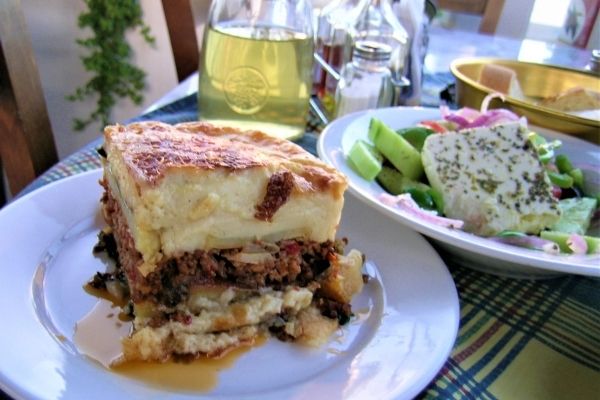
How to Make the Béchamel Sauce:
If light Greek moussaka won’t do for you and you want to try the full-fat version, add béchamel sauce. I promised I would explain how to prepare it, so here it is!
The famous béchamel sauce, originally a salsa colla (Italian for glue sauce), has allegedly been imported by Caterina de Medici, an ambitious Italian noblewoman, to France when she married King Henry II. A couple of centuries later, a marquis in the service of King Louis XIV, called Louis de Béchameil, improved and renamed the sauce after his name and this is how we know it today.
The first step in preparing this sauce is to warm the milk in a pan over medium heat. The milk should not boil, but it has to be quite hot.
In another saucepan, melt the butter without boiling it, over low heat. To add the flour, remove the pan from the heat and pour the flour while whisking vigorously with a stainless-steel whisker. It might look lumpy at first, but continue mixing and the lumps should dissolve.
Return the pan to low heat and gradually add the hot milk, whisking continuously. Add the spices (salt, white pepper, freshly ground nutmeg) and stir continuously for about five minutes or until the sauce starts bubbling.

Remove from the heat to add the egg yolks (one at a time), stirring well. Return to the heat for another minute, stirring continuously. Add the cheese and whisk for another minute or two.
Turn the heat off. The sauce might get a crust as it cools down; you can cover the pan with cling film to avoid this.
The béchamel should have a soft, creamy consistency, similar to the crème fraîche, and a light yellow colour.
Use half of the sauce in the meat filling to help set better when it cools down and spread the other half on top of the moussaka before placing it in the oven. The result will be an added layer that might look prettier if you enjoy aesthetics in foods or want to impress someone!
Bon appetite!
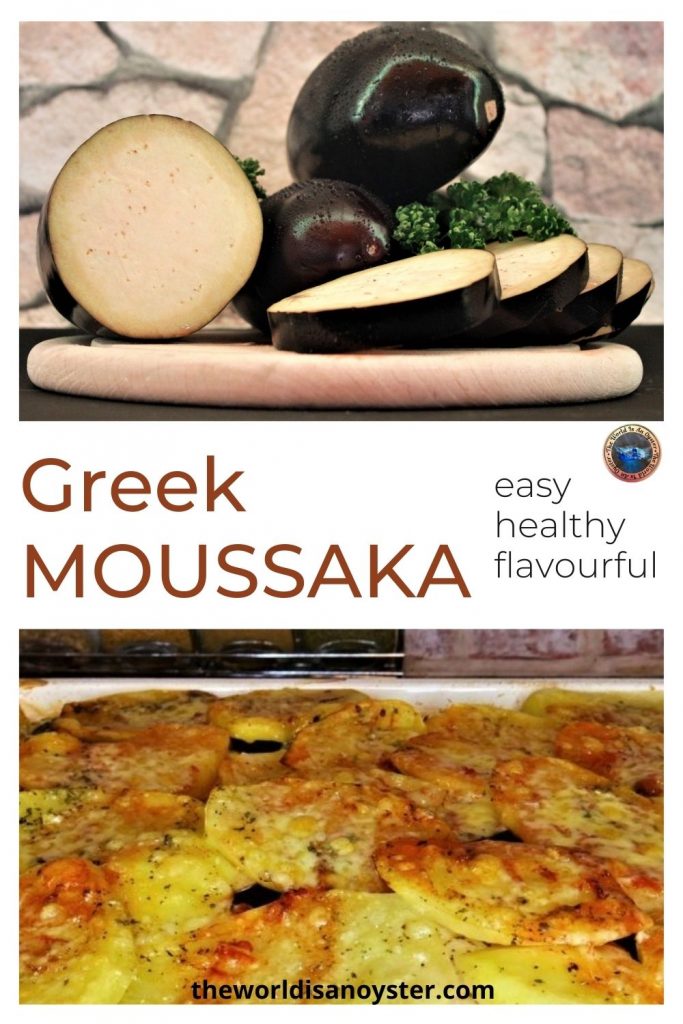
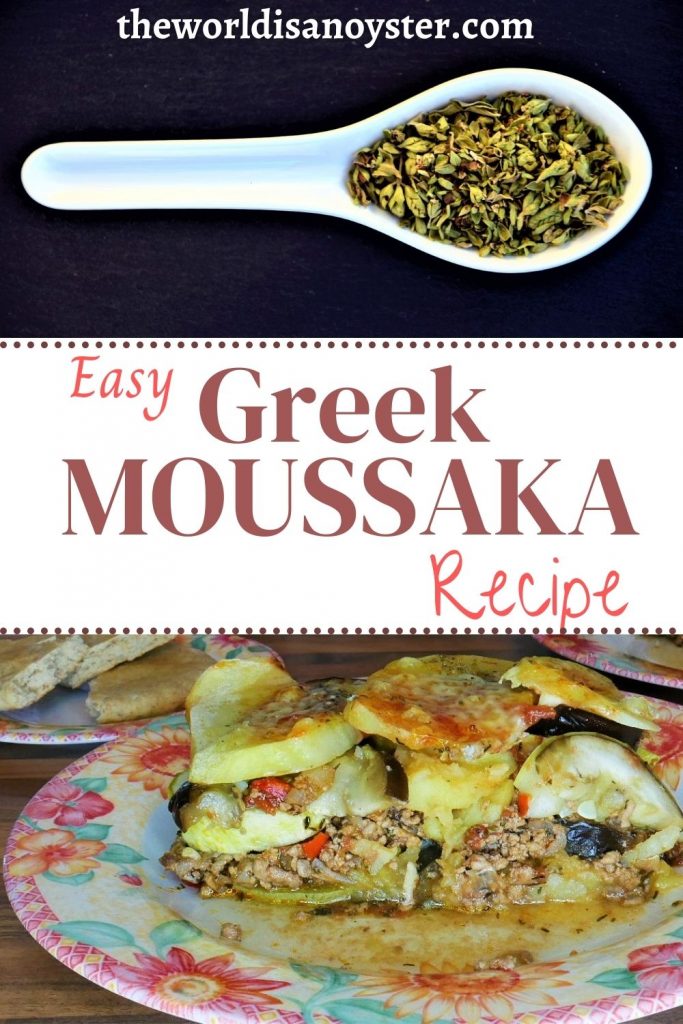
Greek Moussaka
Ingredients
- 2.5 kg potatoes
- 800 g minced beef lean
- 1 pcs pepper sweet pointed
- 4 pcs tomatoes large, or a tin of chopped tomatoes
- 2 pcs onion large
- 2 pcs aubergine large
- 2 pcs courgette
- 6 cloves garlic
- 1 tsp spices (dried oregano, thyme, ground black pepper, freshly ground nutmeg) each
- 1 tbsp rock/sea salt
For the Béchamel Sauce
- 1 l milk full fat
- 100 g butter
- 100 g plain flour
- 100 g Parmesan cheese grated
- 2 pcs egg yolk for colour
- 1 tsp nutmeg freshly ground
- 1 tsp white pepper ground
- ½ tsp rock/sea salt
Instructions
How to Make Greek Moussaka
- Preheat the oven (180°C/350°F/gas mark 4)
- Place the mince in a large pan over medium heat, add a large glass of wine, the finely chopped onions, pepper and tomatoes and stir. Cook it for about ten minutes, stirring occasionally.
- When it is nearly ready, add the chopped garlic. I always cut garlic with a ceramic knife because stainless steel can oxidise it.
- Add the spices and stir for 3-5 minutes, then turn the heat off.
- For the veggies, you have three options: fry them in oil (they will absorb it like a sponge!), bake them in the oven for 15-20 minutes, or use them raw.
- Regardless of your chosen method, cut the potatoes, aubergines and courgettes in no thicker than one cm slices. Soak the potatoes in cold water for a few minutes (to get rid of the excess starch)
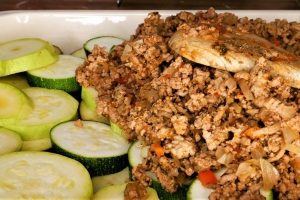
- In a large baking tray, start with a layer of potatoes (sprinkle a little salt and dried oregano). Continue with a layer of aubergines and courgette (slightly salted).
- The next layer is the prepared meat (add half of the béchamel sauce and mix well if you decided to go for it).
- Continue with another layer of courgette, aubergines and potatoes, slightly salted.
- Sprinkle a little dried oregano over this last layer of potatoes.
- To avoid burning the potatoes, I usually spread a couple of tomato sauce spoonfuls over the last layer before baking it. If you made your béchamel sauce, lay the remains of it evenly over the entire surface.
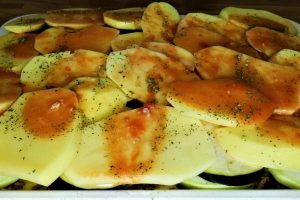
- Bake for 50-55 minutes.
- Just before the time is up, grate some hard cheese on top and bake the moussaka for another 2-3 minutes or until the cheese starts bubbling.
How to Make the Béchamel Sauce
- Warm the milk in a pan over medium heat. The milk should not boil, but it has to be quite hot.
- In another saucepan, melt the butter without boiling it, over low heat.
- Remove the pan from the heat and pour the flour while whisking vigorously with a stainless-steel whisker. It might look lumpy at first, but continue mixing and the lumps should dissolve.
- Return the pan to low heat, and add the hot milk gradually, whisking continuously.
- Add the spices (salt, ground white pepper, grated nutmeg) and stir continuously for about five minutes or until it starts bubbling.
- Remove from the heat to add the egg yolks one at a time, mixing well. Return to the heat for another minute, stirring continuously.
- Add the cheese and whisk for another minute or two, then turn the heat off.
Notes
a bit challenging to place on a plate in one piece (it will not be as glued). Moussaka goes well served with a Greek salad or a simple salad and pitta bread. Enjoy
with a glass of chilled Retsina, my favourite Greek wine! When it is completely cooled, moussaka can be kept in the fridge for up to three days and reheated in the oven before use or frozen for up to 2-3 months. For a vegetarian version, mushrooms are a great substitute for minced beef. Bon appetite!
A Greek Dish With International Influences
The post How to Make Light Greek Moussaka appeared first on The World Is an Oyster.
]]>