The post Easy to Make Vegan, Gluten-free Chilli Sin Carne appeared first on The World Is an Oyster.
]]>Mexican Food Adapted to Various Dietary Needs
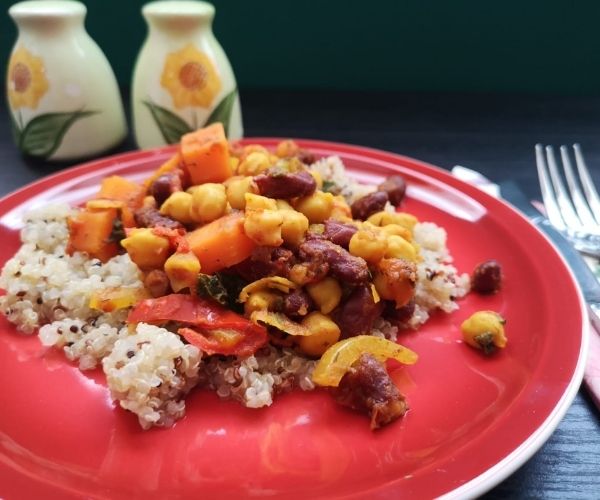
Chilli sin carne is an adapted, vegetarian, vegan and gluten-free version of the world-famous Mexican dish chilli con carne (simple disambiguation for non-Spanish speakers: sin=without, con=with, carne=meat.)
In Spanish, el chile means hot pepper, which would be the prominent flavour of this dish (in slang, it has a more offensive meaning, but we’ll keep with the cooking side!) Please do not mistake it for the South American country Chile, though!
This post may contain affiliate links, which means I will receive a commission if you purchase through my links at no extra cost to you. Please read the full disclosure for more information. Thank you!
The word has variations for American English (chili, pl. chilies/chilis) and British English (chilli, pl. chillies/chillis. Source: Merriam-Webster, accessed 30/04/2021).
Since I live in the UK, I’ll stick with the British English version. However, I will forever use the metric system for quantities, as it has been in use in the UK since I was born, even if the Brits still use stone for weight and pints for liquids – quite confusing and old-sounding, like stone age-old, really.
Now that the etymological side of what we are eating is cleared, I would like to stress some health facts about the ingredients used in this chilli sin carne recipe.
Chickpeas – the best meat substitute for a chilli sin carne!
The main difference to the traditional beef recipe is that I have replaced the meat with chickpeas, my favourite pulses. Packed with vitamins and minerals, high in proteins and fibre (carbs too, so not keto-friendly) and lacking cholesterol, chickpeas are a fantastic source of antioxidants that help fight against cancer and not only.
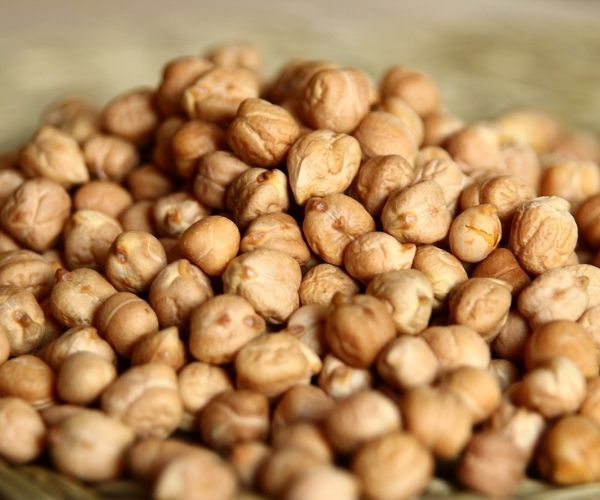
Years of studies have proved chickpeas play a role in reducing inflammation, helping the heart stay healthy, lowering blood pressure and cholesterol level, fighting anaemia or even helping our mental health (source: Medical News Today, accessed 30/04/2021).
The side I served with my chilli sin carne is also a healthy substitute to classic white rice: quinoa.
Quinoa, essentially a seed classified as a whole grain, is a naturally gluten-free superfood, complete protein, with a high concentration of minerals and fibre. Like chickpeas, quinoa has an essential role in fighting heart disease, cancer or diabetes, besides being an important food choice for people living with celiac disease.
Fun fact about it: quinoa exists in over 120 varieties (source: Harvard Edu, accessed 30/04/2021.) I used tricoloured quinoa because I had a pack in the cupboard, and it made a fun side dish appreciated even by the fussy eater in our family!
One last thing before I forget: I never add salt to the food while it is cooking. Why? Because cooking is biochemistry: do it right, it keeps you healthy; do it wrong – you harm yourself and those you are cooking for unknowingly!
UE and the UK have authorised the use of a food additive called sodium ferrocyanide (E535) as an anticaking agent in table salt (I have not checked the USA facts).
This additive decomposes at high temperatures during cooking. As far as I know, cyanides are basically poison. Of course, being regulated means that they should be largely inoffensive to the human body.
But my middle name is Doubting Thomas when it is about what the authorities generally tell us. Hence, I always use rock/sea salt and read the label before I buy it! Also, if I know that salt can contain “safe” cyanides (?!), I make it even safer and not activate them at high temperatures!
The food will have plenty of taste if I add salt after cooking and cooling the food by at least 20 degrees Celsius (10-20 minutes after turning the heat off). At least I won’t freak out that I deliberately poisoned my family!
Also, I do not cook with much oil (if I must, then I use cold-pressed rapeseed oil) and NEVER fry onions in oil! It is way too heavy for the human liver!
This is just a brief foray into healthy eating. For detailed explanations and in-depth research, I recommend opening the above links and looking for more information available.
Ingredients for chilli sin carne
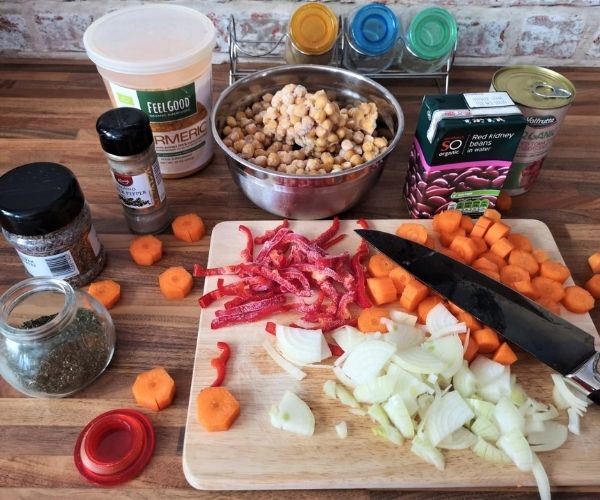
Large onion, quartered and finely cut.
Organic garlic cloves.
Sweet pointed pepper – I prefer it to bell peppers. Usually, I slice more at once and keep it in the freezer for weekly use.
Two-three large organic carrots.
Kidney beans – I buy organic packs, ready boiled (approx. 230 g of dried beans).
Organic chickpeas – I usually boil a large pack, cool, drain and store it in the freezer to use within three months.
Organic chopped tomatoes.
A glass of white wine (or water if cooking for children).
Spices: cayenne chilli pepper powder, ground black pepper, paprika, dried thyme, turmeric (for an extra pinch of health), rock/sea salt, dried oregano, cumin seeds. Check the spices brands used do not contain gluten!
Method
Take the boiled chickpeas out of the freezer and allow them to thaw slightly.
In a pan, bring a cup of water to boil and add the quinoa. Reduce heat and simmer for 12 minutes. Turn the heat off, and allow the seeds to absorb the remaining water. When cooled, add a pinch of salt.
Separately, pour the wine/water into a large pan over medium heat.
Chop the onion, carrots, garlic and pepper; add all to the boiling liquid.
Add the chopped tomatoes and stir; bring to boil and reduce heating. Let simmer for ten minutes.
Rinse the kidney beans under cold water, drain and add to the pan.
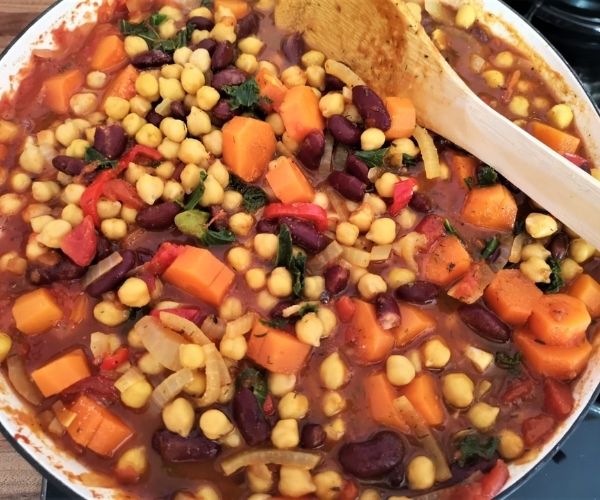
Add the chickpeas and spices (except salt) and stir well; let simmer for another 5 minutes.
When ready, turn the heat off and allow the chilli sin carne to slightly cool before adding salt. Mix well so that the salt distributes equally.
Serve warm, replacing the traditional tortillas with pita bread if needed, but remember this pita recipe is not gluten-free!
The heat of the chillies will compensate for the heat of the food. Perhaps a glass of white wine will help appease that hotness!

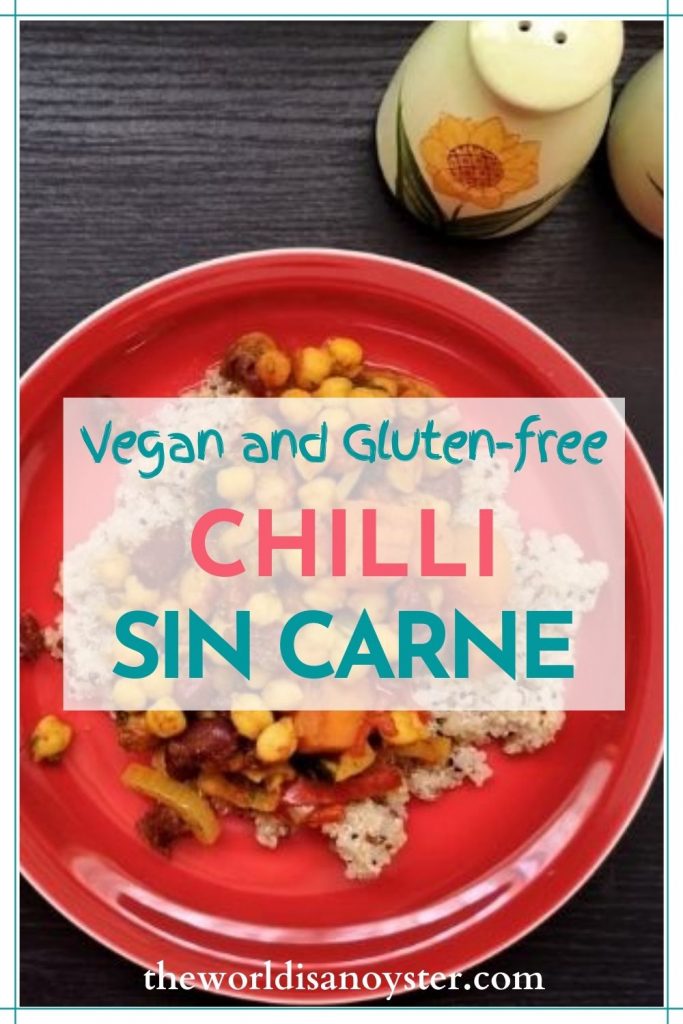
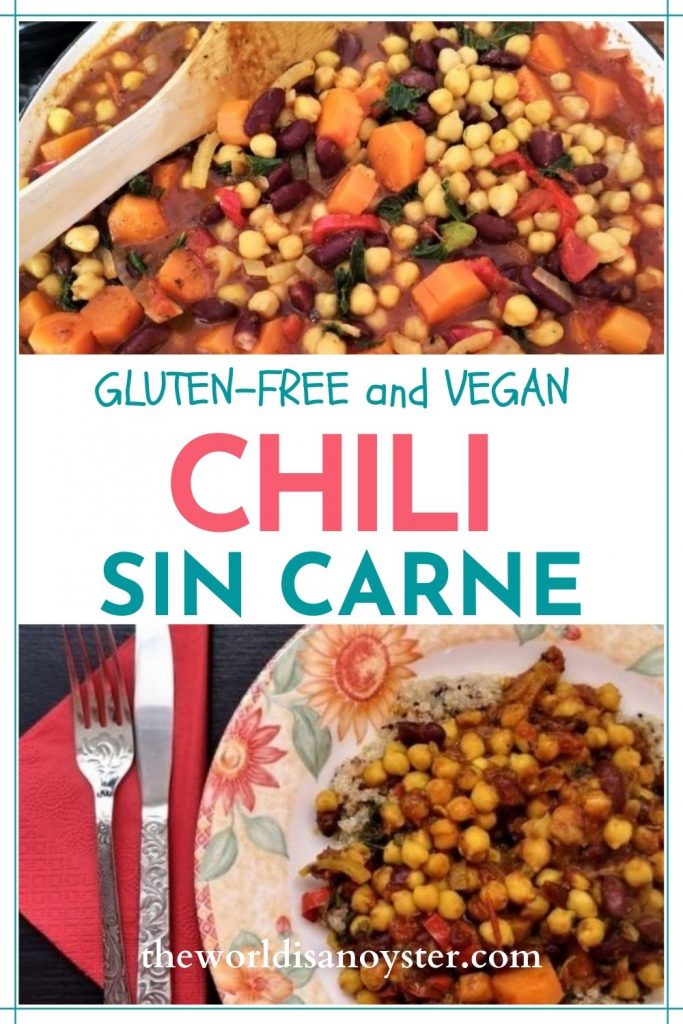
Enjoy your quick, easy and healthy chilli sin carne with a glass of chilled wine. Bon appetite!

Vegan, Gluten-free Chilli Sin Carne
Ingredients
- 1 pcs large onion pelled, organic
- 3-4 cloves garlic peeled, organic
- 1 pcs sweet pointed pepper deseeded, organic
- 2-3 pcs large carrots peeled, organic
- 1 pack kidney beans organic
- 500 g boiled chickpeas organic; defrost slightly if frozen
- 1 glass white wine/water
- 1 can chopped tomatoes organic
- 1 tsp cayenne chilli pepper powder
- 1 tsp ground black pepper
- 1 tsp paprika
- 1 tsp cumin seeds
- 1 tsp dried oregano
- 1 tsp dried thyme
- ½ tsp turmeric
- 1 tsp salt rock/sea
- 60-70 g quinoa + a large cup of water to boil
Instructions
- Take the boiled chickpeas out of the freezer and allow them to thaw slightly.
- In a pan, bring to boil a cup of water and add the quinoa. Reduce heat and simmer for 12 minutes. Turn the heat off, and allow the seeds to absorb the remaining water. When cooled, add a pinch of salt.
- Meanwhile, pour the wine/water into a large pan over medium heat.
- Chop the onion, carrots, garlic and pepper; add all to the boiling liquid.Add the chopped tomatoes and stir; bring to boil and reduce heating. Let simmer for ten minutes.

- Rinse the kidney beans under cold water, drain and add to the pan.
- Add the chickpeas and spices (except salt) and stir well; let simmer for another 5 minutes.When ready, turn the heat off and allow it to slightly cool before adding salt. Mix well so that the salt distributes equally.
- Use quinoa as a side dish and serve warm.
Notes
Mexican Food Adapted to Various Dietary Needs
The post Easy to Make Vegan, Gluten-free Chilli Sin Carne appeared first on The World Is an Oyster.
]]>