The post Alexandria. The African City Of Alexander The Great appeared first on The World Is an Oyster.
]]>Taste of a City
Music: There’s a Storm a’ Coming, Richard Hawley
Movie: King Tut
Book: The Fires of Alexandria, Thomas K. Carpenter. The Amun Chamber, Daniel Leston
This post may contain affiliate links, which means I will receive a commission if you purchase through my links at no extra cost to you. Please read the full disclosure for more information. Thank you!
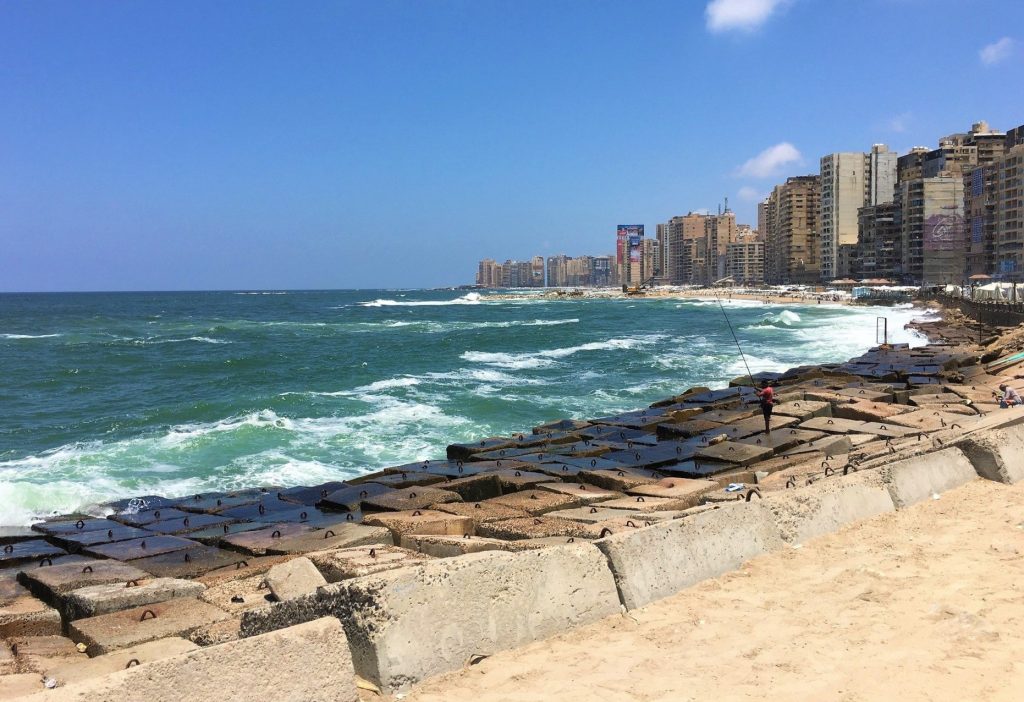
I don’t remember seeing a dark cloud in the skies of Alexandria. I wonder if it ever rains in this urban oasis at the fringe of the Sahara Desert.
I’m up on the open deck to watch the ship drop anchor and to check the weather. As expected, it is another sizzling day.
The Millennium docks in Alexandria only once a month this summer. I would typically jump on a tour bus to Cairo. Not today, though.
It is time I saw what made Alexander the Great entrust his general and successor with building the most magnificent city of antiquity on the northern coast of Africa. A city that has brought the Greeks on the pharaohs’ throne, has hosted the most majestic library the millennia has seen, has fallen to the Romans and has become a bustling modern swarm, apparently unaware of its unbelievable history.
It is not all doom and gloom, and time has still to fight for the right to sink this corner of the world in the darkness of oblivion. One indeed needs a creative imagination to envisage the wonder of the antiquity that was The Lighthouse. Also, the old library is long gone; more vision is required.
So, I close my eyes and do see the Pharos rising proudly from the waves, all the way to the clouds. I see millions of scrolls stored on shelves and Pythagoras going about his research in the cool rooms of the old library.
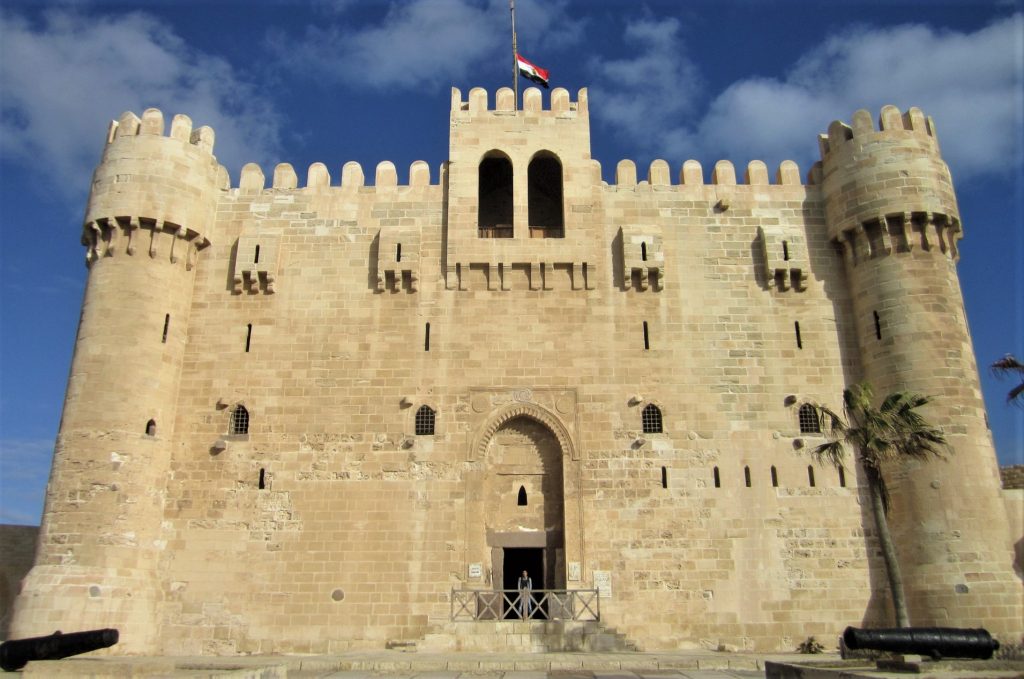
Then I open my eyes. A massive medieval Muslim fortress lays where the Pharos once was. It’s a trick of the mind! It does not mean that Alexandria and its rich history has vanished in time out of mind.
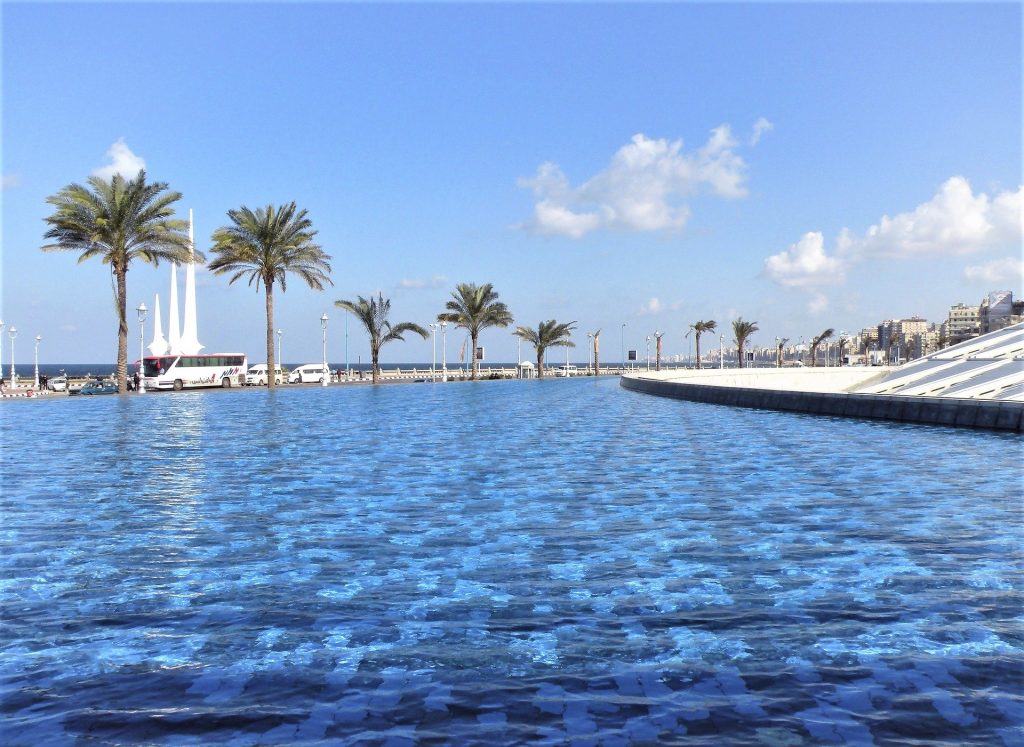
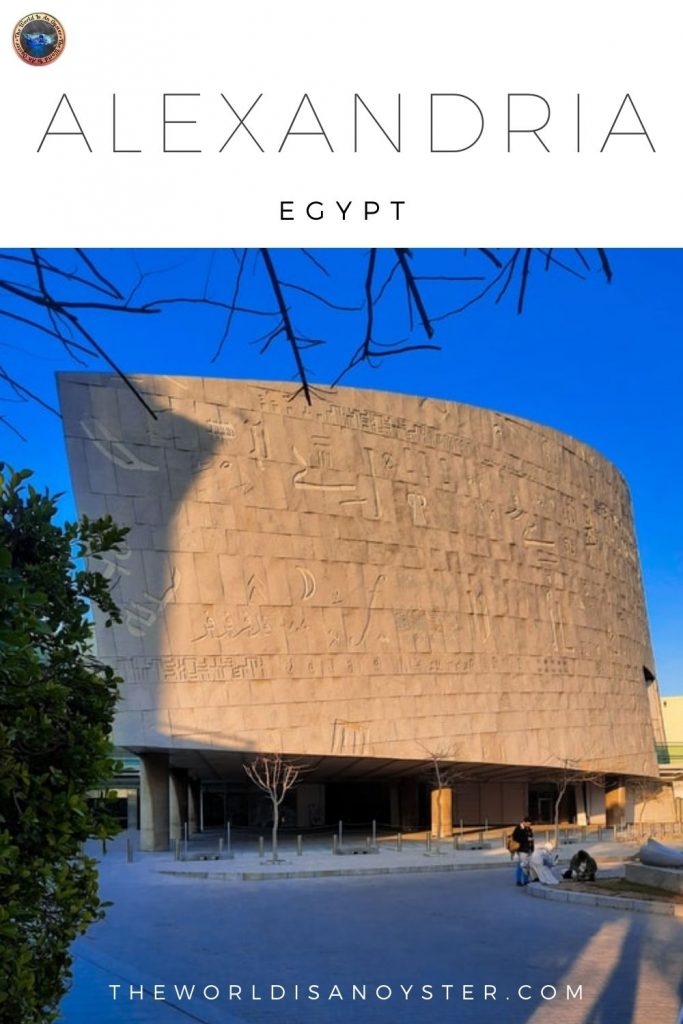
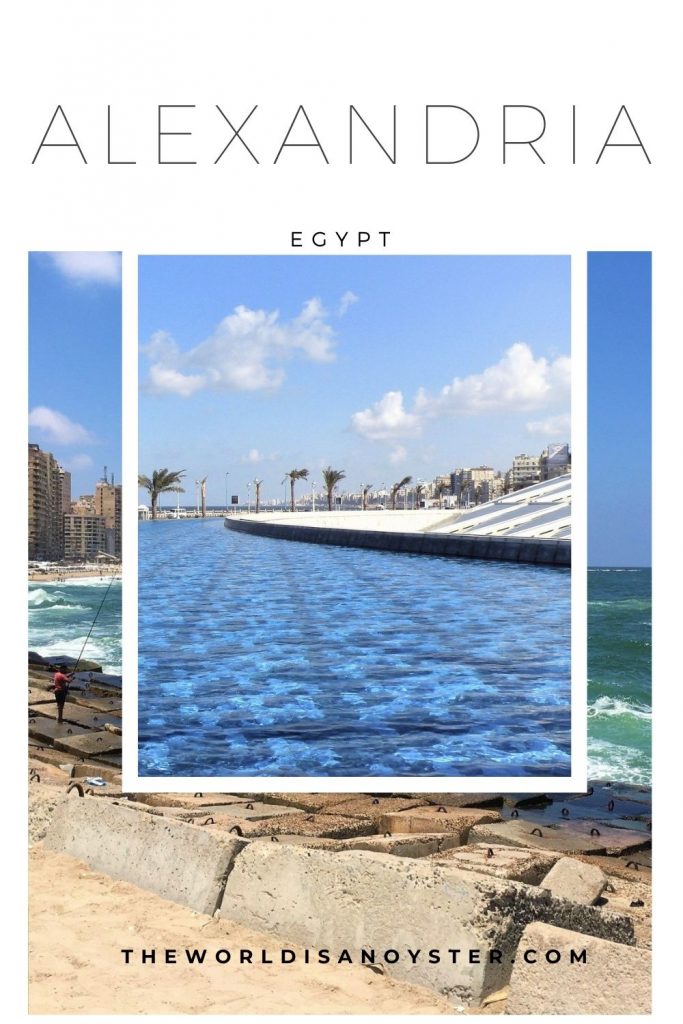
The new library shines its glass dial roof in the searing African sun. Millions have access to the knowledge catalogued in each sunlit room of the futuristic edifice.
You might not hold in your hands the scrolls Pythagoras produced twenty-five centuries ago, but you get the idea.
And maybe Alexander is still around here somewhere, sleeping his eternal sleep undisturbed by the day-to-day commotion.
Colleagues who have been out on different occasions warned me that the city was a little rough and suggested I shouldn’t go alone. So, I’ve arranged with a friend to accompany me, and he agreed.
The walk from the terminal is long, the sun is merciless, but it won’t make me give up. Yet!
The first thing that strikes me is the pungent stench of urine exulting from the narrower streets. My friend, Lisbon born and bred, is already twitching his nose. “Not posh enough for your taste?” I tease him while I wish I had a peg to pinch my nose.
The streets get busier. The air is charged with fine hot Saharan sand particles that hit my face in the persistent breeze. So far, I can’t see anything architectural that would strike me. It’s all square apartment buildings, broad boulevards suffocated by heavy traffic and exasperating honking.
I was about to tell my friend that it seems only men wearing white gallibaya walk the streets in the late morning hour. Before I open my mouth, a hand grabs my shoulder and shakes me quite brutally.
I turn to see who would do such a thing and why. A man in his fifties is gibbering incessantly in a language that makes no sense to either of us. His grubby hands are clutching to my forearm and won’t let go.
I shake myself free and shout at him to stop touching me. The man shows a lot of missing teeth in what he probably believes is an enticing smile. He turns to my friend, throwing a word in English among a lot of gibberish and heavy gesturing:
“Camel!” and something else I did not understand. Then, he points at me, broadening his ugly smile.
More men gather around to watch the freak show.
My friend is, literally, my friend. A married man of thirty-three with a wife waiting for him in Portugal. He has hinted before that he would have liked a different sort of relationship between us. I told him that there was a wife between us, not a romantic relationship.
We remain friends, because we have good banter every time we talk. We feel comfortable with one another. He’s a smart guy, although a little bonkers. I enjoy spending time with him, that’s all.
Why is the way he’s staring at me making me so prickly?
“How many camels?” I hear him asking the Egyptian.
Is he for real? We’re in a foreign country with weird customs, surrounded by a handful of men who push and shove each other to get to touch my arms. We don’t understand their language, and they speak an iota of English which makes communication arduous.
These people don’t get at all his sense of humour, can’t he see it? And I call this idiot ‘friend’!
The older man launches in a tirade of faster babbling and sawing the air while pointing at me. By his body language, he takes the negotiation seriously.
My friend can hardly hold his laughter while encouraging the old man. The bloody imbecile thinks he’s funny!
I get so annoyed and already feel sorry that I asked him to accompany me out in the city today.
My head is full of antique history; I’m not curious to find out what’s my worth in camels! The idiot thinks it’s hilarious to put me in such a situation!
How would he feel if somebody offered me two camels in exchange for him? Given how annoyed I am at the moment, I would sell him for a camel’s hoof or just give him away for free only to get rid of him!
I tell him to drop this nonsense in a serious tone of voice, or I’ll go back to the ship and never speak to him again.
The idiot rolls with laughter and somehow explains to the Egyptian that I am more expensive than that. The Egyptian finally turns his back and leaves, annoyed by the failed business.
I feel like slapping both of them: one for his Dark Ages mentality, gender and marital status discrimination. The other one for encouraging this freak show.
Through laughter, my arsehole friend asks me to observe his appreciation as he refused the Egyptian’s generous offer.
Gee! I’m ecstatic that I’m worth more than two camels. I already see my index raising on the stock exchange!
The moron is on fire. He won’t stop. He says he could have started a transport company through the desert and establish some sort of trade with the Bedouins. He should have considered the offer better.
“Such a wasted opportunity!’ I reply sarcastically.
All I can think of is that Caucasian women must be considered exotic around here. And for sale. After all, the man approached us in a busy quarter of the city and proposed the trade as if it was the most natural thing in the world.
The time is elastic. We are contemporary but don’t live in the same century. What if I had adventured in the city by myself? I would have been abducted by aliens, probably. Not that the present company is a lot better!
My friend takes my hand. I accept this since it deters other locals from looking for more ‘business’. Miraculously, the jabber and touching cease. The ad hoc, boisterous throng disperses visibly disappointed that no deal was sealed.
What the hell? Do they believe that white skin feels different? Oh, I see. A man is holding my hand. I now belong to someone. I’m not up for grabs anymore!
I’m glad that in my world I don’t get harassed for being a woman just like more than half the planet’s population or for having a skin (no matter the colour) attribute to all Sapiens! The things we take for granted …
I make an effort to shake off the ugly encounter by talking about the founder of the city and the glory these places once knew. The thing is when you read books or watch movies you don’t think about the pestilent stench or the behaviour of some.
I have been to Cairo a few times and used public transportation. I have never dealt with anything other than persistent starring that I could ignore with little effort. This was a new, unexpected, unwanted and degrading experience.
My friend tries to make me feel better and asks someone about a bazaar where he knows I would love to spend some money. There’s no bazaar in the area, so we just walk to the seafront.
Another image I was not expecting strikes both of us: local vendors selling food that’s on display on large trays placed on rags thrown on the ground. They advertise out loud their ware consisting of spices, sweets and meaty pasties.
To my horror, passers-by stop, pay for and eat the stuff that’s being buzzed by swarms of flies in the heat of the midday!
My Portuguese friend is a five-star restaurant manager on board the ship. I wouldn’t even touch a fork if I hadn’t washed my hands and hardly ever a morsel of food directly.
Be it OCD, snobbery or basic food hygiene standards, it is too much, so we decided to call it a day. The greatness of the wonder of antiquity does not appeal to either of us anymore.
The streets walked by the factual Cleopatra or by the fictitious Heron (from the book recommended at the beginning of this post) in her search for the culprits that had burned the library in the book just don’t call me anymore.
I’ve lost any interest in seeing the city’s posh area and checking the local customs over there. I’m trying hard not to imply anything, but the first impression is important and, on this occasion, it just wasn’t great.
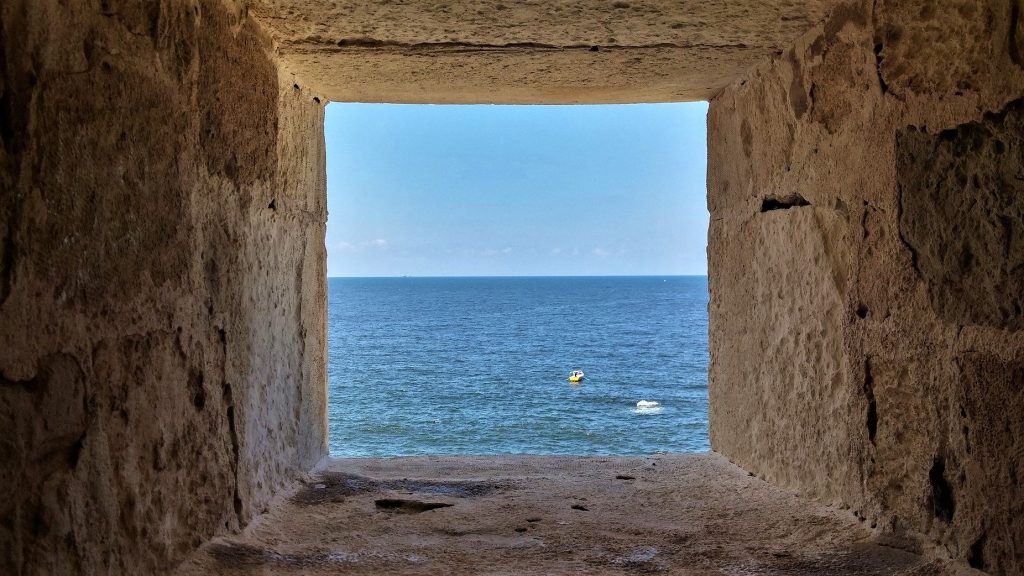
The most magnificent city of antiquity built by the Ptolemys to honour the greatest man of the times (or what’s left of that city), the man himself, Alexander the Great (if he’s indeed resting around here), the new Bibliotheca Alexandrina and many other old and modern edifices will have to wait for me to come back and give them another chance. My loss!
As for my stupid friend, the ship will be back in Venice at the end of the cruise. We will have another chance to go out, sit on a bench and talk about everything and anything as friends do.
Most likely, we’ll laugh about his wasted business opportunity and how he nearly sold me for two camels. What an arsehole! And what a lousy taste in friends I have!
However, most of the time, he’s a nice guy, although a little bonkers. Anyhow, I was never interested.
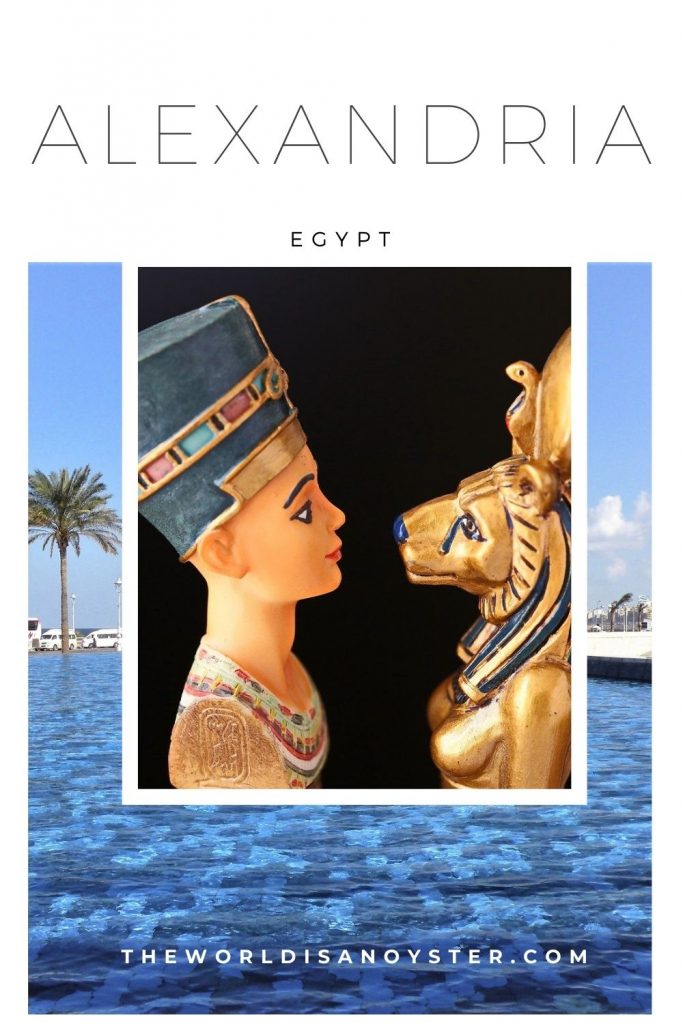
The post Alexandria. The African City Of Alexander The Great appeared first on The World Is an Oyster.
]]>The post Cairo, Egypt. Wonders of Antiquity Under The Saharan Sun appeared first on The World Is an Oyster.
]]>Perfection
Music: Hospital For Souls, Bring Me The Horizon
Movie: The English Patient, the best Oscar movie ever!
Book: Transylvanian Sunrise, Radu Cinamar and Peter Moon (you will find the connection!)
Tour Name: Cairo – Pyramids, Museum of Antiquities, Lunch
Deck three is situated just above the water level. From my cabin, I can hear the waves hitting the outer shell. I can also hear the echoing, trudging hum of the engine that drags the cruise ship through the dark blue waters of the Mediterranean. The innards of the monster growl painfully, yet the beast is not defeated!
This post may contain affiliate links, which means I will receive a commission if you purchase through my links at no extra cost to you. Please read the full disclosure for more information. Thank you!
Last night, the Captain announced through the ship’s PA that one of the propellers was damaged during our departure from Limassol, Cyprus. That explains why the water has turned so murky. The vessel took ages to get out of the port before sailing to Egypt.
The floating hotel will dock in Alexandria at least four hours later than planned. That sucks! The tour to Cairo and the Pyramids was supposed to leave at seven in the morning!
I’m still in two minds about my choice of clothing. I know that the heat will be a killer under the relentless midday sun. A cotton t-shirt with a picture of the Colosseum across the chest, a pair of linen trousers, sandals and a straw hat should do. An extra bottle of water in my backpack, the camera in hand, and I’m off to the gangway.
Before I see the dock, I can feel the heat defeating the cruise liner’s AC system. The second I step on the concrete pier, sweat beads trickle down my back, drenching my Roman printed cotton t-shirt. It’s going to be a scorcher that makes one feel as roasting in the ovens of hell, but I can’t be bothered. I’m in Egypt, and in less than three hours, I will step on Cairo’s streets for the first time in my life!
Fifty-two buses gulp rapidly almost all the passengers from the ship. I am in awe of the entire Shore Excursions department’s five staff for dispatching thousands of people within minutes!
I am the last to hop on the bus. Or so I thought. As I take my seat in the last row, I see a swarthy guy in a blue uniform wearing a Kalashnikov on his right shoulder. He remains on the steps and faces the now closed door. The tour guide takes the microphone and, before he introduces himself, makes a reassuring announcement that the presence of armed police is standard procedure in Egypt, but it’s more a precaution; an attack is not likely to happen.
I hear a half-relieved collective breath and decide to ignore the guard and his gun. Then I see a police car behind the bus. There’s another one at the convoy’s front; I only saw it when the first bus moved out. Standard procedure, relax!
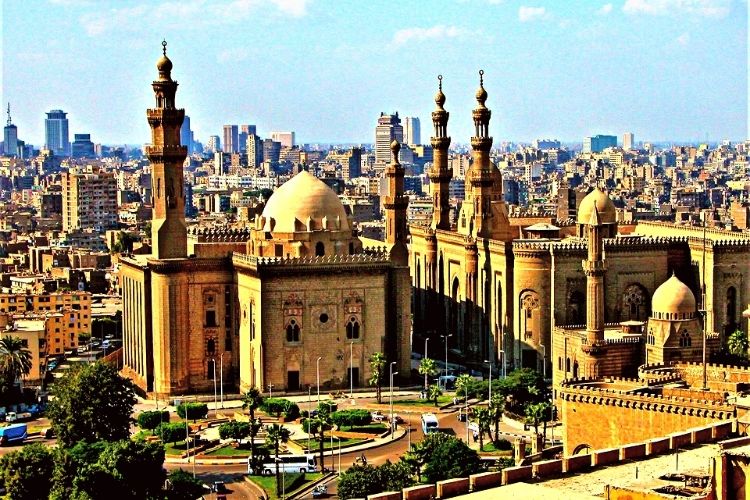
At twelve-fifteen sharp, our coach, the last of the fifty-two, finally starts moving. The convoy must look like a giant silver snake slithering through the dusty streets of Alexandria. The tour guide tells us that the medieval citadel we can see at some distance is where the Pharos (the famous Lighthouse of antiquity) used to stand.
We get a quick glimpse at the massive new Bibliotheca Alexandrina and its sundial glass roof leaning towards the sea. The guide informs us that it is placed close to where the antiquity’s original library burnt to the ground.
What a tremendous loss! A gradual destruction process that spread over a few centuries, obliterating knowledge that was already thousands of years old in antiquity. It boggles the mind to only think of it!
A panicked scream at the front of the bus erupts as a vehicle stopped to our right at the traffic lights, speeds up and cuts three lines right in front of our coach and turns left, no signal whatsoever! The automobile carries a giant haystack on its roof. Stranded straws float on the street taken by the wind flow thus created.
The bus driver most likely didn’t even flinch. The tour guide says ‘this is normal Egyptian driving style!’ Jungle driving applies to the desert as well as crazy cities or insane mountaintop narrow paths!
Another car passes us, carrying two donkeys cramped on the back seat. One placid muzzle and one fat rump hardly pressed to the vehicle’s rear windshield ignite a few giggles among the Mexicans.
The bus convoy takes a few turns on Alexandria’s busy streets that I award with the craziest driving fashion medal. Before we realise it, we’re out of the city in the endless desert, on our way to Cairo, the capital city.
The blue waters of the Mediterranean are replaced by an infinite, desolate and mesmerising at the same time ocean of golden ripples.
We advance rapidly on what I imagine is a highway, in the middle of nowhere, among endless dunes. This is a scene from ‘The Mummy’, and I’m in it! It’s surreal even to think that I’m crossing the Sahara.
Every curve of the road (which I still can’t see, being covered in sand!) shows a glimpse of the massive row of silver busses crossing the endless desert. The sun is reflected by the metallic shields of what must resemble a giant reptile seen from above.
Today I share the bus with a compact group of Mexican passengers and a Spanish-speaking Egyptian tour guide. Earlier, he was greeting the group by the door as we got on the bus. I couldn’t ignore his exotic charm and long, dark and thick eyelashes that would make any girl jealous.

I listen with excitement about how the day is planned and what we are going to visit before he launches into historical facts about Egypt. His Spanish is flawless. I will find out later that he perfected the use of the language in South America. He used to be an engineer involved in different construction projects.
A glance at my watch tells me that we are only half an hour through our two-hour drive from Alexandria to Cairo.
The guide’s mellow voice, the bus’s motion and the sun that throws scorching rays of fire over the desert induce me in a hypnotic state. I slowly indulge in a trance. I have to let it sink: I’m visiting this fantastic corner of the world for the first time. I am going to witness extraordinary things I’ve only read about in books or seen on TV!
Gizeh Plateau at the Edge Of Cairo City
The bus finally stops. The abrupt end of the lulling motion helps me shake the lethargy that engulfed my senses. I suddenly feel incredibly rested and super-energised!
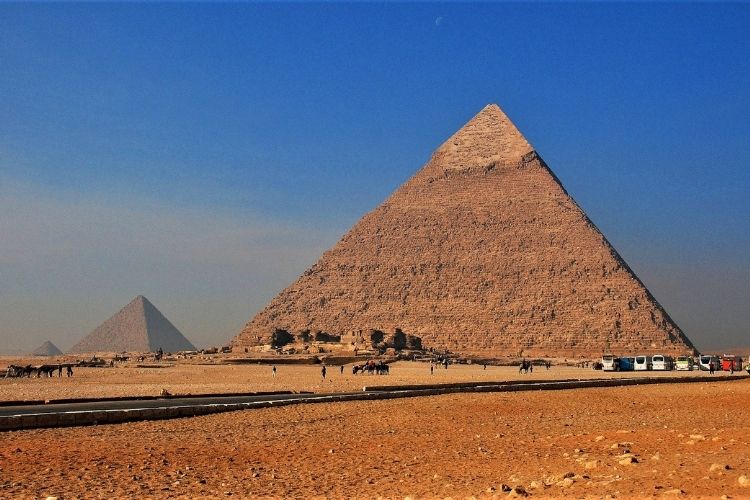
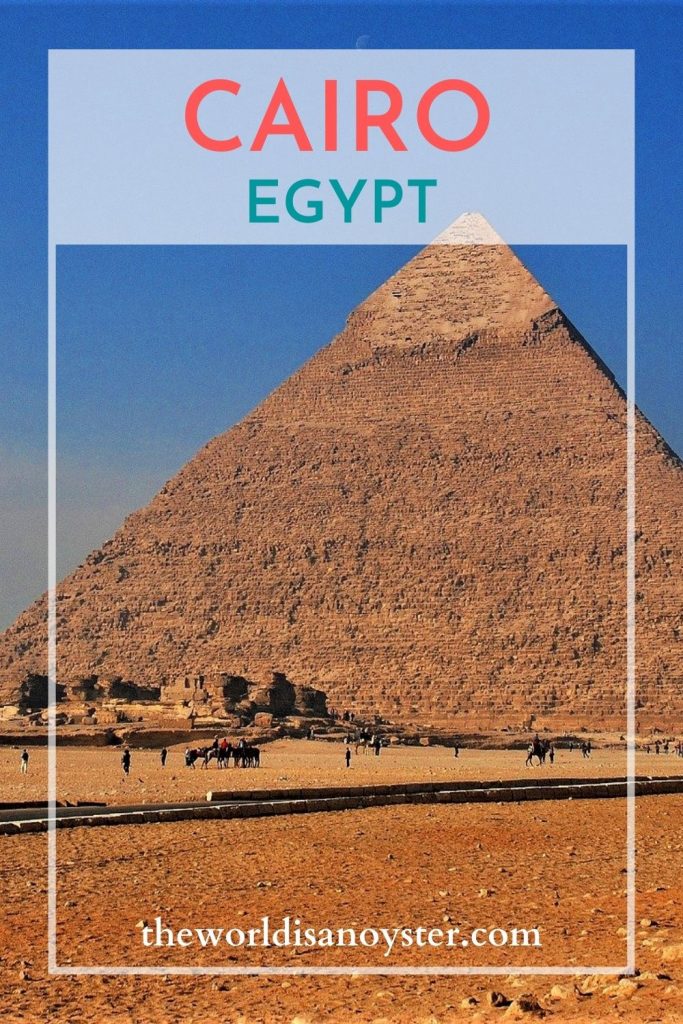
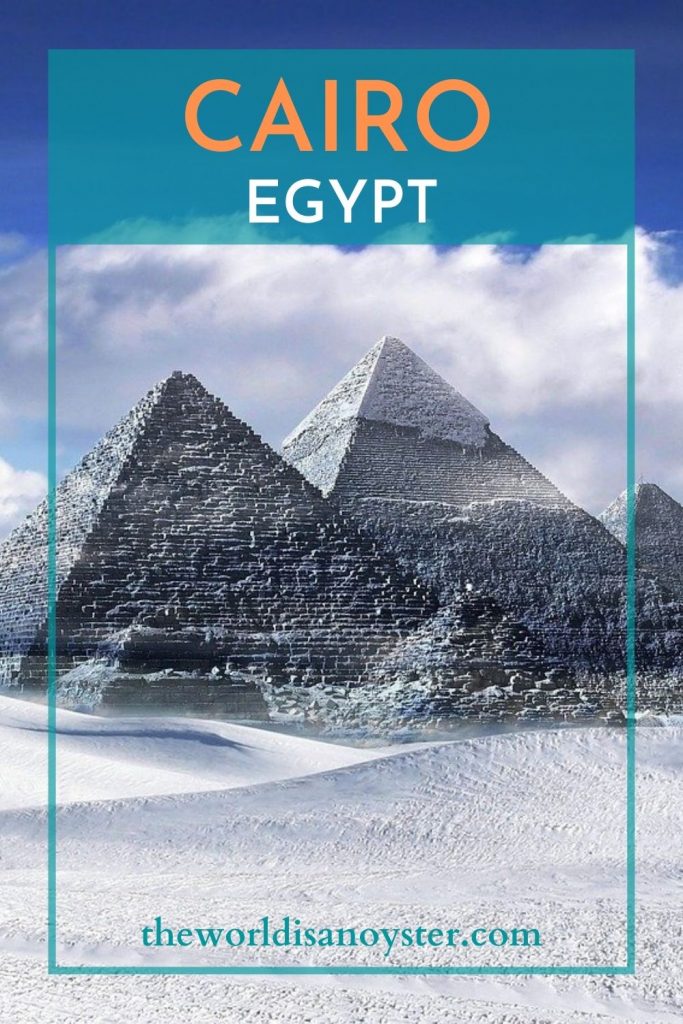
As we exit the coach, we are right on the Gizeh Plateau, on the outskirts of Cairo. The first glimpse of the Pyramids renders me breathless. I knew we would see them, but I was not expecting it to happen so quickly. I thought we had to hike somewhere far, in the sizzling heat, before being rewarded with such a magnificent prospect.
Certainly not! The Pyramids are right here, all three of them! More shockingly, not far from Gizeh, I can see through a haze of Saharan dust and traffic pollution the modern city of Cairo.
This is incredibly surreal! I covered thousands of miles to see the most famous archaeological site of antiquity. In contrast, others check the wind’s direction from their balcony without a care in the world about the thousands of years old constructions!
I envy them for taking this place for granted, but then I think that maybe I’d do the same had I been born with such a view across my street!
I turn around 360 degrees a few times over, slowly, to take it all in. The Mexicans had scattered to take pictures.
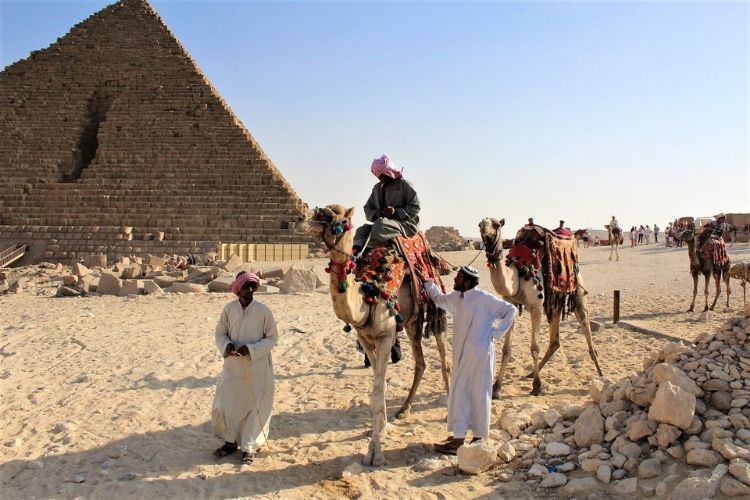
A man dressed in a beige gallibaya and pulling the reins of a camel startles me: “Pigshure, madame? Zouvenir from Ezhybt!“
He pulls the camel closer while I retreat farther away. I’m not climbing on that unenthusiastic beast for a blooming picture for which the camel’s owner will charge me a small fortune!
The poor animal stinks, spits and looks so annoyed by its predicament. I am convinced that it will bite me if I get any closer!
My refusal has no meaning; the man repeats his offer at least five times, like a broken record. In the end, I had to leave the spot I claimed as my perfect viewpoint only to get rid of him and his camel.
It takes some time to realise that this place has a specific energy. For as harshly the sun burns the sand with rays of fire, it does not feel too bad. The heat is bearable; it does not bother me as much as I thought it would. I feel full of beans and do not worry about the world. I am looking at the Pyramids, after all. Life is good.
I make my way towards an open entrance at the base of the Great Pyramid of Khufu. The tour guide is by the opening, telling a few Mexicans that they can go inside if they wish, but they should expect high humidity levels and an even higher temperature than outside. That, plus the musty aroma wafting from the opening, deter me from even attempting to investigate the bowels of the massive construction.
I ask the guide if he would take a picture of me with all the Pyramids in the background. He obliges so I move as far as I can from the objective.
I hate selfies! I might be the only one on the planet who does, but I genuinely hate them. If I want to see my mug, a quick glimpse in the mirror in the morning is enough. Thank God I don’t suffer from the technological era’s compulsion to ruin perfect scenery with a mug plastered on it! I only want some proof that I was there.
The man asks me again if the angle is right and snaps a few. I won’t even see the result until a few days later. Digital cameras are not yet invented! This being a memoir and all, this story happened in a distant dinosaur era. Back then, pictures were made on films, developed later and printed on photographic paper!
I take the opportunity that the Mexicans are not assaulting the guide with historical questions, and I start a more private dialogue. At the end of it, I know how he had learned Spanish, that he now lives in Cairo and that he’s not married. I had already figured this out.
I tend to check the ring finger of each man I speak with. He wears no ring, and there is no lighter mark on his skin to indicate he had removed it recently, so I believe him. In five minutes, I found out all I wanted to know; then I asked a few history-related questions as the Mexicans were regrouping. It was time to move to our next destination.
We get to see the colossal footless statue of Ramses the Great that was moved from Memphis (the old capital of Egypt) to Cairo and many other antique artefacts.
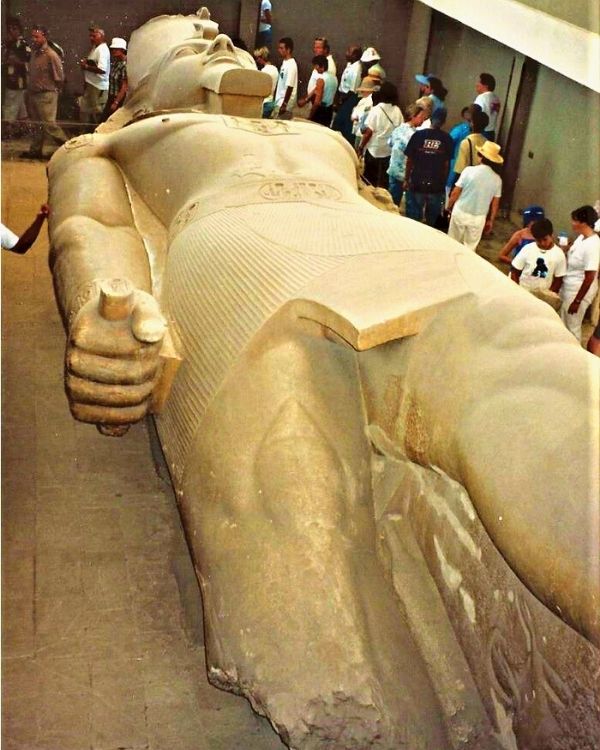
Next, the guide takes our group through a half-buried labyrinth of chambers. The floors are covered with fine sand; the limestone walls with chiselled hieroglyphs all the way up to the painted ceilings.
A few passengers ask about the meaning of all that writing. Of course, there’s not enough time to read it all, but the guide explains it actually describes ordinary people’s day-to-day lifestyle, most likely those who sweat blood to build the Pyramids.
I appreciate the shade, but it’s so hot among these walls! I try to make sense of the depicted stories, but as I turn around to see all the walls, the room starts to spin a little. I lean onto a wall, hoping I won’t activate some hidden mechanism that will open a secret (until then!) door that will swallow me without a living soul noticing!
The guide follows through the labyrinth, and we finally move out. No calamity befell!

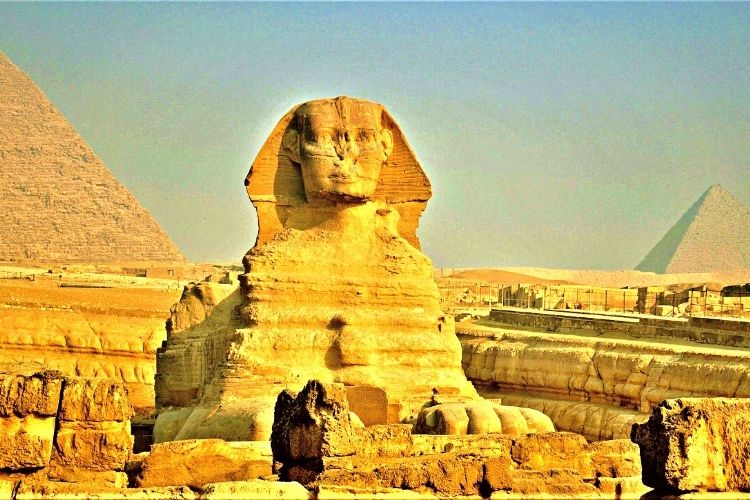
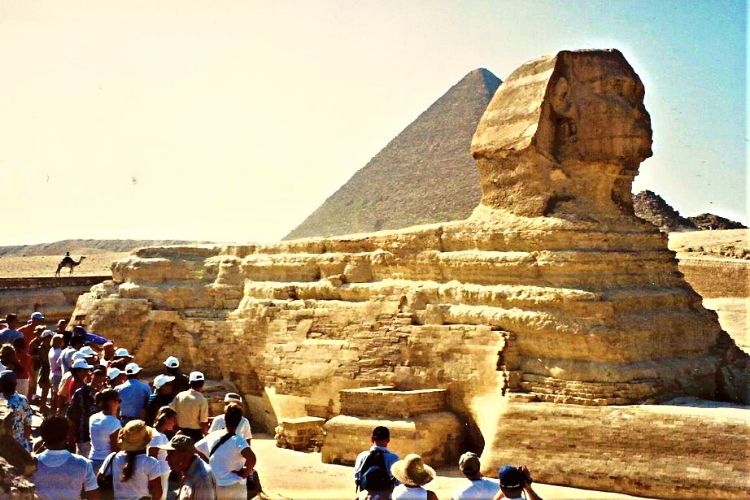
One more stop at the Sphinx follows, accompanied by yet another fascinating history lesson. My question about what is under the Sphynx or why there’s no inside carving yet to see what is there renders the tour guide perplexed. He looks at me as if I were an alien, asking in Spanish (a very human language!) why there’s no research yet on the inside of the Sphynx.
I find it hard to believe that the massive figure was built there for no reason. What if it holds clues to our ancient times that could enlighten humankind about our long-lost spirituality, Global energy currents, or explain why the Pyramids were built precisely where they were erected and not a hundred metres away? I take his puzzled look as my cue to leave the man alone and the ancient mysteries buried hereinafter.
Museums Or Hospitals For Souls?
The next stop in today’s trip is the Museum of Egyptian Antiquities. The minute I get in, I start walking as in a trance. Every single thing I see was made or lived many thousands of years ago. I easily ignore the hordes of visitors and only focus on the exhibits.
In a way, I feel as if I had just stepped back in history. The atmosphere is strangely eerie. The fact that I walk through mummies is surreal! And still, nothing prepares me for what is to come.
If you watched at least one movie that shows the museum’s interior, you surely remember the endless galleries displaying countless exhibits. Well, the camera only captured tiny parts of it. This place is enormous!
I’m overtaken by a bizarre compulsion to instantly grow five more pairs of eyes and ears to see and hear all there is to know. Even so, I would still miss something.
Slowly, our group moves further along the corridors of the museum among hundreds of visitors. Gallery after gallery of wonders come into view.
In the shade and coolness of the old building, we get lost through the busy galleries full of golden chariots, tools, weapons, jewellery, human and animal mummies and everything else that has been brought to light from under tonnes of sand. It is a vivid display of how life and death were as far as five thousand years ago.
A chilling thought crosses my mind: the darkened emaciated shapes soaked in ancient resins, covered in shredded linen bandages, numbered and placed behind glass panels we are staring at used to be people like you and me who lived, walked and left this world aeons ago.
Is there in the afterlife, or maybe in a different dimension, a museum for souls? Perhaps a psychiatric hospital would be more in demand, given what they had to put up with! Or are the souls that were once captive in those mummified bodies still lurking through these galleries searching for their previous host body? Or perhaps looking for those who unveiled and allotted them an afterlife as museum exhibits? Maybe they were kindly invited to reside here!
I mull over this chilling thought, and gratitude fills me at the idea that I won’t be a blonde relic stared at centuries after my departure. The secrets of mummification remain … secret to this day!
At a point, we get into a smaller room, dimly lit, unlike the rest of the galleries. I stare in awe at a hundred wonders, most of them of pure gold, exposed behind secure glass windows.
In the middle of the room, the visitors suddenly split the same way the Red Sea split to allow his brother, Moses, to leave Egypt. People turn left or right as if to bypass something situated in front of them. The last person in front of me steps to the right.
Out of the blue, I found myself speechless, breathless, all of my senses numbed, with people fading to volatile shades moving in slow motion, a step away from it.
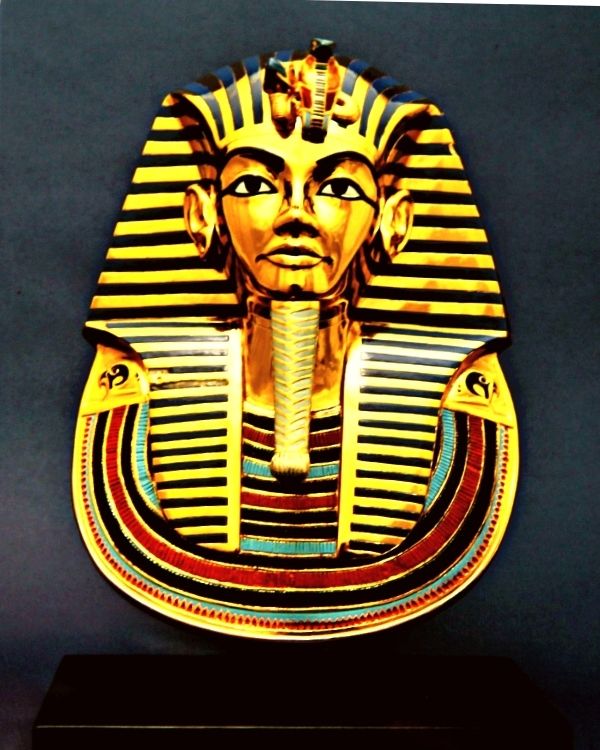
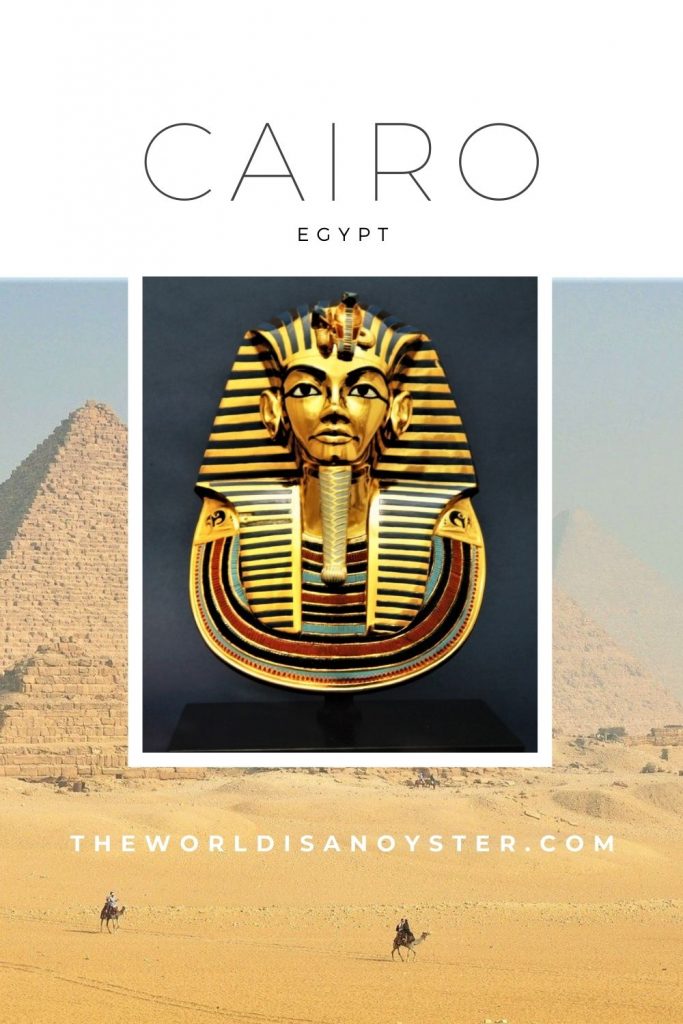
The room’s lack of light is compensated by a beam in the glass box that shows it in its entire splendour: the golden hand-made mask of the boy-king. Its little hammer dents and eye lines painted by a human hand have nothing to do with the present-day micron precision of computer programmed artefact production. No smooth lines and perfectly rounded curves; nonetheless, it is perfect. It’s the most exquisite thing I have seen in my entire life!
In one split second, I have again stepped back into a time I have heard about the entire day. I am only facing Tutankhamen’s mortuary mask. The most iconic and still controversial object recovered by Howard Carter at Luxor all those years ago. Iconic for the fame that surrounds it. Controversial for igniting vivid debates over its actual ownership; many archaeologists believe that it was not even meant to be this pharaoh’s mortuary mask in the first place!
It is only an object, but it seems so alive. Perhaps even more than the boy-king ever was! Utterly mesmerising! It holds the kind of beauty that hurts to look at. The craftsmanship humbles me, and so does the purpose this mask had served and the mysterious owner who had worn it for millennia in his royal death. If perfection were to be defined after a human-made article, this should be it! Tut’s mask is absolute perfection!
The guide touches my elbow, and I come out of my trance abruptly, back to a crowded, dimly lit room. The man is watching me intently, with a broad smile. And tells me that the same thing happened to him, when he first saw it, as a boy. It’s something that remains with you for life!
Reluctantly, I make an effort to remove myself from the vicinity of the mask. I am sure I have seen thousands of other exhibits on the way out of the museum, but I can’t remember much; it’s all a bit blurry. What is important is that I was there.
It is late afternoon when we depart from the museum. The sun had abated its merciless beating on us, mere humans.
Cairo Class
With renewed energy and excited chatting among the group, we depart to an exclusive hotel in downtown Cairo for a long-awaited meal. Exclusive because common Cairenes are not allowed access unless if they work there. This hotel, we’re told, is designated only for wealthy Egyptians and foreigners.
Paradoxically, I’m a poor foreigner too hungry to emit a pointed opinion about class dissociation nobody cares about. Worse, the cookie monster I am forgets all about everything as I spot the desserts buffet at the opposite end of a massive and elegantly set dining room. I only glance in passing at the pear-shaped crystal candelabra hanging from the tall ceiling and make sure I’m one of the first to stuff my plate with samples of every single cake available.
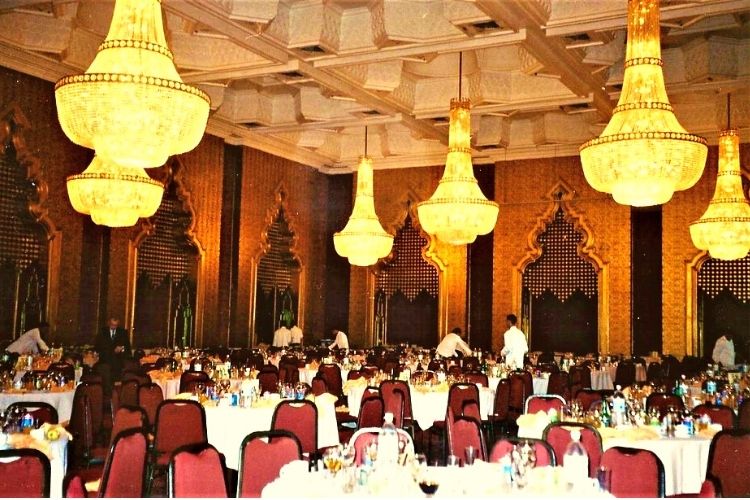
I get a seat at a table in a corner, and a few young Mexicans I got acquainted with ask if they could sit with me. I happily invite them to grab their seats when I hear the guide’s voice asking us to save one for him. The only free place happens to be the one next to my right.
He has a dry sense of humour, just like me. He glances at my plate with a dimpled smirk and compliments me on the healthy choice of food. I reply wittily that I’ll try the traditional Egyptian food later if there’s room left in my stomach! The one-hour meal break passes too soon.
Return To the Port Of Call
I board the bus with regret that it’s all over. Cairo and its Pyramids remain back, unfazed in their eternity by the insignificant fact that I was there. On the other hand, I hope to remember this trip until my last day on Earth and beyond that!
After such a fabulous day, the time has come to bid intriguing Cairo goodbye and return to Alexandria. To my amazement (even though I read that hundreds of times!) there is a freshness in the air as the sun sets in magnificent hues of orange and dark pink over the hazy city.
This time I don’t go to the seat at the back of the coach. The guide invites me to sit next to him, in the front row. He grabs the microphone. More historical facts won’t make any sense now, so he engages in a happy banter with the energetic group.
Then, he produces two huge carton boxes of baklava. The Egyptian baklava, he says, is the best among the Mediterranean ones, and everybody agrees as they help themselves.
The man returns to his seat and offers me the open box with a few pieces left. In a most solemn face, he says that possibly I did not have a fair chance to sample the delicious Egyptian sweets today, and he can’t let me pass the opportunity!
Sting all you like, mister! I’m elbow-deep in the box of Egyptian extravagance smothered in sticky honey syrup!
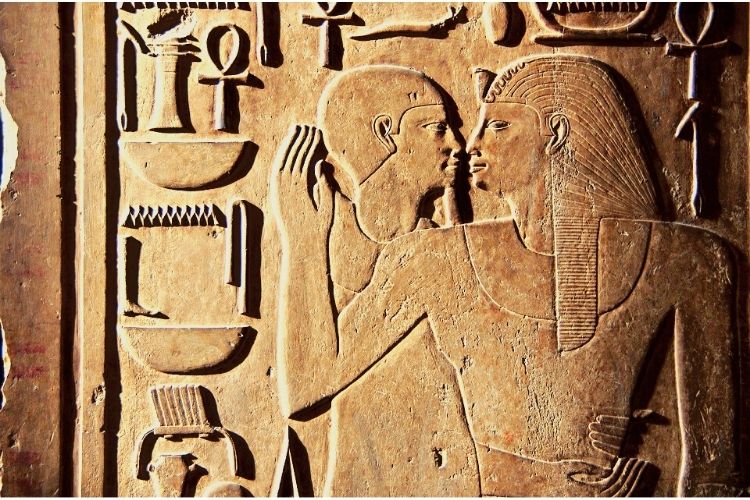
Cairo’s lights are far gone. The metallic snake of buses slithers eerily in the chilling darkness of the desert. I can hear a hum of voices and happy chatter behind me. It’s been a long day, but everybody seems so energised. I feel more awake than I was in the morning when I opened my eyes.
The tour guide and I spend the last hour and a half in a lively private conversation about everything and anything. At a point, he takes my hand in his and holds it for the rest of the trip. We gaze into each other’s eyes and can’t stop talking.
The conversation naturally switches to English for no reason, even if we both speak Spanish as if we were Madrileños. An Eastern European and a North African. It doesn’t bother us that we’re from different worlds, thousands of miles apart, distinctive cultures going back to times immemorial, or leave such complicated lives. The now and here are happening at this moment in time, in the bleakness of a barely lukewarm Sahara.
And just like that, he stops talking and kisses me! All humming and buzzing miraculously end. The time stops for a minute. Then, we talk some more. And kiss some more! Until the lovely elderly lady behind us asks why we didn’t tell them that we were novios. To which we both turned and replied at the same time, smiling, that we weren’t! The confusion on her face – priceless! The prejudice, if there was any, we didn’t give a damn about!
§
So Long, Tutankhamen, Cairo and Tour Guide!
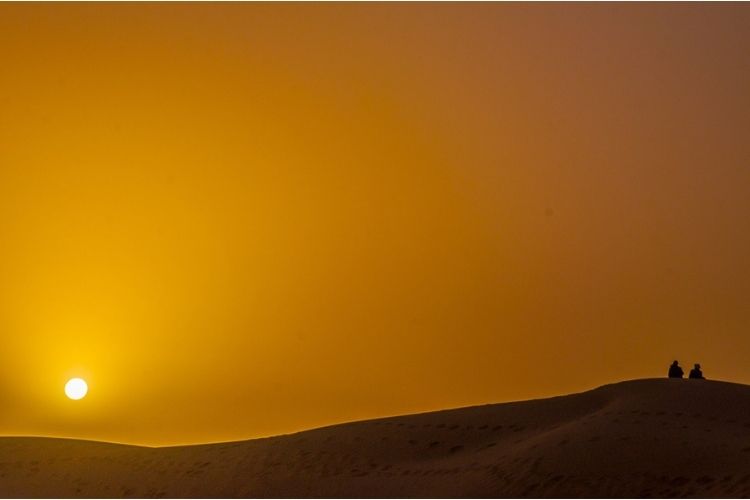
The boy-pharaoh chose to live his eternity in a secret place surrounded by the Sahara’s hot sand. The location is not so secret anymore, but his wish is respected. His charred mummy is at peace while the ones who botched his mummification are dead sure (pun!) evermore haunted in the underworld.
Thousands of the belongings meant for his afterlife were moved to a new museum (The Grand Egyptian Museum) located on the Gizeh Plateau. For everyone to see and marvel at their beauty, incommensurable value and, beyond all, perfection.
I so wish to see this museum as well one day! It’s on my lengthy bucket list.
The torrid July day I had spent there was a history lesson lived and witnessed where history happened and so much more than just a trip to a fascinating past!
Visit Cairo, even if only once in your lifetime! It is one of the many places on Earth every human must see at some point. And don’t stop reading! Read a lot. There are centuries worth of fiction and non-fiction books about Egypt. You’ll only re-discover it through the imagination (or facts) of others.
You may believe what you learn in history classes. Or that the Pyramids were there long before the Egyptians. Or that they are connected to the energetic vortexes of the planet. Or that aliens built them with outer galactic technology. Or that the world at that point was so advanced and eroded by greed that it reached the end of a cycle in the evolution of humankind (whatever human race dominated Terra back then, perhaps giants – whose skeletons pop up all around the world, but who ‘never existed’) and an atomic blast erased them from the face of the Earth to start afresh.
The cloak of mystery shrouding Egypt will not fall off her shoulders any time soon. Or will it? The information is out there; only more of us need to see it.
I haven’t gone back to Cairo in many years. I might never go again. But I will forever strive to preserve that unique feeling of my encounter with Perfection at the Egyptian Museum of Antiquities.
I hope that if it did not change in the many years since passed, it will last forever and will always be my special memory. Alas, Alzheimer still exists in the severely understudied human mind, as menacing as it ever was in this modern, civilised world. One never knows! One thing I’m sure of, though: I will always want to remember one tour guide who held my hand on the three-hour trip from Cairo to Alexandria!
Perfection
The post Cairo, Egypt. Wonders of Antiquity Under The Saharan Sun appeared first on The World Is an Oyster.
]]>